Middle East
Iran-Bahrain talks on horizon signal more sunset on US hegemony
Bahrain’s Potential Rapprochement with Iran Reflects Broader Geopolitical Shifts and Challenges U.S. Hegemony
The recent announcement that Bahrain and Iran will commence talks to reestablish diplomatic relations marks a seemingly minor but symbolically significant event in the Persian Gulf. This development, while surprising to some, is a reflection of broader geopolitical shifts and a potential challenge to U.S. hegemony in the region.
Bahrain, a small island nation closely aligned with Saudi Arabia, hosts the American Fifth Fleet, responsible for securing the Gulf, the Red Sea, and the Arabian Sea. Any rapprochement with Iran is likely to be unsettling for Washington, which has historically viewed Iran as a key adversary in the region.
For decades, Bahrain’s Sunni minority government has oppressed its Shi’ite majority, a policy supported by Saudi Arabia’s anti-Iran stance. The reestablishment of diplomatic ties between Bahrain and Iran could ease some of this internal tension, offering a new dynamic in Bahrain’s domestic and foreign policy landscape.
This diplomatic move follows a significant shift in the region’s geopolitical landscape, underscored by the Beijing-brokered rapprochement between Saudi Arabia and Iran in 2022. This landmark agreement challenged the long-held notion that Sunni and Shi’ite states in the region are inherently adversarial. The Bahrain-Iran talks are another step towards greater regional cooperation, possibly influenced by increasing Chinese and Russian involvement in the Gulf.
Historically, the U.S. has maintained its influence in the Persian Gulf through military presence and strategic alliances, aimed at ensuring the “free flow of oil” and countering perceived threats, particularly from Iran. However, the evolving diplomatic landscape suggests a potential decline in U.S. influence as regional players seek new alignments.
This shift recalls the diplomatic strategies of Turkey under former Foreign Minister Ahmet Davutoglu, who promoted a “zero enemies” policy aimed at reducing regional tensions and fostering cooperation. Such an approach, though initially met with skepticism in Washington, offers a model for how states can exercise agency to alter adversarial relationships.
The potential Bahrain-Iran rapprochement highlights a broader questioning of American foreign policy, which has often relied on identifying and countering regional “enemies” to justify military engagement and maintain strategic dominance. The current geopolitical changes challenge this paradigm, suggesting that regional stability might be achievable through diplomacy and cooperation rather than conflict.
Moreover, this development aligns with Iran’s growing legitimacy as a regional actor, bolstered by its new membership in the BRICS bloc alongside Saudi Arabia. The inclusion of both nations in BRICS underscores their significant roles in the emerging Global South, further shifting the balance of power away from Western dominance.
While the prospect of a complete regional harmony remains unlikely, the Bahrain-Iran talks signify that hostility is not an inevitable outcome of regional politics. States possess the agency to pursue peaceful relations, a lesson that could be valuable for the U.S. in its interactions with global powers like Russia and China.
In conclusion, Bahrain’s diplomatic initiative with Iran symbolizes a potential sunset on U.S. hegemony in the Persian Gulf. This move not only reflects changing regional dynamics but also challenges the longstanding American policy of enemy identification. As Bahrain navigates this new diplomatic terrain, the implications for regional stability and international relations will be closely
Middle East
US Authorizes Embassy Departures in Israel
Evacuation notices. Aircraft carriers moving in. Talks hanging by a thread. Is the Middle East edging toward another war?
The United States has authorized the departure of non-emergency embassy staff and their families from Israel, signaling mounting concern as tensions with Iran intensify and Washington accelerates one of its largest regional military deployments in decades.
The U.S. Embassy in Israel announced Friday that personnel may leave “due to safety risks,” advising Americans to consider departing while commercial flights remain available. According to reports, Ambassador Mike Huckabee urged staff who wished to leave to do so immediately.
The move comes as the USS Gerald R. Ford — the world’s largest aircraft carrier — heads toward the eastern Mediterranean, joining a substantial U.S. naval presence already in the region. Washington currently has more than a dozen warships deployed across Middle Eastern waters.
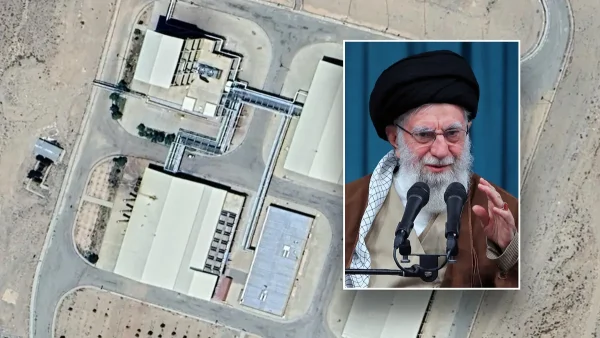
The evacuation notice follows Oman-mediated nuclear talks between Iran and the United States in Geneva, described by diplomats as a final effort to avoid open conflict. While both sides reported “progress,” deep differences remain.
President Donald Trump, who has repeatedly threatened military action, said this week he was “not happy” with negotiations and reiterated his demand for “no enrichment.” Reports suggest U.S. negotiators are pressing Iran to dismantle key nuclear facilities and surrender its enriched uranium stockpile.
Iran has rejected what it calls “excessive demands.” Foreign Minister Abbas Araghchi said talks had entered a serious phase but warned that miscalculations could derail diplomacy. Technical discussions are expected to continue next week in Vienna under the auspices of the UN nuclear agency.
The backdrop is volatile. Trump recently claimed Iran is developing missiles that could soon reach the United States — a statement disputed by intelligence assessments. Meanwhile, Iran maintains its nuclear program is civilian and accuses Washington of spreading “big lies.”
The region has seen this brinkmanship before. A previous round of diplomacy collapsed last year before a brief U.S.-Israel military operation targeted Iranian nuclear sites.
UN High Commissioner for Human Rights Volker Türk said he was “extremely alarmed” by the risk of escalation and urged restraint.
For now, embassies are preparing, fleets are repositioning, and diplomats are racing against time. Whether the coming days bring compromise or confrontation may determine whether this crisis ends at the negotiating table — or in the skies above the Middle East.
Middle East
Iran Pledges ‘Never, Ever’ to Hold Bomb-Grade Material
Zero stockpiles. Irreversible fuel. But Trump says he’s “not happy.” Is a last-minute nuclear deal within reach?
Iran has agreed it would “never, ever” possess nuclear material capable of producing a bomb, according to Oman’s foreign minister, in what appears to be a high-stakes diplomatic effort to prevent possible U.S. military action.
Speaking to CBS News after meeting U.S. Vice President JD Vance in Washington, Omani Foreign Minister Badr Albusaidi described what he called a significant shift in Iran’s position. Unlike the 2015 nuclear agreement negotiated during the Obama administration, he said, the current proposal would involve “zero stockpiling” of enriched uranium.
“Now we are talking about zero stockpiling,” Albusaidi said, adding that any existing enriched uranium would be diluted “to the lowest level possible” and converted into nuclear fuel in a manner that would be “irreversible.”
If implemented, such a measure would go beyond earlier frameworks by permanently neutralizing Iran’s accumulated material rather than simply limiting enrichment levels.
Albusaidi expressed confidence that a “peace deal is within our reach,” while urging President Donald Trump to allow diplomacy additional time.
But Trump signaled frustration with the pace and substance of talks. “I am not happy with the negotiation,” he said bluntly. “I say no enrichment.”
The dispute over enrichment lies at the heart of the standoff. Iran maintains it has the sovereign right to enrich uranium for civilian energy purposes. Washington insists that even low-level enrichment leaves open a pathway to weapons capability.
The diplomatic push comes amid a significant U.S. military buildup in the Middle East and repeated warnings from Trump that force remains an option if negotiations collapse.
Whether Iran’s reported commitment to eliminate stockpiles satisfies Washington’s demand for “no enrichment” remains unclear. The gap between zero stockpiling and zero enrichment could determine whether the crisis moves toward de-escalation — or confrontation.
Middle East
China Tells Citizens to Leave Iran
Evacuation alerts from Beijing. U.S. carriers moving in. Are major powers bracing for a wider conflict?
China has urged its citizens to evacuate Iran “as soon as possible,” warning of sharply rising security risks across the Middle East as tensions between Washington and Tehran escalate.
In a statement released Friday, China’s Foreign Ministry advised nationals currently in Iran to “strengthen safety precautions and evacuate as soon as possible.” It also recommended that Chinese citizens avoid traveling to Iran for the time being.
The advisory comes as the United States authorized the departure of non-emergency embassy staff from Israel and moved additional military assets into the region. The USS Gerald R. Ford, the world’s largest aircraft carrier, is en route to waters near Israel, joining a significant American naval presence.
Beijing said its embassies and consulates in Iran and neighboring countries would provide “necessary assistance” to citizens seeking to leave via commercial flights or overland routes.
In Israel, China’s embassy urged nationals to remain highly vigilant, minimize travel, and familiarize themselves with nearby bomb shelters and evacuation routes. State broadcaster CCTV reported that Chinese citizens were advised to avoid going out unless necessary.
The warnings follow Oman-mediated nuclear talks between Iran and the United States, widely viewed as a last attempt to avert military confrontation. While diplomats signaled some progress, Iranian officials cautioned Washington against what they described as “excessive demands.”
The growing military build-up, evacuation notices and diplomatic uncertainty have fueled concerns of a broader regional escalation.
For China — which maintains economic and energy ties with Iran while also engaging closely with Gulf states and Israel — the move reflects a careful balancing act: safeguard its citizens while navigating a volatile geopolitical moment.
As embassies activate contingency plans and warships reposition across the Mediterranean, governments appear to be preparing for scenarios they still publicly hope to avoid.
Middle East
Intel Disputes Trump’s Claim Iran Can Soon Strike US
Trump says Iran’s missiles could soon hit America. U.S. intelligence reportedly says — not so fast.
U.S. intelligence assessments do not support President Donald Trump’s recent claim that Iran is on the verge of deploying a missile capable of striking the United States, according to three sources familiar with classified briefings.
During his State of the Union address, Trump warned that Tehran was “working on missiles that will soon reach the United States of America,” framing the threat as part of his broader justification for potential military action.
But intelligence officials say there has been no new evidence to back that assertion.
Two sources told reporters that the most recent unclassified 2025 Defense Intelligence Agency (DIA) assessment remains unchanged. That report concluded Iran could potentially develop a “militarily viable intercontinental ballistic missile” by 2035 — and only if it chose to pursue that capability using its satellite launch vehicle technology.
The continental United States lies more than 6,000 miles from Iran, well beyond the range of Tehran’s current short- and medium-range missile arsenal.
While Iran has advanced its missile program and demonstrated the ability to strike regional targets and U.S. bases in the Middle East, U.S. intelligence agencies have not publicly indicated that Tehran is close to fielding an operational ICBM capable of reaching North America.
The White House declined to comment on the discrepancy.
The debate comes at a sensitive moment. The United States has increased military deployments in the Middle East, and diplomatic negotiations over Iran’s nuclear program are described by officials as reaching a critical phase.
Trump has repeatedly said he will not allow Iran to obtain a nuclear weapon and has signaled he is prepared to use force if talks collapse. Intelligence agencies, however, have assessed that while Iran has positioned itself to potentially produce a nuclear device, it has not restarted a formal weapons program.
The gap between political rhetoric and intelligence assessments now raises a familiar question in Washington: how much of the case for escalation rests on facts — and how much on strategic messaging.
Middle East
White House Officials Want Israel to Strike Iran First
Officials quietly floating a strategy: let Israel fire first — then the U.S. follow. What’s behind the calculus?
Senior advisers to President Donald Trump would reportedly prefer Israel to launch a strike on Iran before the United States does, believing that an initial Israeli attack could bolster domestic support for subsequent American military action, according to a Politico report.
Sources familiar with private discussions say some in Trump’s inner circle think a unilateral Israeli strike — followed by Iranian retaliation — would make it politically easier for the U.S. to justify its own response. The officials were granted anonymity to discuss sensitive deliberations.
The reported strategy comes as the U.S. and Iran prepare for another round of nuclear talks in Geneva, seen as a last chance for diplomacy. Washington has amassed warships and aircraft in the Middle East to press Tehran to agree to tighter limits on its nuclear and missile programs.
While the administration is publicly emphasizing negotiation, insiders say options on the table range from limited strikes designed to pressure Iran into concessions to broader operations targeting nuclear and missile infrastructure. A joint U.S.–Israel operation remains a possibility according to the same sources.
White House spokesperson Anna Kelly declined to comment on internal deliberations, saying only that “only President Trump knows what he may or may not do.”
The discussions reflect high-stakes geopolitics and political considerations ahead of possible escalation — raising questions about how U.S. policy might unfold if diplomacy collapses.
Middle East
Trump Signals Iran Strike as Missile Warning Raises Stakes
Missiles, nuclear fears, and a military build-up — is the U.S. heading toward another Middle East war?
President Donald Trump used his State of the Union address to lay out a blunt warning to Iran, arguing that Tehran’s expanding missile program and nuclear ambitions could justify U.S. military action.
“They’re working to build missiles that will soon reach the United States of America,” Trump told lawmakers, framing Iran not only as a regional destabilizer but as a direct threat to American soil.
While the president stopped short of announcing an attack, his remarks come amid a significant U.S. military buildup in the Middle East. More than 150 aircraft have reportedly been repositioned to bases across Europe and the region, alongside expanded naval deployments. The scale of the movement has fueled speculation that Washington is preparing for possible sustained operations if diplomacy fails.
Trump accused Iran of reviving its nuclear program, backing militant proxies and being responsible for past attacks that killed U.S. service members. He also cited Tehran’s ballistic missile development, claiming it already possesses missiles capable of striking Europe and U.S. bases overseas.
U.S. defense assessments have previously indicated that while Iran currently fields short- and medium-range missiles, it could develop an intercontinental ballistic missile by 2035 if it chooses to pursue that capability. The continental United States lies more than 6,000 miles from Iran.
The president argued that Iran has not made the commitment Washington demands. “They want to make a deal, but we haven’t heard those secret words, ‘We will never have a nuclear weapon,’” Trump said.
Iran’s Foreign Minister Abbas Araghchi responded that a diplomatic breakthrough remains possible if talks are prioritized. Tehran maintains that its nuclear program is intended for civilian energy and insists on its sovereign right to enrich uranium.
Trump’s speech also highlighted Iran’s crackdown on protesters, though the casualty figures he cited were significantly higher than independent estimates.
The political backdrop is complicated. Trump rose to power promising to end “forever wars,” and public opinion remains cautious about new military entanglements. A recent Reuters/Ipsos poll found that nearly 70 percent of Americans believe the U.S. military should be used only when facing a direct and imminent threat.
Yet Trump struck a dual note: “As president, I will make peace wherever I can,” he said. “But I will never hesitate to confront threats to America wherever we must.”
The coming days — and the fate of nuclear negotiations — may determine which path he chooses.
Middle East
Syria Under Fire on Two Fronts
West erupts with regime loyalists. East flares with ISIL attacks. Is Syria’s fragile transition already under strain?
Syria’s transitional government is confronting simultaneous security threats in the west and east, as clashes with Assad loyalists in Latakia coincide with a renewed wave of ISIL attacks in Deir Az Zor.
In the coastal countryside near Jableh, fighting erupted Tuesday between Internal Security Forces and Saraya al-Jawad, a militia reportedly loyal to former regime commander Suheil al-Hassan, once head of the feared Tiger Forces. At least four people were killed, including a member of the security forces. Authorities said a senior militia commander was among those “neutralised.”
The emergence of Saraya al-Jawad signals a shift from scattered loyalist resistance to what officials describe as a more organized insurgency in the Alawite heartland — long the base of the al-Assad family’s rule. The Interior Ministry accuses the group of orchestrating assassinations, bombings and attempts to destabilize public life.
At the same time, ISIL claimed responsibility for deadly attacks in Deir Az Zor province. A soldier was killed near Al-Mayadin, while two separate assaults on a checkpoint in Al-Sabahiyah left four security personnel dead. The resurgence has reignited fears that extremist cells are exploiting the country’s fragile transition.
Interior Minister Anas Khattab accused “remnants of the previous regime and ISIL” of attempting to undermine stability. Analysts are divided over the cause. Some suggest external actors may be activating dormant networks to weaken the new government. Others argue the violence reflects a widening security vacuum following the withdrawal of foreign forces and the reshuffling of power structures.
The vast Syrian desert — nearly 40 percent of the country’s territory — remains particularly vulnerable. Experts warn it could again become a training ground for militants unless rapid coordination with local tribes and security forces is established.
After more than a decade of war and the regime’s collapse in late 2024, Syria’s new leadership faces a stark test: can it secure a fractured nation before competing armed factions regain ground?
Middle East
US Masses Airpower Near Iran — Strike Plans Loom
150+ aircraft moved. Two carriers in play. Is Washington preparing for more than just a warning shot at Iran?
The United States has rapidly expanded its military footprint near Iran, deploying more than 150 aircraft to bases across Europe and the Middle East in what analysts describe as preparations for a potential multiday air campaign.
According to satellite imagery and flight tracking data cited by The Washington Post, the buildup began after nuclear talks between Washington and Tehran ended on February 17 without a breakthrough. The scale of the deployment is reportedly among the largest seen in the region since before the 2003 Iraq war.
President Donald Trump has repeatedly threatened military action if Iran does not agree to stricter limits on its nuclear program. Iranian officials say negotiations remain possible but caution that any agreement would take time.
Defense experts reviewing the deployments say the assets being assembled suggest planning for sustained air operations rather than a limited, one-off strike. Dana Stroul, a former Pentagon official, told the Post the current posture allows the military to execute “anything from a sustained, highly kinetic campaign to more targeted, limited strikes.”
Mark Cancian of the Center for Strategic and International Studies said that if Washington intends a weeks-long air campaign, even more assets may be required.
The US currently has more than a dozen warships in the Middle East, including the aircraft carrier USS Abraham Lincoln, nine destroyers and three littoral combat ships. The USS Gerald R. Ford, the world’s largest aircraft carrier, has arrived at Souda Bay in Crete en route to the region — a rare move that could place two US carrier strike groups within operational reach of Iran.
The last time two carriers operated simultaneously in the region was in June 2025, when the United States struck three Iranian nuclear sites during Israel’s 12-day conflict with Tehran.
For now, the Pentagon has not announced any strike decision. But the message is unmistakable: Washington is positioning itself to move quickly — and decisively — if diplomacy collapses.
-
Minnesota2 months agoFraud Allegations Close In on Somalia’s Top Diplomats
-
Somaliland1 month agoF-35s Over Hargeisa: The Night Somaliland’s Sovereignty Went Supersonic
-
Somalia1 month agoAid Destroyed, Trust Shattered: Somalia Loses U.S. Support for Good
-
Somaliland2 months agoUAE, Bahrain, Morocco and Kazakhstan Hold Recognition Talks With Netanyahu
-
Terrorism1 month agoForeign ISIS Pipeline Exposed: Puntland Captures Dozens of Non-Somali Fighters
-
Somaliland1 month agoSomaliland at Davos: The Moment Somaliland Entered the World’s Inner Circle
-
Comment2 months agoQatar Push Mediation With Al-Shabaab as Mogadishu Cornered
-
Terrorism4 weeks agoAmerica Pulls Back From Somalia but Doubles Down Next Door