
Analysis
US Enforces New Sanctions on Iran Amid Nuclear Escalations

Sanctions Target UAE-Based Companies and Vessels Involved in Iranian Petroleum Transport
The United States’ recent imposition of sanctions on Iran marks another chapter in the prolonged and complex relationship between the two nations. Since the 1979 Iranian Revolution, the US and Iran have had a contentious relationship, characterized by economic sanctions, diplomatic isolation, and periodic confrontations. The 2015 Joint Comprehensive Plan of Action (JCPOA), known as the Iran nuclear deal, provided a brief respite, but the US withdrawal from the agreement in 2018 under the Trump administration reignited tensions. The latest sanctions reflect ongoing concerns over Iran’s nuclear ambitions and the broader geopolitical struggle in the Middle East.
Iran’s advancements in its nuclear program, specifically enriching uranium to 60% purity, pose significant concerns for global security. This level of enrichment is alarmingly close to the 90% required for weapons-grade uranium. Despite Iran’s claims of peaceful intentions, the potential for nuclear weapon development cannot be ignored. This escalation has prompted reactions from international bodies like the International Atomic Energy Agency (IAEA) and the Group of Seven (G7), which have warned Iran against further nuclear advancements.
The US sanctions serve as a strategic measure to curb Iran’s nuclear program and limit its regional influence. Secretary of State Antony Blinken’s statement underscores the US commitment to preventing Iran from acquiring nuclear weapons, emphasizing a multifaceted approach that includes economic sanctions and diplomatic pressure. By targeting companies involved in the transport of Iranian petroleum, the US aims to cut off revenue streams that could fund the nuclear program.
Iran’s nuclear advancements and the US response have broader implications for Middle Eastern stability. Israel, a key US ally and regional rival of Iran, has expressed deep concern over Iran’s nuclear capabilities. Iran’s recent comments about potentially changing its “nuclear doctrine” if threatened by Israel add a layer of urgency and potential volatility. The sanctions could also influence Iran’s relations with other regional players and international actors, including Russia, given the recent warnings about potential missile transfers.
The sanctions targeting UAE-based companies and vessels associated with Iranian petroleum transport are likely to exacerbate Iran’s economic challenges. Iran’s economy has been severely impacted by previous sanctions, leading to inflation, unemployment, and reduced oil revenues. Further restrictions could limit Iran’s ability to engage in international trade and access foreign currency, deepening the economic crisis and potentially increasing domestic discontent.
While the primary aim of the sanctions is to curb Iran’s nuclear ambitions, they can also have unintended humanitarian consequences. Economic sanctions often lead to shortages of essential goods, increased poverty, and reduced access to healthcare for the civilian population. It is crucial for the international community to balance sanctions with measures that mitigate humanitarian impacts.
The imposition of new sanctions is likely to strain diplomatic relations between the US and Iran further. Iran’s rebuke of the G7 statement and calls for distancing from “destructive policies” reflect a defiant stance that may complicate future negotiations. The Biden administration’s approach will be critical in navigating these tensions and exploring potential diplomatic avenues to address the nuclear issue.
The US sanctions and the G7’s stance highlight the importance of international cooperation in addressing nuclear proliferation. The effectiveness of these measures depends on the collective efforts of global powers to enforce sanctions and maintain pressure on Iran. Additionally, the role of the United Nations and the IAEA will be pivotal in monitoring Iran’s compliance and facilitating dialogue.
The latest US sanctions on Iran underscore the ongoing geopolitical struggle to prevent nuclear proliferation and maintain regional stability. While aimed at curbing Iran’s nuclear advancements, the sanctions also have significant socioeconomic and humanitarian implications. The path forward will require careful diplomacy, international cooperation, and a balanced approach to ensure security while addressing the needs of the Iranian populace. The global community must remain vigilant and proactive in mitigating the risks associated with Iran’s nuclear program and its broader regional impact.



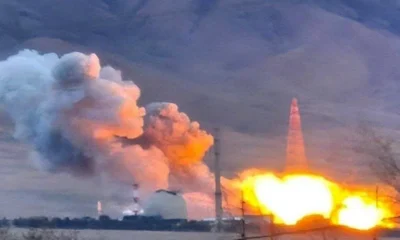

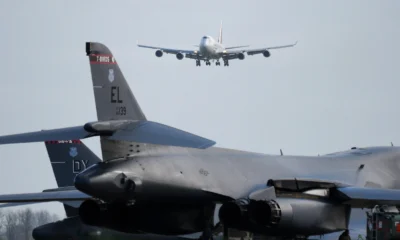







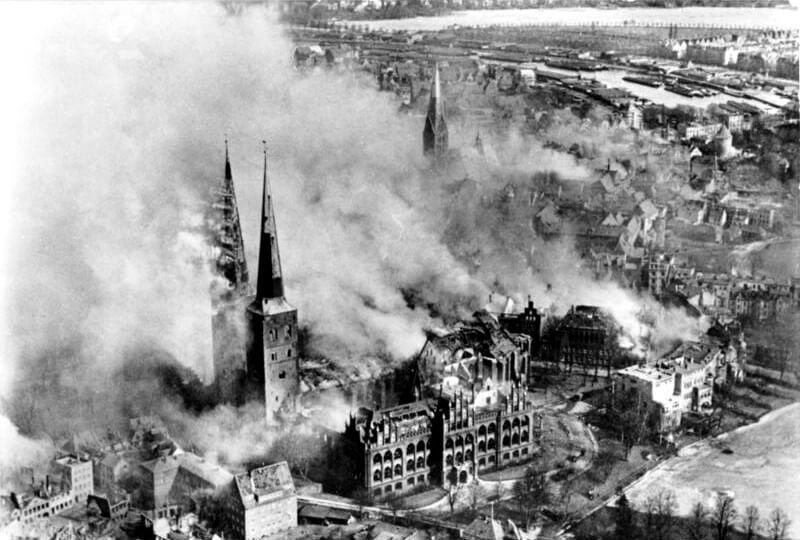
From Lübeck to Today: How Strategic Bombing Reshaped War—and Echoes in Modern Conflicts.
From wooden cities to digital warfare—the logic of war hasn’t changed, only the tools.
In March 1942, the British Royal Air Force made a calculated decision that would redefine modern warfare: it chose the historic German city of Lübeck not for its military value, but for its vulnerability.
The city’s medieval structure—dense, flammable, and largely built from timber—made it an ideal target for incendiary bombing. Over the night of March 28–29, British bombers dropped hundreds of tons of explosives, including tens of thousands of incendiary devices.
The result was devastating: a firestorm that destroyed nearly a third of the city, killed hundreds, and displaced thousands.
It was not just an attack. It was a message.
Britain’s strategy marked a shift from targeting military infrastructure to targeting morale. By striking culturally significant cities, London aimed to demonstrate that Germany itself was no longer insulated from the war.
The objective was psychological as much as physical: to erode public confidence and force political reconsideration in Berlin.
The response from Adolf Hitler was immediate and revealing. Enraged, he ordered the Baedeker Blitz—retaliatory strikes against British cities such as Bath and York, chosen not for industrial importance but for their cultural heritage. War had entered a new phase, where symbolism and identity became targets alongside armies and factories.
Yet the outcome exposed a critical miscalculation.
Despite the destruction, British morale did not collapse. Instead, the bombings hardened public resolve, reinforcing a pattern that would repeat throughout the war: strategic bombing inflicted immense damage, but rarely achieved decisive political surrender on its own.
That lesson still resonates today.
Modern conflicts—from the Middle East to Eastern Europe—continue to echo this logic. Civilian infrastructure, energy systems, and symbolic sites are often targeted not only to degrade capabilities, but to send signals, shape narratives, and influence political will.
What has changed is not the intent, but the method.
Where Lübeck burned under incendiary bombs, today’s wars deploy precision strikes, drones, cyberattacks, and economic pressure. Yet the underlying calculation remains familiar: that by increasing the cost of war for societies, leaders can force strategic concessions.
History suggests otherwise.
The bombing of Lübeck—and the retaliatory campaigns it triggered—demonstrated that societies under attack often adapt rather than collapse. Instead of breaking morale, such strategies can entrench resistance and prolong conflict.
Eighty-four years later, the firestorm over Lübeck stands as more than a historical episode.
It is a reminder that wars are not only fought on battlefields—but in cities, in minds, and in the fragile line between pressure and resilience.
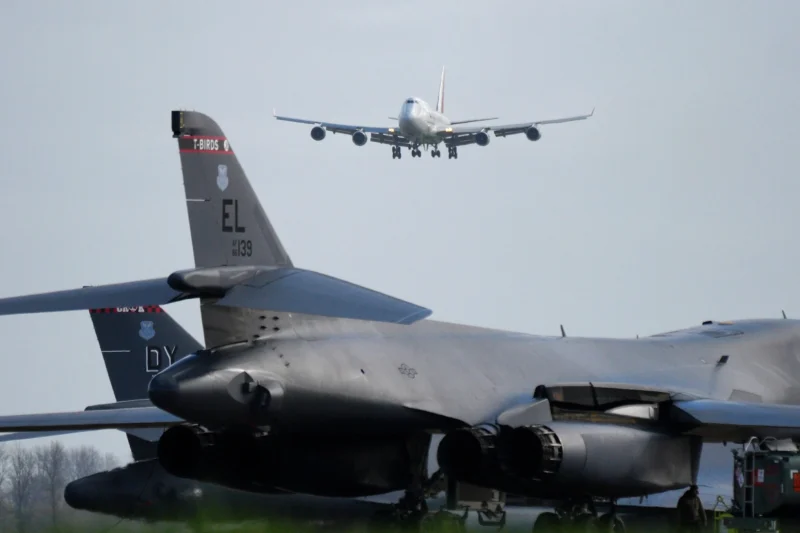
While the Middle East burns, the real power game is moving east—and history is repeating itself.
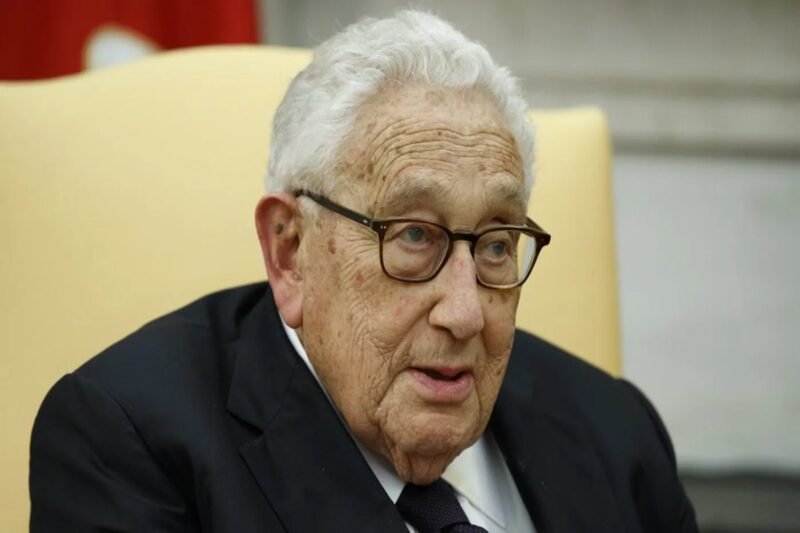
In the summer of 1971, a quiet diplomatic maneuver reshaped the world. Henry Kissinger slipped into Islamabad under the pretext of illness, only to secretly open a channel to China. The result was a geopolitical earthquake: Washington and Beijing aligned, and the Soviet Union found itself strategically isolated.
More than half a century later, the echoes are unmistakable.
As war engulfs Iran and tensions ripple across the Middle East, a quieter, more consequential shift is unfolding—once again involving Pakistan, once again tied to backchannel diplomacy, and once again centered on Asia.
The reappearance of Pakistan as a diplomatic intermediary in U.S.–Iran contacts is not coincidence. It signals the reactivation of an old geopolitical axis—one where Asia serves as both the stage and the broker of global power realignments.
What is different today is scale.
In 1971, the objective was to rebalance Cold War dynamics. Today, the transformation is structural. Asia is no longer a theater of competition; it is becoming the center of gravity. Economically, technologically, and demographically, the axis of global influence is shifting eastward—toward a complex interplay between China and India.
Both nations, despite ideological differences, now operate within a global capitalist framework, driving innovation, manufacturing, and digital transformation at unprecedented levels. Their rivalry is real, but so is their shared trajectory: central players in a system no longer dominated solely by the West.
Against this backdrop, the Middle East—despite its volatility—appears less like the future and more like a pressure zone within a larger transition.
Even recent developments reinforce this pivot. Indian Prime Minister Narendra Modi’s high-profile engagement with Israel reflects Asia’s growing diplomatic reach into traditionally Western-aligned regions. Meanwhile, shifting tensions between Pakistan and Bangladesh hint at deeper realignments across South Asia itself.
The strategic game has widened.
Corridors of trade, energy, and influence—stretching from the Indian Ocean to Central Asia—are once again becoming decisive. Pakistan’s position, long defined by geography and its nuclear capability, is being re-evaluated in this broader contest. It is not merely a regional actor; it is a hinge between competing spheres of influence.
This is why today’s developments feel familiar.
Like in Kissinger’s era, the most important moves are not always visible. They unfold through intermediaries, quiet negotiations, and seemingly peripheral actors. The headlines may focus on war, but the deeper story is about positioning for what comes after.
The question, then, is not whether the world is changing—but whether the change has already happened.
If 1971 marked the opening of China to the world, today may mark the moment the world fully pivots to Asia.
Iran isn’t trying to win the war—it’s trying to outlast it. And the world is paying the price.
One month into the war, the United States and Israel are confronting a paradox: a heavily damaged Iran that is still dictating the tempo of the conflict—and, increasingly, the global economy.
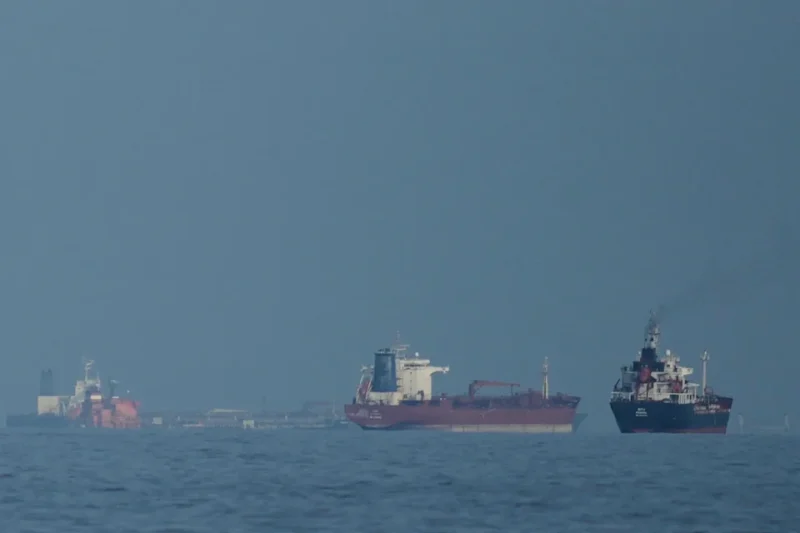
At the center of this strategy lies the Strait of Hormuz, the narrow maritime corridor through which a significant share of the world’s energy supply once flowed. By restricting access and threatening shipping, Tehran has transformed a regional war into a global economic shock.
Oil prices have surged, supply chains have tightened, and inflation pressures are re-emerging across multiple continents.
What makes this moment strategically significant is not Iran’s conventional strength—but its adaptation.
Rather than fighting as a traditional state, Iran is operating with the logic of an insurgency. It relies on dispersed assets, mobile missile launchers, underground facilities, and what military analysts describe as “shoot-and-scoot” tactics.
Even after sustained airstrikes, these methods allow Tehran to maintain a persistent, if limited, capacity to strike—and to threaten.
This asymmetry explains the current imbalance. While Washington and Tel Aviv dominate the battlefield in terms of firepower, Iran is shaping the strategic environment. By targeting economic pressure points rather than military parity, it raises the cost of war for everyone involved.
The objective is not victory in the conventional sense. It is survival.
As long as Iran can endure, it can claim success—particularly if the war continues to strain global markets and political stability in rival states. This logic echoes patterns seen in Iran-aligned groups across the region, from Yemen to Iraq, where persistence has often outweighed firepower.
Yet this strategy is not without risk.
Internally, Iran faces mounting pressure. Economic hardship, leadership uncertainty, and a population still scarred by recent crackdowns create vulnerabilities that prolonged conflict could deepen. Reports of recruitment drives, including among younger populations, suggest strain within its security apparatus.
Externally, the stakes are rising. The United States is weighing whether to escalate further—potentially forcing open Hormuz—or to pursue a negotiated exit. Each path carries consequences. Escalation risks widening the conflict. De-escalation risks validating Iran’s approach.
The war has therefore entered a new phase—less about territory, more about endurance and leverage.
The central question is no longer who can strike harder, but who can sustain pressure longer without breaking.
For now, Iran has found a way to fight a stronger adversary without matching its strength—by turning geography, economics, and time into weapons.
And in doing so, it has shifted the battlefield from the skies of the Middle East to the foundations of the global economy.
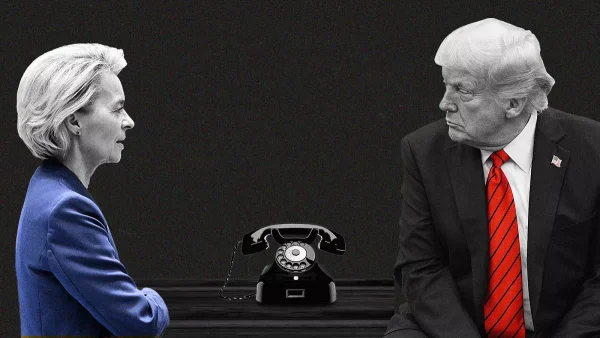
Energy shocks, political fractures—Europe is rethinking everything as wars collide.
The widening war involving Iran is forcing a hard reassessment across Europe—exposing the limits of solidarity, the fragility of energy security, and the growing appeal of neutrality in an era of overlapping conflicts.
At the center of the crisis is energy.
As instability disrupts supply routes and drives oil above $100 a barrel, European economies are once again under strain. Countries that pivoted away from Russian energy after the invasion of Ukraine now face a difficult reality: alternatives are neither stable nor cheap.
The result is a political dilemma that is becoming harder to ignore.
Some governments are quietly reconsidering their stance toward Russia. Calls to ease sanctions on Russian energy—once politically unthinkable—are now resurfacing, exposing fractures within the European Union.
While leaders in Germany and Brussels warn against empowering Moscow, others argue that domestic economic pressures are becoming unsustainable.
This tension reflects a broader shift.
The Iran war has revealed how interconnected global conflicts have become. What happens in the Strait of Hormuz reverberates through European gas markets; decisions in Kyiv affect energy flows from Moscow; and political choices in Washington reshape both.
In this environment, the traditional model of bloc-based alignment is under stress.
A growing number of policymakers are turning toward a more state-centered approach—prioritizing national economic stability over ideological commitments.
The argument is pragmatic: governments are ultimately accountable to their own citizens, particularly when energy prices surge and living costs rise.
This is where neutrality re-enters the conversation.
Not as isolationism, but as strategy.
Neutrality, in this context, allows states to navigate competing pressures without fully committing to one side of a geopolitical divide.
It opens space for what analysts call “niche diplomacy”—focusing on specific areas such as mediation, humanitarian engagement, or economic stabilization, rather than direct confrontation.
For Europe, this could mean leveraging its influence as a regulatory and diplomatic power rather than a military one.
Yet the shift is neither simple nor risk-free.
Moving toward neutrality could weaken collective responses to aggression, strain alliances, and embolden adversaries. At the same time, maintaining current commitments without adjusting to economic realities risks domestic backlash and political instability.
The Iran war has accelerated this debate, but it did not create it.
It has simply made visible a deeper truth: in a multipolar world, alignment is costly, and neutrality—once seen as passive—is increasingly being reconsidered as a form of strategic flexibility.
The question now is not whether Europe can remain fully aligned across multiple conflicts.
It is whether it can afford not to rethink its position.
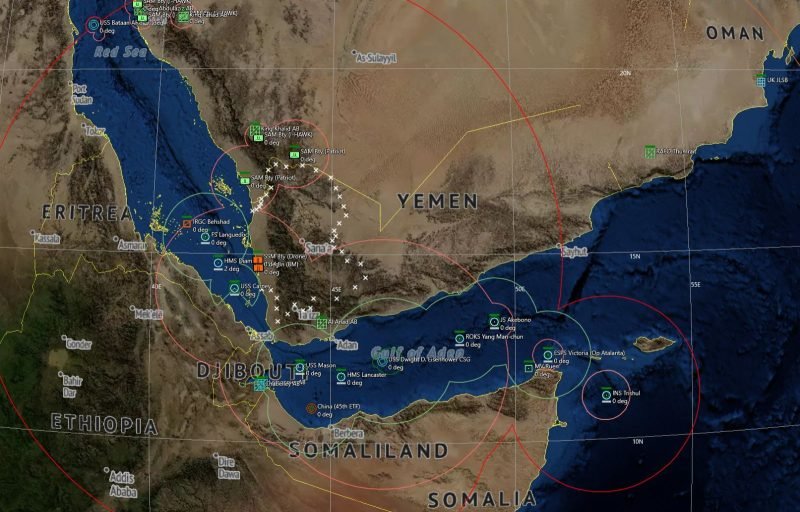
First Hormuz. Now the Red Sea. The world’s trade arteries are turning into battlefields.
The war centered on Iran is no longer confined to the Gulf. It is redrawing the map of global trade—pushing the Red Sea from a secondary theater into a critical frontline of economic and geopolitical competition.
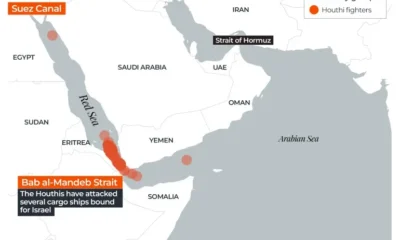
At the heart of this shift lies a simple reality: as the Strait of Hormuz becomes increasingly unstable, the world is turning westward. The Bab el-Mandeb Strait—linking the Red Sea to the Gulf of Aden—is rapidly emerging as an alternative artery for energy and trade.
But what was once a backup route is now becoming a pressure point.
The risk is not theoretical. Iran has already signaled that escalation could extend into the Red Sea, while Yemen’s Houthi movement—armed with drones, mines, and anti-ship missiles—has hinted at entering the conflict. Even limited attacks could sharply raise insurance costs, reroute shipping, and strain already fragile supply chains.
For Africa, the consequences could be immediate and severe.
Countries along the Red Sea basin—Egypt, Djibouti, Eritrea, and Sudan—are already embedded in a dense web of military bases and foreign interests. Djibouti alone hosts forces from the United States, China, France, and Japan, making it one of the most militarized nodes in global trade.
Layer onto this an intensifying rivalry among regional powers.
United Arab Emirates have spent years expanding influence across the Horn of Africa through investment and port infrastructure. Companies like DP World have turned ports into instruments of geopolitical leverage—a strategy now colliding with local resistance and legal disputes.
Meanwhile, new actors—and new risks—are entering the equation.
Speculation about Israeli strategic positioning near Berbera and reported cooperation between Houthi forces and Somalia-based militants such as al-Shabaab add layers of volatility. Even informal coordination between non-state actors could transform piracy, drone warfare, and smuggling into a coordinated threat to maritime security.
Two trajectories now define the near future.
In the first, escalation spreads—linking the Gulf and Red Sea into a single, continuous conflict zone. Under that scenario, global energy flows face severe disruption, and the Red Sea becomes the last viable corridor under immense strain.
In the second, major powers and regional actors prioritize containment—securing shipping lanes even as broader rivalries persist. The Red Sea, in this case, becomes a zone of uneasy cooperation rather than open confrontation.
But either way, stability is no longer the baseline.
What the Iran crisis has exposed is not just the vulnerability of a single chokepoint—but the fragility of the entire global trade architecture. As pressure shifts from Hormuz to Bab al-Mandab, the battlefield is expanding from territory to transit routes.
And in modern geopolitics, control of those routes can matter as much as control of land itself.
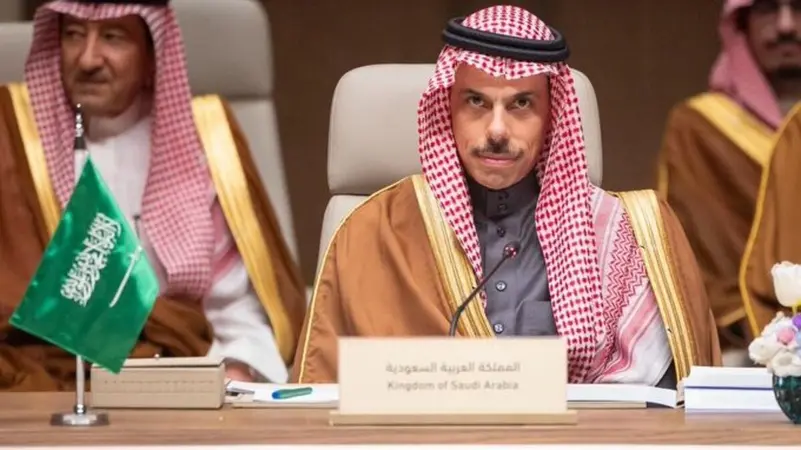
Saudi Arabia isn’t fighting the war — it’s waiting to win it. Here’s how.
In a region defined by escalation, Saudi Arabia is choosing something far more deliberate: restraint.
As the war between the United States, Israel, and Iran enters a dangerous phase, Riyadh has resisted the gravitational pull of direct confrontation. Instead, it is executing a strategy built on patience, selective engagement, and calculated distance—an approach that reflects not weakness, but discipline.
At the center of this strategy lies a fundamental tension. Iran’s revolutionary model poses a direct ideological and geopolitical challenge to the Kingdom’s monarchical system and its alignment with Western security structures.
Yet Saudi Arabia has concluded that outright war would be self-defeating. Any large-scale escalation—especially one targeting energy infrastructure or maritime routes—would strike at the heart of its economic transformation.
That transformation, anchored in Vision 2030, is no longer theoretical. Non-oil sectors now account for a majority share of economic output, while tourism and investment flows have accelerated beyond early expectations. Megaprojects like NEOM and the Red Sea initiative are not just prestige ventures; they are pillars of a post-oil future that depends on stability above all else.
War threatens that stability.
This is why Riyadh’s approach is less about confrontation and more about positioning. Saudi Arabia benefits when its rivals are contained, distracted, or weakened—but it seeks those outcomes indirectly.
A prolonged conflict that drains Iran’s capacity, tests U.S. commitments, and constrains Israeli dominance can shift the regional balance without requiring Saudi Arabia to absorb the costs.
Recent diplomacy reflects this logic. Despite deep rivalry, Saudi officials have maintained communication channels with Tehran, reinforcing the détente brokered by China in 2023.
These contacts are not signs of reconciliation, but tools of risk management—designed to prevent spillover into Saudi territory and keep escalation within limits.
At the same time, Riyadh’s relationship with United States is evolving. While security ties remain essential, the Kingdom is no longer operating as a passive partner. It is diversifying its alliances, expanding engagement with China and Russia, and asserting greater independence in energy and foreign policy decisions.
This recalibration reflects a broader reality: the Middle East is no longer shaped by a single dominant power. In this emerging multipolar landscape, influence accrues not only through force, but through flexibility.
Saudi Arabia is adapting accordingly.
Its stance toward Israel illustrates this balance. Tactical alignment against Iranian threats coexists with strategic caution. Riyadh has avoided full normalization, linking any progress to credible steps toward Palestinian statehood—preserving both domestic legitimacy and regional leverage.
The result is a strategy that operates in the background rather than the battlefield.
It is not without risk. A miscalculation—whether by Iran, Israel, or Washington—could still draw Saudi Arabia into a wider conflict.
Attacks on energy facilities, shipping routes, or critical infrastructure would have immediate and severe consequences. But Riyadh appears to be betting that disciplined restraint, combined with active diplomacy, can contain those risks.
In doing so, Saudi Arabia is redefining what power looks like in the modern Middle East.
Not dominance through force, but influence through timing. Not escalation, but endurance.
As others exhaust themselves in confrontation, Riyadh is positioning for what comes next—quietly, deliberately, and with an eye on a future where survival depends less on military victories and more on strategic patience.
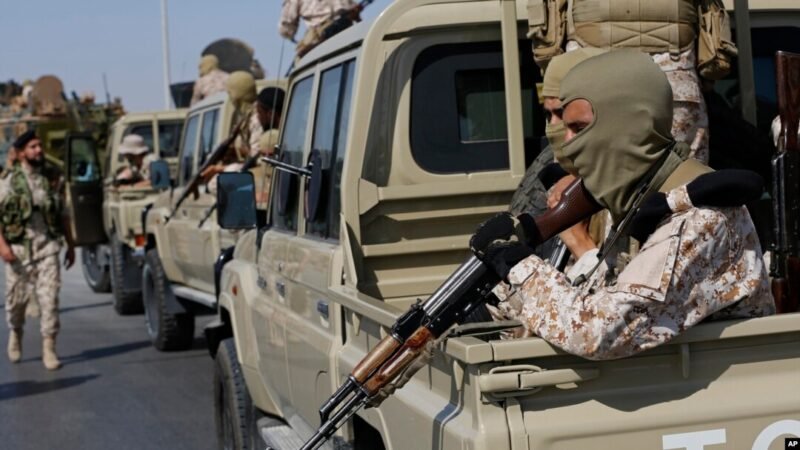
Libya doesn’t lack resources or people — it lacks one thing: unity. Here’s why the system keeps failing.
Fifteen years after the fall of Muammar Gaddafi, Libya remains trapped in a cycle of political paralysis, where elite rivalries and fragmented authority continue to block the emergence of a functioning state.
At the core of the crisis is a breakdown in consensus. Competing factions—often operating through parallel institutions—have prioritized narrow political and economic interests over national cohesion. The result is a system defined less by governance than by veto power, where progress is routinely stalled and compromise remains elusive.
This dysfunction is not merely institutional; it is structural.
Libyan society, deeply rooted in tribal affiliations, has struggled to adapt to externally promoted models of partisan democracy. Following the 2011 revolution, elections produced a proliferation of political parties—many lacking real constituencies or organizational depth. What emerged was not a competitive democratic system, but a fragmented political landscape where labels often masked informal networks of influence.
The consequences have been profound.
Instead of fostering representation, the party system has contributed to institutional duplication, weakened legitimacy, and prolonged instability. More than a hundred parties now exist on paper, yet few command meaningful public trust. In practice, political authority remains dispersed across tribal, regional, and militia-based structures that operate outside formal frameworks.
External prescriptions have further complicated the picture.
Western-backed proposals have consistently emphasized party-based governance as the path forward. But political theory—and Libya’s own experience—suggests that democracy cannot be transplanted wholesale into a social fabric that has not undergone the necessary cultural and institutional transformation. Without that foundation, electoral processes risk reinforcing division rather than resolving it.
The absence of a finalized constitution has deepened the impasse.
Repeated delays have allowed transitional arrangements to persist indefinitely, enabling political actors to maintain access to state resources without accountability. This has fueled public frustration and eroded confidence in the political process itself.
Yet the challenge is not the presence of disagreement—it is its nature.
In stable democracies, competing views generate policy alternatives and institutional balance. In Libya, disagreement has hardened into entrenched antagonism, often exploited by elites to consolidate power. The shift from constructive pluralism to zero-sum conflict has prevented the emergence of a shared national project.
Some analysts now argue that Libya may require a more consensual model of governance—one that prioritizes inclusion and gradual institution-building over ideological competition. Such an approach would acknowledge the country’s social realities while creating space for a transition from fragmented authority to a unified state.
The path forward remains uncertain.
What is clear, however, is that Libya’s crisis is not solely the product of external intervention or internal division. It is the result of a political system that has yet to align its structures with its society—and of elites who have struggled, or declined, to place national interest above factional gain.
Until that balance shifts, Libya’s state-building project will remain incomplete, suspended between the promise of unity and the persistence of division.

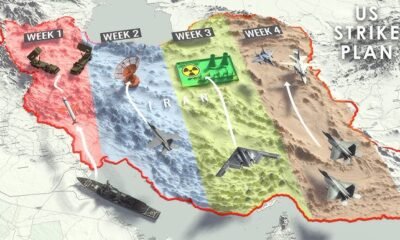
Secret 8-Stage War Plan Could Ignite Full-Scale Invasion

The WWII Strategy That Still Haunts Modern Wars

Pentagon Prepares Ground Raids in Iran


-

 Terrorism2 months ago
America Pulls Back From Somalia but Doubles Down Next Door
-

 Top stories2 months ago
Rubio Signals Preemptive Military Option as U.S. Tightens Pressure on Iran
-

 Analysis2 months ago
How Chinese Speculators Set the Stage for the Gold and Silver Crash
-

 Russia-Ukraine War1 month ago
Russian General Boasted of Torture and Killing of Ukrainian Prisoners
-
 US-Israel war on Iran1 month ago
UK Refuses Iran Strike Access, Trump Fires Back
-
 Russia-Ukraine War1 month ago
Europe’s Spies Challenge Trump’s Ukraine Peace Optimism
-
 Top stories4 weeks ago
War Expands Across Region as Iranian Militias Join Fight
-
 US-Israel war on Iran4 weeks ago
Iran Pledges ‘Never, Ever’ to Hold Bomb-Grade Material