
Top stories
Denmark Pushes Back After Trump Names U.S. Envoy to Greenland

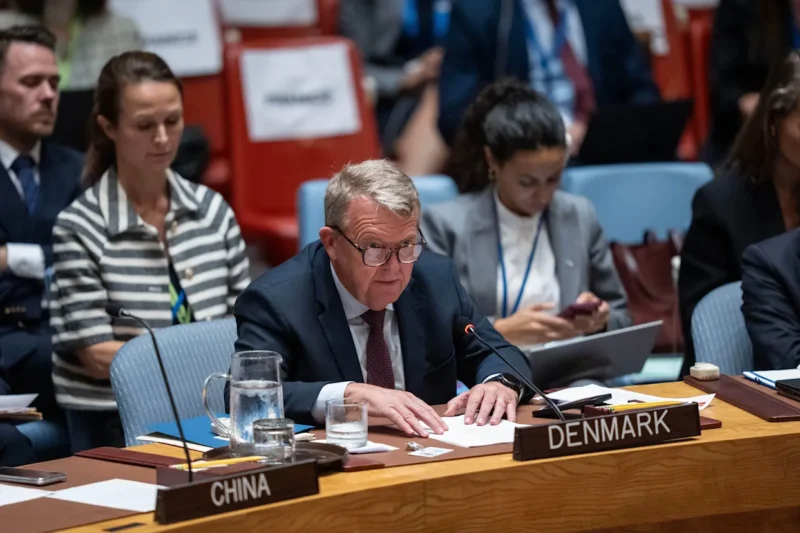
An envoy appointment revives an old fault line: Greenland’s future—and how far U.S. power can go.
Denmark has issued a pointed warning to Washington after President Donald Trump appointed Louisiana Governor Jeff Landry as U.S. special envoy to Greenland, reviving a sensitive sovereignty dispute that has simmered for months.
In a statement released Monday, Danish Foreign Minister Lars Løkke Rasmussen said Copenhagen “insists that everyone—including the United States—must show respect for the territorial integrity of the Kingdom of Denmark.” The remark followed Trump’s announcement, which framed Greenland as central to U.S. national security and global stability.
Trump has repeatedly argued for U.S. jurisdiction over Greenland during his transition and early second term, refusing to rule out military force to secure control of the mineral-rich, strategically located Arctic territory.
In March, Vice President JD Vance visited a remote U.S. military base on the island and accused Denmark of underinvesting in Greenland’s defense—comments that sharpened tensions between the allies.
While the controversy had largely faded from headlines, it resurfaced sharply on Sunday when Trump named Landry as envoy, saying he would “strongly advance our country’s interests” for the security of allies and the world. Landry went further, writing on X that it was an honor to serve “to make Greenland a part of the U.S.”—language that immediately raised alarms in Copenhagen.
Rasmussen acknowledged that the appointment “confirms the continued American interest in Greenland,” but stressed that interest does not override sovereignty. Denmark, a long-standing member of NATO, views the issue as one of principle as much as policy.
The diplomatic friction follows earlier unease. In August, Danish officials summoned the U.S. ambassador after reports alleged that individuals linked to Trump conducted covert influence operations in Greenland. Earlier this month, the Danish Defense Intelligence Service warned that the United States is increasingly using economic leverage—and the threat of force—to “assert its will” against both rivals and partners.
For Denmark, the message is clear: strategic cooperation with Washington does not imply consent to territorial pressure. For the United States, Greenland’s location in a warming Arctic, rich in minerals and critical sea routes, remains an irresistible strategic prize.
As geopolitical competition intensifies in the High North, the envoy appointment has turned a dormant dispute into a live test of alliance boundaries—forcing both sides to confront how far interest can go before it collides with sovereignty.










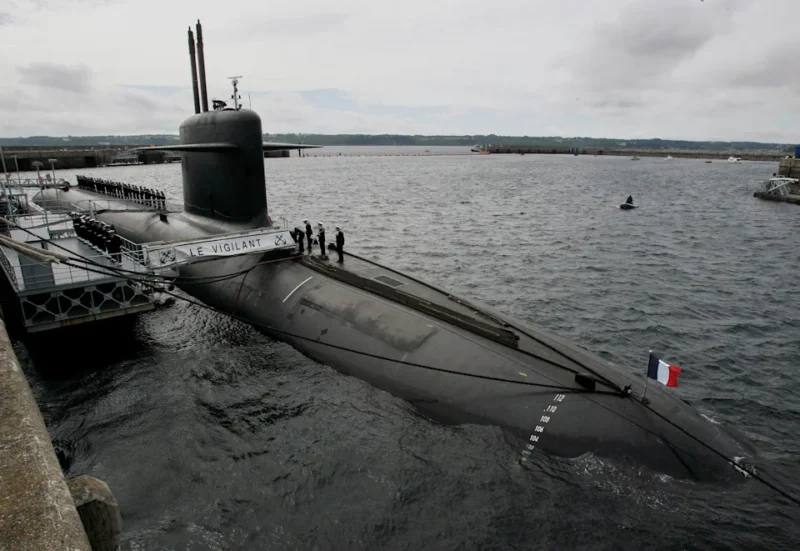
French President to Outline Deterrence Strategy at Submarine Base Amid Doubts Over American Nuclear Guarantees.
President Emmanuel Macron will travel Monday to France’s top-secret Île Longue submarine base to deliver a major speech on the country’s nuclear doctrine — a signal that Europe’s security landscape may be entering a new and uncertain phase.
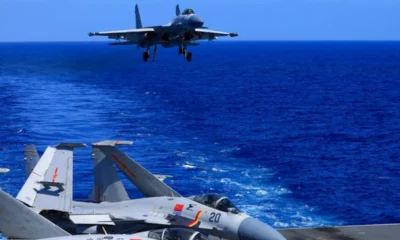
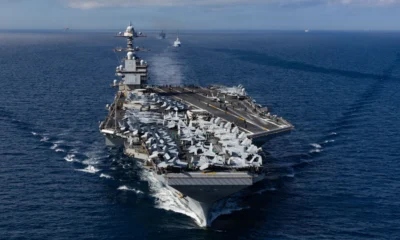
The base, home to France’s four nuclear-armed submarines, provides a stark backdrop. Each vessel carries up to 16 M51 intercontinental ballistic missiles equipped with multiple warheads. As France’s commander in chief, Macron alone holds the authority to order their use.
The timing is significant. Russia’s war in Ukraine grinds on, Moscow has lowered its threshold for nuclear retaliation, and China and North Korea are expanding their arsenals. At the same time, questions have surfaced in parts of Europe about whether the United States would risk its own cities to defend European capitals under President Donald Trump.
For decades, U.S. nuclear weapons stationed in Europe formed the backbone of NATO’s deterrence strategy. But some European officials now speak more openly about contingency planning.
Rasmus Jarlov, chair of Denmark’s parliamentary defense committee, voiced the concern bluntly. “If things got really serious, I very much doubt that Trump would risk American cities to protect European cities,” he said, adding that Europe may need to look to France in the short term.
France is the European Union’s only nuclear-armed member. Macron previously stated in 2020 that France maintains fewer than 300 warheads — a stockpile he said was sufficient to inflict “absolutely unacceptable damage” on any state threatening France’s “vital interests,” which he noted have a “European dimension.”
Defense analysts will be listening carefully for signals of change: whether Macron expands the definition of France’s protective umbrella, increases cooperation with European partners, or hints at adjustments to arsenal size or deployment.
Germany has already opened discussions. Chancellor Friedrich Merz has acknowledged “initial talks” about nuclear deterrence, even publicly floating the idea that German aircraft could one day carry French nuclear weapons.
The language of deterrence is intentionally ambiguous, designed to keep adversaries guessing. But even subtle shifts in tone matter. With just 14 months left in his presidency, Macron’s remarks could shape Europe’s security doctrine for years to come.
As uncertainty clouds transatlantic guarantees, one question hangs over the Atlantic: if America’s shield weakens, will France’s nuclear force step into a broader European role?
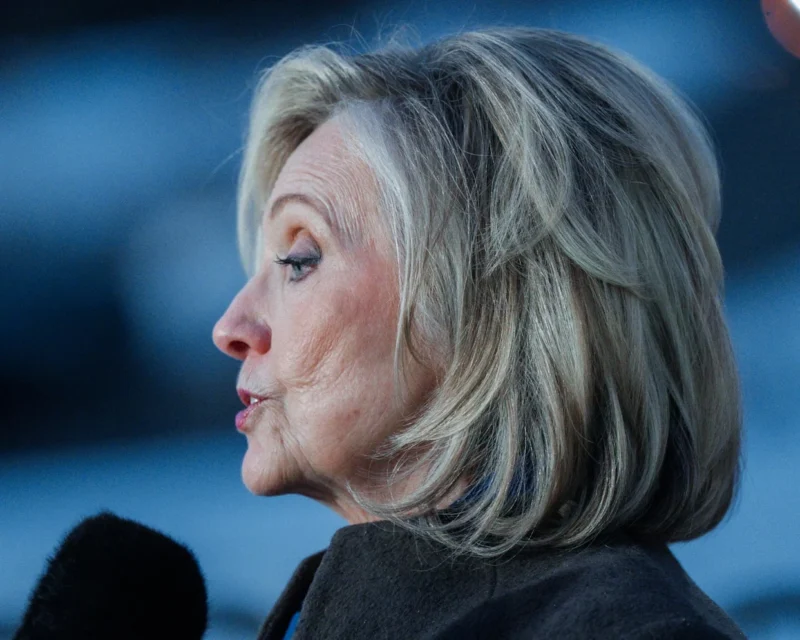
From Epstein to UFOs — what really happened inside Hillary Clinton’s closed-door testimony?
Hillary Clinton spent hours behind closed doors before a House oversight committee investigating her alleged links to Jeffrey Epstein — and emerged accusing Republicans of staging a political distraction aimed at shielding former President Donald Trump.
The former secretary of state flatly denied knowing Epstein or visiting any of his properties. “I did not know Jeffrey Epstein,” she told reporters afterward. “I never went to his island. I never went to his homes. I never went to his offices.”
Clinton argued the Republican-led inquiry was less about uncovering facts and more about diverting attention. “What is being held back? Who is being protected? And why the cover-up?” she asked.
The session, held privately at the committee’s request, grew contentious at several points. Clinton said members repeated the same questions “over and over again,” before the discussion took what she described as an unusual turn. “I started being asked about UFOs,” she said, along with questions tied to the debunked “Pizzagate” conspiracy theory.
The hearing was briefly suspended after Representative Lauren Boebert leaked a photo from the closed session, which was later posted on social media by a conservative influencer. Clinton’s legal team objected, noting that photography is prohibited during private depositions. “We had agreed upon rules,” Clinton said. “One of the members violated that rule.”
Democrats on the committee countered that the investigation should focus on Trump and Commerce Secretary Howard Lutnick, who have both acknowledged past contact with Epstein. Representative Robert Garcia said Trump should testify under oath regarding his ties. Committee Chair James Comer dismissed the idea of subpoenaing the former president but left open the possibility regarding others.
Epstein, a convicted sex offender, died in jail in 2019 while awaiting trial on federal trafficking charges. Recently released Justice Department documents have renewed scrutiny of his network of prominent associates.
Clinton also defended her husband, former President Bill Clinton, who is scheduled to testify. She said she is “100% confident” he was unaware of Epstein’s crimes during their past social interactions and that his connection ended years before Epstein’s criminal conduct became public.
Transcripts and video from both testimonies are expected to be released, setting the stage for further political fallout in a case that continues to entangle high-profile figures across party lines.
A village. A water run. Gunfire. Now a family is refusing burial until answers come.
A 24-year-old woman was shot dead in a rural village outside Balcad, triggering allegations of sexual assault by Somali government forces and renewed calls for an independent investigation.
The victim, identified by relatives as Naley Buurow Nuune, was killed on February 7 in Garas Diinle village in the Middle Shabelle region. Family members told local media that she had gone to collect water from a neighbor when she encountered soldiers operating in the area.
The forces accused include local units stationed in Balcad under District Commissioner Qasim Ali Nur, known as “Qasim Furdug,” as well as Turkish-trained Gorgor commandos reportedly deployed nearby. The Gorgor units are led by Sahid Jama Farah, widely known as “Sahid Jareere.”
Relatives allege that soldiers attempted to sexually assault Naley. A young boy who had accompanied her reportedly fled after gunfire broke out. The family says she was first shot in the arm, then assaulted, and later fatally shot in the back. They claim a bullet entered through her back and exited through her chest.
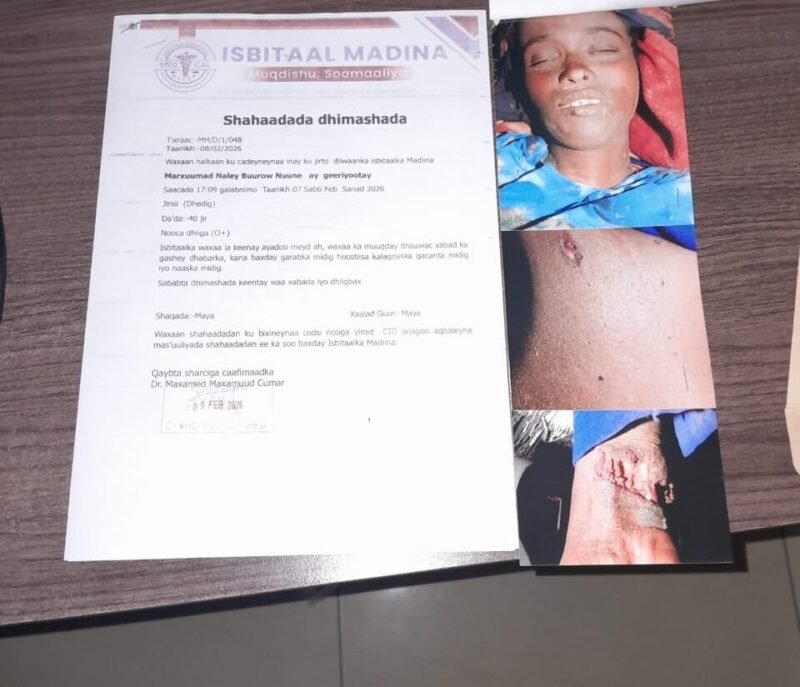
Her body was transported to Madina Hospital in Mogadishu. A medical report dated February 8 confirms she was brought in deceased, citing gunshot wounds as the cause of death and noting fatal bleeding. The report does not reference findings related to sexual violence.
Naley’s body remains in the hospital mortuary. Her family has refused burial, demanding accountability and a transparent investigation.
A clan elder from Middle Shabelle, Hussein Xaadoole, said one suspect was initially detained after a mobile phone allegedly belonging to him was found at the scene. He claimed the suspect was later released following intervention by a senior commander. These allegations have not been independently verified.
The Federal Government of Somalia, the Gorgor command, and the Balcad district administration have not publicly responded to the accusations.
The case has heightened tensions in Middle Shabelle, where security operations against Al-Shabaab have intensified in recent months. For Naley’s family, however, the focus remains clear: they want answers — and justice.
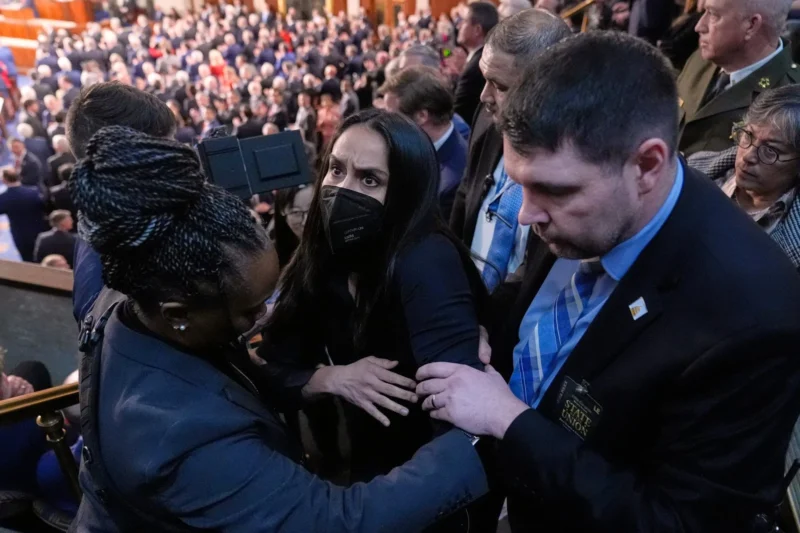
he says she stood silently. Police say she broke the rules. So what really happened in the gallery?
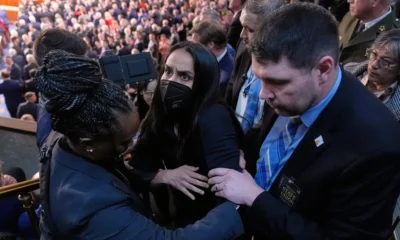
A guest of Representative Ilhan Omar was arrested inside the U.S. Capitol after standing during President Donald Trump’s State of the Union address, setting off a dispute over protest, procedure and free expression in Congress.
Aliya Rahman, a Minneapolis resident invited by the Minnesota Democrat, was taken into custody by Capitol Police after she stood during the president’s speech. Authorities said she violated event rules that prohibit demonstrations in congressional buildings.
“The guest was told to sit down, but refused to obey our lawful orders,” Capitol Police said in a statement. She was charged with unlawful conduct and disruption of Congress.
Rahman, however, said she did not shout, gesture or display any sign. Speaking to Democracy Now, she described standing silently in response to comments she considered offensive. “There are only two things you can do at the State of the Union,” she said. “Sit down and stand up.”
Police maintained that standing in defiance of instructions constitutes prohibited conduct, regardless of whether the protest is silent. “It’s not allowed. She was told to sit. She refused. It’s simple,” a spokesperson said.
Rahman’s presence at the event carried added symbolism. In January, she was forcibly removed from her car by federal immigration officers in Minneapolis during enforcement operations. She later said she suffered shoulder injuries in the encounter. According to Omar’s office, Rahman warned officers at the Capitol about those injuries before being escorted out. She was later treated at George Washington University Hospital before being booked.
Omar called the arrest “heavy-handed” and demanded a full explanation. “The heavy-handed response to a peaceful guest sends a chilling message about the state of our democracy,” she said.
During the speech, President Trump defended his immigration crackdown and criticized sanctuary city policies. Omar, from the House floor, shouted: “You have killed Americans.” Lawmakers themselves were not subject to arrest under constitutional protections afforded to members of Congress.
Rahman said she would tell elected officials that their responsibility is to improve lives, not “construct enemies.” By Wednesday, Omar said her guest was “back and safe.”
The incident has added another flashpoint to an already charged political climate — one where even standing up can spark national controversy.
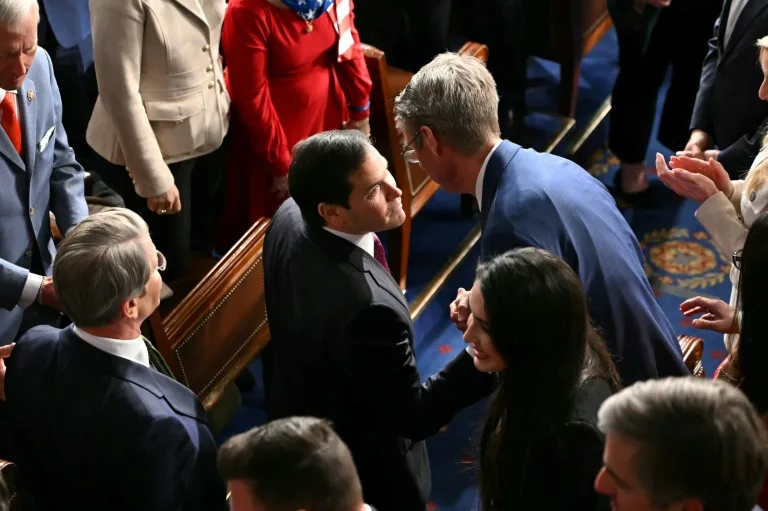
Cuba’s crisis deepens. Caribbean leaders warn of instability. Rubio arrives with pressure — and questions follow.
US Secretary of State Marco Rubio met Caribbean leaders on Wednesday amid rising regional anxiety over Washington’s renewed pressure on Cuba.
Rubio, a longtime critic of Havana’s communist government, joined the CARICOM summit in Saint Kitts and Nevis as the Trump administration escalates its Western Hemisphere strategy. His visit follows US actions in Venezuela that have disrupted oil shipments to Cuba, worsening fuel shortages and rolling blackouts on the island.
Jamaican Prime Minister Andrew Holness warned that further deterioration in Cuba could destabilize the wider Caribbean and fuel migration — a key concern for President Donald Trump.
“Humanitarian suffering serves no one,” Holness said, urging dialogue between Washington and Havana to promote “de-escalation, reform and stability.”
Summit host Terrance Drew, prime minister of Saint Kitts and Nevis, echoed the concern, saying a destabilized Cuba would affect the entire region. He cited worsening food shortages and power outages described by contacts on the island.
The United States has maintained sanctions on Cuba for decades. Under Trump, Washington has signaled readiness to intensify measures, including potential penalties for countries trading oil with Havana. However, some tougher proposals — such as restricting remittances — have not yet been enacted.
Rubio’s agenda also includes sustaining cooperation on Haiti and Venezuela. Trinidad and Tobago’s Prime Minister Kamla Persad-Bissessar openly backed US intervention in Venezuela, crediting Washington’s actions with curbing narcotics trafficking and reducing violence in her country.
But divisions were visible. While some leaders called for humanitarian relief for Cuba, others criticized regional silence over authoritarian governance in Caracas and Havana.
For Caribbean states, the balancing act is delicate: maintaining close ties with Washington while avoiding instability in neighboring Cuba. For Rubio, the summit is a test of how far US pressure can go without fracturing regional support.
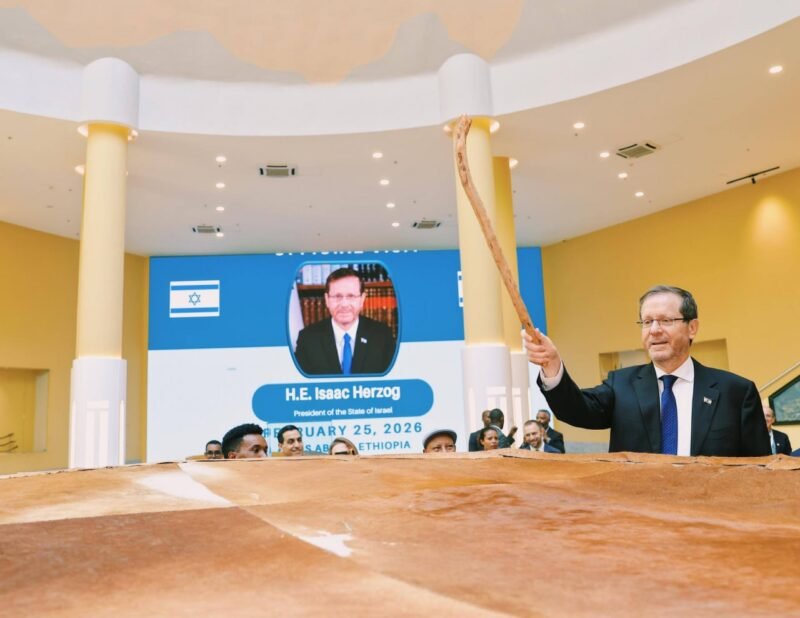
From Bole Airport to the Adwa Victory Memorial, Herzog’s first stop in Addis sends a symbolic message.
Israeli President Isaac Herzog arrived in Addis Ababa early Wednesday for an official visit aimed at strengthening diplomatic and strategic ties between Israel and Ethiopia.
Herzog was received at Bole International Airport by Ethiopia’s Foreign Minister Gedion Timothewos and State Minister Ambassador Berhanu Tsegaye, marking the start of a visit focused on expanding cooperation between the two countries.
Shortly after his arrival, Herzog visited the Adwa Victory Memorial Park, a symbolic gesture highlighting Ethiopia’s historic resistance against colonial rule. Guided through the museum complex, the Israeli president paid tribute to the 1896 Battle of Adwa, where Ethiopian forces defeated an invading Italian army — a defining moment in African anti-colonial history.
The visit to Adwa was widely seen as a diplomatic signal of respect for Ethiopia’s sovereignty and national pride. The memorial stands as a powerful symbol of independence, unity and resilience, themes that resonate strongly in Ethiopian political discourse.
During his stay, Herzog is expected to hold high-level talks with senior Ethiopian officials. Discussions are anticipated to focus on strengthening bilateral cooperation across security, technology, agriculture and economic development.
Israel and Ethiopia share longstanding ties rooted in historical, cultural and security connections. In recent years, both governments have sought to deepen engagement amid shifting regional dynamics in the Horn of Africa and the Middle East.
Herzog’s visit comes at a time of heightened geopolitical realignment across the region. Officials from both sides have framed the trip as an opportunity to reinforce mutual interests and expand strategic collaboration.
For Addis Ababa and Jerusalem alike, the optics of the visit — beginning at Adwa — underscore a message of partnership grounded in respect for sovereignty and shared strategic priorities.
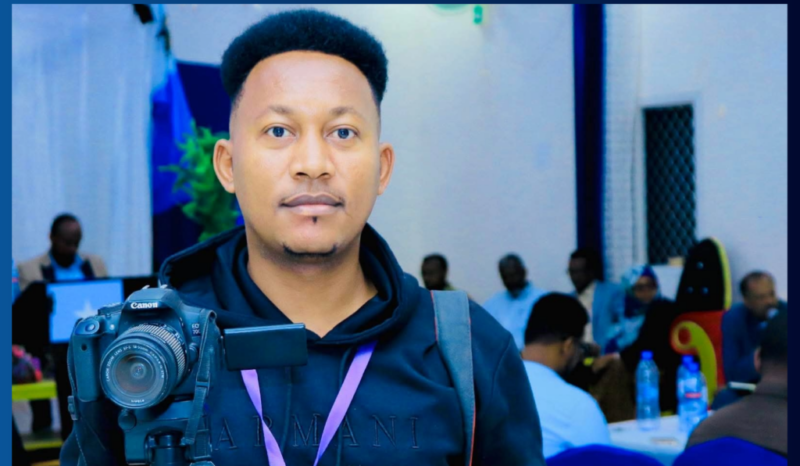
Detained. Cameras seized. Videos erased. One journalist forced to apologize on camera. Press freedom in Lasanod under pressure.
Police in Lasanod have detained two journalists, confiscated equipment and forced the deletion of published content, prompting sharp condemnation from the Somali Journalists Syndicate (SJS).
On February 21, officers detained Raxanreeb Media reporter Abdirisaq Abdirahman, known as Kobciye, after his outlet aired a video in which construction laborers complained about low wages and alleged that foreign workers were undercutting local jobs.
According to Kobciye and Raxanreeb founder Farah Atto, police trailed the journalist, raided his office in central Lasanod and seized three cameras and two laptops. Officers later went to his home and allegedly harassed family members.
After spending three days in hiding, Kobciye was taken to a police station where, he said, he was forced to delete the video from Raxanreeb’s Facebook platform and record an apology message. The video was later posted on a page linked to police authorities.
Kobciye told SJS he was coerced into making the recording and informed he would not be released unless he complied.
On the same day, Halbeeg Media journalist Mowliid Ismaaciil was briefly detained after filming protests against an alleged forced eviction tied to the city’s mayor. He was released after two hours, and his footage was deleted.
SJS Secretary General Abdalle Ahmed Mumin described the incidents as “blatant violations of press freedom,” accusing authorities of abusing their power to silence reporting on matters of public interest.
The media rights group called on local authorities to return confiscated equipment, halt interference with journalists’ work and hold responsible officials accountable.
The detentions come amid heightened political tensions in the region, raising renewed concerns over the safety and independence of journalists operating in Lasanod.
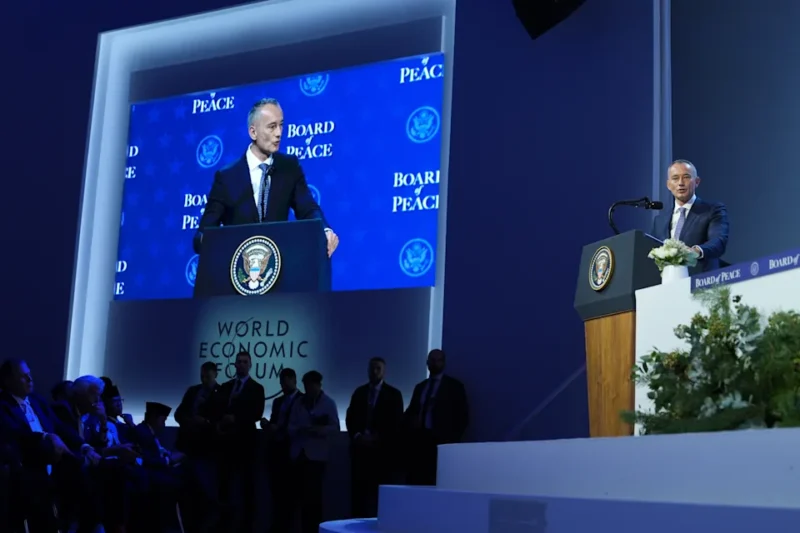
Washington launched it. Europe is split over it. Now Brussels must decide how far to go with Trump’s Gaza board.
European Union foreign ministers are set to meet Monday in Brussels with Nikolay Mladenov, director of the U.S.-backed Board of Peace, as the bloc grapples with how to respond to President Donald Trump’s controversial plan for Gaza’s reconstruction and governance.
Mladenov, a former U.N. diplomat tapped by Trump to oversee the initiative, will sit down with EU foreign policy chief Kaja Kallas and ministers from the 27-member bloc. The discussions come as EU capitals remain divided over whether to formally align with the board, which aims to shape Gaza’s postwar future.
The EU maintains deep ties to both Israel and the Palestinians and plays a key oversight role at the Rafah border crossing. It is also the largest donor to the Palestinian Authority. That position has placed Brussels at the center of debate over reconstruction, humanitarian oversight and long-term governance in Gaza.
Hungary and Bulgaria have joined the board as full members, while candidate countries including Turkey, Kosovo and Albania have also signed on. Twelve other EU nations attended last week’s inaugural Washington meeting as observers. The EU flag was displayed at the event.
But resistance is growing. French President Emmanuel Macron and European Commission President Ursula von der Leyen declined formal participation. Von der Leyen did, however, send Mediterranean Commissioner Dubravka Šuica as an observer — a move that drew criticism from France.
French Foreign Minister Jean-Noël Barrot said the Commission’s attendance broke institutional norms, arguing that such engagement should have been cleared by the European Council.
Commission officials insist accepting invitations falls within their remit and say the EU seeks to shape Gaza’s reconstruction while maintaining support for the United Nations’ central role in conflict resolution.
Trump’s ambitions for the Board of Peace reportedly stretch beyond rebuilding Gaza to reshaping the diplomatic framework traditionally led by the U.N. Security Council. Yet progress remains limited on even narrower ceasefire goals, underscoring the complexity of the territory’s political and security landscape.
For Brussels, the immediate challenge is balancing influence with unity — and deciding whether engagement means endorsement.

US Authorizes Embassy Departures in Israel

Macron Signals Nuclear Shift as Europe Questions U.S. Shield

Iran Pledges ‘Never, Ever’ to Hold Bomb-Grade Material


-
 Minnesota2 months ago
Fraud Allegations Close In on Somalia’s Top Diplomats
-

 Somaliland1 month ago
F-35s Over Hargeisa: The Night Somaliland’s Sovereignty Went Supersonic
-

 Somalia1 month ago
Aid Destroyed, Trust Shattered: Somalia Loses U.S. Support for Good
-
 Somaliland2 months ago
UAE, Bahrain, Morocco and Kazakhstan Hold Recognition Talks With Netanyahu
-
 Terrorism1 month ago
Foreign ISIS Pipeline Exposed: Puntland Captures Dozens of Non-Somali Fighters
-

 Somaliland1 month ago
Somaliland at Davos: The Moment Somaliland Entered the World’s Inner Circle
-
 Comment2 months ago
Qatar Push Mediation With Al-Shabaab as Mogadishu Cornered
-
 Terrorism4 weeks ago
America Pulls Back From Somalia but Doubles Down Next Door