
Top stories
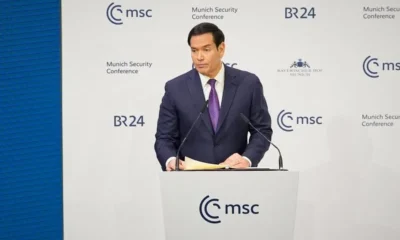
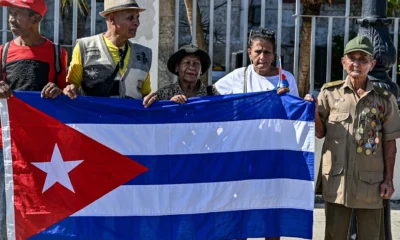
Rubio Faces Cuba Backlash at Caribbean Summit

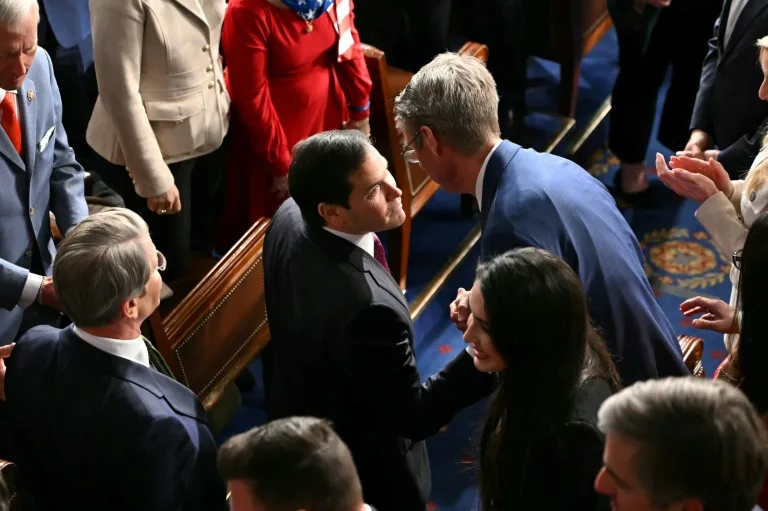
Cuba’s crisis deepens. Caribbean leaders warn of instability. Rubio arrives with pressure — and questions follow.
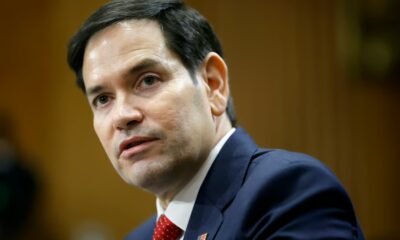
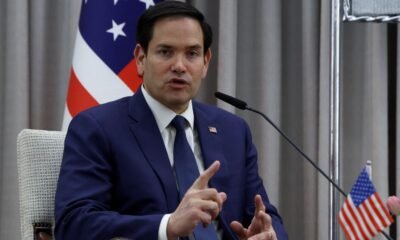
US Secretary of State Marco Rubio met Caribbean leaders on Wednesday amid rising regional anxiety over Washington’s renewed pressure on Cuba.
Rubio, a longtime critic of Havana’s communist government, joined the CARICOM summit in Saint Kitts and Nevis as the Trump administration escalates its Western Hemisphere strategy. His visit follows US actions in Venezuela that have disrupted oil shipments to Cuba, worsening fuel shortages and rolling blackouts on the island.
Jamaican Prime Minister Andrew Holness warned that further deterioration in Cuba could destabilize the wider Caribbean and fuel migration — a key concern for President Donald Trump.
“Humanitarian suffering serves no one,” Holness said, urging dialogue between Washington and Havana to promote “de-escalation, reform and stability.”
Summit host Terrance Drew, prime minister of Saint Kitts and Nevis, echoed the concern, saying a destabilized Cuba would affect the entire region. He cited worsening food shortages and power outages described by contacts on the island.
The United States has maintained sanctions on Cuba for decades. Under Trump, Washington has signaled readiness to intensify measures, including potential penalties for countries trading oil with Havana. However, some tougher proposals — such as restricting remittances — have not yet been enacted.
Rubio’s agenda also includes sustaining cooperation on Haiti and Venezuela. Trinidad and Tobago’s Prime Minister Kamla Persad-Bissessar openly backed US intervention in Venezuela, crediting Washington’s actions with curbing narcotics trafficking and reducing violence in her country.
But divisions were visible. While some leaders called for humanitarian relief for Cuba, others criticized regional silence over authoritarian governance in Caracas and Havana.
For Caribbean states, the balancing act is delicate: maintaining close ties with Washington while avoiding instability in neighboring Cuba. For Rubio, the summit is a test of how far US pressure can go without fracturing regional support.




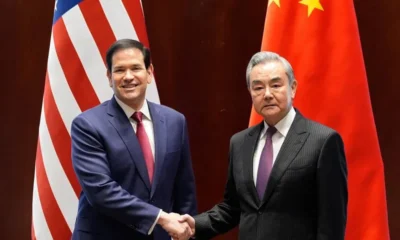









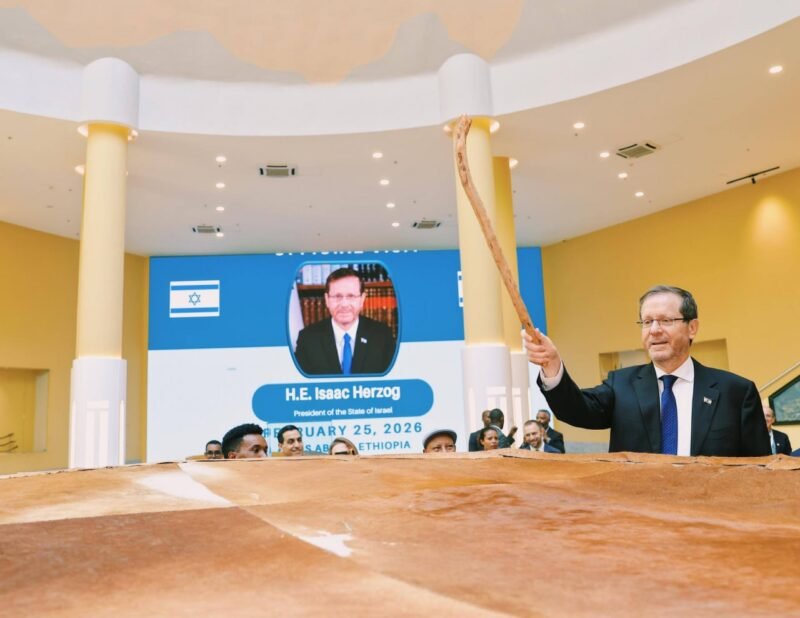
From Bole Airport to the Adwa Victory Memorial, Herzog’s first stop in Addis sends a symbolic message.
Israeli President Isaac Herzog arrived in Addis Ababa early Wednesday for an official visit aimed at strengthening diplomatic and strategic ties between Israel and Ethiopia.
Herzog was received at Bole International Airport by Ethiopia’s Foreign Minister Gedion Timothewos and State Minister Ambassador Berhanu Tsegaye, marking the start of a visit focused on expanding cooperation between the two countries.
Shortly after his arrival, Herzog visited the Adwa Victory Memorial Park, a symbolic gesture highlighting Ethiopia’s historic resistance against colonial rule. Guided through the museum complex, the Israeli president paid tribute to the 1896 Battle of Adwa, where Ethiopian forces defeated an invading Italian army — a defining moment in African anti-colonial history.
The visit to Adwa was widely seen as a diplomatic signal of respect for Ethiopia’s sovereignty and national pride. The memorial stands as a powerful symbol of independence, unity and resilience, themes that resonate strongly in Ethiopian political discourse.
During his stay, Herzog is expected to hold high-level talks with senior Ethiopian officials. Discussions are anticipated to focus on strengthening bilateral cooperation across security, technology, agriculture and economic development.
Israel and Ethiopia share longstanding ties rooted in historical, cultural and security connections. In recent years, both governments have sought to deepen engagement amid shifting regional dynamics in the Horn of Africa and the Middle East.
Herzog’s visit comes at a time of heightened geopolitical realignment across the region. Officials from both sides have framed the trip as an opportunity to reinforce mutual interests and expand strategic collaboration.
For Addis Ababa and Jerusalem alike, the optics of the visit — beginning at Adwa — underscore a message of partnership grounded in respect for sovereignty and shared strategic priorities.
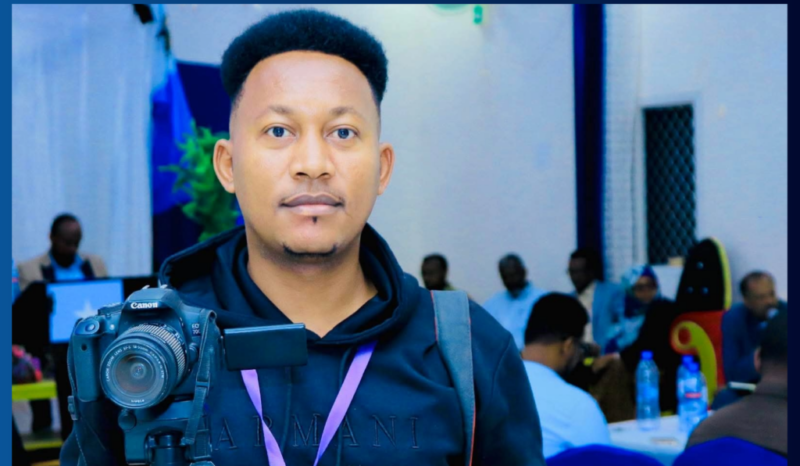
Detained. Cameras seized. Videos erased. One journalist forced to apologize on camera. Press freedom in Lasanod under pressure.
Police in Lasanod have detained two journalists, confiscated equipment and forced the deletion of published content, prompting sharp condemnation from the Somali Journalists Syndicate (SJS).
On February 21, officers detained Raxanreeb Media reporter Abdirisaq Abdirahman, known as Kobciye, after his outlet aired a video in which construction laborers complained about low wages and alleged that foreign workers were undercutting local jobs.
According to Kobciye and Raxanreeb founder Farah Atto, police trailed the journalist, raided his office in central Lasanod and seized three cameras and two laptops. Officers later went to his home and allegedly harassed family members.
After spending three days in hiding, Kobciye was taken to a police station where, he said, he was forced to delete the video from Raxanreeb’s Facebook platform and record an apology message. The video was later posted on a page linked to police authorities.
Kobciye told SJS he was coerced into making the recording and informed he would not be released unless he complied.
On the same day, Halbeeg Media journalist Mowliid Ismaaciil was briefly detained after filming protests against an alleged forced eviction tied to the city’s mayor. He was released after two hours, and his footage was deleted.
SJS Secretary General Abdalle Ahmed Mumin described the incidents as “blatant violations of press freedom,” accusing authorities of abusing their power to silence reporting on matters of public interest.
The media rights group called on local authorities to return confiscated equipment, halt interference with journalists’ work and hold responsible officials accountable.
The detentions come amid heightened political tensions in the region, raising renewed concerns over the safety and independence of journalists operating in Lasanod.
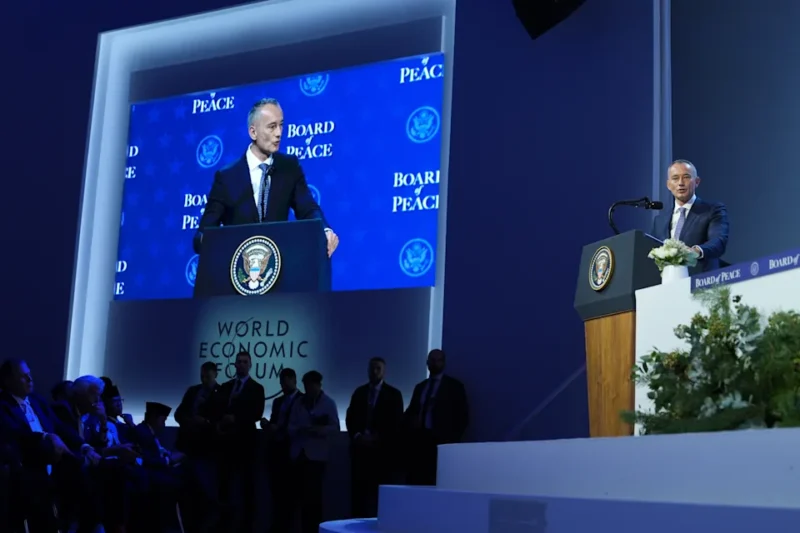
Washington launched it. Europe is split over it. Now Brussels must decide how far to go with Trump’s Gaza board.
European Union foreign ministers are set to meet Monday in Brussels with Nikolay Mladenov, director of the U.S.-backed Board of Peace, as the bloc grapples with how to respond to President Donald Trump’s controversial plan for Gaza’s reconstruction and governance.
Mladenov, a former U.N. diplomat tapped by Trump to oversee the initiative, will sit down with EU foreign policy chief Kaja Kallas and ministers from the 27-member bloc. The discussions come as EU capitals remain divided over whether to formally align with the board, which aims to shape Gaza’s postwar future.
The EU maintains deep ties to both Israel and the Palestinians and plays a key oversight role at the Rafah border crossing. It is also the largest donor to the Palestinian Authority. That position has placed Brussels at the center of debate over reconstruction, humanitarian oversight and long-term governance in Gaza.
Hungary and Bulgaria have joined the board as full members, while candidate countries including Turkey, Kosovo and Albania have also signed on. Twelve other EU nations attended last week’s inaugural Washington meeting as observers. The EU flag was displayed at the event.
But resistance is growing. French President Emmanuel Macron and European Commission President Ursula von der Leyen declined formal participation. Von der Leyen did, however, send Mediterranean Commissioner Dubravka Šuica as an observer — a move that drew criticism from France.
French Foreign Minister Jean-Noël Barrot said the Commission’s attendance broke institutional norms, arguing that such engagement should have been cleared by the European Council.
Commission officials insist accepting invitations falls within their remit and say the EU seeks to shape Gaza’s reconstruction while maintaining support for the United Nations’ central role in conflict resolution.
Trump’s ambitions for the Board of Peace reportedly stretch beyond rebuilding Gaza to reshaping the diplomatic framework traditionally led by the U.N. Security Council. Yet progress remains limited on even narrower ceasefire goals, underscoring the complexity of the territory’s political and security landscape.
For Brussels, the immediate challenge is balancing influence with unity — and deciding whether engagement means endorsement.
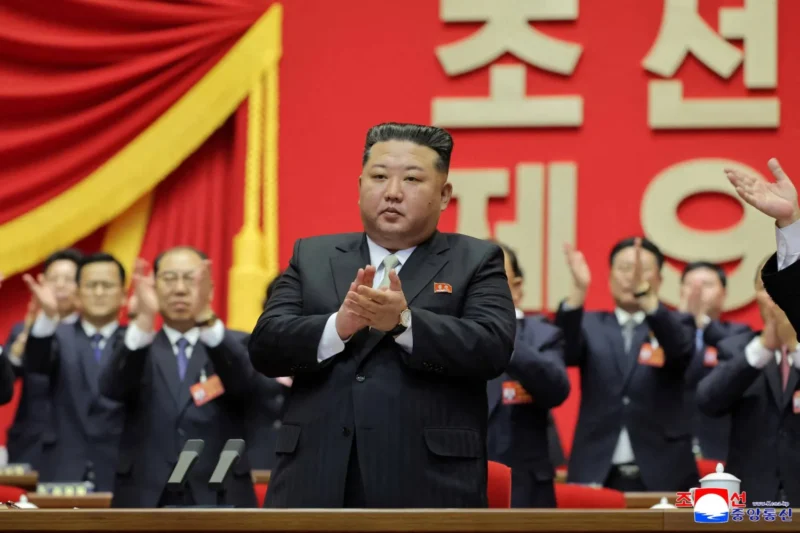
Thousands gather in Pyongyang. Loyalty pledges made. Nuclear power praised. What signal is Kim sending now?
North Korea’s ruling Workers’ Party has re-elected Kim Jong Un as general secretary, using a rare national congress to spotlight what it described as major advances in the country’s nuclear arsenal.
State media reported Monday that senior military leaders pledged loyalty to Kim during the once-in-five-years gathering in Pyongyang, where thousands of party elites convened to set the country’s political and military direction.
The Korean Central News Agency said the congress praised Kim for “radically” strengthening North Korea’s nuclear forces and transforming the Korean People’s Army into a military prepared for “any form of war.” The message was unmistakable: national defense — anchored in nuclear capability — remains central to Kim’s rule.
The congress, only the ninth in the party’s history, offers rare insight into North Korea’s power structure. Analysts closely monitor seating arrangements and imagery to assess shifting influence within the regime. Attention is also focused on Kim’s teenage daughter, Ju Ae, who has increasingly appeared in state events and is viewed by South Korean intelligence as a potential successor.
Under Kim, North Korea’s nuclear program has evolved from intermittent testing to a more sophisticated weapons enterprise. Though it has not conducted a nuclear test in more than eight years, Pyongyang has worked to miniaturize warheads for long-range missiles. Days before the congress, Kim unveiled what state media described as nuclear-capable rocket launchers.
China’s President Xi Jinping congratulated Kim on opening a “new chapter” in bilateral relations, signaling continued regional backing. Kim has also appeared publicly with Xi and Russian President Vladimir Putin in recent years, underscoring closer ties amid tensions with Washington.
The congress comes as US President Donald Trump has expressed openness to renewed talks with Kim. At the previous party congress, Kim labeled the United States his country’s “biggest enemy.” Whether he chooses to soften or reinforce that stance in the coming days will be closely watched.
For now, the message from Pyongyang is clear: Kim remains firmly in control — and nuclear power remains
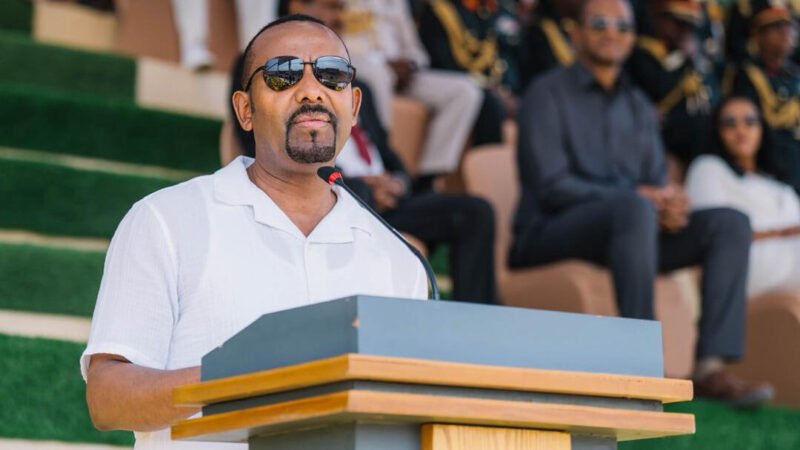
Red bonnets, airborne units and a regional message — Abiy signals Ethiopia’s military ambitions beyond its borders.
Ethiopian Prime Minister Abiy Ahmed on Sunday hailed the country’s elite airborne forces as a symbol of “purpose in one wing and discipline in the other,” in a high-profile ceremony marking the 65th anniversary of the Special Operations Command.
Speaking at Hawassa International Stadium before senior military officials and defense leaders, Abiy — commander-in-chief of the armed forces — described the red-beret unit as an “exceptional gift of Ethiopia,” embodying the country’s culture, identity and national resolve.
“These heroic figures are not just fighters,” he said, portraying the force as both a shield against threats and a vehicle for national transformation.
The celebration comes at a time when Ethiopia faces complex security challenges at home and across the Horn of Africa. Abiy framed the airborne command not only as a domestic security asset but as a regional stabilizer. He said Ethiopia seeks to promote peace and counter terrorism from Somalia to the Red Sea port of Massawa, signaling broader strategic ambitions.
Equipped with advanced technology and specialized training, the two-winged unit is designed for rapid deployment and preemptive operations, the prime minister said. Its mission, he added, is to deter conflict before it escalates and to respond decisively when crises emerge.
Abiy linked the force’s evolution to Ethiopia’s long-term state-building project, arguing that national strength rests on disciplined institutions capable of safeguarding sovereignty and stability. He extended congratulations to East African nations, describing the elite unit as a contribution to continental security.
The anniversary event was marked by a display of military precision and symbolism, reinforcing the government’s emphasis on unity, national pride and regional influence.
In a volatile region, Abiy’s message was clear: Ethiopia intends to remain not only a defender of its borders, but a strategic actor shaping security across the Horn of Africa.
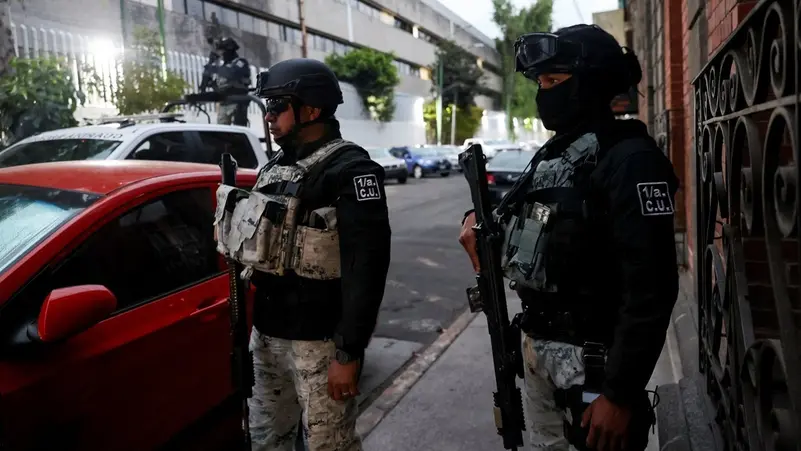
A secretive US military task force, a $15 million bounty, and Mexico’s most wanted cartel boss — here’s what we now know.
A newly formed US military-led intelligence task force played a role in the Mexican operation that killed Nemesio Oseguera, the notorious cartel leader known as “El Mencho,” according to US defense officials.
The Joint Interagency Task Force-Counter Cartel (JITF-CC), launched last month, specializes in mapping cartel networks operating across the US-Mexico border. A US defense official told Reuters the unit contributed intelligence ahead of Sunday’s raid in Jalisco, though the operation itself was carried out entirely by Mexican forces.
A former US official said Washington assembled a detailed “target package” on Oseguera, combining intelligence and law enforcement data, and shared it with Mexico. El Mencho had long ranked at or near the top of US priority targets, with a $15 million bounty on his head.
Mexico’s defense ministry confirmed the United States provided “complementary information,” but stressed the mission was designed and executed by Mexican authorities without US troops on the ground.
Oseguera, 60, led the powerful Jalisco New Generation Cartel (CJNG), widely viewed as one of Mexico’s most sophisticated criminal organizations. His death triggered immediate retaliation, including torched vehicles and highway blockades across multiple states.
The operation marks a significant win for Mexico’s fight against drug trafficking networks that funnel billions of dollars’ worth of cocaine and fentanyl into the United States. It also underscores growing US involvement in cartel targeting under President Donald Trump’s administration, which has pressed Mexico to intensify its crackdown and has designated cartels as terrorist organizations.
Brigadier General Maurizio Calabrese, who leads the new task force, recently said the US military is applying lessons learned from counterterrorism campaigns against al-Qaeda and ISIS to dismantle cartel networks. He estimates that while a few hundred figures sit at the top of cartel hierarchies, as many as 200,000 to 250,000 contractors assist with drug movement.
The task force is part of a broader US strategy that includes expanded surveillance, military control along parts of the border and maritime strikes against suspected drug vessels.
For Washington and Mexico City alike, the killing of El Mencho sends a clear message. But history suggests that removing a cartel kingpin rarely ends the violence — it often reshuffles it.
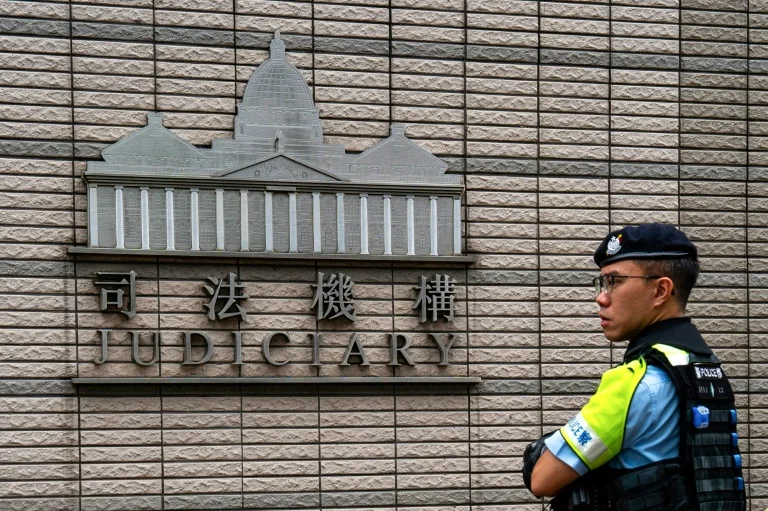
Twelve democracy campaigners lose their appeal in Hong Kong’s biggest national security trial. What does it mean for the city’s future?
Hong Kong’s High Court on Monday upheld the convictions and prison sentences of 12 pro-democracy campaigners in the city’s largest national security case, reinforcing Beijing’s sweeping crackdown on dissent.
The defendants were part of a group of 45 opposition figures convicted in 2024 for organizing an unofficial primary election in 2020. Authorities deemed the vote a subversive plot, arguing it aimed to secure a legislative majority capable of vetoing the government’s budget and forcing political concessions such as universal suffrage.
Chief Judge Jeremy Poon ruled that the strategy amounted to an unlawful attempt to undermine Hong Kong’s constitutional order. While lawmakers are legally permitted to veto the budget under the city’s Basic Law, the court said using that mechanism as coordinated political leverage crossed into subversion.
Among those whose appeals were dismissed were veteran activist Leung Kwok-hung, known as “Long Hair,” former journalist Gwyneth Ho and Australian citizen Gordon Ng. The defendants waved to supporters in court as the three-judge panel delivered its decision.
Critics swiftly condemned the ruling. Pro-democracy figures described it as a blow to political freedoms, while Amnesty International said the court had missed a chance to correct what it called a miscarriage of justice.
The case traces back to the mass pro-democracy protests of 2019. In response, Beijing imposed a sweeping national security law in 2020, criminalizing acts of secession, subversion, terrorism and collusion with foreign forces. Since then, dozens of opposition politicians, activists and civil society leaders have been arrested or jailed.
Sentences in the broader case ranged from just over four years to 10 years in prison. The 12 appellants may seek a final appeal at Hong Kong’s top court, though it remains unclear whether they will pursue that route.
For many in the city, Monday’s ruling underscores a stark reality: the legal boundaries of political opposition in Hong Kong have fundamentally changed.
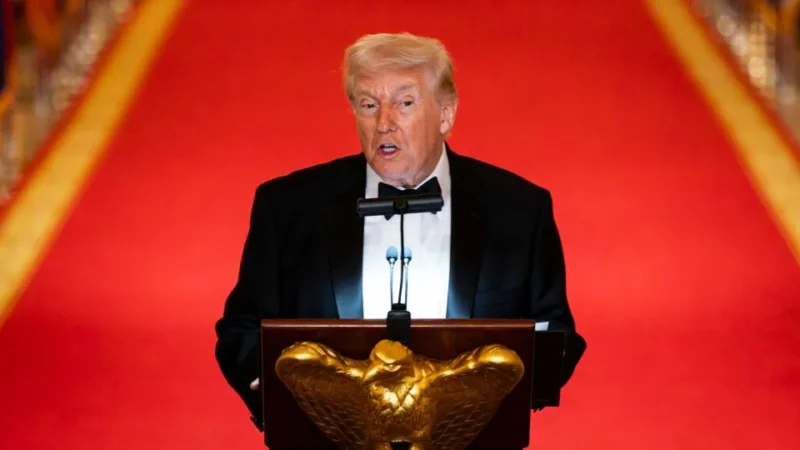
Trump says help is “on the way.” Greenland says it never asked for it. What’s really behind the hospital ship move?
President Donald Trump said Saturday that he is dispatching a U.S. naval hospital ship to Greenland, the semi-autonomous Danish territory he has repeatedly sought to acquire — an announcement that Greenland’s leadership swiftly rejected.
“Working with the fantastic Governor of Louisiana, Jeff Landry, we are going to send a great hospital boat to Greenland,” Trump wrote on social media, alongside an illustration of the USNS Mercy. He claimed the ship would assist “many people who are sick, and not being taken care of there.”
Greenlandic Prime Minister Jens-Frederik Nielsen responded bluntly: “No thank you.”
In a statement, Nielsen said Greenland operates a universal public health care system that provides free treatment to citizens — a “deliberate choice” central to the island’s social model. He urged Washington to engage in direct dialogue rather than make unilateral announcements online.
Denmark’s Prime Minister Mette Frederiksen echoed that sentiment, defending Denmark’s national health care system and emphasizing equal access regardless of wealth.
It remains unclear whether any deployment order has been issued. The Pentagon directed inquiries to U.S. Northern Command, which referred questions to the Navy. The Navy did not respond. Ship-tracking data showed the USNS Mercy moored in Alabama, with no indication of imminent departure.
The announcement follows Denmark’s recent evacuation of a U.S. submarine crew member from Greenlandic waters for medical treatment — a routine operation handled by Greenlandic authorities. The episode underscores an existing level of cooperation between Copenhagen and Washington.
Strategically, Greenland occupies a critical position in the Arctic, where melting sea ice is opening new shipping routes and intensifying competition among global powers. The United States maintains Pituffik Space Base on the island’s western coast, a key early-warning and surveillance facility.
Trump’s renewed interest in Greenland has unsettled European allies and reignited debate over sovereignty in the Arctic. For many Greenlanders, concerns center less on geopolitics and more on preserving social systems — particularly public health care and education — that differ sharply from the American model.
Whether the hospital ship proposal signals humanitarian outreach or another attempt to assert influence remains uncertain. What is clear is that Greenland’s leadership wants decisions about its future made in Nuuk, not Washington.

Somaliland President to Visit Israel in Historic First Trip

Trump Signals Iran Strike as Missile Warning Raises Stakes

Gates Calls Epstein Ties a “Huge Mistake”


-
 Minnesota2 months ago
Fraud Allegations Close In on Somalia’s Top Diplomats
-
 Editor's Pick2 months ago
Why India Is Poised to Become the Next Major Power to Recognize Somaliland
-

 ASSESSMENTS2 months ago
Somalia’s Risky Pact with Pakistan Sparks Regional Alarm
-

 Somaliland1 month ago
F-35s Over Hargeisa: The Night Somaliland’s Sovereignty Went Supersonic
-

 Somalia1 month ago
Aid Destroyed, Trust Shattered: Somalia Loses U.S. Support for Good
-
 Somaliland2 months ago
UAE, Bahrain, Morocco and Kazakhstan Hold Recognition Talks With Netanyahu
-
 Terrorism1 month ago
Foreign ISIS Pipeline Exposed: Puntland Captures Dozens of Non-Somali Fighters
-

 Somaliland1 month ago
Somaliland at Davos: The Moment Somaliland Entered the World’s Inner Circle