
Top stories
Global Opinion Splits on Iran War but Agrees Economic Fallout Will Last

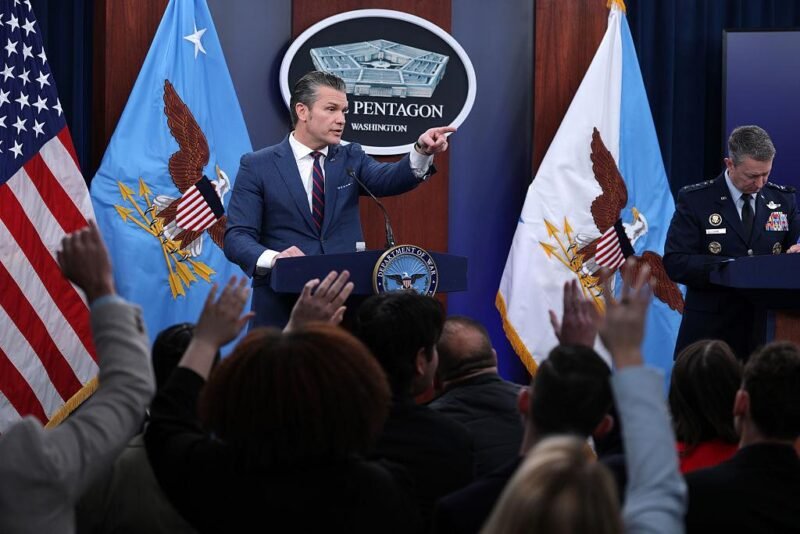
No One Thinks This War Ends Cleanly. From Washington to Beijing to the Gulf—analysts agree on one thing: the damage is just beginning.
Across leading editorial boards, think tanks, and policy institutions, a rare consensus is emerging: the Iran war may pause, but its economic and geopolitical consequences are only deepening.
At The Wall Street Journal, opinion writers have taken direct aim at Donald Trump’s strategy, describing it as inconsistent and reactive. The critique is not simply about tone—it is about clarity. Repeated ultimatums and shifting deadlines, they argue, risk civilian infrastructure without guaranteeing strategic outcomes, particularly the reopening of the Strait of Hormuz. The underlying concern: economic pain will ultimately fall on American households.
Economic analysts at Reuters Breakingviews go further, warning that even a ceasefire will not restore normalcy. Insurance costs, depleted reserves, and persistent risk premiums are likely to keep energy markets unstable. In their view, the idea that reopening Hormuz alone can resolve the crisis is a dangerous oversimplification.
Meanwhile, the U.S.-China Economic and Security Review Commission highlights a structural shift in the conflict: China’s role as Iran’s economic lifeline. By purchasing the bulk of Iranian oil and facilitating sanctions evasion, Beijing is not just mitigating pressure—it is reshaping the limits of U.S. economic power.
Strategic analysts at the Atlantic Council frame the war in even broader terms. Their assessments suggest the conflict is accelerating a global realignment, exposing vulnerabilities in energy security and forcing new alliances to emerge beyond traditional Western frameworks.
From the region itself, Al Jazeera offers a different lens: one centered on local agency. Commentators argue that lasting stability will not come from external military pressure, but from a Gulf-led security framework that includes Iran—warning that exclusion risks prolonging instability.
Think tanks such as Brookings Institution and Center for Strategic and International Studies push the analysis deeper. Their focus is not just on the war’s trajectory, but its unintended consequences: strengthening hardliners in Tehran, triggering proliferation risks, and setting off longer-term regional instability.
Taken together, these perspectives converge on a stark conclusion. There is no clean victory in sight. The war is not only reshaping the Middle East—it is redefining the global economic order.
And long after the ceasefire headlines fade, the costs will remain embedded in markets, politics, and everyday life.











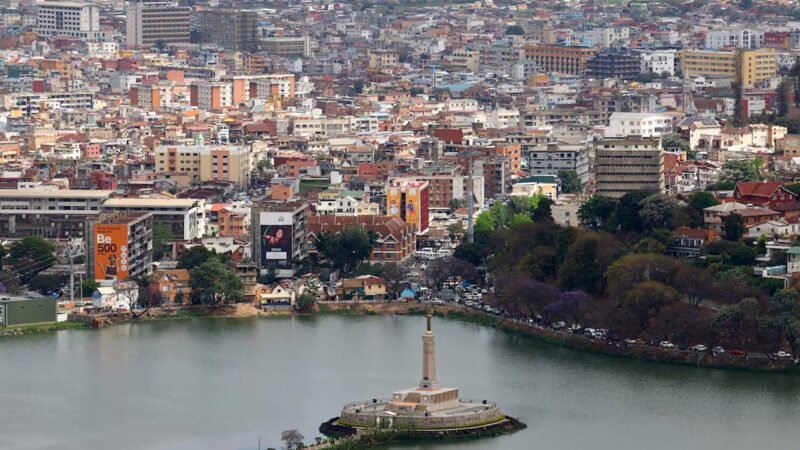
The war isn’t in Africa—but the crisis is. Fuel shortages are spreading, and the hardest hit are the most vulnerable.
Madagascar has declared a 15-day state of energy emergency, becoming one of the clearest early casualties of a widening global fuel crisis triggered by conflict in the Middle East.
The government says the island nation is facing severe supply disruptions, with shipments delayed by both bad weather and instability tied to the war involving the United States, Israel, and Iran. Areas like Nosy Be—heavily reliant on fuel imports from the Gulf—have been hit particularly hard, exposing how quickly distant conflicts can destabilize fragile economies.
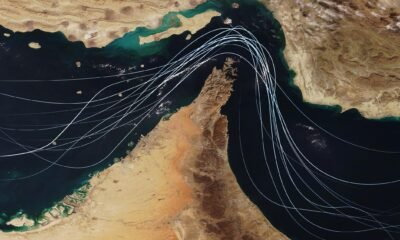
At the center of the disruption is the Strait of Hormuz, a chokepoint through which a significant share of the world’s oil and gas flows. Even partial disruption has sent shockwaves across global supply chains—none more acutely felt than in Africa.
A joint warning from the African Union, the United Nations Economic Commission for Africa, and the World Bank underscores the scale of the threat: what began as a trade disruption risks spiraling into a full-blown cost-of-living crisis. Rising fuel prices are already feeding into higher food costs, transport expenses, and mounting pressure on vulnerable currencies.
Across the continent, governments are scrambling. South Africa has cut fuel levies to ease consumer strain. Senegal has imposed austerity measures, including banning non-essential travel by ministers. Kenya is closely monitoring supply chains to prevent shortages.
Financial institutions are also moving. African Export-Import Bank has launched a $10 billion crisis response program aimed at shielding African economies from the fallout.
Meanwhile, Africa’s largest industrial player is stepping in. Nigerian billionaire Aliko Dangote says his refinery is operating at full capacity, exporting fuel and fertilizer across the continent to offset disrupted Middle Eastern supply.
There are tentative signs of relief. Donald Trump has announced a two-week ceasefire aimed at stabilizing the situation, which could ease shipping through Hormuz. But for countries like Madagascar, the damage is already unfolding.
This crisis is exposing a harsh reality: Africa is not on the battlefield, but it is on the front line of the economic fallout. And for the continent’s most vulnerable nations, the margin for shock is dangerously thin.
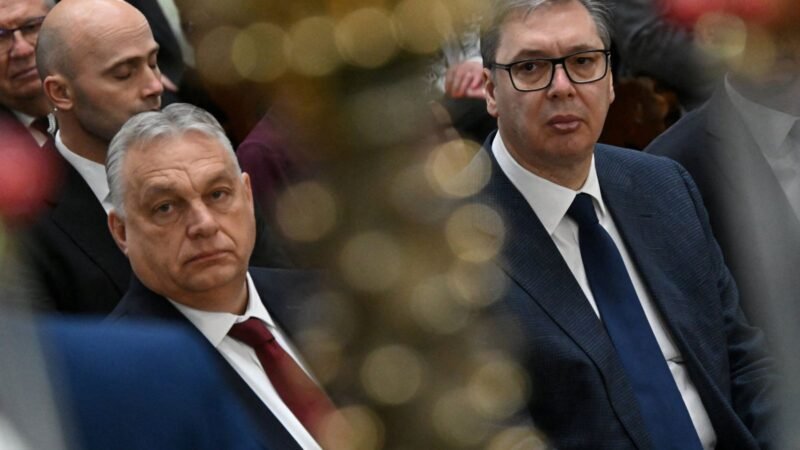
EU accused of interference. U.S. backs Orbán. Russia weighs in. Hungary’s election is now global.
MOSCOW — Russia has accused elements within the European Union of attempting to influence Hungary’s upcoming election against Prime Minister Viktor Orbán, adding a new layer of geopolitical tension to a vote already drawing international attention.
Kremlin spokesman Dmitry Peskov said Wednesday that political forces in Brussels were working to undermine Orbán’s re-election bid and support his opponents ahead of the April 12 ballot.
“Many forces in Europe would not like Orbán to win,” Peskov said, suggesting that the publication of a leaked conversation between Orbán and Vladimir Putin was intended to damage the Hungarian leader politically. He offered no evidence of EU involvement in the leak.
The European Commission rejected the claim, stating that Hungary’s election is solely the decision of its voters.
The Kremlin’s remarks follow a parallel intervention from Washington.
During a visit to Budapest, U.S. Vice President JD Vance accused the EU of “disgraceful” interference and openly backed Orbán’s campaign. Donald Trump has also endorsed the Hungarian leader, reinforcing a rare alignment between Moscow and parts of the U.S. political establishment in support of the same candidate.
Orbán has long maintained closer ties with Russia than most EU leaders, resisting sanctions pressure and sustaining Hungary’s heavy reliance on Russian energy. His government has also blocked key EU initiatives, including financial support packages for Ukraine, citing national interests.
The leaked transcript referenced by Peskov added to the scrutiny.
In the exchange, Orbán reportedly described himself as being “at the service” of Putin, using a metaphor likening Hungary to a smaller actor assisting a larger power. Peskov framed the comments as evidence of pragmatic leadership rather than alignment.
The broader dynamic reveals a deeper contradiction.
Hungary, an EU member state, is now at the center of competing external narratives. Brussels emphasizes democratic autonomy. Washington voices support for Orbán while criticizing European influence. Moscow positions itself as defending a partner against Western pressure.
Each side is warning against interference—while engaging in it.
As polls suggest Orbán faces his most serious electoral challenge in over a decade, the stakes extend beyond domestic politics. The outcome will shape Hungary’s position within the EU, its relationship with Russia, and the balance between national sovereignty and bloc cohesion.
What might once have been a routine election has become something else.
A test case for how far external power centers—on all sides—can shape the political trajectory of a European state.
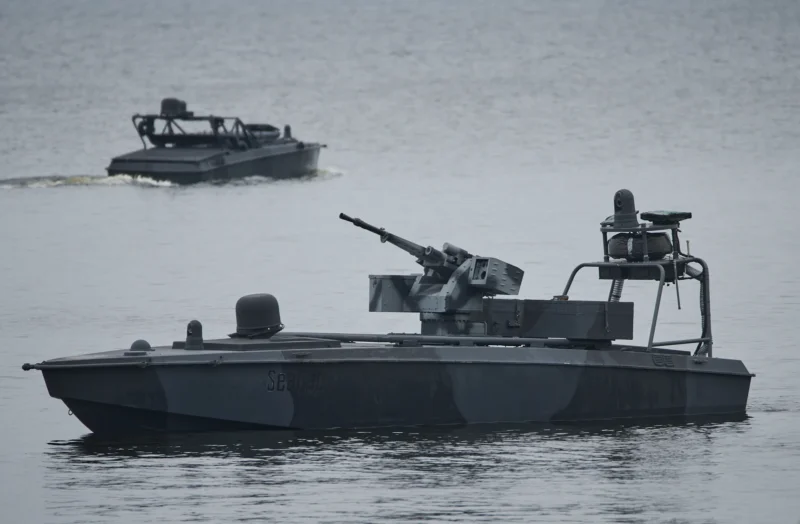
The Ukraine war just crossed into North Africa—and into global energy lanes.
TRIPOLI — Ukrainian forces have quietly opened a new front in their war against Russia, conducting a drone strike on a Russian tanker from western Libya, according to Libyan officials—an escalation that pushes the conflict beyond Eastern Europe and into the Mediterranean.
The Russian-flagged vessel, carrying tens of thousands of tons of liquefied natural gas, was damaged in early March by what officials described as a sea drone attack near Maltese waters. The tanker remained afloat and later drifted toward Libya’s coast, with all crew members evacuated.
According to officials, the operation was launched from facilities in Tripoli, where Ukrainian personnel—primarily drone specialists—have been operating in coordination with authorities aligned to Prime Minister Abdul-Hamid Dbeibah. Their presence, described as part of a covert arrangement supported by Western partners, marks a notable expansion of Ukraine’s operational reach.
Ukrainian teams are reportedly stationed across multiple locations in western Libya, including the port city of Misrata. Their mission reflects a broader shift in strategy—taking the fight beyond traditional theaters and targeting Russia’s economic lifelines, including its so-called “shadow fleet” used to circumvent sanctions.
As Russia adapts in the Black Sea—hardening defenses and limiting exposure—Ukraine is seeking alternative arenas where asymmetric tools, particularly naval drones, can still deliver impact. The Mediterranean, with its dense shipping lanes and proximity to European energy markets, offers both opportunity and risk.
Since the fall of Moammar Gadhafi, the country has remained divided between rival administrations, creating space for external actors to operate. Western-aligned authorities in Tripoli and Russia-linked forces in the east have turned Libya into a proxy battleground—one now intersecting directly with the Ukraine war.
A conflict framed as regional is becoming increasingly global. Ukrainian forces, defending their own territory, are now projecting power into North Africa. Russia, facing sanctions in Europe, finds its maritime supply lines targeted in distant waters.
The tanker attack underscores how energy infrastructure and shipping routes are becoming central targets. With global markets already strained by disruptions elsewhere, any sustained campaign against maritime assets could amplify volatility in energy supply and pricing.
Neither Moscow nor Kyiv has publicly confirmed the operation. But the emerging pattern is harder to ignore: the battlefield is expanding, the tools are evolving, and the lines between regional conflicts are blurring.
What began as a war over territory is increasingly a contest over reach.
And Libya has become its latest proving ground.
They left for jobs. They returned in coffins. Africa’s role in Ukraine is no longer hidden.
YAOUNDÉ — Cameroon has confirmed that 16 of its nationals have died while fighting for Russia in the war in Ukraine, highlighting a growing and largely opaque flow of foreign recruits into the conflict.
In a formal memo to the Russian Embassy, Cameroon’s foreign ministry said Moscow had verified the deaths of the soldiers, who were deployed in what Russia describes as its “special military operation.” Authorities said they had begun contacting families of the deceased, while also summoning relatives of additional nationals in Russia for urgent consultations.
Ukrainian officials estimate that more than 1,700 Africans have been recruited to support Russian forces, often through misleading offers of employment or training. Several African governments have raised concerns that citizens are being drawn into the war under false pretenses, only to be deployed to front-line combat roles.
In Kenya, lawmakers were told earlier this year that around 1,000 citizens had been recruited under similar circumstances. Nigeria has also reported casualties, while investigations have found African women recruited into Russia’s defense sector through deceptive work-study programs, including roles in drone assembly.
For individuals facing limited opportunities at home, offers of overseas work can be difficult to verify. For Russia, the recruitment of foreign nationals provides a supplementary manpower pool as the conflict stretches into its third year.
In 2025, its defense ministry ordered emergency measures to prevent defections among military personnel, signaling concern over the growing number of soldiers leaving for foreign engagements. The confirmed deaths are likely to intensify scrutiny of recruitment networks operating across the continent.
While African governments officially maintain neutrality or limited engagement in the Ukraine war, their citizens are increasingly present on the battlefield—often without formal state authorization or oversight.
What began as isolated reports has evolved into a pattern of recruitment, deployment and casualties that links distant African communities to one of the world’s most consequential conflicts.
For policymakers, the challenge is no longer hypothetical.
It is immediate: how to prevent exploitation, protect citizens and address the quiet expansion of a war that is reaching far beyond its original borders.
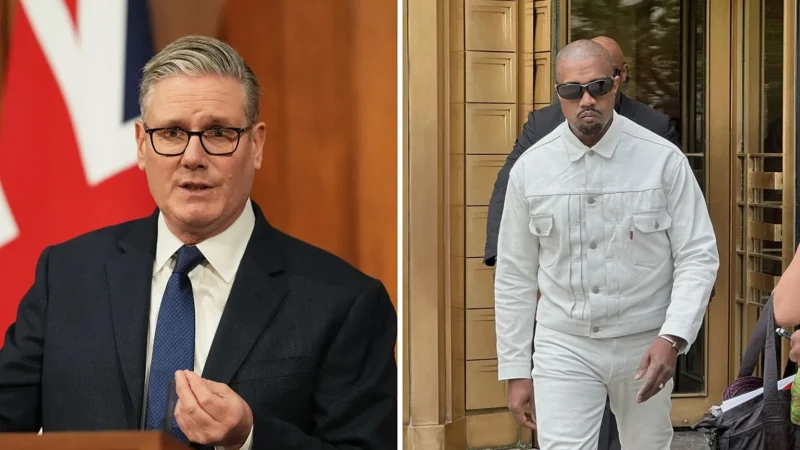
No Entry, No Festival: UK Blocks Kanye West, Wireless Collapses Overnight. One decision. One artist. One major festival shut down.
LONDON — The 2026 Wireless Festival has been cancelled after Kanye West—also known as Ye—was denied entry into the United Kingdom, forcing organizers to scrap the three-day event just months before it was due to begin.
UK authorities withdrew West’s Electronic Travel Authorisation following a government review, concluding that his presence would not be “conducive to the public good.” The decision came amid renewed scrutiny of his past antisemitic remarks and public controversies.
Festival organizers confirmed the cancellation shortly after the ruling, stating that refunds would be issued to all ticket holders. The event, scheduled for July in London’s Finsbury Park, had relied on West as its headline act across all three days—leaving little room for replacement once his entry was blocked.
The move follows mounting political and public pressure.
Prime Minister Keir Starmer had described West’s booking as “deeply concerning,” citing his past statements and actions, including controversial songs and public comments widely condemned as antisemitic. Jewish community leaders also voiced strong opposition, calling the decision to feature him inappropriate given the recent history.
West had attempted to address the backlash.
In recent months, he issued a public apology and expressed willingness to engage with Jewish communities in the UK. However, officials ultimately determined that these efforts did not outweigh the broader concerns tied to his past conduct.
The cancellation highlights the commercial risk of reputational exposure.
Wireless, one of the UK’s largest music festivals, draws tens of thousands of attendees annually. Its model—anchoring the event around a single global headliner—amplified the impact of the government’s decision, leaving organizers unable to restructure the lineup in time.
The contradiction is clear.
West remains a globally influential artist with a large audience, yet his public controversies have increasingly limited his access to major platforms. Governments and sponsors are weighing cultural influence against public standards, and in this case, regulatory authority proved decisive.
The episode reflects a broader shift.
Cultural events are no longer insulated from political and social scrutiny. Decisions about who performs are now tied not only to demand, but to reputational and legal considerations that can determine whether an event proceeds at all.
For Wireless, the outcome was immediate.
Without its headline act, the festival could not go on—turning a single visa decision into the collapse of one of the summer’s biggest events.
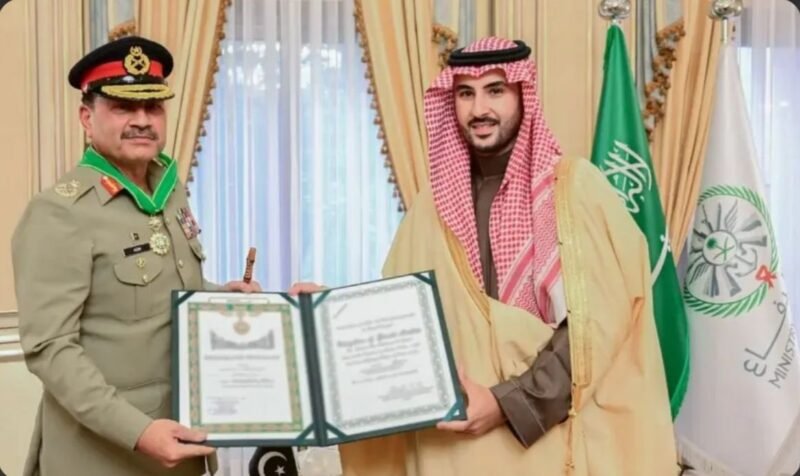
Enough Is Enough: Saudi Shields Hold as Pakistan Draws the Line Against Iran.
Iran fires. Saudi intercepts. Pakistan steps in. The war is shifting fast.
RIYADH — Saudi Arabia’s air defenses intercepted a new wave of Iranian missiles and drones as Pakistan signaled it would stand firmly with the Kingdom under a mutual defense pact, raising the stakes in an already widening regional conflict.
The Saudi Ministry of Defense said its forces destroyed 11 ballistic missiles and 22 drones in the latest attacks targeting the Kingdom. Debris from intercepted projectiles fell near energy facilities, with damage assessments ongoing, but authorities emphasized the effectiveness of Saudi defensive systems in neutralizing the threats.
The scale and persistence of the attacks underscore what regional officials describe as a deliberate escalation by Iran against Gulf stability. Pakistani officials went further, calling the strikes a violation of Saudi sovereignty and a direct threat to regional peace.
Islamabad’s message was clear.
A senior Pakistani security official said that if the conflict intensifies, Pakistan will stand alongside Saudi Arabia under a strategic defense agreement that treats aggression against one as aggression against both.
That commitment transforms the strategic equation.
What began as a confrontation between Iran and the United States and Israel is increasingly drawing in regional powers, with alliances shifting from political support to potential military backing. Pakistan, which has been attempting to mediate, warned that Iran’s continued attacks risk collapsing diplomatic efforts altogether.
Saudi Arabia, meanwhile, is projecting restraint—but also resolve.
Officials stressed that despite repeated provocations, Riyadh has maintained a defensive posture, focused on protecting its territory, population and critical infrastructure. The Kingdom has reiterated its right to respond decisively if its sovereignty continues to be violated.
Iran’s strikes are intensifying at the same moment diplomatic channels are trying to open. Each new attack not only raises the risk of retaliation but also narrows the space for negotiation.
For Saudi Arabia, the message is increasingly straightforward.
Defense is holding. Alliances are solidifying. And if escalation continues, the conflict may no longer remain contained—but evolve into a broader regional confrontation with far higher stakes.
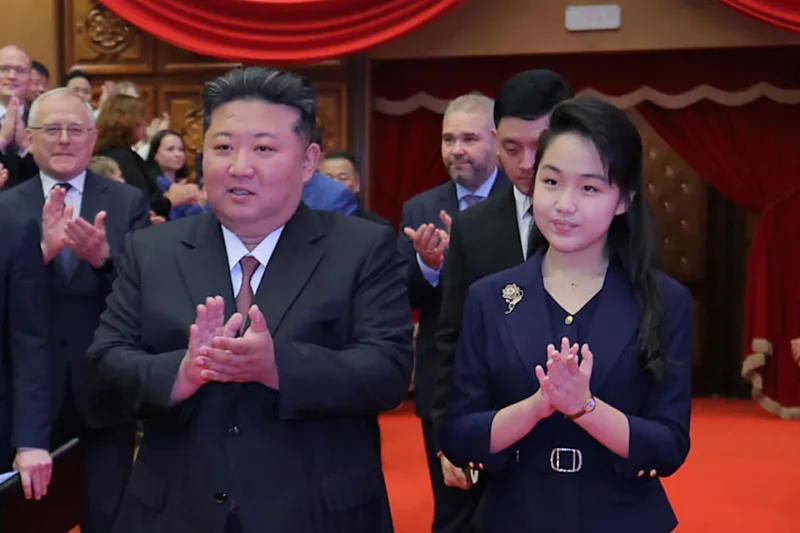
No weapons. No strong statements. North Korea may be recalibrating its alliances.
SEOUL — North Korea appears to be keeping its distance from Iran as the regional war intensifies, according to South Korean intelligence, signaling a potential shift in Pyongyang’s strategic priorities toward reengagement with the United States.
South Korea’s National Intelligence Service said it has seen no evidence that North Korea has supplied weapons or logistical support to Tehran since the conflict began in late February. Lawmakers briefed on the assessment said Pyongyang has also limited its public messaging, issuing only muted statements condemning U.S. and Israeli actions.
The restrained posture contrasts with the more active diplomatic responses from Russia and China, both of which have openly backed Iran. Pyongyang’s silence has extended beyond rhetoric. It did not publicly acknowledge the death of Iran’s supreme leader or formally recognize his successor, a notable departure from past patterns of alignment.
South Korean officials interpret the shift as deliberate.
By limiting its involvement, Pyongyang may be positioning itself for a future diplomatic opening with Washington once the Middle East conflict stabilizes. The approach suggests a calculation that overt alignment with Iran could complicate any attempt to restart dialogue with the United States.
The move reflects a broader pattern of strategic flexibility in North Korean foreign policy.
While historically aligned with anti-Western partners, Pyongyang has shown a willingness to recalibrate its posture when it sees potential leverage in engaging Washington. The current restraint may be less about distancing from Iran than about preserving optionality in a fluid geopolitical environment.
At the same time, internal signals point to continuity rather than transformation.
The intelligence briefing also indicated that leader Kim Jong Un may be preparing his daughter as a potential successor, highlighting her in military-themed public appearances. The messaging appears designed to reinforce regime stability and dynastic continuity even as external strategy evolves.
Developments on the Korean Peninsula further underscore the shifting dynamics.
Kim Yo Jong, the leader’s sister, recently acknowledged an apology from South Korea’s president over a drone incident earlier this year. The response marked a rare moment of measured engagement, following months of heightened tensions.
The emerging picture is one of calculated restraint.
North Korea is neither abandoning its traditional alliances nor fully embracing new ones. Instead, it is navigating between them, limiting exposure in one conflict while preserving room to maneuver in another.
The contradiction is subtle but significant.
At a moment when global conflicts are drawing alliances into sharper alignment, Pyongyang is doing the opposite—stepping back, lowering its profile and waiting for an opportunity to redefine its position on its own terms.
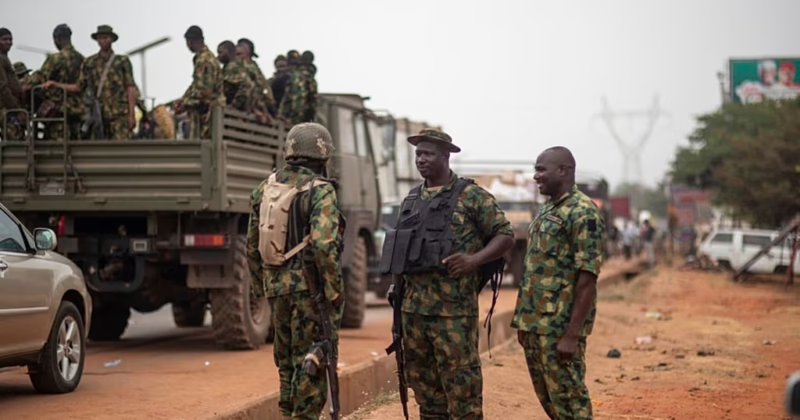
Nigerian Troops Rescue 31 Easter Worshippers After Deadly Church Attack in Kaduna.
They came to worship. They were taken hostage. Nigeria’s security crisis is deepening.
ABUJA — Nigerian troops rescued 31 worshippers abducted during Easter services in northwestern Kaduna state, the military said, following a deadly attack that left at least five people dead and underscored the country’s worsening security crisis.
Gunmen raided a Catholic and an evangelical church in the village of Ariko, about 100 kilometers north of the capital, according to local officials and the Nigerian military. Troops responding to the attack engaged the assailants in a firefight, forcing them to abandon hostages and flee.
The military said five victims were killed during the assault, while local church leaders placed the toll at seven, reflecting the uncertainty that often surrounds such incidents in remote areas.
The attack occurred despite heightened security measures ordered for Easter, including increased deployments around places of worship. It highlights the persistent vulnerability of civilians in regions where armed groups operate with relative freedom.
Kaduna state lies at the center of a broader security challenge facing Nigeria, where criminal gangs known as bandits carry out raids, kidnappings and extortion. While primarily motivated by financial gain, these groups have increasingly shown signs of coordination with jihadist factions active in the country’s northeast, blurring the line between organized crime and insurgency.
Authorities did not clarify whether the attackers were affiliated with militant groups or bandit networks, referring to them broadly as “terrorists.” The ambiguity reflects a wider problem for Nigerian security forces, which face overlapping threats that are difficult to categorize and contain.
The incident follows a pattern of large-scale abductions targeting religious gatherings. In January, more than 170 worshippers were kidnapped from churches in Kaduna, with many released only after weeks of negotiations.
Elsewhere in the northwest, the military reported killing at least 65 suspected bandits in Zamfara state during a separate operation described as a “major breakthrough.” Yet such tactical gains have done little to stem the broader trend of escalating violence.
The continued attacks have drawn international attention, including comments from Donald Trump, who has alleged widespread persecution of Christians in Nigeria—claims that Nigerian officials have disputed in the past.
The latest assault underscores a central tension. Security operations are producing localized successes, including hostage rescues and militant casualties. But the frequency and scale of attacks suggest that the underlying drivers of violence—weak governance, economic distress and fragmented security control—remain largely unaddressed.
For civilians in Kaduna and beyond, the result is a security environment where even major religious holidays no longer offer protection.

Iran Continues Attacks on Gulf States Despite Ceasefire

Israel Backs Ceasefire but Doubts Its Durability and Scope

Iran’s Nuclear Threat Isn’t Gone


-
 US-Israel war on Iran3 weeks ago
Waves of Mystery Drones Breach U.S. Nuclear Base Airspace
-
 Terrorism1 week ago
Egypt Uncovers Alleged Plan to Down Presidential Plane
-
 US-Israel war on Iran2 weeks ago
Former CIA Chief Blames White House for Escalating Iran War Crisis
-
 Top stories2 weeks ago
Saudi Arabia Deepens Defense Ties with Ukraine
-
 US-Israel war on Iran3 weeks ago
Iran’s Guard Leadership Hit Hard in Escalating Strikes
-
 Analysis2 weeks ago
Inside the IRGC’s Quiet Rebuild of Hezbollah
-
 US-Israel war on Iran2 weeks ago
Iran War Sparks Global Crisis Warning
-
 US-Israel war on Iran3 weeks ago
UK Opens Bases for U.S. Strikes on Iran Missile Sites