Trump may reopen the F-35 door for Turkey. For Israel, NATO, Somalia, and Somaliland, this is not just an arms deal — it is a signal that Ankara may be returning to the center of U.S. strategy.
Getty Images
Trump’s F-35 Opening to Turkey
Why a Fighter Jet Deal Could Reshape NATO, Israel’s Security Calculus, and the Horn of Africa
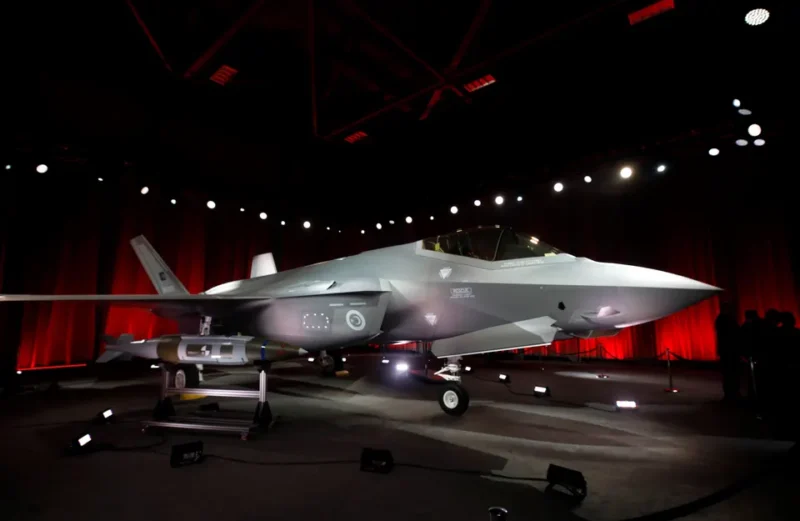
President Donald Trump is reportedly expected to support a potential sale of F-35 fighter jets to Turkey, a move that could mark one of the most important resets in U.S.-Turkey defense relations in years.
Reuters, carried by The Times of Israel, reported that Trump is expected to back the sale during a visit to Ankara for a NATO summit, though legal and congressional obstacles remain unresolved. Turkey was removed from the F-35 program after its 2019 purchase of Russia’s S-400 air-defense system, and U.S. law still restricts Turkey from rejoining the program while it retains that system.
This is not just an arms deal. It is a strategic signal.
If Turkey returns to the F-35 program, Ankara would regain access to one of the most advanced fighter aircraft in the world. That would strengthen Turkey’s military position inside NATO, increase President Recep Tayyip Erdogan’s leverage with Washington, and create anxiety in Israel, Greece, Cyprus, and other states that already view Turkish regional ambitions with concern.
The S-400 problem remains the central obstacle. According to Reuters, one possible solution being discussed is for Turkey to transfer the Russian system to a third country, though no agreement has been finalized and Russia’s own end-user restrictions could complicate such a move.
For Trump, the reported move fits a wider effort to repair relations with Erdogan. The two leaders have maintained warmer ties since Trump returned to office, and Reuters reported that Trump recently hinted he would do something that would make Turkey “very happy.” Vice President JD Vance has also said a review is underway to determine whether Turkey has complied with U.S. law in a way that could allow F-35 access.
Israel is openly worried. Prime Minister Benjamin Netanyahu told Fox News that Turkey should not receive F-35 jets or fighter engines, warning that such a sale could upset the regional power balance. That concern reflects Israel’s long-standing interest in preserving its qualitative military edge in the Middle East.
The timing is important. The Trump administration recently moved ahead with a roughly $700 million engine sale linked to Turkey’s KAAN fighter jet program, despite concerns from some U.S. lawmakers. That suggests Washington may already be testing a broader defense reset with Ankara.
For WARYATV readers, the Horn of Africa angle is clear.
A stronger Turkey inside NATO is not only a Middle East story. Turkey is already deeply invested in Somalia’s security architecture. Ankara has trained Somali forces, built military capacity in Mogadishu, and signed defense and maritime cooperation agreements with Somalia. Reuters reported in 2024 that Turkey would help Somalia strengthen maritime security and protect its territorial waters under a defense and economic cooperation agreement.
Turkey has also taken a hard line against Somaliland’s recognition. Ankara has repeatedly affirmed support for Somalia’s territorial integrity, and Turkey’s Foreign Ministry rejected Israel’s recognition of Somaliland as a move it said could undermine Somalia’s unity and regional stability.
That means any U.S.-Turkey defense reset will be watched carefully in Hargeisa.
Somaliland should not read the F-35 issue as a direct military threat. But it should understand the larger message: Turkey may be regaining strategic favor in Washington at the same time it is expanding influence in Somalia and opposing Somaliland’s recognition. This creates a more complex diplomatic environment for Somaliland, especially after Israel’s recognition shifted the regional balance.
The F-35 is not just a jet. It is a political weapon of trust. Washington does not sell such aircraft casually. If Turkey is brought back into the program, it would signal that Trump sees Ankara as too important to isolate, despite Turkey’s disputes with Israel, Greece, Cyprus, and parts of the U.S. Congress.
For Israel, this creates a dilemma. Israel may welcome U.S. efforts to strengthen NATO against Russia and stabilize Turkey’s relationship with the West. But it does not want Turkey to gain advanced airpower while Erdogan continues to confront Israel politically and expand Turkish influence across the Middle East, Africa, and the Red Sea.
For Somaliland, the lesson is strategic discipline. Israel’s recognition is a major breakthrough, but it does not remove Turkey from the game. In fact, if Washington improves ties with Ankara, Somaliland will need an even more sophisticated diplomatic strategy.
Hargeisa must deepen its relationship with Israel and the UAE, but it must also understand how Washington balances Turkey, NATO, Somalia, and Red Sea security.
This is where Somaliland’s argument must become practical. It must present itself as a stable partner, a secure Red Sea gateway, a responsible actor near Bab al-Mandab, and an economic platform connected to Berbera, Ethiopia, and global trade. Recognition must be linked not only to justice and history, but to security usefulness.
The reported F-35 opening also shows how quickly alliances can shift. Turkey was punished for buying Russian air-defense systems. Now it may be offered a path back into the most advanced U.S. fighter program. That is how great-power politics works: punishment, negotiation, leverage, and reintegration when interests change.
Somaliland must study that lesson carefully.
Small states cannot afford to depend on one diplomatic breakthrough. They need layered strategy. Israel matters. The UAE matters. Ethiopia matters. Washington matters. Europe matters. The diaspora matters. Public communication matters. Economic delivery matters.
Turkey’s possible return to the F-35 program is therefore not only about aircraft. It is about Ankara’s return to high-level strategic bargaining with Washington. That could strengthen Turkey’s confidence across several theaters, including Somalia and the Red Sea.
For Somaliland, the correct response is not panic. It is preparation.
Strategic Assessment: Trump’s reported support for a potential F-35 sale to Turkey could reshape U.S.-Turkey relations and alter the regional security balance watched closely by Israel, Greece, Cyprus, and the Horn of Africa.
The deal still faces legal and congressional obstacles because of Turkey’s Russian S-400 system, but the political signal is clear: Washington may be ready to bring Ankara closer again.
For Somaliland, the development matters because Turkey remains one of Somalia’s strongest security partners and one of the most vocal opponents of Somaliland’s recognition. Hargeisa must therefore treat this as a reminder that recognition diplomacy requires patience, strategic communication, and multiple alliances — not reliance on one breakthrough.
By WARYATV Intelligence Desk | waryatv@waryatv.com
Strategic Assessments examine major geopolitical developments, separating events from implications and identifying the forces shaping what comes next.