Connect with us

Minnesota

Trump Orders Pullback of 700 Immigration Agents From Minnesota

Published

on

After weeks of protests and national backlash, the White House signals a tactical retreat in Minnesota.

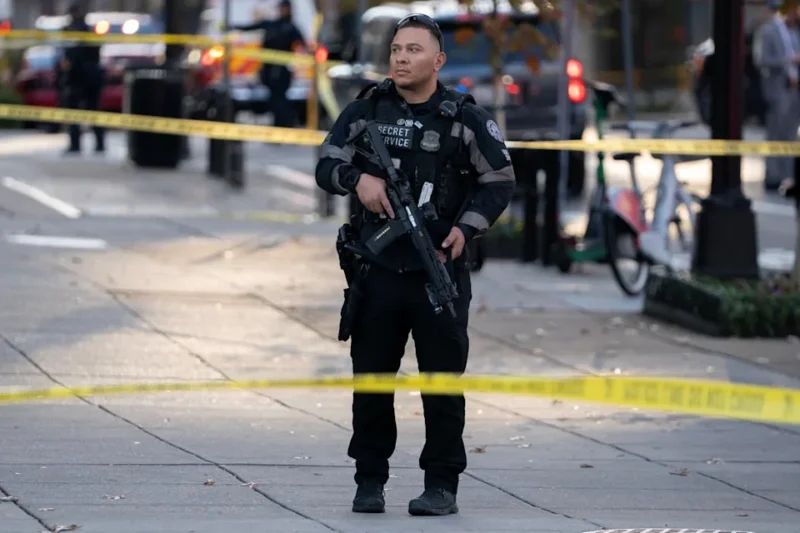
MINNEAPOLIS The Trump administration will reduce the number of federal immigration agents operating in Minnesota by 700, marking a significant shift after months of heavy enforcement deployments that sparked protests across the state.

The announcement was made Wednesday by White House border czar Tom Homan, who said the drawdown would affect federal immigration personnel deployed in and around the Minneapolis–Saint Paul area.

President Donald Trump has sent thousands of armed immigration agents to Minnesota since the start of the year as part of an aggressive enforcement campaign, a move that drew widespread criticism from local officials, civil rights groups, and residents. The operations triggered repeated demonstrations, particularly after several controversial encounters between federal agents and civilians.

Homan did not provide a detailed timeline for the reduction but said the administration was adjusting its operational posture while maintaining its broader immigration enforcement objectives. He stressed that the drawdown does not signal an end to federal operations in the state, but rather a recalibration of resources.

The federal surge had placed Minnesota at the center of a national debate over immigration enforcement tactics, accountability, and the role of federal agents operating without close coordination with local authorities. Community leaders have accused federal agencies of escalating tensions through highly visible, militarized operations.

While the White House has framed the reduction as a tactical decision, critics view it as a response to mounting political pressure and public backlash. Minnesota lawmakers from both parties have called for clearer oversight, transparency, and limits on the conduct of federal immigration officers.

No immediate response was issued by the Department of Homeland Security regarding whether additional policy changes — such as new rules on identification, use of force, or coordination with local police — would accompany the reduction in personnel.

The drawdown comes as Congress continues to debate funding and oversight of federal immigration agencies, with Minnesota frequently cited as a flashpoint in the broader national struggle over enforcement, civil liberties, and public trust.


Minnesota

Minnesota Killings Put Trump Immigration Crackdown Under Congressional Fire

Published

on

Top U.S. immigration officials are set to testify before lawmakers on Tuesday in the first congressional hearing since two U.S. citizens were killed during federal immigration operations in Minnesota, intensifying scrutiny of President Donald Trump’s hardline enforcement push.

The hearing follows the deaths of Renee Good and Alex Pretti in Minneapolis, incidents that have fueled public anger and political backlash. Trump administration officials initially described both victims as “domestic terrorists,” but video evidence later contradicted those claims, prompting renewed calls for accountability.

Appearing before the Republican-controlled House Homeland Security Committee are Todd Lyons, acting director of Immigration and Customs Enforcement; Rodney Scott, commissioner of Customs and Border Protection; and Joe Edlow, director of U.S. Citizenship and Immigration Services.

Democratic lawmakers are expected to press the officials on enforcement tactics, including the use of masks, lack of body cameras, and raids that have swept up non-criminal migrants, families and children. They are also demanding reforms that would refocus immigration enforcement on serious criminal offenders.

The controversy stems from Trump’s intensified enforcement campaign in Minneapolis launched in January, which triggered clashes between masked federal officers and local residents. As criticism mounted, Trump’s border czar Tom Homan took direct control of Minnesota operations, sidelining Border Patrol commander Gregory Bovino and pledging a more targeted approach.

Despite internal guidance urging agents to avoid confrontations with protesters, incidents have continued, including arrests of U.S. citizens accused of following immigration officers.

Tuesday’s testimony is expected to be a flashpoint in the broader debate over immigration enforcement, civil liberties and the political fallout from the Minnesota killings.

Continue Reading

Minnesota

Reports of ICE Ruses Deepen Fear Across Minnesota

Published

on

Reports of federal immigration agents using deceptive tactics have heightened fear and confusion across Minnesota, as the state continues to see an intensified immigration crackdown.

In suburban Minneapolis, restaurant worker Luis Ramirez said he confronted two men dressed as utility workers who had been lingering outside his family’s business for days. The men wore high-visibility vests and hard hats, but Ramirez said their behavior and vehicle raised suspicions. He filmed the encounter, accusing them of surveilling his restaurant under false pretenses. Federal authorities declined to confirm whether the men were immigration officers.

Legal advocates and immigrant rights groups say similar reports are increasing, with alleged federal agents posing as construction workers, delivery drivers, or even anti-ICE activists. While not all incidents have been verified, they have amplified anxiety in immigrant communities and drawn criticism from civil liberties groups.

Naureen Shah of the American Civil Liberties Union warned that such tactics undermine public trust. “When people fear that a utility worker or delivery driver could be an immigration agent, it creates dangerous confusion and erodes confidence in basic institutions,” she said.

Activists in Minneapolis claim they have observed agents leaving federal buildings in unmarked vehicles, sometimes displaying symbols meant to blend into immigrant communities. Organizers also report agents appearing at construction sites in worker attire, though many of these encounters have not resulted in arrests.

State officials, including Governor Tim Walz, have raised concerns about agents allegedly swapping or using improper license plates, a potential violation of state law. In one case, a Minneapolis antiques dealer said two men attempted to buy recent license plates from her shop, prompting her to alert authorities.

Supporters of the crackdown argue that increased scrutiny from activists has forced federal agents to adapt their tactics. Former ICE official Scott Mechkowski said agents are responding to what he described as unprecedented levels of public interference.

For residents like Ramirez, the effect has been constant unease. “Everyone is on edge,” he said. “It feels like they’re everywhere.”

Continue Reading

Minnesota

Measles Outbreak in Minnesota Exposes Vaccine Fears in Somali Community

Published

on

Health officials in Minnesota are struggling to contain a measles outbreak that has disproportionately affected the state’s large Somali community, amid persistent fears linking childhood vaccines to autism.

Since February, 14 confirmed measles cases have been reported statewide. Seven of those cases involved Somali children, most of whom were unvaccinated. State health authorities say all but one case can be traced to an unvaccinated Somali infant who returned from Kenya earlier this year. Minnesota typically records zero or one measles case annually.

Eight patients required hospitalization, though no deaths have been reported.

Public health efforts have been complicated by lingering distrust of the measles-mumps-rubella (MMR) vaccine within parts of the Somali community, driven by concerns that vaccination could cause autism. Those fears resurfaced after visits by Andrew Wakefield, the former British doctor whose claims linking vaccines to autism were discredited and retracted by medical authorities.

Local health leaders warn that Wakefield’s presence has deepened confusion, even as his supporters insist he encourages informed decision-making rather than outright vaccine refusal.

Medical experts stress that extensive global research has found no scientific link between vaccines and autism. Nevertheless, autism diagnoses among Somali children in Minneapolis schools have fueled anxiety for years, though officials say higher enrollment in autism programs does not by itself prove higher prevalence.

Minnesota health officials, the Centers for Disease Control and Prevention, and the National Institutes of Health are now involved in broader research efforts alongside advocacy groups to better understand autism trends.

Vaccination clinics, however, have seen limited turnout. A recent clinic in Minneapolis prepared 600 doses but vaccinated only 24 people.

Community leaders and Somali physicians are urging parents to vaccinate, warning that measles—once nearly eradicated in the U.S.—can be deadly and highly contagious.

“Parents are searching for answers, but misinformation is putting children at risk,” said one Minneapolis-based Somali doctor.

Health officials say rebuilding trust will be critical to preventing further spread as outreach efforts continue.

Health officials in Minnesota are struggling to contain a measles outbreak that has disproportionately affected the state’s large Somali community, amid persistent fears linking childhood vaccines to autism.

Since February, 14 confirmed measles cases have been reported statewide. Seven of those cases involved Somali children, most of whom were unvaccinated. State health authorities say all but one case can be traced to an unvaccinated Somali infant who returned from Kenya earlier this year. Minnesota typically records zero or one measles case annually.

Eight patients required hospitalization, though no deaths have been reported.

Public health efforts have been complicated by lingering distrust of the measles-mumps-rubella (MMR) vaccine within parts of the Somali community, driven by concerns that vaccination could cause autism. Those fears resurfaced after visits by Andrew Wakefield, the former British doctor whose claims linking vaccines to autism were discredited and retracted by medical authorities.

Local health leaders warn that Wakefield’s presence has deepened confusion, even as his supporters insist he encourages informed decision-making rather than outright vaccine refusal.

Medical experts stress that extensive global research has found no scientific link between vaccines and autism. Nevertheless, autism diagnoses among Somali children in Minneapolis schools have fueled anxiety for years, though officials say higher enrollment in autism programs does not by itself prove higher prevalence.

Minnesota health officials, the Centers for Disease Control and Prevention, and the National Institutes of Health are now involved in broader research efforts alongside advocacy groups to better understand autism trends.

Vaccination clinics, however, have seen limited turnout. A recent clinic in Minneapolis prepared 600 doses but vaccinated only 24 people.

Community leaders and Somali physicians are urging parents to vaccinate, warning that measles—once nearly eradicated in the U.S.—can be deadly and highly contagious.

“Parents are searching for answers, but misinformation is putting children at risk,” said one Minneapolis-based Somali doctor.

Health officials say rebuilding trust will be critical to preventing further spread as outreach efforts continue.

Continue Reading

Minnesota

Somali Businesses in Minneapolis Collapse as ICE Raids Trigger Economic Shutdown

Published

on

Fear Empties the Mall: How Trump’s ICE Crackdown Is Strangling Somali America.

At Karmel Mall in south Minneapolis, the heart of Somali-American commerce, silence has replaced the usual rhythm of trade.

Once crowded corridors now echo with Quran recitation and the hum of heaters, not customers. Clothing shops sit open but empty. Food stalls prepare meals no one comes to buy. Travel agencies cancel bookings that once sustained families. For three weeks, fear — not winter — has become the dominant economic force.

This is not an abstract immigration debate. It is a localized economic shock.

“Early afternoons used to bring 15 to 20 customers,” said Abdi Wahid. Now, he waits hours for one. Across the complex, dozens of businesses have stopped opening altogether. Workers stay home. Customers stay away. Even U.S. citizens avoid public spaces, carrying passports in their pockets as if they were foreign visitors in their own city.

The trigger is not crime. It is perception.

Trump’s “Operation Metro Surge” has turned visibility itself into a risk. The Somali community, already under political scrutiny after a fraud case, has become a rhetorical target. When a president describes a community as “garbage” and claims it “contributes nothing,” enforcement quickly becomes collective punishment in practice, even if not in law.

The fear now cuts across legal status. Citizens cancel travel. Families avoid mosques. Employees refuse to come to work. Bashir Garad, who runs a travel and accounting firm, has lost nearly all clients — not because they are undocumented, but because they no longer trust the system to protect them.

“They are citizens,” he said. “But they are afraid they won’t be allowed back.”

That is the deeper damage: the collapse of confidence.

ICE insists enforcement is based on “reasonable suspicion,” not race. But on the ground, suspicion has become visual. Wahid says the killing of Renee Good and the raid at Roosevelt High School convinced many that race itself is now enough.

The economic cost is immediate and measurable. Ibrahim Dahiye says his electronics business is down $20,000 a month. Employees stay home. Rent becomes a shared burden. Survival becomes a prayer.

This is not simply immigration enforcement. It is market disruption.

Karmel Mall is not only a shopping center. It is a financial engine, a religious center, a housing complex, and a social institution for the largest Somali community in the United States. When it slows, an entire ecosystem weakens.

There is a larger lesson here.

Targeted rhetoric reshapes behavior faster than any law. Even when enforcement claims neutrality, public signals determine economic outcomes. Once fear enters the market, legality becomes irrelevant.

What is unfolding in Minneapolis is not deportation policy. It is economic deterrence by atmosphere.

And the price is being paid not by criminals — but by shopkeepers, accountants, and citizens who now treat their own neighborhood as hostile territory.

Continue Reading

Minnesota

Minneapolis Closes Schools After ICE Clash at High School Following

Published

on

Minneapolis officials moved swiftly Thursday to close all public schools after a confrontation between federal immigration agents, teachers and community members erupted at a city high school — just hours after an ICE officer fatally shot Renee Nicole Good, a 37-year-old mother, during an immigration enforcement operation elsewhere in the city.

The clash unfolded Wednesday afternoon at Roosevelt High School, less than three miles from where Good was killed on a snow-covered street. According to the Department of Homeland Security, Border Patrol agents arrived at the school after a five-mile vehicle chase involving a suspect who allegedly rammed a government vehicle during an enforcement action. The pursuit ended as students were being dismissed, drawing agents onto school grounds at a moment of heightened tension across the city.

Witnesses described a chaotic scene. Armed federal agents poured out of unmarked SUVs near the school entrance as hundreds of students exited the building. Teachers and school staff attempted to block the agents from entering school property, urging them to stay away from students, according to multiple accounts. At least one educator was tackled and briefly detained, witnesses said.

“They came in like this was a military operation,” said Carol, a neighborhood resident who asked that her last name be withheld out of fear of retaliation. She said residents rushed outside blowing whistles and shouting at agents to leave the school. Video she recorded shows demonstrators chanting “Shame!” as officers pushed back the crowd.

The incident drew the attention of Gregory Bovino, a senior Border Patrol commander who has overseen enforcement operations in several major U.S. cities. Witnesses said Bovino stood at a school entrance as an agent appeared to film him, a moment that many residents said deepened their sense that the operation was meant to project force rather than restore order.

DHS, in a statement, said agents were assaulted by an individual who identified himself as a teacher and that members of the crowd threw objects and paint at officers. The agency said agents used “targeted crowd control” but denied deploying tear gas — a claim disputed by the Minneapolis Federation of Teachers, which said chemical agents were used. The union confirmed that an educator was arrested and later released.

Parents and local officials expressed alarm that federal agents entered a school environment during dismissal. “School property should be off-limits,” said Kate Winkel, a nearby resident who witnessed the confrontation. “Kids need to feel safe at school.”

The episode unfolded against the backdrop of mounting anger over Good’s killing earlier the same day. Her death, captured on video later analyzed by national media, has sparked protests and renewed scrutiny of the Trump administration’s aggressive immigration crackdown in Minnesota, particularly in neighborhoods with large immigrant and Somali-American populations.

By Thursday evening, Minneapolis Public Schools announced that all classes would be canceled through Friday, citing safety concerns and the need to assess the situation. “This incident involved federal law enforcement agents and is currently under investigation,” the district said, adding that schools would reopen Monday.

For many in Minneapolis, the back-to-back events — a fatal shooting followed by federal agents clashing with teachers at a public high school — have crystallized fears that immigration enforcement has crossed a line, turning neighborhoods and now schools into flashpoints in a rapidly escalating national confrontation.

Continue Reading

Minnesota

MINNESOTA: 2,000 Federal Agents Deployed as Somali Brace for Federal Surge

Published

on

FRAUD, FEAR, AND FORCE: Trump Administration Plans Major Immigration Enforcement Surge in Minnesota Amid Fraud Scrutiny.

MINNEAPOLIS — The Trump administration is preparing a sweeping escalation of immigration enforcement in Minnesota, with plans to deploy roughly 2,000 federal agents to the state in what officials describe as an expansion of ongoing operations tied to fraud investigations and broader immigration priorities.

According to two law enforcement officials familiar with the plans, the deployment will focus heavily on the Twin Cities metropolitan area and include personnel from U.S. Immigration and Customs Enforcement and the U.S. Border Patrol. Gregory Bovino, a senior Customs and Border Protection commander known for overseeing high-profile enforcement actions in other major U.S. cities, is expected to be involved.

The move represents a sharp intensification of federal activity already underway in Minnesota, following weeks of increasingly pointed rhetoric from President Donald Trump and senior administration officials linking alleged welfare and child care fraud to organizations associated with members of the state’s Somali community.

Asked to confirm the deployment, Tricia McLaughlin, an assistant secretary at the Department of Homeland Security, acknowledged a heightened federal presence but declined to offer specifics. “For the safety of our officers, we do not discuss law enforcement footprint,” she said, adding that DHS has surged enforcement nationwide and has made more than 1,000 arrests of individuals accused of serious crimes, including homicide, sexual offenses and gang activity.

The enforcement push comes amid renewed political focus on long-running fraud cases in Minnesota. In 2022, federal prosecutors charged dozens of people in the Feeding Our Future case, alleging a nonprofit falsely claimed to provide meals to children during the pandemic while diverting tens of millions of dollars. At least 37 defendants have pleaded guilty. Court records do not clearly indicate how many of those charged are Somali.

Still, the case has been repeatedly cited by Trump, who has used sweeping language to characterize Minnesota’s Somali population, without providing evidence to support broader claims of community-wide misconduct.

Tensions intensified again late last year after a video by conservative YouTuber Nick Shirley alleged widespread fraud at Somali-run child care centers in Minneapolis. The video went viral after being shared by prominent political figures, despite state officials later saying inspections found the facilities operating within regulations. Several providers rejected the allegations outright.

Even so, federal authorities have frozen portions of child care funding to Minnesota, and state officials face mounting pressure as they work to meet federal documentation deadlines.

The impact on the ground has been immediate. Somali-Americans — most of whom are U.S. citizens — say the expanding enforcement has created fear and uncertainty. Some report carrying passports or citizenship documents out of concern they could be stopped or questioned. In one incident last month, a masked federal agent briefly detained a 20-year-old U.S. citizen of Somali descent before releasing him, prompting public outcry.

Local officials have also raised alarms. Minneapolis Police Chief Brian O’Hara criticized federal agents after video surfaced showing an officer kneeling on a woman during an enforcement operation — an image that resonated deeply in a city still marked by the killing of George Floyd.

Minnesota’s Somali community, the largest in the country, is deeply rooted in the state. Census data show that nearly 58% of Somalis in Minnesota were born in the United States, and the vast majority of foreign-born Somalis are naturalized citizens.

Community leaders warn that isolated cases of wrongdoing are being used to cast suspicion on an entire population. “A single case is generalized, and fear follows,” said Jaylani Hussein of the Minnesota chapter of the Council on American-Islamic Relations. “Families feel it immediately. Trust erodes. And communities that contribute every day to this state are left under a cloud.”

As federal agents prepare to expand their footprint, Minnesota has become a test case — not just for immigration enforcement, but for how far political narratives can reshape the lives of communities caught in their path.

Continue Reading

Minnesota

FBI BOMBSHELL: MINNESOTA FRAUD BURIED TO PROTECT BIDEN ALLIES

Published

on

A political firestorm is building in Washington after FBI Director Kash Patel revealed that major Minnesota fraud investigations were deliberately buried under the Biden administration.

According to investigative journalist Catherine Herridge, Patel has been tracking the sprawling Minnesota fraud scandal for months and believes the original probes were quietly sidelined because they risked implicating individuals politically aligned with former President Joe Biden.

The scope of the investigation is staggering.

Between May and December 2025 alone, the FBI opened 16 active investigations into 32 healthcare and in-home care providers, examining allegations that range from healthcare fraud and money laundering to cybercrime, public corruption — and even possible terrorist financing.

So far, 78 individuals have been indicted and 57 convicted, with investigators now expanding the probe nationwide to determine whether the same fraud networks operated beyond Minnesota and whether elected officials were involved.

At the center of the scandal is the infamous “Feeding Our Future” case, which exposed an alleged $250 million fraud scheme tied to federal COVID-era nutrition programs. Prosecutors say enormous sums were claimed for meals that were never served, with money allegedly laundered through shell entities to enrich participants.

The revelations have ignited bipartisan outrage — but especially fury among conservative lawmakers and media figures.

On Newsmax, host Rob Finnerty accused Democrats of orchestrating a cover-up and demanded congressional testimony from Minnesota Governor Tim Walz and Attorney General Keith Ellison.

“After watching conservatives prosecuted endlessly, the time has come for accountability on the left,” Finnerty said, calling for investigations to go “all the way to the top.”

With congressional hearings looming and federal agencies intensifying enforcement, the Minnesota fraud scandal is no longer a local issue — it is rapidly becoming a national reckoning over corruption, political protection, and the misuse of taxpayer money.

Continue Reading

Minnesota

Fraud Allegations Close In on Somalia’s Top Diplomats

Published

on

Allegations Mount Against Somalia’s Foreign Minister and UN Envoy as US Congress Probes Massive Minnesota Fraud.

Serious and escalating allegations are now circling the very top of Somalia’s diplomatic establishment, colliding directly with a widening United States congressional investigation into what lawmakers describe as billions of dollars in fraud and misuse of federal funds in Minnesota.

Multiple credible sources allege that Somalia’s Foreign Minister Abdisalam Abdi Ali and Somalia’s Ambassador to the United Nations Abukar Dahir Osman, while holding senior government posts, were linked to an entity known as Progressive Health Care Services Inc, registered in Minneapolis. According to investigators and independent reporting, the entity appears to have been non-operational, raising red flags about misrepresentation, conflicts of interest, and potential violations of U.S. law.

Both men are reportedly naturalized U.S. citizens, placing any alleged financial misconduct squarely within U.S. jurisdiction.

Even more troubling, emerging information suggests Ambassador Osman may have obtained asylum through false claims, including alleged misrepresentation of identity and persecution history. If substantiated, such actions would carry serious legal consequences under U.S. immigration and federal fraud statutes.

These allegations now intersect with a rapidly expanding House Committee on Oversight and Government Reform investigation, announced by Chairman Rep. James Comer (R-Kentucky).

Congress Moves In

The committee will hold a hearing on January 7, titled:

“Oversight of Fraud and Misuse of Federal Funds in Minnesota: Part I.”

Witnesses will include Minnesota state lawmakers who have raised alarms about systemic abuse of social service programs. Comer has also formally invited Governor Tim Walz and Attorney General Keith Ellison to testify on February 10, signaling the investigation is moving up the chain of accountability.

“This is not isolated misconduct,” Comer said in a statement.
“This is a massive failure involving taxpayer dollars, and Americans deserve answers.”

According to the committee, the probe builds on extensive money laundering and fraud cases already uncovered by the U.S. Attorney for the District of Minnesota, including the dismantling of schemes totaling billions of dollars.

The Oversight Committee has requested:

Internal state communications

Financial records

Suspicious Activity Reports from the U.S. Treasury

Transcribed interviews with state officials

The Department of Justice, under Attorney General Pam Bondi, has confirmed that investigations have been ongoing for months, resulting in dozens of convictions and intensified enforcement across multiple agencies.

Political and Diplomatic Fallout

The implications extend well beyond Minnesota.

If senior Somali officials are found to have engaged in fraud or misrepresentation while simultaneously representing Somalia internationally, it would raise profound questions about credibility, governance, and the integrity of Somalia’s diplomatic corps.

The timing is especially sensitive. Somalia is actively lobbying against Somaliland’s growing international recognition—while its own senior representatives now face scrutiny in Washington over alleged abuse of U.S. taxpayer-funded systems.

The Trump administration has already responded by freezing certain federal childcare payments to Minnesota, citing weak oversight and rampant abuse. Officials say the move is part of a broader crackdown on fraud exploiting humanitarian and social programs.

A Test of Accountability

This investigation marks a defining moment: whether individuals with access to power—domestic or foreign—can be held accountable when federal systems are exploited.

As one congressional aide put it privately, “This isn’t about politics anymore. It’s about whether the rule of law applies equally—no matter how high someone climbs.”

For now, the allegations remain under investigation. But the convergence of congressional scrutiny, DOJ action, and mounting evidence suggests this case is far from fading.

If proven, the fallout will not be limited to Minnesota.
It will reach the United Nations, Somalia’s foreign ministry—and Washington’s broader reassessment of whom it trusts as partners.

Continue Reading

Most Viewed

error: Content is protected !!