Analysis
Biden calls out ‘ferocious surge’ of antisemitism
Exploring the President’s Response to Rising Antisemitism and Its Societal Impact
By Kasim Abdulkadir:
President Biden’s condemnation of the ‘ferocious surge’ of antisemitism sheds light on the urgent need to address hate crimes and discrimination. This analysis examines the historical context, societal implications, and potential strategies to combat antisemitism and promote tolerance and inclusivity.
President Biden’s acknowledgment and condemnation of the ‘ferocious surge’ of antisemitism highlight the alarming rise of hate crimes targeting the Jewish community. To fully understand the significance of this statement, it’s essential to delve into the historical context, societal implications, and potential strategies to combat antisemitism.
Antisemitism has deep historical roots, manifesting in discrimination, persecution, and violence against Jewish communities for centuries. From the horrors of the Holocaust to more recent instances of bigotry and prejudice, antisemitism remains a persistent and pervasive form of hate.
The resurgence of antisemitism has profound societal implications, eroding trust, and cohesion within communities and fueling divisions based on religion, ethnicity, and identity. Hate crimes targeting Jews not only inflict physical harm but also instill fear and insecurity, undermining social harmony and collective well-being.
President Biden’s condemnation of antisemitism reflects a commitment to combating hate crimes and promoting tolerance and inclusivity. By publicly addressing the issue, political leaders can raise awareness, mobilize resources, and foster solidarity in the fight against discrimination and bigotry.
Efforts to combat antisemitism must involve community empowerment, education, and advocacy. By promoting interfaith dialogue, Holocaust education, and cultural exchange, communities can foster understanding, empathy, and mutual respect, countering the forces of intolerance and extremism.
Addressing antisemitism requires global cooperation and solidarity. By partnering with international organizations, governments, and civil society groups, countries can exchange best practices, coordinate responses, and uphold human rights principles on the global stage.
Long-term strategies to combat antisemitism should prioritize prevention, intervention, and accountability. By promoting diversity, equity, and inclusion in education, media, and public discourse, societies can create environments that reject hate and embrace pluralism and diversity.
President Biden’s condemnation of the ‘ferocious surge‘ of antisemitism serves as a clarion call to action against hate and intolerance. It underscores the urgent need for collective efforts to combat antisemitism, uphold human dignity, and build a more just and inclusive society for all.
In conclusion, President Biden’s statement condemning the ‘ferocious surge‘ of antisemitism highlights the ongoing struggle to confront hate and bigotry in all its forms. By confronting antisemitism head-on and promoting unity, understanding, and respect, societies can forge a path towards a future free from discrimination and prejudice.
Analysis
The Awdal Model: Traditional Leaders as Architects of Security
National Resilience and the Architecture of Peace: Somaliland’s Strategic Defense Against Destabilization
A Comprehensive Analysis of Traditional Leadership and State Strategy in Maintaining Stability
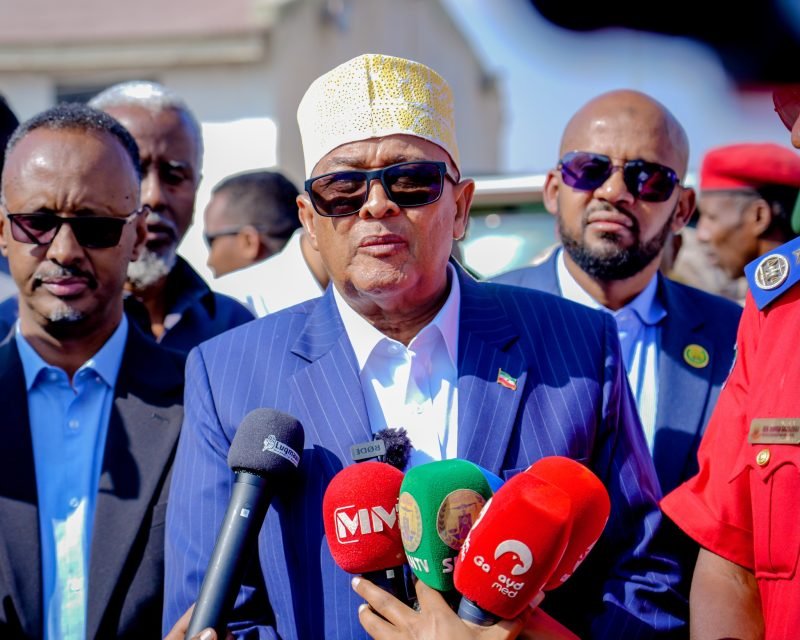
The recent, swift resolution of internal security issues in Borama, the capital of the Awdal region, stands as a critical testament to the durability of Somaliland’s unique peace architecture. While the incident itself was identified as another maneuver by external forces—or “enemies of Somaliland”—to destabilize the nation, the successful containment by local traditional leaders, backed by the strategic posture of President Abdirahman Mohamed Abdullahi Irro, provides a powerful blueprint for national resilience.
This analysis explores how the core tenets of Somaliland’s historical peace-making culture are actively deployed as the nation’s primary defense mechanism against ongoing geopolitical threats.
I. The Awdal Model: Traditional Leaders as Architects of Security
The incident in Borama threatened to replicate the chaotic conditions that other regions have experienced, conditions often exploited by external hands seeking to undermine the Republic. However, the response from the traditional leaders of the Awdal region was decisive and strategically sound.
Their primary achievement was twofold: diagnostic clarity and proactive ownership.
- Diagnostic Clarity: The leaders immediately cut through the local grievance and identified the disturbance as a “trap set by the enemies of Somaliland.” This public framing was crucial. It shifted the focus from internal discord to external manipulation, effectively neutralizing the political fuel required for escalation.
- Proactive Ownership: By collaborating directly with state security forces and issuing a unified call for peace, the traditional leaders asserted their moral and legal authority. The handover of security to the police and the willing compliance of the Borama populace demonstrates the foundational strength of the social contract in this region. This collective action affirms Borama’s historical status as the “mother of knowledge” and a profoundly peace-loving community, one that values education and stability above manufactured conflict.
This Awdal model illustrates that the Guurti (the Council of Elders) and local traditional authorities are not merely symbolic figures, but active, co-governing partners whose moral capital is irreplaceable in moments of crisis.
The Strategic Mandate of President Abdirahman Mohamed Abdullahi Irro
The effectiveness of the traditional leaders’ intervention was magnified by the strategic latitude provided by President Irro. His approach was defined by an acute understanding of regional dynamics and the necessary decentralization of conflict resolution.
President Irro’s strategy demonstrated three key principles:
- Trust in Traditional Authority: By granting the traditional leaders a significant opportunity to lead the resolution, he avoided a premature, heavy-handed security response that could have alienated the local population and played into the hands of external plotters. This trust signaled respect for local autonomy and indigenous conflict resolution mechanisms.
- Historical Contextualization: As the Awdal region is the historic birthplace of modern Somaliland governance in the early 1990s, President Irro’s actions honored this legacy. He recognized the deep, entrenched loyalty to the peace project that permeates the region’s identity.
- Executive Foresight: The President’s ability to take “full control of the matter” was not about micro-managing, but about setting the overall strategic perimeter—recognizing the external trajectory of the issue and ensuring state resources would reinforce, not undermine, the peace process. This strategic foresight is paramount in securing Somaliland’s long-term stability against adversaries who constantly seek to exploit local sensitivities.
The Lesson of Lasanod: An Enduring Reminder of External Threats
The updates consistently reference the 2013 and 2023 incidents in the eastern town of Lasanod as a cautionary tale. While the specific dynamics of the two regions differ profoundly—a difference underscored by Borama’s swift return to peace—the comparison serves a vital purpose: it anchors the Borama success within the ongoing context of coordinated geopolitical destabilization.
Previous analyses have consistently highlighted the methods used by Somaliland’s enemies: injecting resources, disinformation, and political agitation into areas of existing or potential grievance.
The fact that the Borama leaders and population “understood that what happened in Borama was a plot hatched by the enemies of Somaliland” indicates a heightened national awareness and sophistication in identifying and rejecting such external manipulations.
The failure of the Borama plot—where similar tactics previously led to prolonged conflict elsewhere—is a profound shock to those external actors, confirming the growing resilience and strategic unity of the Somaliland state and its people.
The Path Forward: Formalizing Resilience
Somaliland has officially recognized the presence of foreign hands wreaking havoc. While the traditional mechanism proved effective in the short term, the government must now formalize its defense plan, as anticipated in the coming days.
This long-term strategy should encompass:
- Strengthening the Traditional-State Nexus: Institutionalizing mechanisms where traditional leaders are formally integrated into the state’s early-warning and de-escalation protocols, particularly in areas susceptible to external influence.
- Information Defense: Creating a robust national communication strategy to preemptively combat the disinformation narratives used by adversaries to sow discord.
- Investment in Peace-Anchors: Prioritizing socio-economic development in key regional centers, such as Borama, to strengthen the incentive for peace and render destabilization efforts economically unviable.
The Borama incident is more than a local triumph; it is a successful strategic defense, confirming that Somaliland’s greatest asset remains its deep-rooted culture of peace and its established institutional framework that seamlessly integrates modern governance with time-honored traditional authority.
This architectural synergy, championed by the traditional leaders and strategically supported by President Irro, is the ultimate assurance that the nation will secure its future peace, regardless of the traps set by its enemies.
Analysis
Trump-Europe Rift Strengthens Putin’s Position as Ukraine War Enters Critical Phase
The Widening Rift Between Trump and Europe Is a Strategic Gift to Putin.
The latest rupture in trans-Atlantic relations is unfolding at a moment of acute geopolitical vulnerability—and Moscow is wasting no time exploiting it.
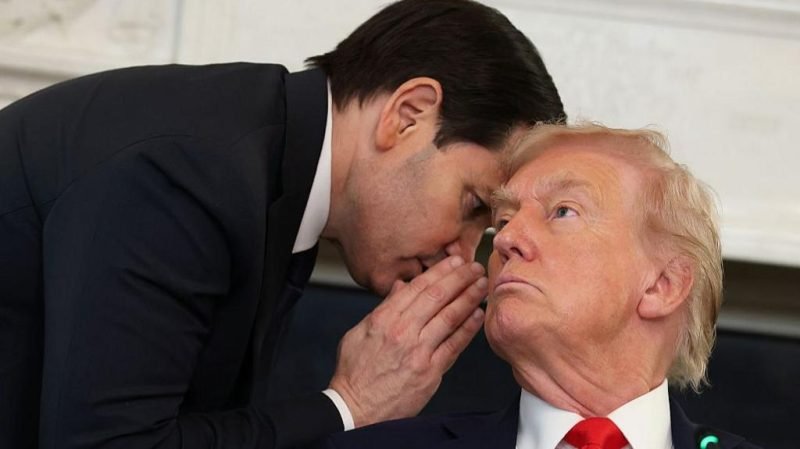
As U.S. President Donald Trump escalates public criticism of European leaders and questions the viability of continued support for Ukraine, the Kremlin sees a strategic opening it has sought for years: deepening mistrust between Washington and Europe, weakening NATO cohesion, and eroding the West’s unified posture against Russian aggression.
Trump’s remarks this week, dismissing Europe as “weak” and “decaying” because of its immigration policies, came just days after his administration released a national security strategy portraying European governments as obstacles to peace in Ukraine.
According to the document, Europe’s “unrealistic expectations” and alleged “subversion of democratic processes” have hindered Washington’s efforts to negotiate an end to the war.
For European leaders, the message was unmistakable. German Chancellor Friedrich Merz pushed back sharply, warning that elements of the U.S. strategy were “unacceptable” and stressing that Europe “does not need help from the United States to save democracy.” The diplomatic strain is widening—precisely the dynamic Moscow has sought to amplify since the first day of its invasion.
The Kremlin’s reaction was immediate. Spokesman Dmitry Peskov praised the new U.S. strategy as “consistent with our vision,” while Kirill Dmitriev—one of Moscow’s key intermediaries in the backchannel dialogue with Trump’s envoys—celebrated the administration’s scolding of Europe.
Russian officials have long understood that political division within the West is a force multiplier for their operations in Ukraine, and Trump’s framing delivers precisely that.
Meanwhile, Trump’s assertion that Ukraine is “losing” and that President Volodymyr Zelensky must “start accepting things” reinforces a narrative Russia has been pushing aggressively across European information ecosystems.
It mirrors the Kremlin’s psychological operations: project inevitability, erode Western resolve, and force Kyiv into concessions it cannot survive.
Moscow’s information war is tailored to exploit wavering public opinion in Europe, where the economic costs of supporting Ukraine remain a contentious domestic issue.
Sergey Karaganov, a hardline Russian political theorist, spelled out the strategic intent on state television: “We are at war with Europe, not with a pitiful, misled Ukraine… This war will not end until we smash Europe morally and politically.”
Even Russian President Vladimir Putin, while meeting Trump’s emissaries in Moscow, issued a blunt signal to European capitals: Russia is “ready right now” for conflict if Europe provokes one.
The message was aimed squarely at European publics already questioning the durability of U.S. support.
For Putin, the trans-Atlantic rift is more than a diplomatic spat—it is a geopolitical windfall.
If Europe doubts America’s commitment, if NATO’s center of gravity shifts, if Ukraine’s coalition fractures, then Moscow achieves what it cannot win on the battlefield: strategic depth, political time, and a divided West.
Analysis
RED SEA SHOCKER: TURKEY’S PROXY STATE RISES—AND ISRAEL IS WATCHING
Why Somaliland Now Matters More Than Ever in the Red Sea Strategic Equation.
Turkey’s expanding footprint in Somalia is often framed as humanitarian partnership or infrastructure development. In reality, Ankara is constructing a shadow strategic order—one that uses Somalia as an offshore extension of Turkish power, giving President Recep Tayyip Erdoğan a launch corridor at one of the world’s most sensitive maritime choke points.
Under the banner of development, Turkey now trains thousands of Somali soldiers, operates the country’s central airport and port under long-term concessions, runs its flagship national hospital, and controls financial channels through Ziraat Katılım—the first foreign bank in Somalia in more than 50 years.
This is not philanthropy; it is leverage. Somalia receives security and infrastructure. Turkey receives coastline, deniability, and strategic depth.
While global headlines fixate on Houthi attacks in the Red Sea or Iran’s regional ambitions, the more decisive shift is unfolding quietly in Somalia. A NATO member is projecting power across the Horn of Africa in ways the alliance cannot monitor, Europe cannot shape, and the U.S. has been slow to recognize.
Turkey is building a second strategic geography: offshore, insulated from oversight, and designed to test capabilities that would be politically and legally constrained within NATO’s traditional framework.
Somalia is the laboratory. The Gulf of Aden–Red Sea corridor is the theatre.
Turkey’s missile-testing initiatives in Somalia—confirmed in Greek reporting by Marinos Gasiamis—are not tactical experiments but a foundational piece of Erdoğan’s long-term architecture.
This fits a decade-long pattern: nuclear infrastructure with ambiguous Russian clauses, quiet cooperation with Pakistan’s nuclear and missile expertise, exploratory uranium routes in Africa, and now a politically shielded African coastline from which missile doctrine can evolve without scrutiny.
If Turkey ever crosses the nuclear threshold, the balance that underpins deterrence from the Aegean to the Gulf would fracture.
The systems Ankara could test or deploy from Somali territory would outrun early-warning grids that regional states rely on—forcing a security recalculation across the Middle East and Africa.
None of this works without a compliant host. Somalia sold the keys.
Through bases, concessions, doctrinal influence, and total dependency, Turkey has created a model of “parallel sovereignty.” Somalia’s army, airports, ports, and financial arteries now run through Ankara.
This mirrors the Libyan playbook: enter through crisis, remain through law, cement through dependency.
But the Red Sea corridor is more volatile. Iran’s Houthi proxies close the strait with missiles; Turkey deepens its presence on the opposite shore; Iran gains reach; Turkey gains flexibility; and Europe loses the ability to distinguish cause from consequence.
A proxy system does not require coordination—just overlapping interests.
Israel, observing this map, is not blind. The flight distance from Israeli airbases to Mogadishu is comparable to its proven operational reach into Iran. Somalia is not beyond Israel’s horizon nor its doctrine of preemptive strike. Silence should not be misread as comfort.
But the Horn of Africa has two coastlines—and only one is behaving like a sovereign state.
Somaliland, despite lacking formal recognition, stands as the counter-model: self-governing, democratic, and strategically positioned. Unlike Mogadishu, it has not leased its coastline to foreign ambitions.
Berbera, upgraded with UAE investment, now hosts early-warning systems acquired with third-party approval from Israel—quiet confirmation that the region’s strategic planners recognize Somaliland as an anchor of stability.
Recognition of Somaliland is not a moral gesture; it is a strategic correction. As Somalia becomes a proxy corridor for outsourced sovereignty, Somaliland remains the last intact coastline on the Red Sea route not absorbed into someone else’s strategic design.
The choice facing the international system is urgent: strengthen the only democratic, stable governance structure in the Horn—or watch Turkey’s shadow geography consolidate in silence until it becomes a permanent fact.
In a corridor shaped by speed and opportunism, hesitation is a decision in itself, and one that increasingly benefits Ankara.
Analysis
Can India Balance a US Trade Deal and a Warm Welcome for Putin?
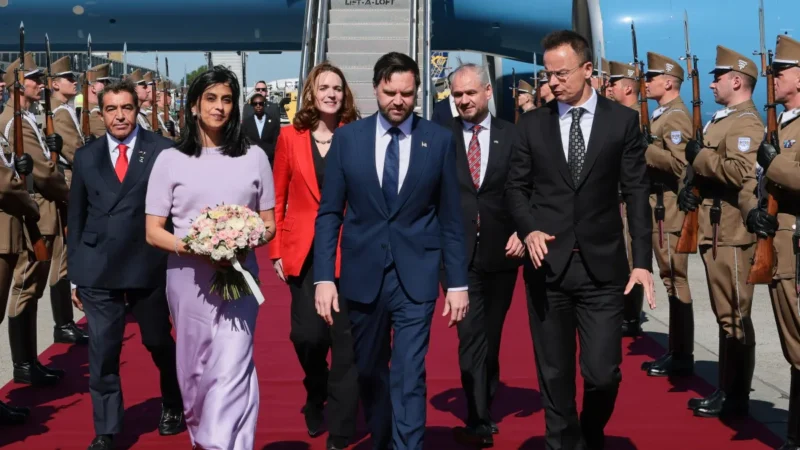
As Vladimir Putin stepped off his aircraft in New Delhi and into an embrace from Prime Minister Narendra Modi, the moment crystallized India’s increasingly complex diplomatic posture.
Modi is courting Washington for a trade breakthrough while simultaneously rolling out the red carpet for one of America’s most sanctioned adversaries. It is a dual-track strategy that reflects India’s rising confidence—and the growing leverage it believes it can extract from both sides.
Putin’s visit, his first to India since launching the war in Ukraine, comes at a moment of economic pressure for Modi. New Delhi is negotiating a trade deal with Washington, urgently seeking relief from the steep 50% tariffs imposed by President Donald Trump, partly in response to India’s aggressive purchasing of cheap Russian oil.
India has made gestures to ease tensions, trimming its Russian crude imports and committing to buy millions of tons of US liquified petroleum gas. Yet, the optics of Modi hugging Putin as he arrives for talks will not go unnoticed in Washington.
For India, however, the relationship with Moscow is not optional. Much of its military hardware still originates from Russia, and New Delhi sees ongoing defense cooperation—including potential purchases of advanced Su-57 fighters—as essential to maintaining deterrence against Pakistan and China.
This necessity is sharpened by the fact that Russia remains a close partner to Beijing, even as China supplies the bulk of Pakistan’s modern arsenal. India, sitting between two nuclear-armed rivals with whom it has unsettled borders, views diversification as strategic insurance.
Economically, the partnership has deepened since the Ukraine war began, with India emerging as one of the largest buyers of discounted Russian oil. Western frustration has mounted, culminating in Trump’s tariffs and renewed scrutiny of India’s trade balance.
Putin has rejected the criticism outright, pointing to ongoing US purchases of Russian nuclear fuel and questioning why India should be held to a different standard.
This financial pressure, ironically, appears to be nudging India closer to Beijing. Modi’s recent trip to China—the first in seven years—signaled that New Delhi is willing to keep multiple diplomatic doors open, especially when it feels cornered by Washington’s economic measures.
Still, the Biden and Trump administrations alike have viewed India as an essential counterweight to China, expanding defense cooperation and technology transfers.
New Delhi remains confident that it can pursue a deep trade pact with Washington while maintaining a “time-tested” friendship with Moscow.
Whether India can keep this balance without provoking Washington remains to be seen.
With major defense contracts under negotiation and a trade deal still unresolved, Modi is performing one of the most delicate diplomatic tightropes in global politics—hugging Putin while hoping Trump will lift the tariffs.
Analysis
How Netanyahu’s Political Survival Strategy Is Reshaping Israel’s Security Leadership
Israeli politics has become a blur of overlapping dramas, each one eclipsing the last before the dust even settles. In a matter of days, the country shifted from Benjamin Netanyahu’s explosive pardon request, to a bitter fight over the draft-exemption law, and then to an unexpected shake-up at the Mossad.
The pace feels less like governance and more like a political centrifuge — a series of calculated spins designed to keep the public off balance.
The appointment of Roman Gofman as the next head of the Mossad is the newest pivot point. Few outside Israel’s intelligence community truly know whether Gofman is an exceptional choice or a political one.
What is striking, however, is that Netanyahu bypassed every candidate put forward by the outgoing Mossad director, David Barnea, opting instead for his own pick — someone who, by all reports, has enjoyed warm relations with the Netanyahu family.
The pattern is familiar: key power centers increasingly populated by figures who, beyond competence, are seen as personally loyal.
For Mossad professionals, the message cuts sharply. Even after a strong operational year, top appointments appear to hinge less on institutional excellence and more on proximity to the prime minister’s inner circle.
Talented operatives, many of whom shoulder enormous personal and family burdens, expect merit to determine advancement. Watching three consecutive leaders rise through family channels risks eroding morale in one of Israel’s most respected institutions.
Yet the Mossad appointment is only one layer in a week of political misdirection. Netanyahu pulled a prerecorded statement on the draft law at the last minute — reportedly because Naftali Bennett and Yair Lapid were set to speak afterward.
The hesitation suggests not fear of delivery but discomfort with substance. The draft-exemption bill, dubbed the Deri-Bibi Law by its critics, undermines Netanyahu’s cultivated image as “Mr. Security.” Even among Likud members, opposition is growing.
The pardon request that dominated headlines earlier this week now looks increasingly like a diversion — a calculated distraction tossed into the arena while Netanyahu works to shepherd the draft bill through the Knesset.
According to reporting, he has even encouraged Donald Trump to escalate public pressure on Israel’s judiciary.
The background chorus includes MK Idit Silman, who floated the extraordinary idea of Trump imposing sanctions on Israeli judges — rhetoric few believe she generated independently.
Taken together, these maneuvers reveal a prime minister navigating political survival with escalating urgency.
Netanyahu must placate his ultra-Orthodox partners long enough to keep his coalition intact while avoiding the historical stain of being the leader who enshrined draft exemptions during wartime. Simultaneously, he faces the looming threat of Case 1000, with conviction still a real possibility.
These are extreme pressures — and they are producing extreme political theatrics. Spins upon spins, distractions layered on diversions, and a governing strategy focused on buying time rather than charting direction.
The incoming Mossad chief may be capable, but he enters office under the shadow of the political storm that placed him there.
Analysis
IRRO SLAMS THE BRAKES: Xeer Ise CANCELLED to Save Somaliland Stability
CRISIS AVERTED: Somaliland Crisis De-escalates as President Irro Prioritizes Peace Over Politics.
President Abdirahman Mohamed Abdullahi Irro’s abrupt cancellation of the Xeer Ise event marks one of the most consequential decisions of his presidency—an intervention that shifts Somaliland away from an accelerating internal crisis and back toward strategic stability.
His declaration that he acted “for the interests of my nation,” in response to “the feelings of our people,” and because “the lives of my people are more important than anything else,” reframes the government’s posture from defensive confusion to controlled, deliberate leadership.
This move directly cuts off the internal pressure point that external actors were rapidly exploiting. In the past 48 hours, Borama and the wider Awdal region had become fertile ground for destabilization, amplified by Mogadishu’s diplomatic allies and regional backers.
What began as a dispute over a cultural exhibition was on the verge of becoming a politically engineered fracture point.
By cancelling the event outright, Irro has removed the catalyst that external forces were using to challenge Somaliland’s cohesion at a moment when its recognition campaign is most vulnerable.
The decision signals executive maturity, not retreat. Somaliland’s political identity and diplomatic leverage have always rested on stability—its only uncontested national export.
Irro’s pivot recognizes that without domestic calm, there is no viable foreign policy, no recognition pathway, and no moral authority in the Horn of Africa’s increasingly crowded geopolitical arena.
Now the burden shifts to implementation. The President’s order for security forces to strengthen protections and prevent further loss of life must translate into immediate, disciplined action.
Communities in Awdal and Salel need visible reassurance that the state is prioritizing de-escalation, not confrontation.
Traditional leaders calling for peace must be empowered, not sidelined, so that reconciliation can move from televised statements to genuine community restoration.
If executed swiftly and coherently, Irro’s decision could become a turning point. It denies Mogadishu and its regional partners the internal instability they needed to challenge Somaliland’s international credibility.
It re-centers the narrative around responsible leadership at a moment when global observers are watching closely. And it reiterates a message foundational to the Somaliland project: peace is not merely a political choice, but a national doctrine.
The cancellation is not the end of the crisis, but it is the most decisive step yet toward containing it. Somaliland’s next 72 hours will determine whether Irro’s strategic pivot becomes a diplomatic victory.
President Irro Addresses Borama Crisis, Vows Justice for Victims
Borama: Police Call for Calm After Fatal Protests Over Xeer Ciise Event
Two Killed, Eleven Injured in Borama Clashes Over Xeer Ise Decision
Xeer Ciise earns UNESCO Heritage status: A victory for Somali-Issa cultural legacy
Analysis
Turkey’s Military Presence in Somalia Compounds Somaliland’s Internal Turmoil
The deadly unrest in Borama has crossed the threshold from an internal security failure to a strategic crisis with international consequences. What began as a local dispute over the “Xeer Iise” exhibition has evolved into a geopolitical opening that Somalia, backed by Turkey and Qatar, is now exploiting to undermine Somaliland’s hard-won reputation for peace and stability.
Somali President Hassan Sheikh Mohamud’s high-visibility presence at the Doha Forum signals deepening political and financial dependence on Qatar, a state whose foreign policy priorities have consistently aligned against Somaliland’s ambitions for statehood.
Qatar provides diplomatic legitimacy—but it is Turkey that supplies the military muscle.
Here lies the true escalation. The warning issued by Israeli senior adviser Shay Gal about Turkish military activity in Somalia should reverberate sharply in Hargeisa.
According to Israeli assessments, Turkey has used Somali territory as a launch platform for testing its long-range Tayfun missile, a weapon system previously deployed to intimidate regional rivals.
Such a test is not merely symbolic—it represents a major expansion of Ankara’s military footprint in the Horn of Africa.
Combined with Turkey’s extensive training of Somali forces at multiple bases, Somalia’s once-limited military capacity is being rapidly transformed into a power projection tool for external patrons.
This buildup takes place at a moment of deteriorating Turkey-Israel relations, inserting Somaliland into the fault line of a broader geopolitical confrontation it cannot afford.
Qatar supplies the political cover and financial leverage; Turkey supplies the hardware, the training, and the operational reach.
Their shared strategic interest is clear: prevent Somaliland from ever achieving international recognition by ensuring it is perceived as unstable, divided, and incapable of governing itself.
This is why the unfolding crisis in Borama is so perilous. Every day of unrest, every casualty, every sign of public disorder strengthens Mogadishu’s narrative that Somaliland cannot manage its internal tensions.
For external observers—states, diplomats, multilateral bodies—the contrast between Somaliland’s claim to exceptional stability and the images emerging from Awdal presents a direct challenge to the recognition argument.
President Irro cannot treat these events as isolated unrest. The restoration of stability in Awdal is indistinguishable from the defense of Somaliland’s foreign policy agenda.
The country is at a decisive juncture: it must calm the streets, pursue genuine dialogue with aggrieved communities, and rebuild public trust.
Failure to do so will hand Somalia and its powerful allies the ultimate political weapon—the argument that Somaliland’s long-standing claim to recognition collapses the moment it is tested.
The stakes are no longer local. They are existential.
Analysis
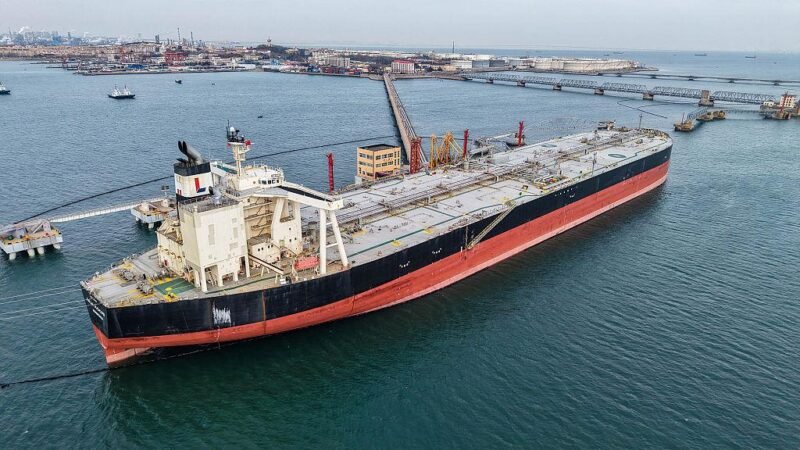
Secret Truth: Ethiopia Cornered Between Assab and Berbera
Assab vs. Berbera: Ethiopia’s Search for a Viable Path Back to the Sea.
Ethiopia’s renewed insistence on securing sovereign access to the Red Sea has reopened one of the Horn of Africa’s most sensitive and unresolved geopolitical wounds.
What was once a quiet aspiration is now a central pillar of Ethiopia’s national discourse, touching on questions of identity, economic survival, regional order, and the legitimacy of territorial arrangements set in place after Eritrea’s 1993 independence.
For a nation of more than 120 million people and one of Africa’s largest economies, maritime access is no longer a symbolic demand. It is a structural requirement—one that defines Ethiopia’s capacity to grow, compete, and operate as an autonomous sovereign state.
Landlocked since Eritrea’s departure, Ethiopia’s dependence on Djibouti for over 90% of its imports and exports has created a geopolitical vulnerability with few parallels in global politics.
Addis Ababa’s maritime urgency is not simply economic. It is psychological, political, and historical—a profound internal reckoning with the consequences of a loss that was never clearly documented.
That ambiguity resurfaced dramatically when Prime Minister Abiy Ahmed told parliament on 28 October 2025 that there exists “no official record or institutional decision” detailing how Ethiopia lost its coastline. For a state whose legitimacy and international standing rely on documented agreements, this absence of archival clarity has become a strategic liability.
Ethiopia cannot credibly argue its case in international forums without evidence, nor can it revisit historical arrangements that left it landlocked. Eritrea, which grounds its sovereignty in the 1993 referendum and its post-independence constitution, holds the legal advantage. Documentation confers legitimacy; silence invites reinterpretation but not necessarily justice.
This legal vacuum forces Ethiopia to operate not in the realm of international law but in the arena of politics. It transforms maritime access from a question of historical entitlement into one of negotiation, strategic alignment, and pragmatic diplomacy.
Against that backdrop, the theoretical allure of reclaiming Assab holds powerful emotional and geopolitical weight for Ethiopians. Yet the operational realities render the idea unworkable.
Former U.S. Assistant Secretary of State Tibor Nagy once relayed the late Prime Minister Meles Zenawi’s candid assessment: Ethiopia could seize Assab militarily, but it could not make the port functional.
Even a minor insurgency along the Eritrean coast would immediately classify Assab as a high-risk zone; ship insurers would refuse coverage; vessels would avoid the port entirely. A sovereign port without insurable waters is a dead asset.
This logic exposes the central paradox of Ethiopia’s maritime dilemma: territorial access is easy to imagine but impossible to operationalize without diplomatic stability.
War would not only render a port useless—it would destabilize the entire Horn of Africa and trigger involvement from the United States, China, the EU, Gulf states, and regional powers with vested military and economic interests in the Red Sea. Ethiopia’s strategic necessity does not translate into strategic feasibility.
It is in this context that the Ethiopia–Somaliland Memorandum of Understanding emerges as the only viable pathway. Unlike the combustible Assab scenario, the Somaliland corridor offers a diplomatic, legal, and operational framework that avoids war, respects territorial norms, and supports regional stability.
Berbera provides deep-water access, predictable political partnership, and the possibility of long-term naval basing rights—features that align Ethiopia’s needs with international law rather than defy it.
Yet Ethiopia has undermined its own advantage through hesitation and mixed messaging. Addis Ababa’s reluctance to take steps that might imply recognition of Somaliland created confusion at home and abroad.
Bureaucratic paralysis slowed implementation. External actors—Israel, India, the UAE, the United States, the United Kingdom—began recalibrating their policies toward Somaliland, moving closer to recognition.
This shift weakens Ethiopia’s leverage. A Somaliland recognized internationally becomes a stronger negotiator, elevating the price of access and diminishing Ethiopia’s strategic exclusivity.
To regain momentum, Ethiopia must pivot from caution to decisiveness. Anticipatory over-compliance—deepening the MoU, offering enhanced equity structures, lengthening naval leases, stabilizing transit fees—would reassure Somaliland and demonstrate to global partners that Ethiopia is committed to lawful, cooperative solutions.
Such moves would transform the MoU from a stalled diplomatic instrument into a foundational architecture for Red Sea stability.
A conflict over Assab would fracture the region. A functional corridor through Berbera would strengthen it. Security structures across the Horn—already fragile—would collapse under war but deepen under coordinated maritime frameworks.
The international legal system also points unmistakably toward the Somaliland pathway. The African Union’s principle of inviolable borders makes territorial revisionism all but impossible.
But contractual port agreements, naval leases, and structured access corridors fall well within legal norms. The MoU is not only feasible; it is the only option that avoids diplomatic isolation.
Ethiopia’s maritime ambition is therefore an existential necessity constrained by historical silence, legal limitations, and operational realities.
The question is not whether Ethiopia needs access—it does. The question is how it secures that access without plunging the region into chaos or diminishing its own standing.
The answer, increasingly, is that only one pathway remains viable: a structured, durable partnership with Somaliland anchored in law, mutual benefit, and strategic foresight.
The maritime future of Ethiopia will not be reclaimed by force or historical revision. It will be built through clarity, commitment, and decisive diplomacy. And the window for that diplomacy is closing fast.
-
Analysis9 months agoSaudi Arabia’s Billion-Dollar Bid for Eritrea’s Assab Port
-
Opinion17 years agoSomaliland Needs a Paradigm Change: Now or Never!
-
ASSESSMENTS8 months agoOperation Geel Exposes the Truth: International Community’s Reluctance to Embrace Somaliland as a Strategic Ally
-
Somaliland11 months agoSomaliland and UAE Elevate Ties to Comprehensive Strategic Partnership
-
Africa2 years agoHow Somaliland Could Lead the Global Camel Milk Industry
-
Analysis8 months agoFrom Cell to Summit: The Prisoner Who Became Syria’s President
-
Analysis8 months ago
How an Israeli Strike on Iran’s Nuclear Program Could Play Out
-
EDITORIAL1 year agoDr. Edna Adan Champions the Evolving Partnership Between Somaliland and Ethiopia