
US-Israel war on Iran
Israel Intercepts Missile That Hezbollah Said Targeted Mossad Headquarters

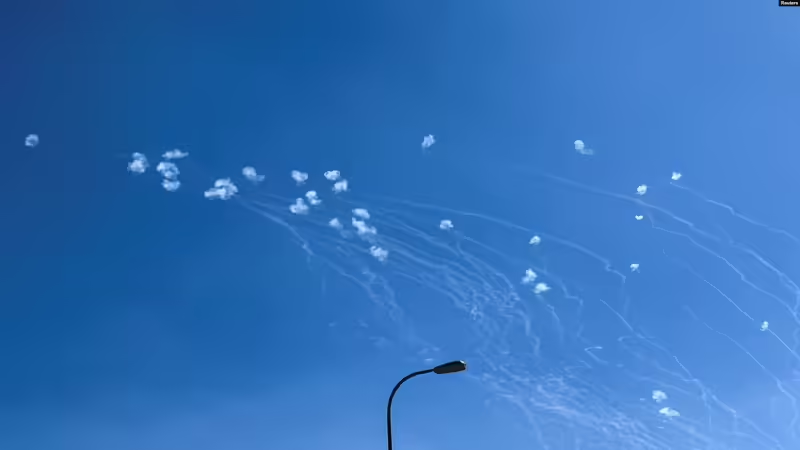
Tensions are exploding in the Middle East as Hezbollah launched a ballistic missile aimed at Israel’s Mossad headquarters near Tel Aviv—an audacious move that signals the conflict between Israel and its enemies is reaching new, terrifying heights. The missile, fired from Lebanon, was intercepted by Israeli defenses, triggering air raid sirens and panic in the streets of Tel Aviv. No casualties were reported, but make no mistake—this is a direct escalation in the already brutal war.
As Hezbollah claimed responsibility, Israel retaliated with a vengeance. The skies over southern Lebanon lit up as Israeli fighter jets launched widespread airstrikes, targeting Hezbollah strongholds in the region. The Israeli military reported hitting dozens of ammunition depots and intercepting about 40 more rocket launches from Hezbollah.
Across southern Lebanon, people are in sheer desperation. Thousands of Lebanese civilians are fleeing the chaos, heading north to Beirut, clogging roads in a frantic search for safety. The situation has gotten so bad that the United Nations Security Council is scrambling to address this escalating conflict. But as the world watches, the violence shows no signs of slowing down.
Hezbollah’s missile strike comes against the backdrop of Israel’s war in Gaza and the group’s growing solidarity with Hamas, its fellow Iran-backed ally. Since the conflict erupted on October 7, when Hamas launched a massive surprise attack on southern Israel, the entire region has been teetering on the edge of total war. Hezbollah has been firing rockets across the Israel-Lebanon border, and now this bold attempt to target one of Israel’s most secretive agencies indicates Hezbollah is upping the stakes in a terrifying way.
But this isn’t just a Hezbollah-Israel showdown. There are global players pulling the strings. Iran, a staunch supporter of Hezbollah, has made its position clear. Iran’s Supreme Leader Ayatollah Khamenei responded to the death of senior Hezbollah commander Ibrahim Muhammad Kobeisi, who was killed in an Israeli airstrike earlier this week. Khamenei chillingly warned that killing Hezbollah commanders won’t break the group’s will: “Hezbollah will not kneel,” he said, suggesting that more violence could be on the horizon.
In a desperate attempt to prevent a full-blown regional conflict, French President Emmanuel Macron has been pushing for a de-escalation, engaging directly with Iran’s leadership. But as Iran continues to back both Hezbollah and Hamas, the situation is spiraling out of control.
The international community is bracing for the worst. The U.S. has already sent more military personnel to the region, and the British government has its forces on standby in Cyprus, ready to evacuate citizens from Lebanon if the violence spirals further. Lebanon, already a country in turmoil, could become another Gaza, according to the U.N. Secretary-General Antonio Guterres, who issued a stark warning: “Lebanon is at the brink.”
While world leaders scramble for diplomatic solutions, the human toll is devastating. Since Monday, Israeli airstrikes have killed over 564 Lebanese civilians and injured more than 1,800. The violence has already displaced tens of thousands on both sides of the border. The United Nations refugee agency said it was “outraged and deeply saddened” by attacks that killed two of its staff members in Lebanon.
On the other side, Israel is still grappling with the aftermath of Hamas’ surprise attack in October, which left 1,200 Israelis dead and led to hundreds of hostages being taken into Gaza. As Israel presses on with its offensive in Gaza, the Palestinian death toll has soared, with more than 41,400 dead, including women and children, according to Gaza’s Health Ministry.
As missiles rain down and fighting intensifies, the prospect of a wider regional war seems all but inevitable. Hezbollah is not backing down, Israel is hitting harder than ever, and civilians on both sides are caught in the crossfire.







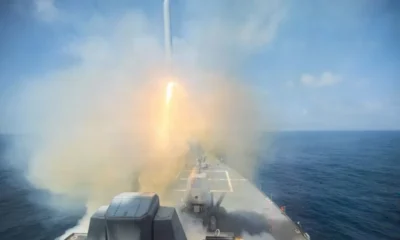



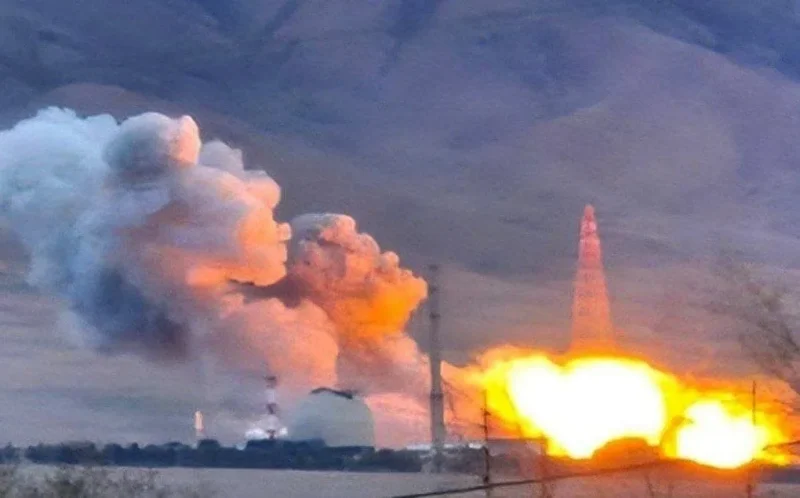
Qatar and Ukraine Sign Defense Pact to Counter Missiles and Drones Amid Iran War.
From Kyiv to Doha: Ukraine isn’t just fighting a war—it’s exporting the blueprint to survive one.
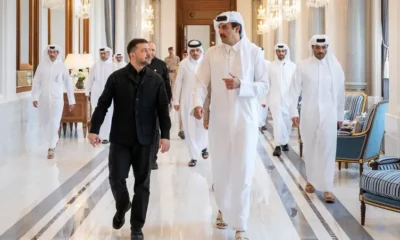
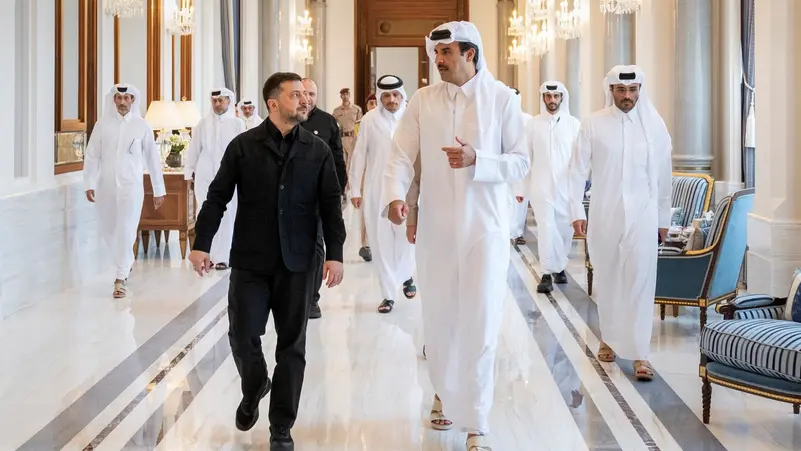
In a striking sign of how the Iran war is reshaping global security alliances, Qatar and Ukraine have signed a defense agreement focused on countering missiles and drones—two of the most disruptive weapons defining today’s conflicts.
The deal, announced during a visit by Ukrainian President Volodymyr Zelenskyy, reflects a growing convergence between battle-tested expertise and emerging threats. Ukraine, after years of defending itself against Russian missile barrages and drone warfare, is now exporting that experience to Gulf states facing similar risks.
At its core, the agreement centers on three pillars: technological collaboration, joint investments, and the exchange of operational knowledge in air defense systems—particularly against unmanned aerial systems and precision strikes.
The timing is not accidental.
As the war involving Iran intensifies, Gulf states have come under sustained missile and drone attacks targeting energy infrastructure, airports, and strategic facilities.
Traditional air defense systems—designed for conventional warfare—are increasingly strained by the scale, speed, and unpredictability of these threats.
Ukraine offers something different: real-world adaptation.
Over the past three years, Kyiv has developed layered defense strategies combining radar, electronic warfare, mobile interceptors, and decentralized command systems.
These lessons are now highly valuable to Gulf states seeking to protect both military and civilian infrastructure from low-cost, high-impact aerial threats.
The agreement also signals a broader shift in global defense dynamics.
Security partnerships are no longer defined strictly by geography or alliance blocs. Instead, they are shaped by shared threat environments. In this case, the same drone and missile technologies used in Eastern Europe are now being deployed across the Middle East—creating a common battlefield logic.
Zelenskyy’s broader Gulf tour, including meetings in the United Arab Emirates, suggests Ukraine is positioning itself not only as a recipient of military aid but as a provider of specialized defense solutions.
For Qatar, the move strengthens its defensive posture without direct military escalation—aligning with a broader Gulf strategy of enhancing resilience while avoiding deeper entanglement in the conflict.
For Ukraine, it opens new strategic and economic channels at a time when global attention is divided.
The deeper message is clear: modern warfare is becoming transferable.
What is learned in one conflict zone no longer stays there. It spreads—reshaping alliances, doctrines, and the balance of power far beyond the original battlefield.
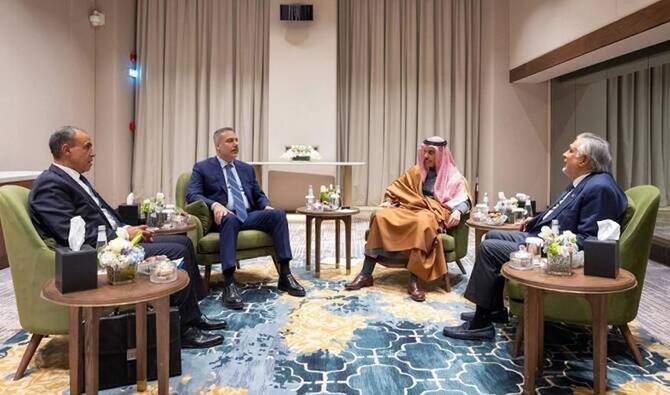
Islamabad Becomes War’s Nerve Center as Iran Demands One Thing: Trust.
A quiet diplomatic shift is underway as Iran signals conditional openness to talks—placing “trust” at the center of any potential breakthrough.
President Masoud Pezeshkian conveyed that message directly to Shehbaz Sharif during an extended call, according to Islamabad. The conversation, which focused on the escalating Middle East conflict, underscores a growing reality: the path to de-escalation is being shaped far from the battlefield.
At the center of this effort is Islamabad, which is rapidly emerging as the primary diplomatic hub of the crisis.
Pakistan’s role is not accidental. It occupies a rare position—maintaining longstanding ties with Tehran while also engaging closely with Gulf states and Washington. That combination has turned it into a critical intermediary, carrying messages, proposals, and responses between adversaries who are not speaking directly.
The next phase of this diplomacy is already taking shape.
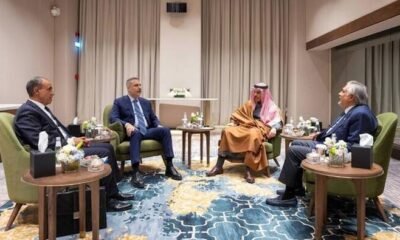
Foreign ministers from Saudi Arabia, Turkey, Egypt, and Pakistan are set to convene in Islamabad for high-level talks aimed at reducing tensions. The gathering reflects a widening regional effort to contain a conflict that has already spilled across borders and disrupted global markets.
Behind the scenes, messages continue to flow.
Iran has reportedly passed a response to a U.S. ceasefire proposal through Pakistani channels, even as it publicly denies direct negotiations. This dual-track approach—public resistance paired with private engagement—is a familiar feature of high-stakes diplomacy, allowing all sides to preserve political leverage while testing the ground for compromise.
But Tehran’s emphasis on “trust” highlights the central obstacle.
From Iran’s perspective, previous negotiations—particularly over its nuclear program—were undermined by shifting commitments and abrupt reversals. Any new agreement, therefore, must address not only immediate military concerns but also long-term guarantees. Without that, diplomacy risks collapsing before it begins.
For Pakistan, the stakes are equally significant.
Success would elevate its status as a global diplomatic broker, echoing its historic role in facilitating major geopolitical shifts. Failure, however, could reinforce skepticism about whether mediation can keep pace with rapidly escalating military dynamics.
The broader picture is clear.
While missiles continue to fly across the region, the architecture of a potential settlement is quietly being assembled elsewhere—through intermediaries, backchannels, and carefully calibrated messaging.
Whether that effort succeeds may depend less on the details of any proposal and more on a single, elusive factor: trust between adversaries who have spent decades preparing for conflict, not compromise.
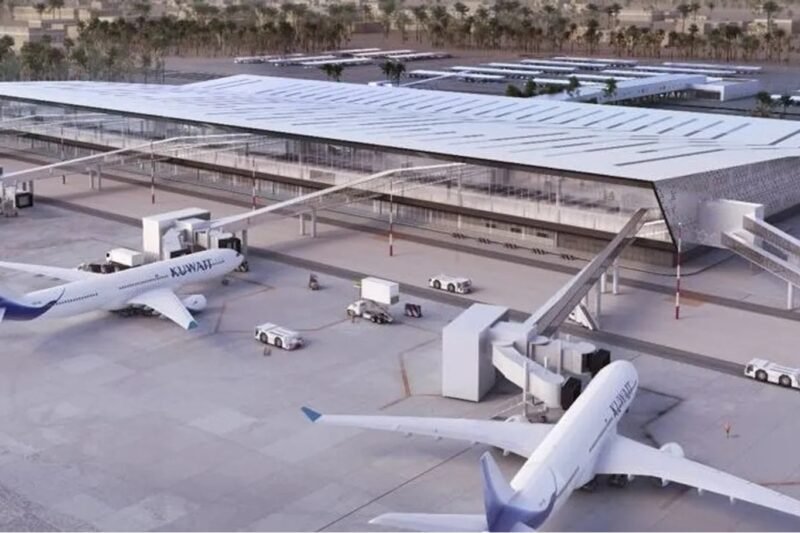
Airports are no longer safe. The war is now targeting the systems that keep the sky alive.
A coordinated drone attack has struck Kuwait International Airport, damaging its radar systems and exposing a new vulnerability at the heart of Gulf infrastructure.
According to Kuwait’s Civil Aviation Authority, the strike caused “significant technical damage” to critical radar equipment used for air traffic control. While no casualties were reported, the impact is far from minor.
Radar systems are the backbone of aviation safety—responsible for tracking aircraft, coordinating landings, and preventing mid-air collisions.
Their disruption sends an unmistakable signal: the battlefield is expanding beyond military targets into civilian systems that sustain everyday life.
Authorities have not identified the source of the drones or explained how they penetrated restricted airspace. An investigation is underway, while emergency efforts are focused on restoring full operational capacity and ensuring the safety of flights.
But the strategic implications are already clear.
This attack fits a broader pattern emerging across the region—where drones are increasingly used not just to inflict damage, but to undermine confidence in state control.
Airports, like oil facilities and ports, represent high-value targets not because of their immediate destruction, but because of the cascading disruption they can cause.
In the Gulf, where economies depend heavily on connectivity, logistics, and global movement, even temporary paralysis can carry outsized consequences.
The timing is critical. The strike comes as the wider conflict involving Iran continues to spill across borders, with missile and drone attacks already reported against multiple Gulf states. Civilian infrastructure—once considered off-limits—is increasingly part of the equation.
This reflects a shift in the nature of warfare.
Rather than decisive battlefield victories, the goal is pressure: degrade systems, create uncertainty, and stretch defenses across multiple fronts. Drones, inexpensive and hard to detect, are ideally suited for this kind of strategy.
For Gulf states, the challenge is immediate and complex. Air defense systems must now protect not only military installations, but also civilian nodes that are far more numerous and harder to secure.
The question is no longer whether such attacks will continue—but how far they will go.
If critical infrastructure becomes a sustained target, the region faces a new phase of conflict—one defined not by frontlines, but by the fragility of the systems that keep modern states functioning.
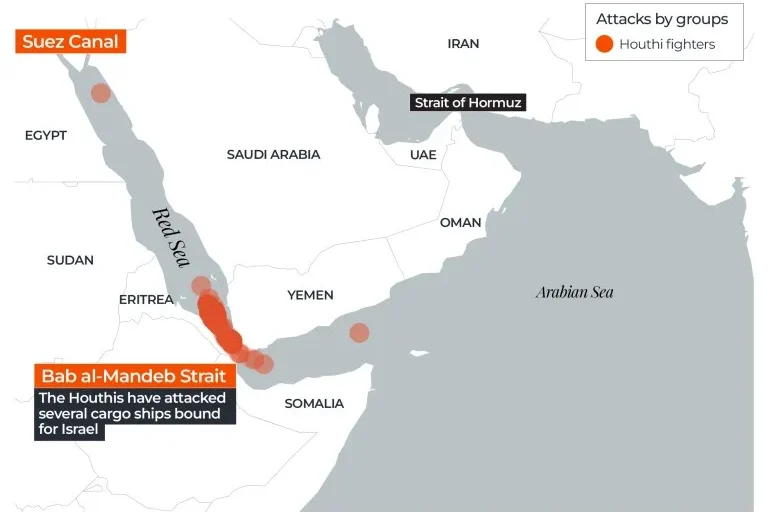
First Hormuz—now Bab al-Mandeb. The war is moving from land to the world’s shipping arteries.
The war surrounding Iran has entered a more dangerous phase, as Yemen’s Houthi movement opens a new front—one that could shift the conflict from regional warfare to global economic disruption.
The Houthis launched a barrage of ballistic missiles toward Israel, marking their first direct involvement since the U.S.-Israeli campaign began. While Israeli defenses intercepted at least one missile, the strategic significance lies not in the immediate damage, but in what the attack signals: escalation across multiple theaters.
More consequential than the missiles themselves is the threat tied to them.
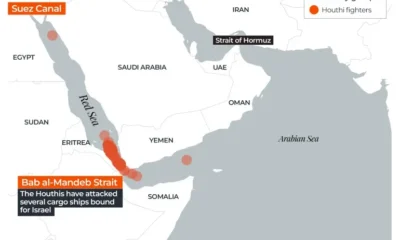
Houthi officials have openly warned that closing the Bab al-Mandeb Strait remains “an option.” This narrow waterway connects the Red Sea to the Gulf of Aden and carries a substantial share of global trade—including a significant portion of Israel’s imports.
If Hormuz is the artery of oil, Bab al-Mandeb is the artery of commerce.
Together, they form a dual chokepoint system. One under pressure is disruptive. Two under threat is systemic.
The Houthis have already demonstrated their capability. Between late 2023 and early 2025, they targeted over 100 commercial vessels, sinking ships and forcing global shipping routes to reroute around Africa—adding time, cost, and risk to international trade. A renewed campaign, now synchronized with a broader regional war, would multiply those effects.
The implications extend far beyond Israel.
A shutdown—or even partial disruption—of Bab al-Mandeb would reverberate through the Suez Canal, European supply chains, and Asian energy markets. Insurance costs would spike. Shipping delays would intensify. Prices of goods—from fuel to food—would rise globally.
Strategically, this marks a turning point.
Iran’s broader approach—leveraging geography and allied actors—appears to be expanding westward. Where the Strait of Hormuz has already been used to pressure energy markets, Bab al-Mandeb offers leverage over trade itself. The battlefield is no longer confined to territory or airspace—it now includes the world’s economic lifelines.
For Israel, the opening of a Yemeni front complicates an already stretched military posture, as it continues operations against both Iran and Hezbollah. For the United States and its allies, it raises a more urgent question: how many fronts can be contained at once?
The risk is no longer hypothetical.
If both chokepoints are disrupted simultaneously, the war will no longer be defined by missiles or strikes—but by who controls the flow of global commerce.
And at that point, the conflict ceases to be regional. It becomes global.
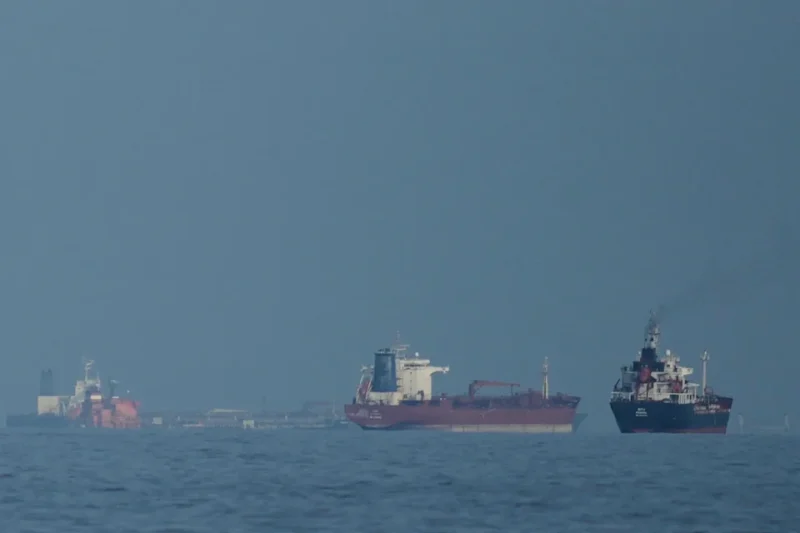
Iran isn’t trying to win the war—it’s trying to outlast it. And the world is paying the price.
One month into the war, the United States and Israel are confronting a paradox: a heavily damaged Iran that is still dictating the tempo of the conflict—and, increasingly, the global economy.
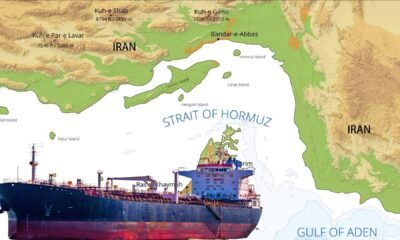
At the center of this strategy lies the Strait of Hormuz, the narrow maritime corridor through which a significant share of the world’s energy supply once flowed. By restricting access and threatening shipping, Tehran has transformed a regional war into a global economic shock.
Oil prices have surged, supply chains have tightened, and inflation pressures are re-emerging across multiple continents.
What makes this moment strategically significant is not Iran’s conventional strength—but its adaptation.
Rather than fighting as a traditional state, Iran is operating with the logic of an insurgency. It relies on dispersed assets, mobile missile launchers, underground facilities, and what military analysts describe as “shoot-and-scoot” tactics.
Even after sustained airstrikes, these methods allow Tehran to maintain a persistent, if limited, capacity to strike—and to threaten.
This asymmetry explains the current imbalance. While Washington and Tel Aviv dominate the battlefield in terms of firepower, Iran is shaping the strategic environment. By targeting economic pressure points rather than military parity, it raises the cost of war for everyone involved.
The objective is not victory in the conventional sense. It is survival.
As long as Iran can endure, it can claim success—particularly if the war continues to strain global markets and political stability in rival states. This logic echoes patterns seen in Iran-aligned groups across the region, from Yemen to Iraq, where persistence has often outweighed firepower.
Yet this strategy is not without risk.
Internally, Iran faces mounting pressure. Economic hardship, leadership uncertainty, and a population still scarred by recent crackdowns create vulnerabilities that prolonged conflict could deepen. Reports of recruitment drives, including among younger populations, suggest strain within its security apparatus.
Externally, the stakes are rising. The United States is weighing whether to escalate further—potentially forcing open Hormuz—or to pursue a negotiated exit. Each path carries consequences. Escalation risks widening the conflict. De-escalation risks validating Iran’s approach.
The war has therefore entered a new phase—less about territory, more about endurance and leverage.
The central question is no longer who can strike harder, but who can sustain pressure longer without breaking.
For now, Iran has found a way to fight a stronger adversary without matching its strength—by turning geography, economics, and time into weapons.
And in doing so, it has shifted the battlefield from the skies of the Middle East to the foundations of the global economy.
War without invasion? Rubio says yes—but warns every option is still on the table.
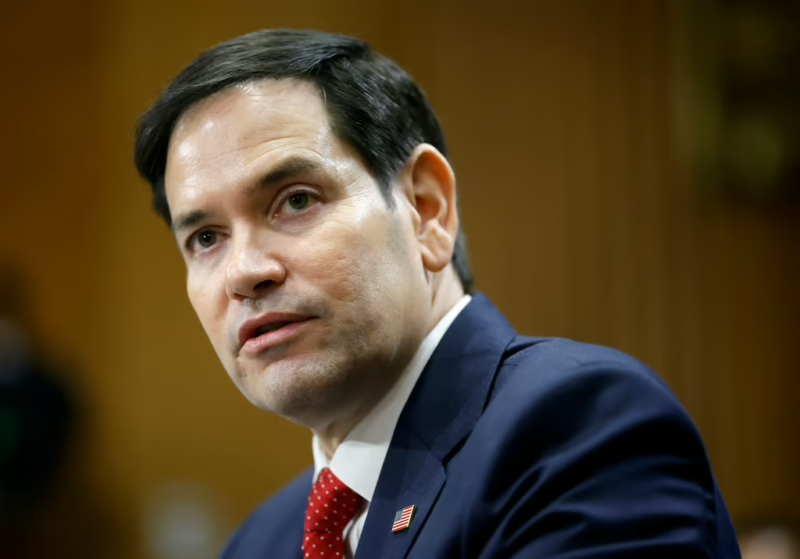
U.S. Secretary of State Marco Rubio said Washington believes it can achieve its military objectives in Iran without deploying ground troops, even as the administration keeps all options open amid a rapidly evolving conflict.
Speaking after a Group of Seven meeting near Paris, Rubio emphasized that the United States is advancing faster than expected and expects the operation to conclude “in weeks, not months.” While he acknowledged that President Donald Trump retains the authority to escalate—including the potential use of ground forces—he framed such a move as unnecessary under current conditions.
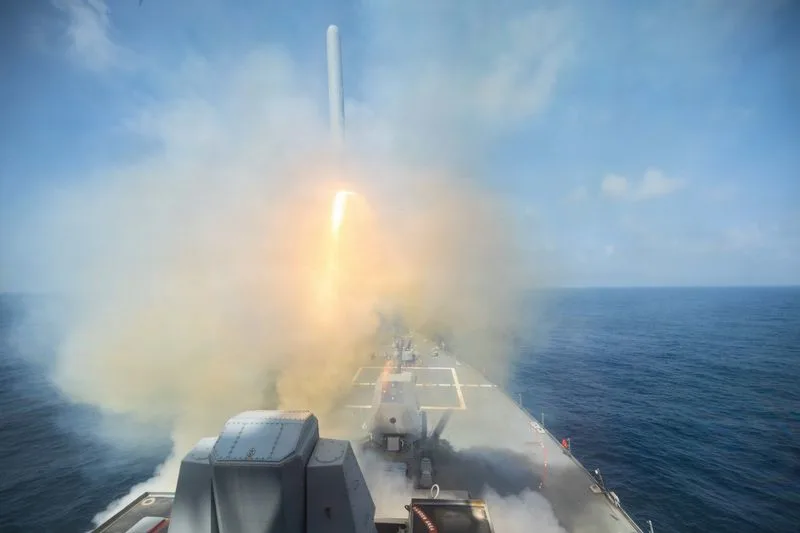
The remarks reflect a strategic preference for a limited war model: relying on airpower, naval dominance, and precision strikes rather than a large-scale ground invasion.
At the same time, Rubio signaled that diplomatic channels remain active, though uncertain. He said Iran has not formally responded to a U.S. proposal to end the war but has sent indirect messages suggesting openness to negotiations.
That ambiguity mirrors the broader state of the conflict—caught between escalation and negotiation.
Rubio also warned that Iran could attempt to impose fees or restrictions on vessels transiting the Strait of Hormuz, a move that would further disrupt global energy markets.
He called for coordinated international efforts to ensure the waterway remains open, while clarifying that Washington is not currently asking allies to intervene militarily during active hostilities.
Instead, discussions with partners—including the United Kingdom—have focused on potential roles in stabilizing the region after the conflict subsides.
In a sign of the war’s expanding global impact, Rubio acknowledged that the United States may consider redirecting weapons originally intended for Ukraine to support operations in the Middle East, though no such decision has been made yet.
The possibility highlights how overlapping conflicts are beginning to compete for the same military resources.
Meanwhile, G7 foreign ministers issued a joint statement calling for an immediate halt to attacks on civilians and civilian infrastructure, underscoring growing international concern about the humanitarian toll of the war.
They also stressed the urgent need to restore secure navigation through Hormuz—a reminder that the conflict’s economic consequences are now as significant as its military dimensions.
Rubio’s message ultimately captures the current U.S. posture: confident in achieving its goals without a ground war, open to diplomacy, but prepared to escalate if necessary.
The challenge, as the war enters a critical phase, is whether that balance can be maintained—or whether events on the ground will force a more consequential choice.

War Enters Dangerous New Phase as Oil Surges, Alliances Strain

Beyond the Bombs: The Real War Is Radicalism vs. Stability

Ukraine’s War Expertise Becomes Gulf’s Shield


-
 Terrorism2 months ago
America Pulls Back From Somalia but Doubles Down Next Door
-

 Top stories2 months ago
Rubio Signals Preemptive Military Option as U.S. Tightens Pressure on Iran
-

 Analysis2 months ago
How Chinese Speculators Set the Stage for the Gold and Silver Crash
-
 Russia-Ukraine War1 month ago
Russian General Boasted of Torture and Killing of Ukrainian Prisoners
-

 US-Israel war on Iran1 month ago
UK Refuses Iran Strike Access, Trump Fires Back
-
 Russia-Ukraine War1 month ago
Europe’s Spies Challenge Trump’s Ukraine Peace Optimism
-
 Top stories4 weeks ago
War Expands Across Region as Iranian Militias Join Fight
-
 US-Israel war on Iran4 weeks ago
Iran Pledges ‘Never, Ever’ to Hold Bomb-Grade Material