
Analysis
Somalia’s Consultative Council in Disarray: Political Tensions Rise Amid Failed Talks

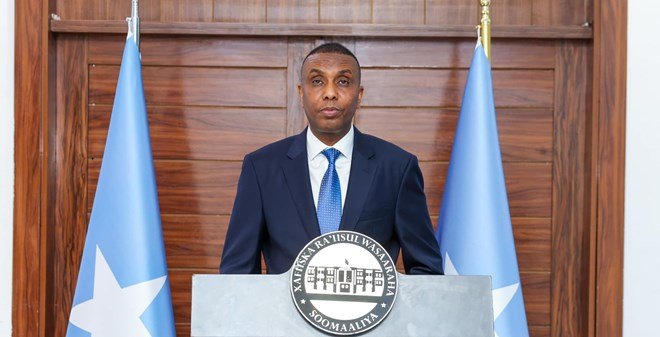
The recent meeting of Somalia’s National Consultative Council, aimed at resolving key governance issues, has ended in failure, according to Prime Minister Hamse Abdi Barre. The talks, which began on October 2, were expected to bring federal and regional leaders together to address pressing national challenges. Instead, the meeting has underscored deepening political divisions within Somalia’s leadership, raising serious concerns about the country’s future stability and governance.
Prime Minister Hamse revealed that the council’s meeting has not produced any meaningful results, and ongoing consultations between the leaders have yet to reach consensus on several critical issues. “The meeting of the National Consultative Council has collapsed since its opening and is still facing difficulty,” Barre admitted, adding that further decisions and official statements would follow once discussions have concluded. This outcome is the latest in a series of failed efforts to unify the federal government and regional administrations, signaling a deepening political crisis.
A Fractured Federal System
The failure of the National Consultative Council is a reflection of Somalia’s fractured federal system, which has been plagued by power struggles and mistrust between the central government and regional states. While the council has met nine times during Barre’s tenure as Prime Minister, Barre openly acknowledged that many of these meetings have highlighted the federal government’s weaknesses and inability to foster meaningful cooperation.
Most notably, the absence of two key regional leaders—President Ahmed Madobe of Jubbaland and President Saeed Deni of Puntland—has significantly undermined the latest talks. Madobe walked out of the current meeting, and Deni has boycotted the council altogether for the past year. Both leaders have long been at odds with the federal government under President Hassan Sheikh Mohamoud’s administration, and their absence from these discussions underscores the growing rift between Mogadishu and the regional states.
Prime Minister Barre’s candid admission of the council’s collapse highlights a grim reality: the Somali government’s efforts to unify the country under a functional federal system are faltering. “We are not committed to the unity and nationalism we wished for Somalis,” he said, adding that “the harsh reality” facing the Somali people must be confronted. Despite efforts to move the country forward, Barre admitted that the government has repeatedly failed in this endeavor.
Political Manipulation and Regional Divisions
One of the core reasons behind the failure of Somalia’s federal system lies in the increasingly autocratic tactics employed by President Mohamoud. Reports have emerged suggesting that Mohamoud’s government has been leveraging international development aid as a political tool to pressure regional leaders into supporting his administration and reelection efforts. This has created an atmosphere of distrust and deepened divisions between Mogadishu and the regional states.
Under Mohamoud’s alleged strategy, regional states that refuse to align with his policies face the risk of losing critical development funding. This has prompted widespread criticism, with regional leaders accusing Mohamoud of using aid as a means of blackmail. In a country heavily reliant on foreign assistance to address basic needs like healthcare, education, and infrastructure, such actions have not only heightened tensions but also jeopardized the well-being of ordinary Somalis.
President Mohamoud’s approach has transformed what should be a collaborative governance model into a power struggle, as regions scramble to secure essential resources. The withdrawal of leaders like Madobe and Deni from the National Consultative Council reflects their dissatisfaction with this centralized grip on power and highlights the growing sentiment of political alienation among Somalia’s federal states.
Implications for Somalia’s Stability
The failure of the National Consultative Council meeting represents more than just a setback in political negotiations—it threatens to unravel the fragile balance that holds Somalia together. Without functional cooperation between the federal government and regional administrations, the country risks sliding back into the chaos and instability that has plagued it for decades.
The international community has long supported Somalia’s rebuilding efforts, providing crucial aid aimed at lifting the nation out of poverty and fostering stability. However, if Mohamoud’s government continues to manipulate this aid for political gain, the long-term consequences could be disastrous. International donors may reconsider their support, particularly if transparency and accountability in the distribution of funds remain absent.
For Somalia, a country still recovering from the ravages of civil war and extremism, political power struggles currently playing out threaten to derail the progress that has been made, leaving Somali citizens to bear the brunt of the fallout. Without access to development assistance, regions already suffering from poor infrastructure and limited public services will face even greater challenges in providing for their populations.
Reflection on Somaliland
In light of the ongoing political crisis, Prime Minister Barre made an unusual but noteworthy appeal to the Somali people. He urged them to study how Somaliland—Somalia’s neighbor, which declared independence in 1991 but remains unrecognized internationally—has managed to maintain unity, independence, and stability within its borders. While Somaliland has faced its own challenges, its ability to avoid internal divisions and build a functional governance system stands in stark contrast to the current disarray in Somalia.
Barre’s remarks suggest that there are valuable lessons to be learned from Somaliland’s approach to governance. He emphasized the need for Somalia to foster greater unity and nationalism, warning that continued division would only serve to further weaken the country.
Somalia’s current political situation is at a critical juncture. With the National Consultative Council talks in disarray and regional divisions growing ever deeper, the federal government faces an uphill battle to restore trust and cooperation. The continued absence of key regional leaders from discussions and the manipulation of development aid are compounding the country’s challenges, pushing Somalia closer to a breaking point.
As Prime Minister Barre candidly admitted, Somalia’s leadership has repeatedly fallen short in its efforts to unite the country. But acknowledging these failures is only the first step. The question now is whether Somalia’s leaders can overcome their differences and work toward a future that prioritizes the well-being of their people over political maneuvering.
How President Hassan’s Corruption Crushing Somalia’s Federal States
Somali Presidency Accused of Funding Propaganda Against Jubbaland Leader Madobe


















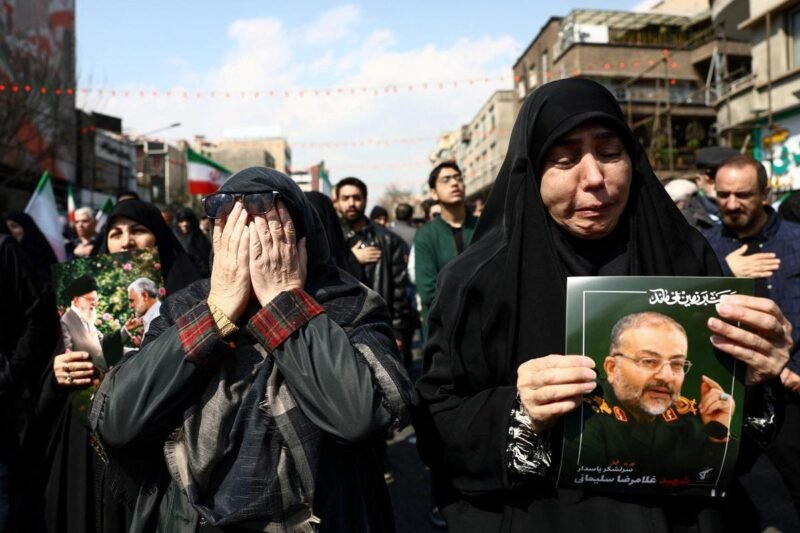
Why Iran’s War Resilience Is Rooted in Ideology, Not Just Military Power.
The war against Iran is often framed in familiar terms—missiles, deterrence, escalation, and nuclear risk. But those metrics, while critical, miss a deeper force shaping the conflict: ideology.
To understand Iran’s resilience, one must look beyond military capability and into the political theology that underpins the Islamic Republic. This is not simply a state fighting for survival. It is a system that draws meaning—and strength—from suffering itself.
At the heart of that worldview lies a centuries-old narrative rooted in Shia history, particularly the Battle of Karbala in 680. The killing of Hussein, the grandson of the Prophet Muhammad, has long symbolized righteous resistance against overwhelming injustice. In modern Iran, that story is not just remembered—it is operationalized.
Martyrdom is not incidental. It is foundational.
Since the early days of the Islamic Republic, leaders have framed their rule as part of a sacred struggle against external domination. That narrative becomes especially powerful in wartime. Loss is recast as sacrifice. Death becomes testimony. Endurance becomes victory.
In the current conflict with Israel and the United States, this framework is being actively reactivated. State-backed mourning ceremonies, mobilization of paramilitary groups like the Basij, and the language of resistance all reinforce a singular message: survival itself is a form of triumph.
This creates a strategic paradox.
From a conventional perspective, sustained military pressure should weaken Iran—degrading infrastructure, leadership, and capabilities. But within Iran’s ideological system, external attack can strengthen internal cohesion. It validates the regime’s core claim: that it is under siege by hostile powers.
That validation matters.
It blurs internal dissent. Citizens who oppose the government may still rally against foreign attacks, driven by nationalism, fear, or anger. In this environment, the state can reposition itself—not as an oppressive authority—but as a defender of the nation.
History reinforces this dynamic. The Iran-Iraq war of the 1980s entrenched a culture of endurance that still shapes political identity today. The lesson was simple: survival, even at immense cost, is victory.
Current strategy reflects that logic. Rather than seeking decisive battlefield success, Tehran appears to be pursuing attrition—absorbing blows, disrupting global systems such as energy flows, and waiting for political fatigue to set in among its adversaries.
Meanwhile, rhetoric from Washington risks amplifying the very narrative Iran depends on. Calls for “unconditional surrender” by Donald Trump shift the conflict from limited objectives to existential confrontation—precisely the framing Tehran has long cultivated.
None of this suggests the Islamic Republic is unbreakable. Its legitimacy is contested, its economy strained, and its population divided. But ideological systems do not require universal belief to function. They require enough conviction, enough institutions, and enough pressure to transform suffering into unity.
That is the danger.
Wars against ideological states are not decided solely by destroying capacity. They are also shaped by meaning. And in Iran’s case, the more intense the external pressure, the easier it becomes for the regime to reclaim the narrative that has sustained it for decades.
The battlefield, in other words, is not only physical.
It is symbolic.
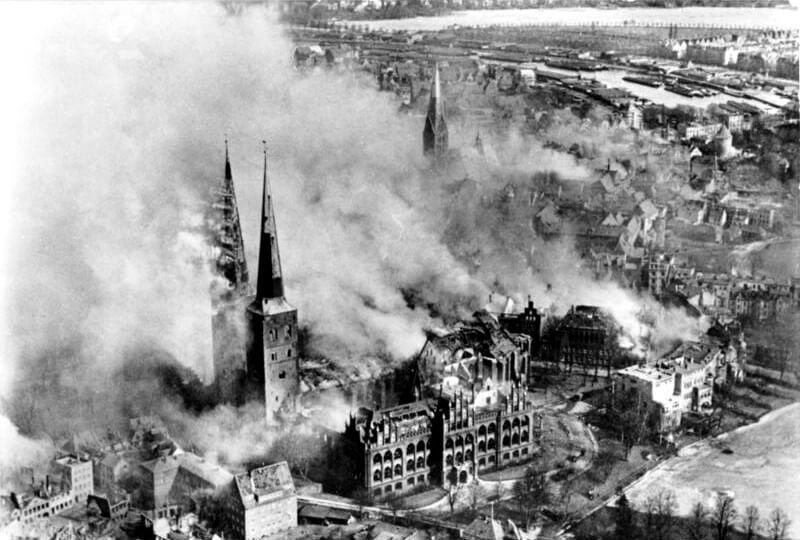
From Lübeck to Today: How Strategic Bombing Reshaped War—and Echoes in Modern Conflicts.
From wooden cities to digital warfare—the logic of war hasn’t changed, only the tools.
In March 1942, the British Royal Air Force made a calculated decision that would redefine modern warfare: it chose the historic German city of Lübeck not for its military value, but for its vulnerability.
The city’s medieval structure—dense, flammable, and largely built from timber—made it an ideal target for incendiary bombing. Over the night of March 28–29, British bombers dropped hundreds of tons of explosives, including tens of thousands of incendiary devices.
The result was devastating: a firestorm that destroyed nearly a third of the city, killed hundreds, and displaced thousands.
It was not just an attack. It was a message.
Britain’s strategy marked a shift from targeting military infrastructure to targeting morale. By striking culturally significant cities, London aimed to demonstrate that Germany itself was no longer insulated from the war.
The objective was psychological as much as physical: to erode public confidence and force political reconsideration in Berlin.
The response from Adolf Hitler was immediate and revealing. Enraged, he ordered the Baedeker Blitz—retaliatory strikes against British cities such as Bath and York, chosen not for industrial importance but for their cultural heritage. War had entered a new phase, where symbolism and identity became targets alongside armies and factories.
Yet the outcome exposed a critical miscalculation.
Despite the destruction, British morale did not collapse. Instead, the bombings hardened public resolve, reinforcing a pattern that would repeat throughout the war: strategic bombing inflicted immense damage, but rarely achieved decisive political surrender on its own.
That lesson still resonates today.
Modern conflicts—from the Middle East to Eastern Europe—continue to echo this logic. Civilian infrastructure, energy systems, and symbolic sites are often targeted not only to degrade capabilities, but to send signals, shape narratives, and influence political will.
What has changed is not the intent, but the method.
Where Lübeck burned under incendiary bombs, today’s wars deploy precision strikes, drones, cyberattacks, and economic pressure. Yet the underlying calculation remains familiar: that by increasing the cost of war for societies, leaders can force strategic concessions.
History suggests otherwise.
The bombing of Lübeck—and the retaliatory campaigns it triggered—demonstrated that societies under attack often adapt rather than collapse. Instead of breaking morale, such strategies can entrench resistance and prolong conflict.
Eighty-four years later, the firestorm over Lübeck stands as more than a historical episode.
It is a reminder that wars are not only fought on battlefields—but in cities, in minds, and in the fragile line between pressure and resilience.
While the Middle East burns, the real power game is moving east—and history is repeating itself.
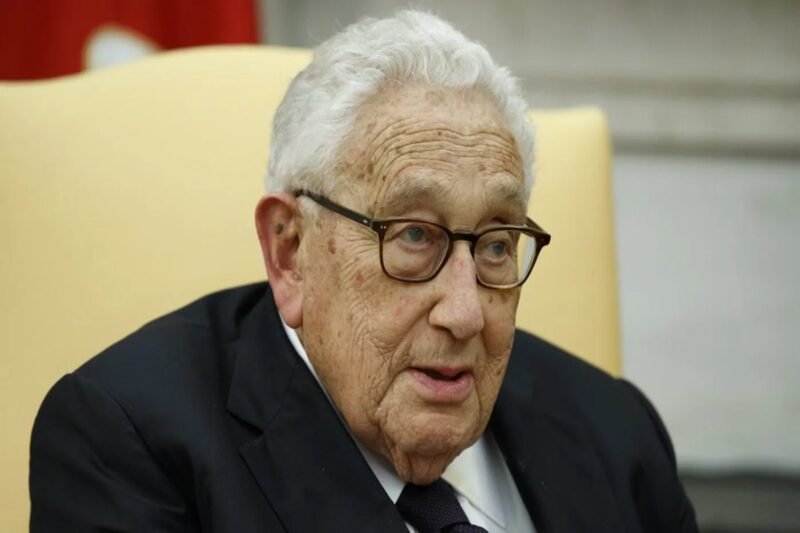
In the summer of 1971, a quiet diplomatic maneuver reshaped the world. Henry Kissinger slipped into Islamabad under the pretext of illness, only to secretly open a channel to China. The result was a geopolitical earthquake: Washington and Beijing aligned, and the Soviet Union found itself strategically isolated.
More than half a century later, the echoes are unmistakable.
As war engulfs Iran and tensions ripple across the Middle East, a quieter, more consequential shift is unfolding—once again involving Pakistan, once again tied to backchannel diplomacy, and once again centered on Asia.
The reappearance of Pakistan as a diplomatic intermediary in U.S.–Iran contacts is not coincidence. It signals the reactivation of an old geopolitical axis—one where Asia serves as both the stage and the broker of global power realignments.
What is different today is scale.
In 1971, the objective was to rebalance Cold War dynamics. Today, the transformation is structural. Asia is no longer a theater of competition; it is becoming the center of gravity. Economically, technologically, and demographically, the axis of global influence is shifting eastward—toward a complex interplay between China and India.
Both nations, despite ideological differences, now operate within a global capitalist framework, driving innovation, manufacturing, and digital transformation at unprecedented levels. Their rivalry is real, but so is their shared trajectory: central players in a system no longer dominated solely by the West.
Against this backdrop, the Middle East—despite its volatility—appears less like the future and more like a pressure zone within a larger transition.
Even recent developments reinforce this pivot. Indian Prime Minister Narendra Modi’s high-profile engagement with Israel reflects Asia’s growing diplomatic reach into traditionally Western-aligned regions. Meanwhile, shifting tensions between Pakistan and Bangladesh hint at deeper realignments across South Asia itself.
The strategic game has widened.
Corridors of trade, energy, and influence—stretching from the Indian Ocean to Central Asia—are once again becoming decisive. Pakistan’s position, long defined by geography and its nuclear capability, is being re-evaluated in this broader contest. It is not merely a regional actor; it is a hinge between competing spheres of influence.
This is why today’s developments feel familiar.
Like in Kissinger’s era, the most important moves are not always visible. They unfold through intermediaries, quiet negotiations, and seemingly peripheral actors. The headlines may focus on war, but the deeper story is about positioning for what comes after.
The question, then, is not whether the world is changing—but whether the change has already happened.
If 1971 marked the opening of China to the world, today may mark the moment the world fully pivots to Asia.
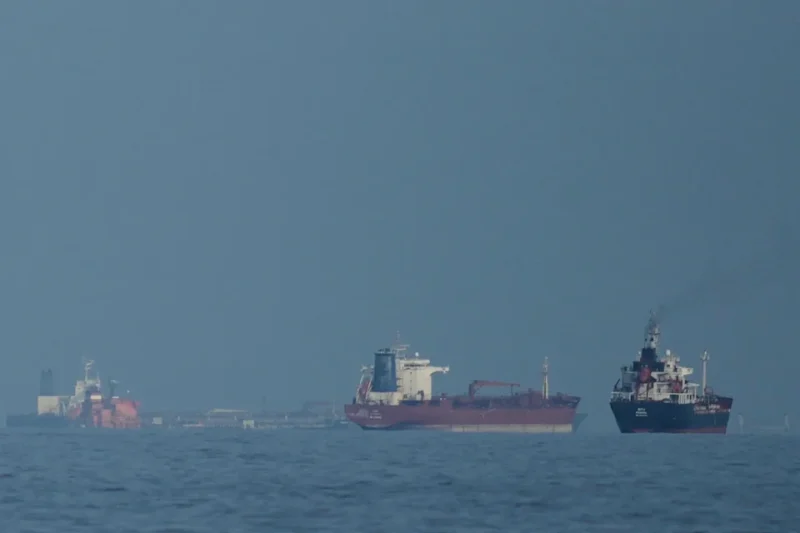
Iran isn’t trying to win the war—it’s trying to outlast it. And the world is paying the price.
One month into the war, the United States and Israel are confronting a paradox: a heavily damaged Iran that is still dictating the tempo of the conflict—and, increasingly, the global economy.
At the center of this strategy lies the Strait of Hormuz, the narrow maritime corridor through which a significant share of the world’s energy supply once flowed. By restricting access and threatening shipping, Tehran has transformed a regional war into a global economic shock.
Oil prices have surged, supply chains have tightened, and inflation pressures are re-emerging across multiple continents.
What makes this moment strategically significant is not Iran’s conventional strength—but its adaptation.
Rather than fighting as a traditional state, Iran is operating with the logic of an insurgency. It relies on dispersed assets, mobile missile launchers, underground facilities, and what military analysts describe as “shoot-and-scoot” tactics.
Even after sustained airstrikes, these methods allow Tehran to maintain a persistent, if limited, capacity to strike—and to threaten.
This asymmetry explains the current imbalance. While Washington and Tel Aviv dominate the battlefield in terms of firepower, Iran is shaping the strategic environment. By targeting economic pressure points rather than military parity, it raises the cost of war for everyone involved.
The objective is not victory in the conventional sense. It is survival.
As long as Iran can endure, it can claim success—particularly if the war continues to strain global markets and political stability in rival states. This logic echoes patterns seen in Iran-aligned groups across the region, from Yemen to Iraq, where persistence has often outweighed firepower.
Yet this strategy is not without risk.
Internally, Iran faces mounting pressure. Economic hardship, leadership uncertainty, and a population still scarred by recent crackdowns create vulnerabilities that prolonged conflict could deepen. Reports of recruitment drives, including among younger populations, suggest strain within its security apparatus.
Externally, the stakes are rising. The United States is weighing whether to escalate further—potentially forcing open Hormuz—or to pursue a negotiated exit. Each path carries consequences. Escalation risks widening the conflict. De-escalation risks validating Iran’s approach.
The war has therefore entered a new phase—less about territory, more about endurance and leverage.
The central question is no longer who can strike harder, but who can sustain pressure longer without breaking.
For now, Iran has found a way to fight a stronger adversary without matching its strength—by turning geography, economics, and time into weapons.
And in doing so, it has shifted the battlefield from the skies of the Middle East to the foundations of the global economy.

Energy shocks, political fractures—Europe is rethinking everything as wars collide.
The widening war involving Iran is forcing a hard reassessment across Europe—exposing the limits of solidarity, the fragility of energy security, and the growing appeal of neutrality in an era of overlapping conflicts.
At the center of the crisis is energy.
As instability disrupts supply routes and drives oil above $100 a barrel, European economies are once again under strain. Countries that pivoted away from Russian energy after the invasion of Ukraine now face a difficult reality: alternatives are neither stable nor cheap.
The result is a political dilemma that is becoming harder to ignore.
Some governments are quietly reconsidering their stance toward Russia. Calls to ease sanctions on Russian energy—once politically unthinkable—are now resurfacing, exposing fractures within the European Union.
While leaders in Germany and Brussels warn against empowering Moscow, others argue that domestic economic pressures are becoming unsustainable.
This tension reflects a broader shift.
The Iran war has revealed how interconnected global conflicts have become. What happens in the Strait of Hormuz reverberates through European gas markets; decisions in Kyiv affect energy flows from Moscow; and political choices in Washington reshape both.
In this environment, the traditional model of bloc-based alignment is under stress.
A growing number of policymakers are turning toward a more state-centered approach—prioritizing national economic stability over ideological commitments.
The argument is pragmatic: governments are ultimately accountable to their own citizens, particularly when energy prices surge and living costs rise.
This is where neutrality re-enters the conversation.
Not as isolationism, but as strategy.
Neutrality, in this context, allows states to navigate competing pressures without fully committing to one side of a geopolitical divide.
It opens space for what analysts call “niche diplomacy”—focusing on specific areas such as mediation, humanitarian engagement, or economic stabilization, rather than direct confrontation.
For Europe, this could mean leveraging its influence as a regulatory and diplomatic power rather than a military one.
Yet the shift is neither simple nor risk-free.
Moving toward neutrality could weaken collective responses to aggression, strain alliances, and embolden adversaries. At the same time, maintaining current commitments without adjusting to economic realities risks domestic backlash and political instability.
The Iran war has accelerated this debate, but it did not create it.
It has simply made visible a deeper truth: in a multipolar world, alignment is costly, and neutrality—once seen as passive—is increasingly being reconsidered as a form of strategic flexibility.
The question now is not whether Europe can remain fully aligned across multiple conflicts.
It is whether it can afford not to rethink its position.
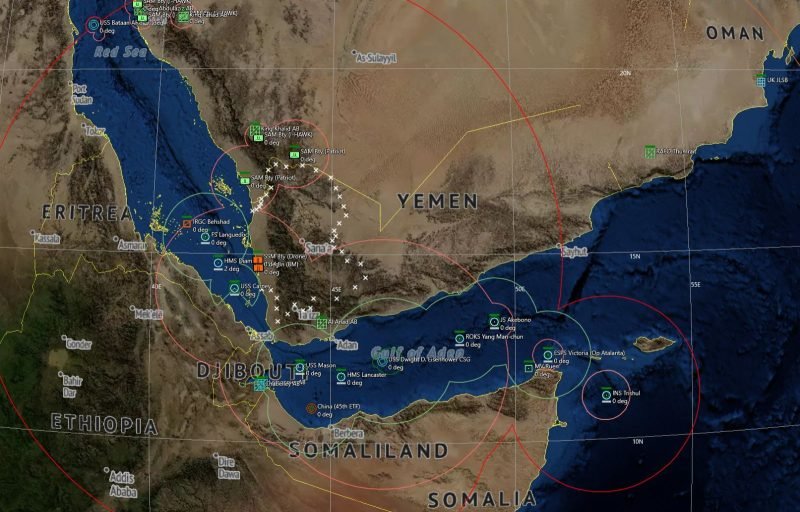
First Hormuz. Now the Red Sea. The world’s trade arteries are turning into battlefields.
The war centered on Iran is no longer confined to the Gulf. It is redrawing the map of global trade—pushing the Red Sea from a secondary theater into a critical frontline of economic and geopolitical competition.
At the heart of this shift lies a simple reality: as the Strait of Hormuz becomes increasingly unstable, the world is turning westward. The Bab el-Mandeb Strait—linking the Red Sea to the Gulf of Aden—is rapidly emerging as an alternative artery for energy and trade.
But what was once a backup route is now becoming a pressure point.
The risk is not theoretical. Iran has already signaled that escalation could extend into the Red Sea, while Yemen’s Houthi movement—armed with drones, mines, and anti-ship missiles—has hinted at entering the conflict. Even limited attacks could sharply raise insurance costs, reroute shipping, and strain already fragile supply chains.
For Africa, the consequences could be immediate and severe.
Countries along the Red Sea basin—Egypt, Djibouti, Eritrea, and Sudan—are already embedded in a dense web of military bases and foreign interests. Djibouti alone hosts forces from the United States, China, France, and Japan, making it one of the most militarized nodes in global trade.
Layer onto this an intensifying rivalry among regional powers.
United Arab Emirates have spent years expanding influence across the Horn of Africa through investment and port infrastructure. Companies like DP World have turned ports into instruments of geopolitical leverage—a strategy now colliding with local resistance and legal disputes.
Meanwhile, new actors—and new risks—are entering the equation.
Speculation about Israeli strategic positioning near Berbera and reported cooperation between Houthi forces and Somalia-based militants such as al-Shabaab add layers of volatility. Even informal coordination between non-state actors could transform piracy, drone warfare, and smuggling into a coordinated threat to maritime security.
Two trajectories now define the near future.
In the first, escalation spreads—linking the Gulf and Red Sea into a single, continuous conflict zone. Under that scenario, global energy flows face severe disruption, and the Red Sea becomes the last viable corridor under immense strain.
In the second, major powers and regional actors prioritize containment—securing shipping lanes even as broader rivalries persist. The Red Sea, in this case, becomes a zone of uneasy cooperation rather than open confrontation.
But either way, stability is no longer the baseline.
What the Iran crisis has exposed is not just the vulnerability of a single chokepoint—but the fragility of the entire global trade architecture. As pressure shifts from Hormuz to Bab al-Mandab, the battlefield is expanding from territory to transit routes.
And in modern geopolitics, control of those routes can matter as much as control of land itself.

No Trust, No Exit: Why U.S. Bases Are Staying in the Gulf

Israel Reports Second Attack from Yemen

Trump Floats Seizing Iran’s Oil as War Strategy


-
 US-Israel war on Iran1 month ago
UK Refuses Iran Strike Access, Trump Fires Back
-
 Russia-Ukraine War1 month ago
Europe’s Spies Challenge Trump’s Ukraine Peace Optimism
-
 Top stories4 weeks ago
War Expands Across Region as Iranian Militias Join Fight
-
 US-Israel war on Iran1 month ago
Iran Pledges ‘Never, Ever’ to Hold Bomb-Grade Material
-
 Top stories1 month ago
India Turns to Brazil in Strategic Minerals Push Against China
-
 US-Israel war on Iran1 month ago
Syria Under Fire on Two Fronts
-
 Russia-Ukraine War1 month ago
Estonia Warns NATO Would Strike Deep Inside Russia if Baltics Are Invaded
-
 Terrorism4 weeks ago
Regional Army Moves Against Expanding Armed Groups