
US-Israel war on Iran
Who is Asma Assad, the London-born wife of Syria’s deposed dictator?


From a London upbringing to the controversial First Lady of Syria, Asma Assad’s journey has left a polarizing legacy.
Asma Assad, the London-born wife of Syria’s ousted dictator Bashar al-Assad, epitomizes a tale of contrasts. Born and raised in the UK as Emma Akhras, her journey from a middle-class upbringing in West London to being the First Lady of Syria has been marked by ambition, controversy, and scandal. Today, as reports suggest the Assad family has fled to Moscow after Bashar’s overthrow, questions linger over Asma’s role during Syria’s years of bloodshed and her uncertain future.
Educated at prestigious institutions and a graduate of King’s College London in computer science, Asma initially pursued a high-flying career at JP Morgan. Her decision to leave London’s corporate world to marry Bashar al-Assad in 2000 was seen as a romantic departure, especially after famously declaring, “Who would choose Harvard over love?” However, her tenure as First Lady soon revealed a far more complex persona.
Initially perceived as a modernizing force in Syria, Asma engaged in public relations efforts to soften the Assad family’s authoritarian image. A notorious 2011 Vogue profile titled “A Rose in the Desert” painted her as a glamorous reformer, determined to brand Syria as a progressive nation. Yet this image quickly unraveled with the regime’s brutal crackdown on pro-democracy protests in 2011, which marked the onset of Syria’s devastating civil war.
Emails leaked in 2012 portrayed Asma as detached from the country’s mounting violence. While Syrians endured unimaginable suffering, she reportedly indulged in extravagant online shopping sprees for luxury goods. Her apparent frivolity earned her comparisons to Imelda Marcos, infamous for her excesses during the Philippines’ dictatorship.
As the war escalated, Asma’s continued loyalty to Bashar drew international condemnation. Offers of refuge from Western nations in exchange for distancing herself from her husband were reportedly declined. Instead, she defended the regime’s actions in media appearances, framing herself as a symbol of resilience against what she called Western misinformation campaigns.
Beyond the scandals, Asma’s health struggles also shaped public perceptions. Diagnosed with breast cancer in 2019 and acute myeloid leukemia in 2023, her illnesses added a humanizing layer to an otherwise polarizing figure. However, her resilience in the face of personal adversity has done little to overshadow the allegations of complicity in war crimes.
In March 2021, the UK’s Metropolitan Police launched an investigation into Asma’s potential role in inciting violence during the Syrian conflict, raising the specter of legal accountability. Calls to strip her of British citizenship have resurfaced following Assad’s downfall, though Prime Minister Keir Starmer has urged caution amid the rapidly evolving situation.
As Asma’s fate now lies in exile, likely in Moscow, she remains emblematic of Syria’s complex legacy. Whether she will face justice or fade into obscurity alongside her husband is yet to be determined, but her story serves as a stark reminder of the human cost of authoritarian rule.

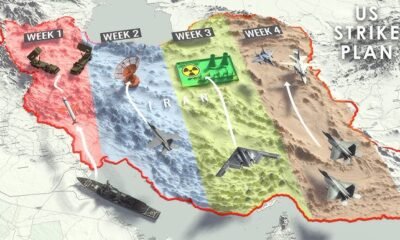



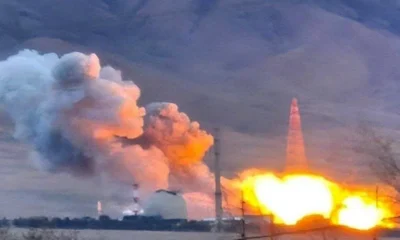

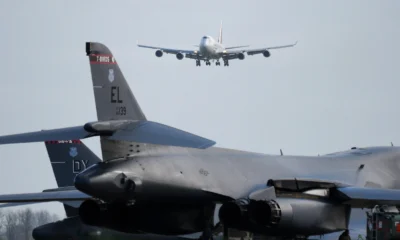









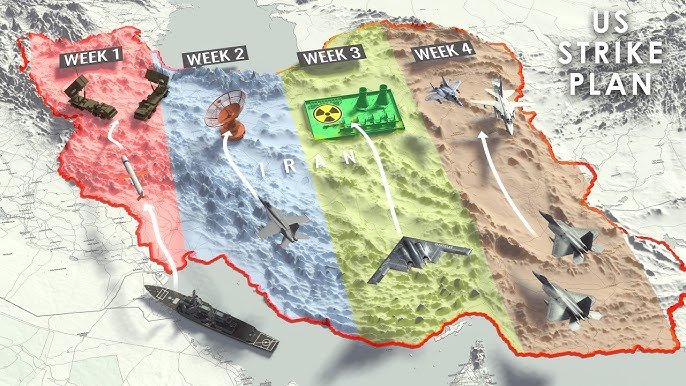
Assassinations, troop landings—even nuclear threats. Is this a real plan—or strategic messaging in a war of narratives?
Iranian state-linked media has accused the United States and Israel of preparing a sweeping, multi-phase plan to escalate the war—claims that come as Washington openly weighs limited ground operations but stops short of committing to an invasion.
According to the Tehran Times, the alleged plan outlines an eight-stage escalation, including targeted assassinations of senior Iranian leaders, strikes on major urban infrastructure, and coordinated ground incursions from multiple directions.
It also claims U.S. forces could deploy thousands of troops through Iran’s southeastern borders and via a regional ally, while opposition fighters enter from the northwest.
More controversially, the report alleges preparations for airborne raids on missile bases and nuclear facilities—and even the possibility of a limited nuclear strike.
None of these claims have been independently verified.
What is confirmed, however, is a growing shift in U.S. military posture. Officials cited by The Washington Post say the Pentagon is preparing options for weeks of targeted ground operations inside Iran.
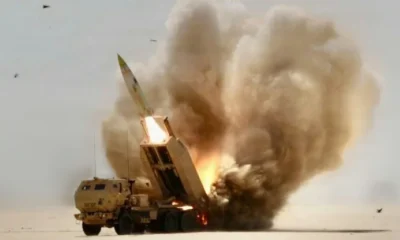
These plans reportedly include special operations raids, potential strikes on coastal weapons systems, and even scenarios involving control of strategic hubs like Kharg Island.
The White House has emphasized that such preparations are standard contingency planning—not a final decision by Donald Trump.
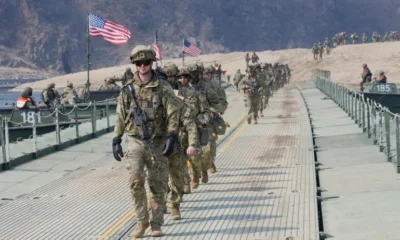
Still, troop movements tell their own story. U.S. Marines have already been deployed to the region, with additional forces from the 82nd Airborne Division expected to follow, signaling readiness for rapid escalation if diplomacy collapses.
The gap between rhetoric and reality is where this story becomes more complex.
Tehran’s claims may reflect genuine intelligence—or they may serve a strategic purpose. By portraying the conflict as an existential threat involving invasion and nuclear risk, Iranian authorities reinforce domestic unity, justify continued resistance, and shape international opinion against further escalation.
At the same time, Washington’s calibrated messaging—highlighting capability without commitment—keeps pressure on Iran while preserving room for negotiation.
This is no longer just a military confrontation. It is a war of perception.
Iran seeks to frame the conflict as a defensive struggle against regime change. The U.S. and Israel, by contrast, are signaling controlled escalation aimed at forcing concessions without triggering a full-scale regional war.
But the line between limited operations and uncontrollable escalation is thin.
With the conflict now entering its second month, and with troop deployments, proxy threats, and maritime chokepoints all in play, the risk is no longer hypothetical. It is structural.
The real question is not whether such plans exist on paper—they almost certainly do.
The question is whether the political moment arrives when someone decides to use them.
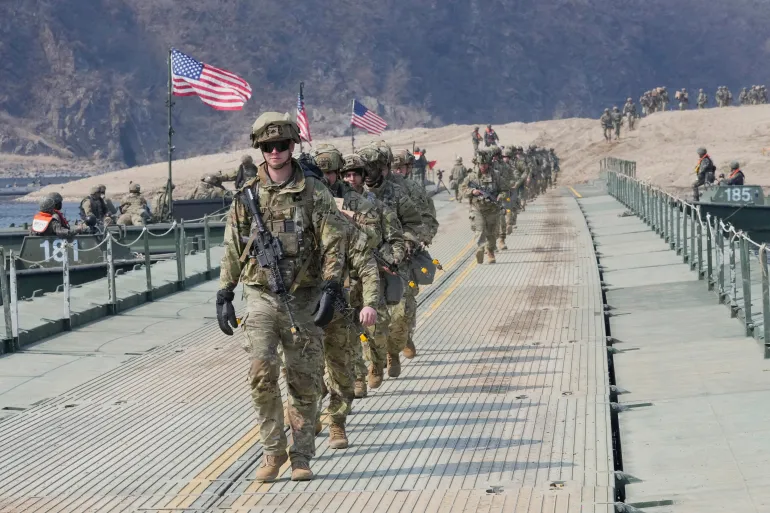
US Eyes Strikes Inside Iran as Hormuz Crisis Deepens. Air war wasn’t enough—now boots on the ground are back on the table.
The war with Iran may be entering its most dangerous phase yet, as the Pentagon prepares contingency plans for limited ground operations—marking a potential shift from airpower dominance to direct battlefield engagement.
According to U.S. officials cited by The Washington Post, the plans under consideration stop short of a full-scale invasion. Instead, they focus on targeted raids—likely involving special operations forces and conventional infantry—against strategic coastal sites and energy infrastructure.
At the center of those discussions is Kharg Island, Iran’s critical oil export hub, as well as weapons systems along the Strait of Hormuz that threaten global shipping. The objective is clear: degrade Iran’s ability to disrupt maritime trade without triggering a broader occupation.
But even limited ground action carries high risks.
U.S. troops would face a battlefield shaped by asymmetric warfare—drones, missile strikes, improvised explosives, and entrenched coastal defenses. Iranian officials have already issued stark warnings.
Parliamentary speaker Mohammad Bagher Ghalibaf suggested any U.S. ground move would be met with direct retaliation, while naval commanders threatened to target American carriers operating within range.
Despite the military planning, the final decision rests with Donald Trump, who has not yet authorized ground operations. The White House has emphasized that preparing options does not mean a decision has been made—a familiar pattern in a conflict defined by shifting signals between escalation and negotiation.
Still, the buildup is tangible. Thousands of U.S. Marines and additional troops from the 82nd Airborne Division are being deployed to the region, alongside amphibious assault groups and strike aircraft. The arrival of forces aboard the USS Tripoli underscores the readiness for rapid action.
Timing is critical. Officials suggest any ground campaign could last “weeks, not months,” reflecting a strategy of swift, targeted intervention rather than prolonged occupation.
Yet the broader implications stretch far beyond Iran’s coastline.
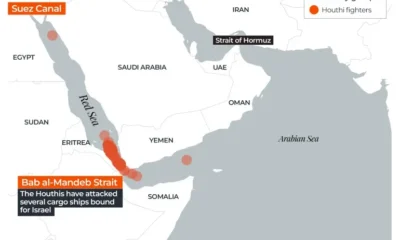
Tehran has signaled it could expand the conflict if attacked on land—potentially opening new fronts in the Red Sea through allied groups such as Yemen’s Houthis. That raises the prospect of simultaneous disruptions at both the Strait of Hormuz and the Bab al-Mandab, two of the world’s most vital maritime arteries.
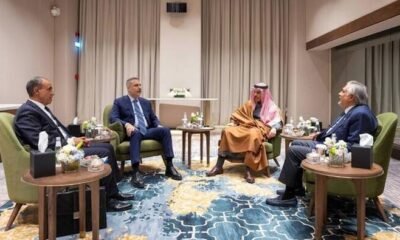
In parallel, diplomatic efforts continue. Pakistan is hosting regional talks involving Gulf and Middle Eastern powers, attempting to broker de-escalation even as military options intensify behind the scenes.
This dual track—negotiation and escalation—defines the current moment.
The United States is preparing for a war it may not want to fight on the ground, while Iran is signaling it is ready for exactly that scenario. Between them lies a narrowing window where diplomacy might still prevent a wider regional confrontation.
If that window closes, the conflict will no longer be defined by airstrikes alone.
It will be defined by territory—and by who is willing to fight for it.
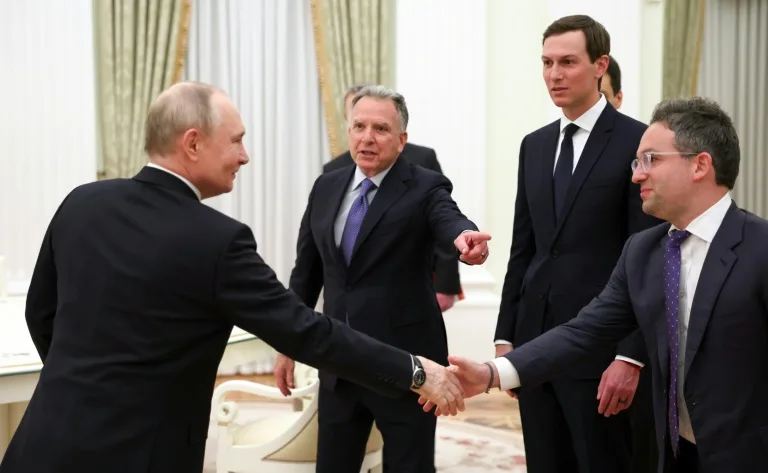
How Much Is Russia Really Helping Iran? Intelligence Support Matters More Than Weapons.
Russia isn’t saving Iran—but it may be helping it survive.
As the war intensifies, a central question is quietly shaping the battlefield: how far is Russia willing to go to support Iran?
Publicly, the answer appears modest. Donald Trump described Moscow’s role as “a bit” of help. Even Iranian officials have kept their language cautious. But beneath that ambiguity lies a more strategic reality—Russia’s support is limited in scale, yet carefully calibrated for impact.
At the core of that support is intelligence.
Western and Ukrainian sources suggest Moscow is sharing satellite data on U.S. naval movements, likely through its Liana surveillance system—designed specifically to track aircraft carriers and naval groups.
In a conflict where maritime control, particularly around the Strait of Hormuz, is decisive, such information can sharpen Iran’s targeting without requiring Russian boots on the ground.
This is not about volume. It is about precision.
Russia’s contribution also extends into technology and expertise. Its earlier role in launching Iran’s Khayyam satellite—and its experience upgrading Iranian-designed Shahed drones during the Ukraine war—has created a feedback loop. Some of those battlefield improvements, including anti-jamming navigation systems, are now reportedly appearing in Iranian operations.
In effect, Iran is absorbing lessons from Ukraine’s frontlines.
Yet the limits of this partnership are just as important as its capabilities. Despite years of military cooperation, Moscow and Tehran do not share a mutual defense pact. Russia has not intervened directly, nor has it delivered its most advanced systems, such as the S-400 air defense platform.
That restraint is deliberate.
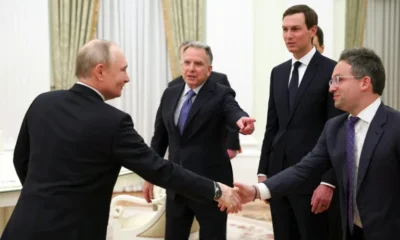
For Vladimir Putin, the war offers strategic advantages without requiring escalation. Rising oil prices—driven by disruptions in Gulf shipping—are boosting Russian revenues, easing the economic pressure of the Ukraine war. A prolonged Middle East crisis also diverts Western attention and resources.
In that sense, instability works in Moscow’s favor.
There is also a deeper calculation: Russia does not necessarily need Iran to win. It needs Iran to endure. A weakened but resilient Tehran can continue to challenge U.S. influence, stretch regional alliances, and maintain pressure on global markets—all without forcing Russia into direct confrontation.
Analysts describe the current support as symbolic but functional—a “goodwill gesture” that sustains the partnership while preserving Russia’s flexibility.
For Iran, that reality is well understood. Facing overwhelming military pressure from Israel and the United States, Tehran is not relying on Moscow for victory. Instead, it is leaning on asymmetric tactics—missiles, drones, and economic disruption—to level the playing field.
The partnership, then, is not about alliance in the traditional sense.
It is about convergence.
Russia provides just enough intelligence, technology, and political backing to keep Iran in the fight. Iran, in turn, sustains a conflict that reshapes global energy markets and stretches Western strategy.
In modern warfare, that may be all either side needs.
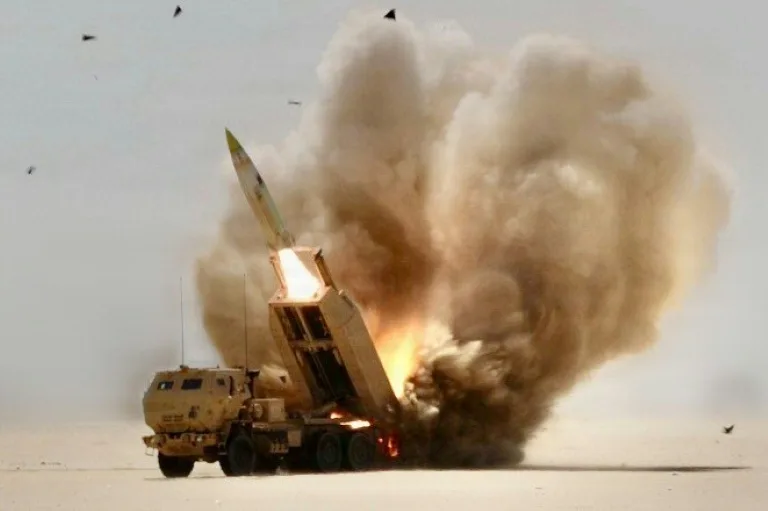
Invisible War: Spyware, AI, and Cyber Attacks Turn Iran Conflict into Digital Battlefield – Missiles hit cities—but hackers hit your phone. This war is now in your pocket.
The war involving Iran, Israel and the United States is no longer confined to airstrikes and missiles. It has quietly expanded into a relentless digital battlefield—one that reaches civilians in real time, often at their most vulnerable moments.
In one recent incident, Israelis fleeing missile attacks received text messages on Android phones offering directions to nearby bomb shelters. The messages appeared credible. But the link embedded inside installed spyware, granting attackers access to cameras, locations, and personal data.
Cybersecurity experts say the timing—coinciding precisely with incoming strikes—marks a new level of coordination between physical and digital warfare.
This is not an isolated tactic. Analysts tracking the conflict report nearly 5,800 cyberattacks linked to Iran-aligned groups, targeting companies and infrastructure across the U.S., Israel, and Gulf states. The scale is vast, even if many attacks are low-impact.
The strategy is clear: overwhelm, intimidate, and exploit weak points.
Unlike traditional warfare, cyber operations are cheap, deniable, and continuous. They allow actors with limited military reach to project power globally—targeting not just governments, but private companies, hospitals, and data centers.
Healthcare systems have emerged as a particularly troubling target. In one case, hackers deployed ransomware against a medical company, locking staff out of critical systems without even demanding payment.
The goal, experts say, was disruption—not profit. Another breach targeted a U.S.-based medical technology firm, underscoring a pattern: essential civilian sectors are now fair game.
At the same time, cyberattacks are increasingly psychological. Iran-linked groups recently claimed responsibility for breaching the personal email of Kash Patel, releasing photos and documents online. The material was not strategically valuable—but it was symbolic, designed to signal reach and sow doubt.
That psychological dimension is amplified by artificial intelligence. Deepfake images, fabricated battle footage, and manipulated narratives are flooding social media. Some false images—such as staged naval losses—have reached tens of millions of viewers, blurring the line between reality and propaganda.
Governments are struggling to keep pace. New agencies and cyber defense units are racing to adapt, but the battlefield is evolving faster than regulation or protection systems can respond.
What makes this digital front especially dangerous is its persistence. Even if a ceasefire emerges, cyber operations are unlikely to stop. They require fewer resources, carry less political risk, and offer continuous leverage.
The result is a war without clear boundaries.
It unfolds in the background of daily life—inside phones, networks, and information systems—where the objective is not just to destroy, but to infiltrate, confuse, and control perception.
And in this conflict, the most powerful weapon may not be a missile.
It may be a message.
Qatar and Ukraine Sign Defense Pact to Counter Missiles and Drones Amid Iran War.
From Kyiv to Doha: Ukraine isn’t just fighting a war—it’s exporting the blueprint to survive one.
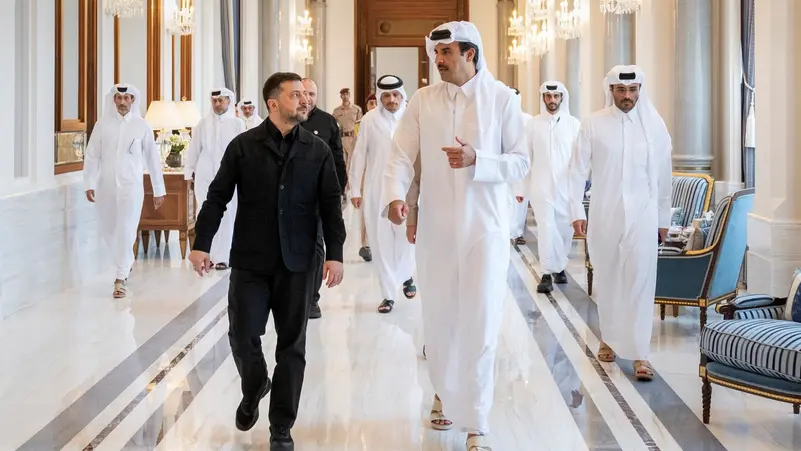
In a striking sign of how the Iran war is reshaping global security alliances, Qatar and Ukraine have signed a defense agreement focused on countering missiles and drones—two of the most disruptive weapons defining today’s conflicts.
The deal, announced during a visit by Ukrainian President Volodymyr Zelenskyy, reflects a growing convergence between battle-tested expertise and emerging threats. Ukraine, after years of defending itself against Russian missile barrages and drone warfare, is now exporting that experience to Gulf states facing similar risks.
At its core, the agreement centers on three pillars: technological collaboration, joint investments, and the exchange of operational knowledge in air defense systems—particularly against unmanned aerial systems and precision strikes.
The timing is not accidental.
As the war involving Iran intensifies, Gulf states have come under sustained missile and drone attacks targeting energy infrastructure, airports, and strategic facilities.
Traditional air defense systems—designed for conventional warfare—are increasingly strained by the scale, speed, and unpredictability of these threats.
Ukraine offers something different: real-world adaptation.
Over the past three years, Kyiv has developed layered defense strategies combining radar, electronic warfare, mobile interceptors, and decentralized command systems.
These lessons are now highly valuable to Gulf states seeking to protect both military and civilian infrastructure from low-cost, high-impact aerial threats.
The agreement also signals a broader shift in global defense dynamics.
Security partnerships are no longer defined strictly by geography or alliance blocs. Instead, they are shaped by shared threat environments. In this case, the same drone and missile technologies used in Eastern Europe are now being deployed across the Middle East—creating a common battlefield logic.
Zelenskyy’s broader Gulf tour, including meetings in the United Arab Emirates, suggests Ukraine is positioning itself not only as a recipient of military aid but as a provider of specialized defense solutions.
For Qatar, the move strengthens its defensive posture without direct military escalation—aligning with a broader Gulf strategy of enhancing resilience while avoiding deeper entanglement in the conflict.
For Ukraine, it opens new strategic and economic channels at a time when global attention is divided.
The deeper message is clear: modern warfare is becoming transferable.
What is learned in one conflict zone no longer stays there. It spreads—reshaping alliances, doctrines, and the balance of power far beyond the original battlefield.
Islamabad Becomes War’s Nerve Center as Iran Demands One Thing: Trust.
A quiet diplomatic shift is underway as Iran signals conditional openness to talks—placing “trust” at the center of any potential breakthrough.
President Masoud Pezeshkian conveyed that message directly to Shehbaz Sharif during an extended call, according to Islamabad. The conversation, which focused on the escalating Middle East conflict, underscores a growing reality: the path to de-escalation is being shaped far from the battlefield.
At the center of this effort is Islamabad, which is rapidly emerging as the primary diplomatic hub of the crisis.
Pakistan’s role is not accidental. It occupies a rare position—maintaining longstanding ties with Tehran while also engaging closely with Gulf states and Washington. That combination has turned it into a critical intermediary, carrying messages, proposals, and responses between adversaries who are not speaking directly.
The next phase of this diplomacy is already taking shape.
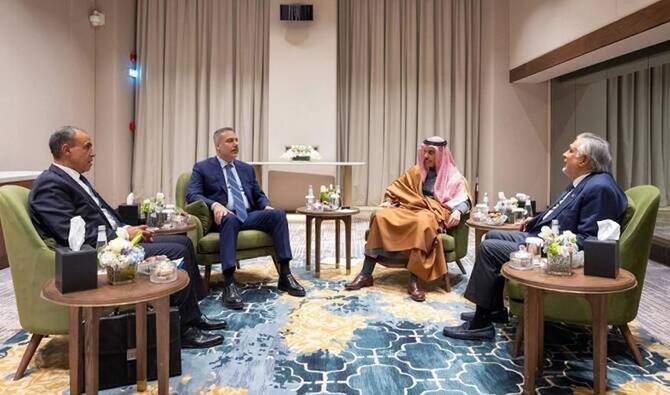
Foreign ministers from Saudi Arabia, Turkey, Egypt, and Pakistan are set to convene in Islamabad for high-level talks aimed at reducing tensions. The gathering reflects a widening regional effort to contain a conflict that has already spilled across borders and disrupted global markets.
Behind the scenes, messages continue to flow.
Iran has reportedly passed a response to a U.S. ceasefire proposal through Pakistani channels, even as it publicly denies direct negotiations. This dual-track approach—public resistance paired with private engagement—is a familiar feature of high-stakes diplomacy, allowing all sides to preserve political leverage while testing the ground for compromise.
But Tehran’s emphasis on “trust” highlights the central obstacle.
From Iran’s perspective, previous negotiations—particularly over its nuclear program—were undermined by shifting commitments and abrupt reversals. Any new agreement, therefore, must address not only immediate military concerns but also long-term guarantees. Without that, diplomacy risks collapsing before it begins.
For Pakistan, the stakes are equally significant.
Success would elevate its status as a global diplomatic broker, echoing its historic role in facilitating major geopolitical shifts. Failure, however, could reinforce skepticism about whether mediation can keep pace with rapidly escalating military dynamics.
The broader picture is clear.
While missiles continue to fly across the region, the architecture of a potential settlement is quietly being assembled elsewhere—through intermediaries, backchannels, and carefully calibrated messaging.
Whether that effort succeeds may depend less on the details of any proposal and more on a single, elusive factor: trust between adversaries who have spent decades preparing for conflict, not compromise.

Airports are no longer safe. The war is now targeting the systems that keep the sky alive.
A coordinated drone attack has struck Kuwait International Airport, damaging its radar systems and exposing a new vulnerability at the heart of Gulf infrastructure.
According to Kuwait’s Civil Aviation Authority, the strike caused “significant technical damage” to critical radar equipment used for air traffic control. While no casualties were reported, the impact is far from minor.
Radar systems are the backbone of aviation safety—responsible for tracking aircraft, coordinating landings, and preventing mid-air collisions.
Their disruption sends an unmistakable signal: the battlefield is expanding beyond military targets into civilian systems that sustain everyday life.
Authorities have not identified the source of the drones or explained how they penetrated restricted airspace. An investigation is underway, while emergency efforts are focused on restoring full operational capacity and ensuring the safety of flights.
But the strategic implications are already clear.
This attack fits a broader pattern emerging across the region—where drones are increasingly used not just to inflict damage, but to undermine confidence in state control.
Airports, like oil facilities and ports, represent high-value targets not because of their immediate destruction, but because of the cascading disruption they can cause.
In the Gulf, where economies depend heavily on connectivity, logistics, and global movement, even temporary paralysis can carry outsized consequences.
The timing is critical. The strike comes as the wider conflict involving Iran continues to spill across borders, with missile and drone attacks already reported against multiple Gulf states. Civilian infrastructure—once considered off-limits—is increasingly part of the equation.
This reflects a shift in the nature of warfare.
Rather than decisive battlefield victories, the goal is pressure: degrade systems, create uncertainty, and stretch defenses across multiple fronts. Drones, inexpensive and hard to detect, are ideally suited for this kind of strategy.
For Gulf states, the challenge is immediate and complex. Air defense systems must now protect not only military installations, but also civilian nodes that are far more numerous and harder to secure.
The question is no longer whether such attacks will continue—but how far they will go.
If critical infrastructure becomes a sustained target, the region faces a new phase of conflict—one defined not by frontlines, but by the fragility of the systems that keep modern states functioning.

Secret 8-Stage War Plan Could Ignite Full-Scale Invasion

The WWII Strategy That Still Haunts Modern Wars

Pentagon Prepares Ground Raids in Iran


-

 US-Israel war on Iran1 month ago
UK Refuses Iran Strike Access, Trump Fires Back
-
 Russia-Ukraine War1 month ago
Europe’s Spies Challenge Trump’s Ukraine Peace Optimism
-

 Top stories4 weeks ago
War Expands Across Region as Iranian Militias Join Fight
-
 US-Israel war on Iran4 weeks ago
Iran Pledges ‘Never, Ever’ to Hold Bomb-Grade Material
-
 Top stories1 month ago
India Turns to Brazil in Strategic Minerals Push Against China
-
 US-Israel war on Iran1 month ago
Syria Under Fire on Two Fronts
-
 Russia-Ukraine War1 month ago
Estonia Warns NATO Would Strike Deep Inside Russia if Baltics Are Invaded
-
 Terrorism4 weeks ago
Regional Army Moves Against Expanding Armed Groups