
Middle East
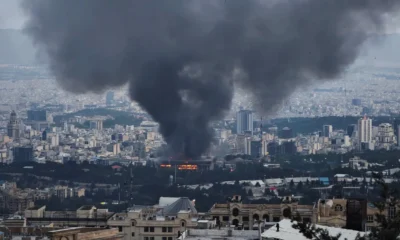
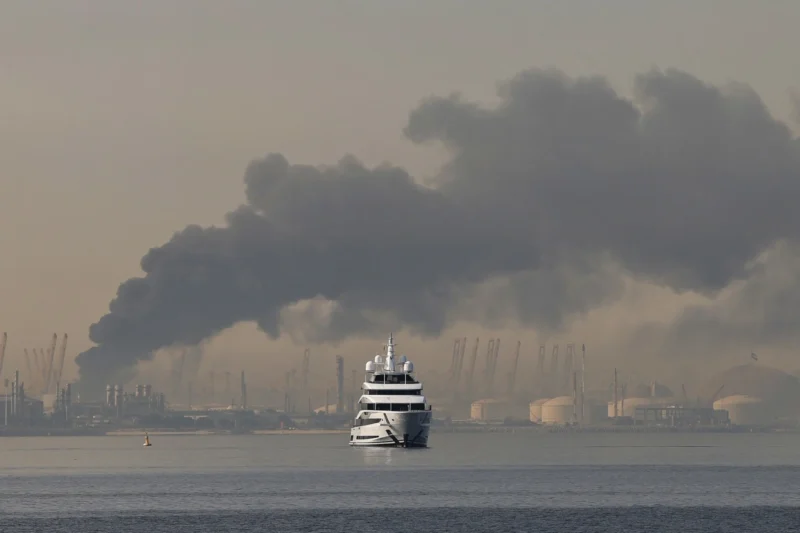
Hormuz: Explosions, GPS Jamming and Shipping Chaos

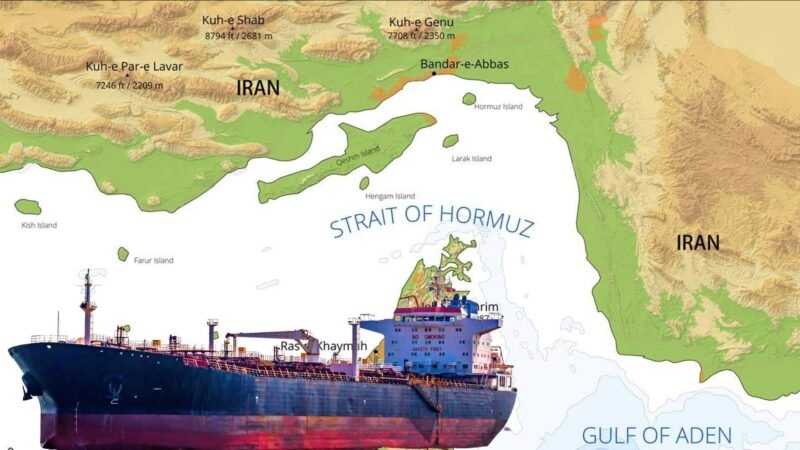
Commercial Vessels Hit Near UAE and Oman as Strait of Hormuz Faces Electronic Warfare and Houthi Threats.
Projectiles. Fires at sea. Ships disappearing from radar. The world’s most vital oil artery is under pressure.
The Strait of Hormuz — a narrow passage carrying roughly 20 percent of global oil and gas exports — became a new flashpoint Sunday as maritime authorities reported explosions, vessel damage and widespread GPS interference following US–Israeli strikes on Iran.
Shipping alerts from the United Kingdom Maritime Trade Operations (UKMTO) described multiple incidents labeled as “attacks.” One vessel west of Sharjah in the United Arab Emirates was rocked by an explosion from an unidentified projectile. Another tanker north of Muscat, Oman, was struck above the waterline, igniting a fire later brought under control. A third vessel northwest of Mina Saqr, UAE, was also reportedly hit and set ablaze.
Beyond physical damage, electronic warfare has intensified. Maritime intelligence firm Windward reported significant disruption to GPS and Automatic Identification System (AIS) signals affecting more than 1,000 vessels. Ships near Iran’s Bandar Abbas port were reportedly showing false positions — appearing at airports, inland locations and even near critical infrastructure — complicating navigation in already tense waters.
“The Persian Gulf, Strait of Hormuz and adjacent waters are the most dangerous place right now for commercial shipping,” said Jakob P. Larsen, head of maritime security at BIMCO. He noted that many ships are attempting to move as far from Iranian waters as possible.
Major shipping company Maersk confirmed it is rerouting certain services to protect crew and cargo. Traffic data shows tankers anchoring, reversing course or switching off AIS transponders amid the uncertainty.
Industry groups also warned that Yemen’s Houthi movement could resume attacks in the Red Sea and Gulf of Aden, further widening the maritime risk zone. The tanker owners’ association Intertanko cautioned members that renewed Houthi activity is possible, though intelligence remains fluid.
So far, there are no confirmed signs of sea mines in the Strait, Larsen said, but he warned that conditions could change quickly.
With commercial vessels damaged, navigation systems disrupted and oil infrastructure already targeted elsewhere in the Gulf, the maritime dimension of the conflict now threatens to ripple directly into global energy markets and supply chains.












Missile Attacks, Port Shutdowns and Airspace Closures Threaten UAE’s Role as Global Finance and Travel Hub.
The world’s safest luxury playground just heard air-raid sirens. What happens to global markets if Dubai no longer feels secure?
Iran’s widening retaliation against U.S.-Israeli strikes has struck at the heart of the Gulf’s economic model, targeting cities long marketed as insulated from regional turmoil. Explosions over Dubai and Abu Dhabi have rattled investors, expatriates and global corporations that helped transform the United Arab Emirates into a tax-free magnet for wealth.
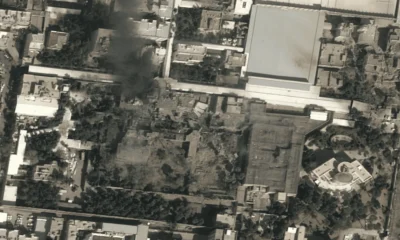
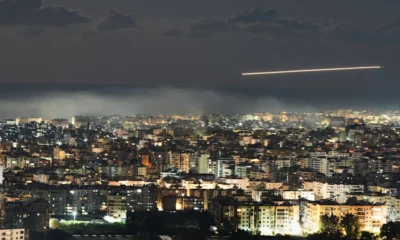
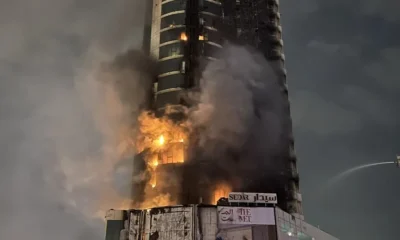
Missile and drone interceptions lit the skies above landmarks including the Burj Khalifa and the Palm Jumeirah, where debris sparked fires near luxury hotels such as the Fairmont The Palm. In Abu Dhabi, falling fragments were reported near Etihad Towers. Kuwait City’s airport also came under drone attack, underscoring how widely the confrontation is spreading.
The economic stakes are significant. DP World suspended operations at Jebel Ali, the Middle East’s largest container port, after debris ignited a fire at one berth. The port and surrounding free zone account for more than a third of Dubai’s gross domestic product. At the same time, hundreds of vessels have anchored near the Strait of Hormuz amid fears Iran could disrupt shipping through the vital energy corridor.
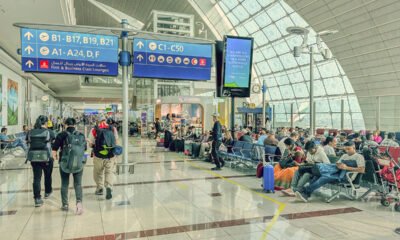
Regional airspace closures have compounded the disruption. Dubai and Doha function as crossroads between Europe and Asia, handling thousands of connecting flights daily. Any sustained interruption reverberates across global aviation, cargo flows and tourism.
Analysts say Tehran’s strategy appears aimed at pressuring Washington’s regional allies by raising the economic cost of continued military operations. Marko Kolanovic, former chief global strategist at JPMorgan, warned that the UAE’s exposure — with roughly 88 percent of its population composed of expatriates and heavy reliance on finance, tourism and trade — makes it especially vulnerable. A prolonged crisis, he cautioned, could send shockwaves through global markets.
Dubai weathered a severe real estate crisis in 2009, but investors largely viewed it as contained. This time, the perception of security itself is under strain. Residents have reported panic buying and a rush to secure outbound flights.
For decades, Dubai sold stability in a volatile neighborhood. The current escalation tests whether that promise can endure — and whether the Gulf’s economic miracle can withstand a war at its doorstep.
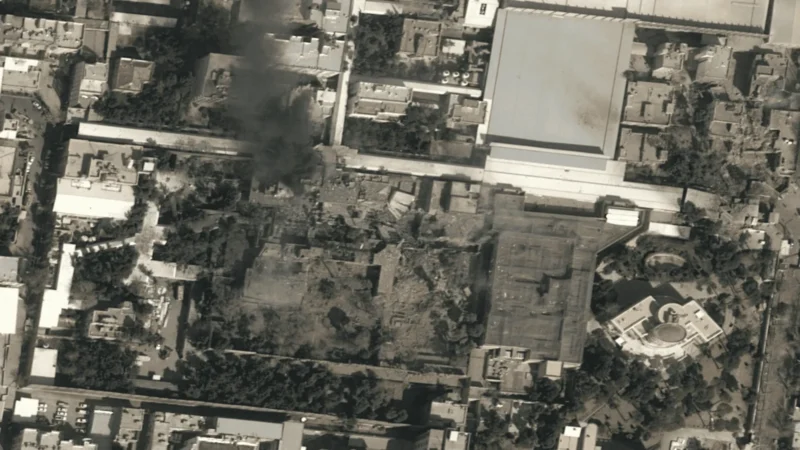
Leadership Council Forms as Tehran Moves Swiftly to Prevent a Power Vacuum After US-Israeli Strike.
Was this a decapitation meant to collapse Iran — or the moment that forces it to consolidate and strike back?
The killing of Iran’s Supreme Leader, Ali Khamenei, in a joint U.S.-Israeli strike has triggered the most consequential leadership transition in the Islamic Republic since 1989. But instead of chaos, Tehran has responded with speed.
Within hours, Iranian authorities confirmed the formation of an interim leadership structure under constitutional provisions designed for precisely this moment. According to international reporting, Alireza Arafi has been appointed as the jurist member of a temporary leadership council tasked with exercising the supreme leader’s authority until the Assembly of Experts selects a successor.
That move matters. It signals continuity — not collapse.
For decades, Iran has operated under sanctions, covert pressure and military threats. Its political architecture was built with redundancy. Succession planning is embedded in its system because siege conditions were never theoretical. The rapid appointment to the interim council suggests the state intends to close any vacuum quickly and limit elite fragmentation.
The broader question now is succession.
Among names frequently discussed is Mojtaba Khamenei, the late leader’s son. His perceived advantage would be network continuity and reassurance to hardline constituencies. But hereditary optics carry risks in a republic born from anti-monarchical revolution.
Another possibility is Hassan Khomeini, grandson of the revolution’s founder. His symbolic legitimacy could unify factions, though symbolism alone may not satisfy security-driven elites in wartime.
Clerical heavyweights such as Sadeq Amoli Larijani or Ahmad Khatami represent institutional continuity. Meanwhile, political operators like Ali Larijani could emerge as power brokers shaping consensus behind the scenes.
Above all stands the Islamic Revolutionary Guard Corps (IRGC). In moments of existential threat, security institutions tend to gain influence. External attempts at “decapitation” often produce the opposite of fragmentation — accelerated consolidation and a harder posture.
Strategically, the strike was widely interpreted as an effort to paralyze decision-making and disrupt succession. Yet early signs suggest Iran’s system remains operational. The leadership council framework indicates the state is prioritizing legibility to itself — keeping chains of command intact even under bombardment.
Regionally, the emotional impact is profound. For Shiite communities beyond Iran’s borders, Khamenei’s death may deepen anti-Israeli sentiment and intensify confrontation with Western allies. Political violence in the Middle East rarely stays contained; it travels through networks of memory, grievance and identity.
The larger geopolitical shift is equally significant. Targeted elimination of a sitting head of state redraws perceived boundaries of sovereignty. Whether this becomes a new precedent — or an isolated rupture — will shape regional calculations for years.
Iran now enters a succession phase under fire. The decisive variable is not whether the system feels shock. It does. The question is whether pressure fractures it — or forces it into a more disciplined, more centralized survival mode.
History suggests states built for siege rarely disintegrate on command.
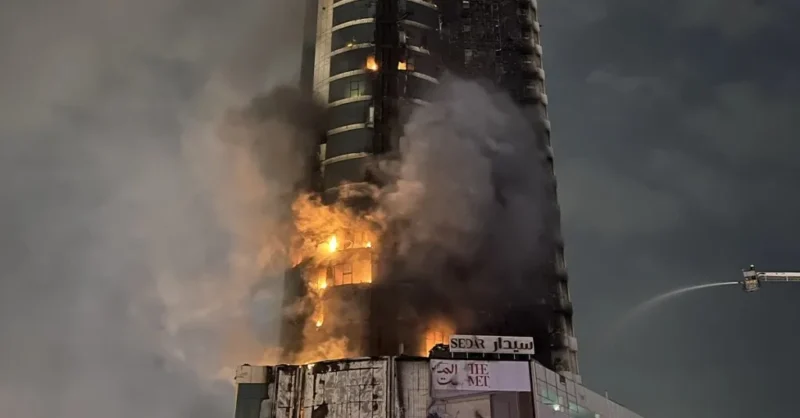
Iranian Strike Targets Naval Support Activity as Low-Cost Weapons Challenge High-End Air Defenses.
Cheap drones vs. billion-dollar fleets. Has modern warfare flipped the cost equation?
Iran’s strike on the headquarters of the U.S. Navy’s 5th Fleet in Bahrain has exposed a hard reality of modern warfare: even the world’s most advanced military can be pressured by low-cost, high-volume attacks.
The attack targeted Naval Support Activity (NSA) Bahrain, home to the U.S. 5th Fleet in the Juffair district of Manama. U.S. officials indicated that major naval assets, including carrier strike groups operating in the region, had already repositioned away from immediate risk zones before the strikes began.
Iran reportedly used a combination of drones and more advanced missile systems in the attack. Analysts say the strategy reflects a broader shift in military doctrine: overwhelm sophisticated air defenses with inexpensive unmanned systems before deploying higher-end weapons.
The widely used Shahed-136 drone — estimated to cost a fraction of traditional missiles — has become emblematic of this tactic. While relatively slow and simple, swarming attacks can force defenders to expend interceptors costing millions of dollars each. Systems such as Patriot and THAAD remain capable of intercepting many incoming threats, but sustained barrages test inventory depth and cost sustainability.
Defense experts describe the challenge as an “attrition equation.” A low-cost drone campaign can impose disproportionate financial strain on advanced defense networks, even when interceptions succeed.
The attack also highlighted the geographic vulnerability of NSA Bahrain. Unlike isolated desert installations, the base sits within a dense urban district. Air-defense fire in populated areas increases the risk of falling debris and diplomatic complications with host nations.
In response, the U.S. military has reportedly accelerated deployment of lower-cost unmanned systems of its own, reflecting a growing emphasis on cost-effective countermeasures. The emergence of American-made loitering munitions underscores a broader arms race in inexpensive drone warfare.
No U.S. warships were reported sunk or critically damaged. However, infrastructure impacts and the psychological effect of strikes against a major naval headquarters have fueled debate over static base vulnerability in contested regions.
The episode signals a broader transformation in global security dynamics: naval dominance is no longer defined solely by aircraft carriers and destroyers, but by resilience against saturation attacks from relatively cheap, widely available technologies.
As the conflict evolves, the question facing Washington is not only how to intercept incoming threats — but how to do so sustainably in an era where adversaries can challenge billion-dollar fleets with systems costing a fraction of that price.
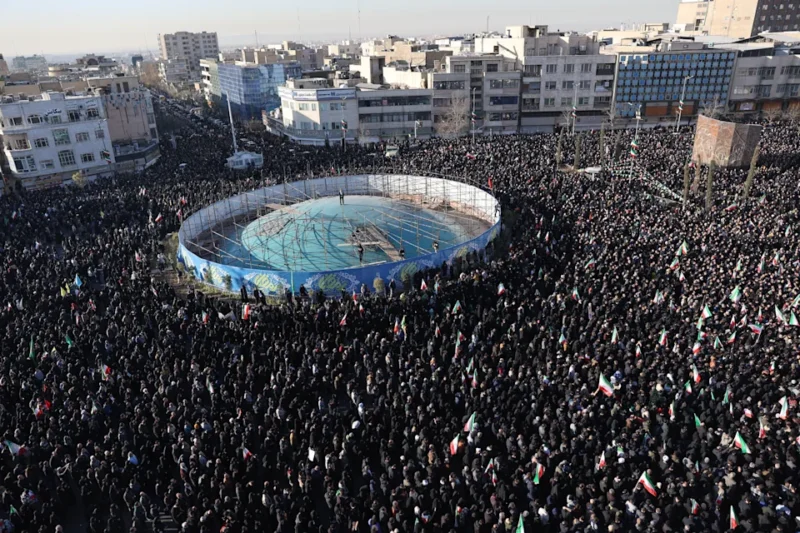
Leadership vacuum. Regional retaliation. Oil routes at risk. The Middle East conflict is entering a dangerous new phase.
Israeli airstrikes shook Tehran on Sunday as Iran expanded its missile retaliation across Israel and several Gulf states, deepening a fast-moving regional confrontation that began with coordinated US–Israeli attacks a day earlier.
Iranian authorities say more than 200 people have been killed since the campaign began. Blasts in Tehran sent thick smoke rising over areas that include government compounds, though specific targets were not immediately confirmed.
The escalation follows widespread claims — including statements from US and Israeli officials — that Iran’s Supreme Leader Ayatollah Ali Khamenei was killed in the initial strikes. Iranian state media later announced a 40-day mourning period and said a governing council had begun work, though full independent international verification remains limited.
Iran’s President Masoud Pezeshkian confirmed in a prerecorded address that a new leadership council is operating as the country manages what would be its most significant power transition since 1989.
Missile exchanges have widened geographically. Loud detonations were heard in Tel Aviv, where Israeli rescue services reported eight deaths and dozens of injuries in Beit Shemesh, bringing the Israeli toll to at least 10.
Iranian parliamentary speaker Mohammad Bagher Qalibaf vowed retaliation, warning that Israel and the United States would face “devastating blows.” President Donald Trump responded with a stark warning against further escalation, promising overwhelming force if attacks continue.
The conflict has also spilled beyond the two countries. Saudi Arabia, the United Arab Emirates, Kuwait, Bahrain, Qatar and Jordan reported intercepting projectiles or drones. In Abu Dhabi, falling debris reportedly caused casualties and structural damage. Attacks were also reported near US facilities in Iraq.
The economic implications are mounting. Roughly 20 percent of global oil shipments pass through the Strait of Hormuz, and energy markets are bracing for volatility if maritime security deteriorates.
At the United Nations, Secretary-General António Guterres urged immediate de-escalation. Russia and China condemned the strikes, while Washington defended them as necessary to prevent Iran from acquiring nuclear weapons.
Whether this confrontation stabilizes or accelerates into a prolonged regional war may hinge on Iran’s succession process — and on how far Washington and Tel Aviv are prepared to push their campaign in the days ahead.
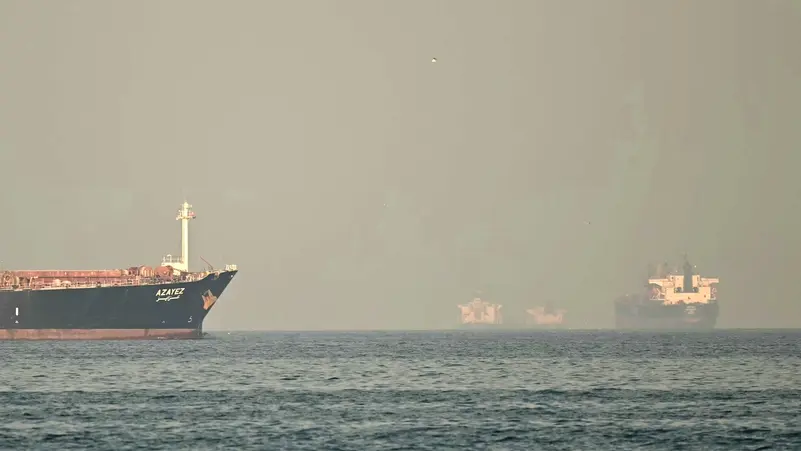
The world’s oil highway is slowing down. Tankers are stopping. What happens if Hormuz closes?
Hundreds of oil and gas vessels have halted movement in and around the Persian Gulf as tensions escalate following US and Israeli strikes on Iran, raising fears of a broader regional conflict and potential energy supply disruption.
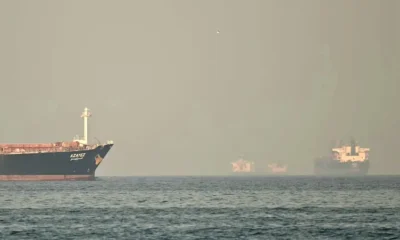
Shipping data from MarineTraffic reviewed Sunday showed at least 150 tankers — including crude oil carriers and liquefied natural gas (LNG) vessels — anchored in open waters beyond the Strait of Hormuz. Dozens more were reported stationary on the opposite side of the strategic chokepoint.
The vessels are clustered off the coasts of major Gulf producers, including Saudi Arabia and Iraq, as well as near Qatar, one of the world’s largest LNG exporters.
The Strait of Hormuz, a narrow maritime corridor linking the Gulf to global markets, handles roughly one-fifth of global oil consumption. Any prolonged disruption there would ripple quickly through energy markets.
The sudden pause in shipping traffic follows Iran’s retaliatory missile attacks after coordinated US–Israel strikes targeted Iranian leadership and military infrastructure. Tehran has previously warned that it could restrict or close the strait in the event of military escalation.
Maritime operators appear to be taking precautionary measures rather than risk transit through a potential conflict zone. Tankers idling in open waters can wait for security clarity before proceeding.
Energy traders are closely monitoring the situation. Even temporary bottlenecks could push oil and gas prices sharply higher, especially given already strained global supply routes following conflicts in Eastern Europe and the Red Sea.
Insurance costs for vessels operating in high-risk areas are also expected to surge, adding further pressure on global shipping.
For now, the ships remain at anchor — a visible sign that a regional military confrontation is rapidly spilling into the arteries of the global economy.
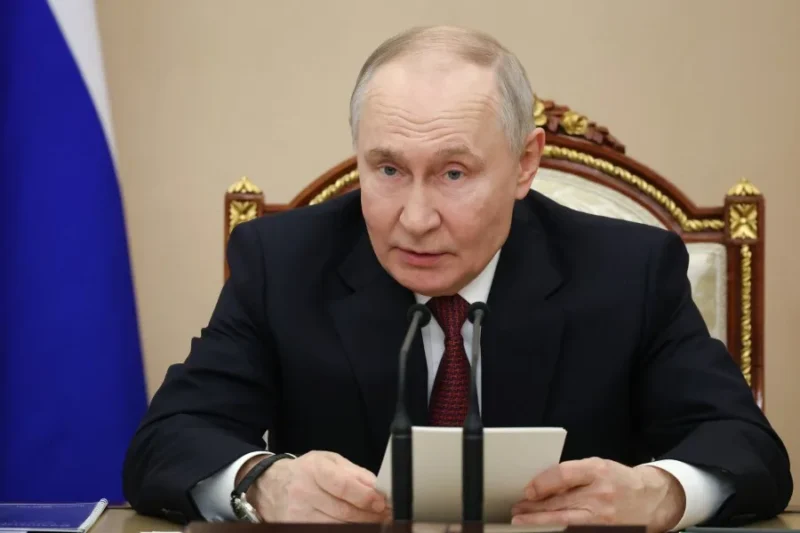
Moscow vs. Washington — the rhetoric just escalated. Is this the start of a broader geopolitical rupture?
Russia sharply condemned the United States and Israel on Saturday, accusing them of recklessly escalating the conflict with Iran and pushing the Middle East toward what it called a potential “catastrophe.”
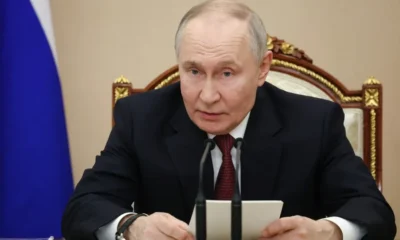
President Vladimir Putin convened a video conference with members of Russia’s Security Council to assess the situation following the strikes, according to Kremlin spokesperson Dmitry Peskov.
In a strongly worded statement, Russia’s Foreign Ministry accused Washington and Tel Aviv of launching a “dangerously irresponsible attack” that risks triggering humanitarian, economic and even radiological consequences across the region.
“By plunging the Middle East into an abyss of uncontrolled escalation, they are actually encouraging countries around the world… to acquire more serious means against emerging threats,” the ministry said.
The remarks reflect Moscow’s concern that the strikes — which US President Donald Trump described as necessary to eliminate security threats and weaken Iran’s leadership — could spiral into a wider regional war.
Dmitry Medvedev, deputy chairman of Russia’s Security Council and a former president, added a pointed historical comparison. Writing in English, Medvedev accused Washington of using diplomacy as “a cover” and questioned America’s long-term endurance.
“The US is just 249 years old. The Persian Empire was founded over 2500 years ago,” he wrote. “Let’s see what happens in 100 years or so…”
Russia has positioned itself as a vocal critic of Western military interventions in the region, while maintaining close ties with Tehran. The Kremlin has repeatedly warned that military escalation could destabilize global energy markets and deepen security fractures across the Middle East.
With missile exchanges already under way and diplomatic channels strained, Moscow’s language signals that the crisis is no longer confined to Washington and Tehran — it is rapidly taking on broader geopolitical dimensions.
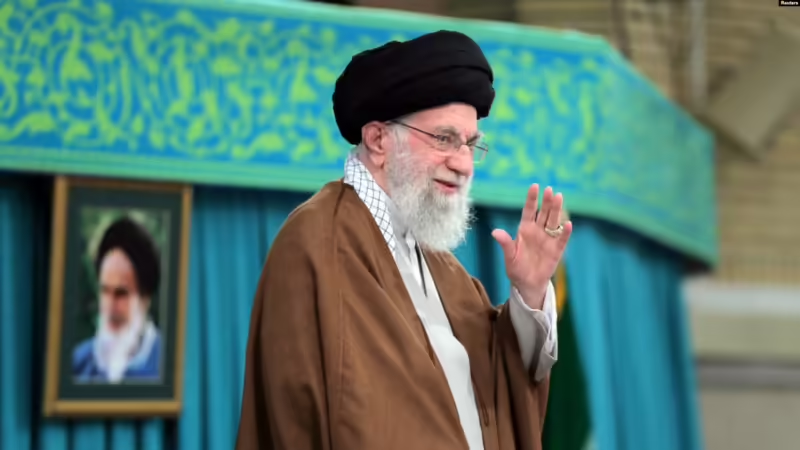
If confirmed, this reshapes the Middle East overnight. Leadership vacuum. Retaliation underway. What happens next?
Iranian state television has confirmed that Supreme Leader Ayatollah Ali Khamenei was killed during coordinated US and Israeli airstrikes, declaring a 40-day national mourning period and signaling a turning point in the intensifying conflict.
The announcement follows earlier claims by US President Donald Trump and Israeli Prime Minister Benjamin Netanyahu that Khamenei had been targeted in the sweeping attacks that began early Saturday. Trump wrote on social media that US intelligence systems had tracked the 86-year-old leader and that he “was unable to avoid” the strike.
Tehran’s initial reports had insisted Khamenei remained in command. Sunday’s confirmation marks a dramatic shift and introduces profound uncertainty into Iran’s political and military structure. Khamenei had led the Islamic Republic since 1989 and held ultimate authority over the armed forces, judiciary and key state institutions.
Analysts say succession mechanisms exist. Barbara Slavin of the Stimson Center noted that a governing council may already be prepared to assume temporary authority. Iran’s constitution provides for a transitional process led by senior clerical and political bodies in the event of a supreme leader’s death.
The strikes reportedly hit targets across 24 provinces, with Iranian media citing more than 200 fatalities. Israel said senior Revolutionary Guard commanders and nuclear officials were among those killed. Iranian officials described the operation as “premeditated aggression” and vowed continued retaliation.
Missile exchanges widened the battlefield. Iranian counterstrikes triggered air-defense responses in Israel and Gulf states hosting US bases, including Kuwait, Qatar, Bahrain and the United Arab Emirates. Regional airspace disruptions followed as governments braced for further escalation.
At the United Nations, Secretary-General António Guterres warned that military action risks unleashing consequences “no one can control.” Russia and China condemned the strikes, while Washington defended them as necessary to prevent Iran from acquiring nuclear weapons.
Trump indicated that bombing would continue “as long as necessary,” raising fears of a prolonged campaign. Markets are closely watching potential disruptions to the Strait of Hormuz, a key artery for global oil supplies.
If fully confirmed and internationally verified, Khamenei’s death would represent the most consequential shift in Iranian leadership in more than three decades — and could redefine the region’s security landscape for years to come.
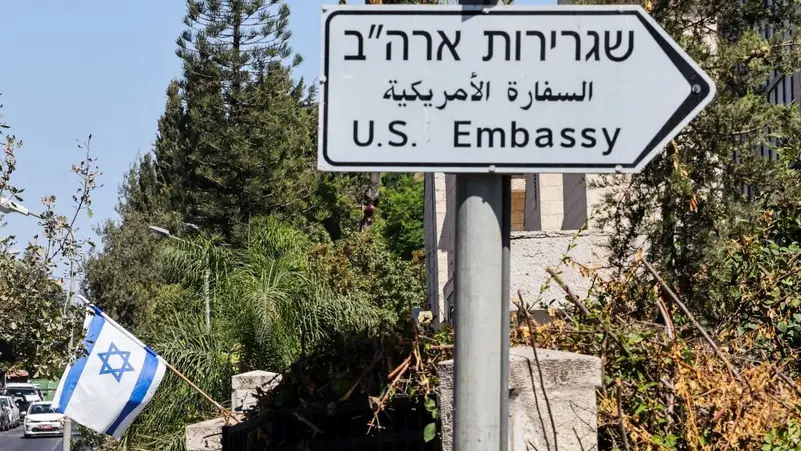
Evacuation notices. Aircraft carriers moving in. Talks hanging by a thread. Is the Middle East edging toward another war?
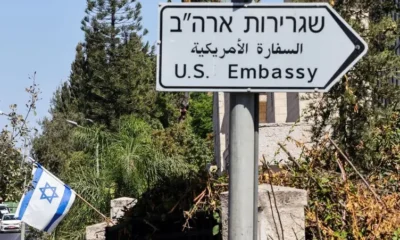
The United States has authorized the departure of non-emergency embassy staff and their families from Israel, signaling mounting concern as tensions with Iran intensify and Washington accelerates one of its largest regional military deployments in decades.
The U.S. Embassy in Israel announced Friday that personnel may leave “due to safety risks,” advising Americans to consider departing while commercial flights remain available. According to reports, Ambassador Mike Huckabee urged staff who wished to leave to do so immediately.
The move comes as the USS Gerald R. Ford — the world’s largest aircraft carrier — heads toward the eastern Mediterranean, joining a substantial U.S. naval presence already in the region. Washington currently has more than a dozen warships deployed across Middle Eastern waters.
The evacuation notice follows Oman-mediated nuclear talks between Iran and the United States in Geneva, described by diplomats as a final effort to avoid open conflict. While both sides reported “progress,” deep differences remain.
President Donald Trump, who has repeatedly threatened military action, said this week he was “not happy” with negotiations and reiterated his demand for “no enrichment.” Reports suggest U.S. negotiators are pressing Iran to dismantle key nuclear facilities and surrender its enriched uranium stockpile.
Iran has rejected what it calls “excessive demands.” Foreign Minister Abbas Araghchi said talks had entered a serious phase but warned that miscalculations could derail diplomacy. Technical discussions are expected to continue next week in Vienna under the auspices of the UN nuclear agency.
The backdrop is volatile. Trump recently claimed Iran is developing missiles that could soon reach the United States — a statement disputed by intelligence assessments. Meanwhile, Iran maintains its nuclear program is civilian and accuses Washington of spreading “big lies.”
The region has seen this brinkmanship before. A previous round of diplomacy collapsed last year before a brief U.S.-Israel military operation targeted Iranian nuclear sites.
UN High Commissioner for Human Rights Volker Türk said he was “extremely alarmed” by the risk of escalation and urged restraint.
For now, embassies are preparing, fleets are repositioning, and diplomats are racing against time. Whether the coming days bring compromise or confrontation may determine whether this crisis ends at the negotiating table — or in the skies above the Middle East.

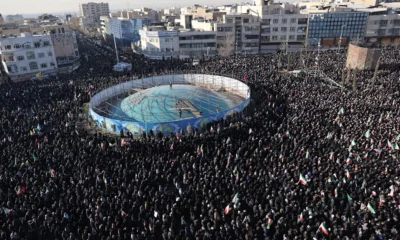
Iran Strikes Shake Gulf’s Tax-Free Safe Haven

Khamenei Is Dead — Will Iran Fracture or Harden?

Hormuz: Explosions, GPS Jamming and Shipping Chaos


-

 Somaliland1 month ago
F-35s Over Hargeisa: The Night Somaliland’s Sovereignty Went Supersonic
-

 Somalia1 month ago
Aid Destroyed, Trust Shattered: Somalia Loses U.S. Support for Good
-
 Terrorism1 month ago
Foreign ISIS Pipeline Exposed: Puntland Captures Dozens of Non-Somali Fighters
-

 Somaliland1 month ago
Somaliland at Davos: The Moment Somaliland Entered the World’s Inner Circle
-
 Terrorism4 weeks ago
America Pulls Back From Somalia but Doubles Down Next Door
-
 Top stories2 months ago
Somali Pirates Hijack Chinese Fishing Vessel off Puntland Coast
-

 Somaliland2 months ago
Somaliland Rejects Claims of Israeli Military Bases or Gaza Refugee Deal
-
 Middle East2 months ago
US War Plans Against Iran Enter Advanced Stage