
US-Israel war on Iran
Trump Signals Exit as Iran Punches Back

“Any time I want it to end, it will end,” Trump says. But with 140 U.S. troops wounded and Hormuz under threat, is the war slipping beyond script?
Mounting U.S. Casualties, Oil Shock and Drone Strikes Complicate White House Narrative of Quick Victory.
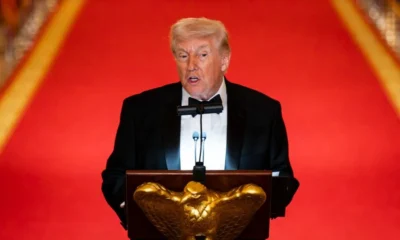
After nearly two weeks of intense U.S.-Israeli strikes, President Donald Trump now sounds increasingly eager to bring the Iran war to a close — even as American casualties mount and Tehran finds asymmetric ways to retaliate.
In an interview with Axios, Trump predicted the conflict would end “soon,” insisting there was “practically nothing left to target.” Days earlier, he had suggested the campaign might last four to six weeks.
At other moments, he has demanded regime change in Tehran and vowed that Iran’s next leader would require his approval — a position that now looks complicated by the swift elevation of Mojtaba Khamenei.
The battlefield picture is more complex than early triumphalism suggested. The Pentagon disclosed that 140 U.S. service members were wounded in the initial phase of the campaign that killed Ayatollah Ali Khamenei and senior Iranian commanders. While American firepower has devastated key military sites, Iranian forces and allied militias are adapting.
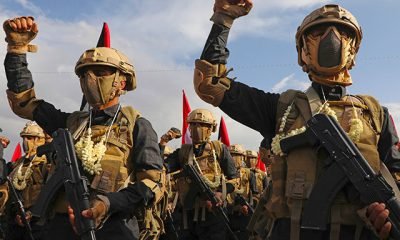
According to U.S. officials and analysts, Tehran is attempting to booby-trap the Strait of Hormuz — the artery for roughly one-fifth of global oil shipments — and has launched drone attacks targeting American positions, including facilities used by U.S. personnel in Iraq’s Kurdish region.
Iran’s strategy appears less about conventional victory than attrition. Even a weakened adversary can impose costs. An exiled Iranian analyst described the regime as a “patient threat” — one willing to endure punishment while probing for vulnerabilities.
Inside Washington, the definition of “winning” remains unsettled. Some Republicans argue Trump can declare success after degrading Iran’s nuclear infrastructure and exit before the conflict deepens.
Others press for more decisive action. Defense Secretary Pete Hegseth has said the administration anticipated Iranian retaliation, though he characterized it as a sign of desperation.
Meanwhile, economic pressures are building. Oil prices have swung sharply, retirement portfolios have whipsawed, and gasoline costs have climbed. Trump has warned Iran it would be struck “TWENTY TIMES HARDER” if it blocks Hormuz, but markets remain sensitive to even partial disruption.
Beyond strategy, the war has revived domestic political fault lines. Trump campaigned on ending “forever wars,” and divisions have emerged within his base between interventionists and isolationists.
Iran may not be able to defeat the United States militarily. But survival alone would allow Tehran to claim resilience. For Trump, ending the conflict swiftly could convert a volatile campaign into a political asset — and prevent a drawn-out war that tests both American patience and economic stability.

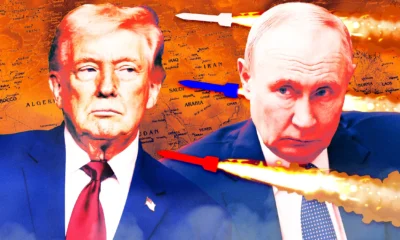









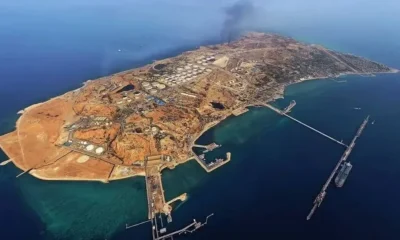


As Moscow Deepens Support for Tehran, the Iran Conflict Risks Becoming a Direct U.S.–Russia Confrontation.
If Russia is helping Iran target U.S. forces, this isn’t just a Middle East war anymore — it’s something far more dangerous.
The most unsettling question about the war with Iran is no longer how it ends in Tehran, but whether it quietly expands toward Moscow.
Reports that Russia is supplying Iran with intelligence, satellite imagery and technical guidance on drone warfare suggest the conflict may be evolving into something Washington has long tried to avoid: a proxy confrontation with a nuclear power.
For decades, U.S. presidents have sought to prevent exactly this scenario. From the Bay of Pigs fiasco in 1961 to the Cuban Missile Crisis that followed, American leaders learned how quickly regional miscalculations can escalate into global standoffs.
President John F. Kennedy ultimately defused that crisis through restraint and backchannel diplomacy, aware that nuclear brinkmanship leaves little margin for error.
Today, the geopolitical terrain is more fragmented — and arguably more volatile.
If Moscow is indeed sharing battlefield insights with Tehran, including expertise on Shahed-style drones that Russia has used extensively in Ukraine, then the Kremlin is no longer a distant observer. It becomes an indirect participant in a conflict where American forces are deployed and already absorbing casualties.
That changes the strategic equation.
President Donald Trump has publicly described his conversations with Vladimir Putin as constructive, even suggesting the Russian leader wants to be “helpful” on the Middle East. Yet intelligence-sharing allegations, if accurate, undermine the premise that Moscow is neutral — let alone cooperative.
Russia has incentives to prolong the crisis. A widening Middle East war diverts Western focus from Ukraine, complicates NATO coordination, and strains global energy markets. It also places Washington in the uncomfortable position of confronting two adversarial theaters at once.
The deeper risk lies in escalation dynamics. Proxy wars often begin with deniable support — intelligence feeds, weapons transfers, tactical advice — before evolving into direct confrontation. The United States and the Soviet Union spent decades managing that risk in Vietnam, Afghanistan and across the Cold War periphery.
But today’s environment lacks the stabilizing guardrails of structured superpower diplomacy. Communication channels are thinner. Mutual trust is minimal. Domestic political pressures are higher.
If Iranian forces, bolstered by Russian expertise, inflict sustained harm on U.S. troops or Gulf allies, the pressure for retaliation could expand beyond Iran itself. Conversely, if Washington escalates against Tehran while Moscow feels strategically cornered in Ukraine, retaliation could take asymmetric forms elsewhere.
This is how great-power entanglements grow — not through deliberate design, but through cumulative miscalculation.
The Iran war may have begun as a targeted campaign against nuclear and military infrastructure. Yet the emerging Russian dimension introduces a second layer of confrontation, one that reaches beyond the Gulf.
The frightening possibility is not simply a prolonged regional war. It is the normalization of a U.S.–Russia proxy battlefield in the Middle East — with nuclear-armed states once again testing each other’s limits.
History suggests such moments demand caution, clarity and disciplined diplomacy.
Whether those qualities prevail now will determine whether this conflict remains regional — or becomes something far harder to contain.
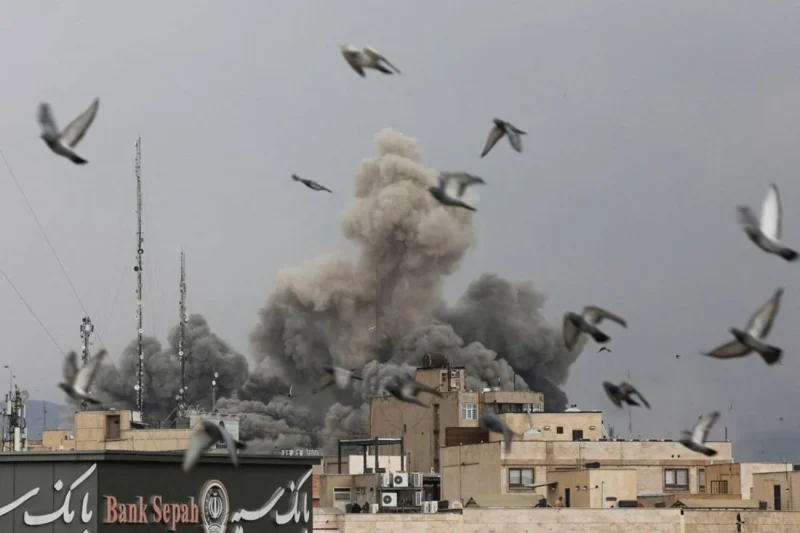
This isn’t just another Middle East war. It may be the moment the post–Cold War world finally gives way to something harsher.
How the U.S.-Israeli Campaign Could Accelerate the Collapse of Post–Cold War Stability.
The war against Iran was presented in Washington and Jerusalem as a defensive necessity — a move to eliminate a nuclear threat before it materialized. U.S. and Israeli officials argued that Tehran was edging dangerously close to weapons capability. Yet as the bombing campaign unfolded, it became clear that nuclear concerns were only part of a larger geopolitical reckoning.
This conflict is not simply another chapter in the Middle East’s long history of violence. It may represent the next phase in a transformation that began in 1991, when the United States launched Operation Desert Storm and, almost simultaneously, the Soviet Union collapsed. That moment marked the beginning of what many called the “unipolar era” — a period of unrivaled American dominance.
The decades that followed were defined by intervention and instability: the wars in Afghanistan and Iraq, the upheavals of the Arab Spring, the Libyan intervention, the Syrian civil war. Each crisis drew in new actors. Each reshaped regional balances. And each left behind unresolved consequences.
Now, the confrontation with Iran pushes that trajectory further.
Donald Trump had campaigned on reducing American entanglements abroad. Yet Iran posed a different challenge. It is not a peripheral actor but a central pillar of regional politics — a state of nearly 90 million people with deep influence across Lebanon, Iraq, Syria and Yemen. Attempting to dismantle such a power inevitably alters the entire system.
In Tel Aviv, Prime Minister Benjamin Netanyahu has framed the campaign as a historic opportunity to eliminate a long-standing threat.
In Washington, some believed a sharp, decisive blow might trigger internal collapse in Tehran. But rapid regime implosion has not occurred. Instead, the conflict has widened, energy routes have been disrupted, and the global economy has absorbed fresh shocks.
The deeper impact may lie in the norms being reshaped. The targeted killing of Iran’s supreme leader marked a dramatic escalation in statecraft. What was once reserved for non-state militant leaders has now been applied to the head of a sovereign state. That precedent will not be forgotten.
Nor will the erosion of multilateral procedure. Where past interventions at least sought the veneer of United Nations backing, today force is justified openly through necessity and strength. International law appears increasingly secondary to strategic calculation.
For many governments watching from afar, the lesson may be stark: nuclear deterrence is no longer optional insurance but essential political survival. Countries that feel vulnerable could accelerate their own military programs, deepening a cycle of proliferation.
At the same time, a new regional architecture may be taking shape. One pillar would be Israeli military predominance. Another would be tighter economic integration between Israel and Gulf monarchies, with the United States positioned as guarantor and beneficiary.
Türkiye remains an independent actor, yet still embedded within NATO structures.
But history offers caution. The collapse of Iraq’s regime in 2003 produced not stability but prolonged chaos. Even if Iran’s leadership were weakened or transformed, the aftermath could prove more destabilizing than the war itself.
The broader trend is unmistakable. Power politics is resurging. Bilateral leverage is favored over multilateral consensus. Military capability is again central to national strategy.
The post–Cold War order, built on assumptions of liberal expansion and cooperative security, appears increasingly fragile. Replacing it with something durable will require more than force.
The war on Iran may not only redraw the Middle East. It may accelerate the transition to a harsher global era — one in which strength defines security, deterrence defines survival, and the old rules no longer reliably apply.
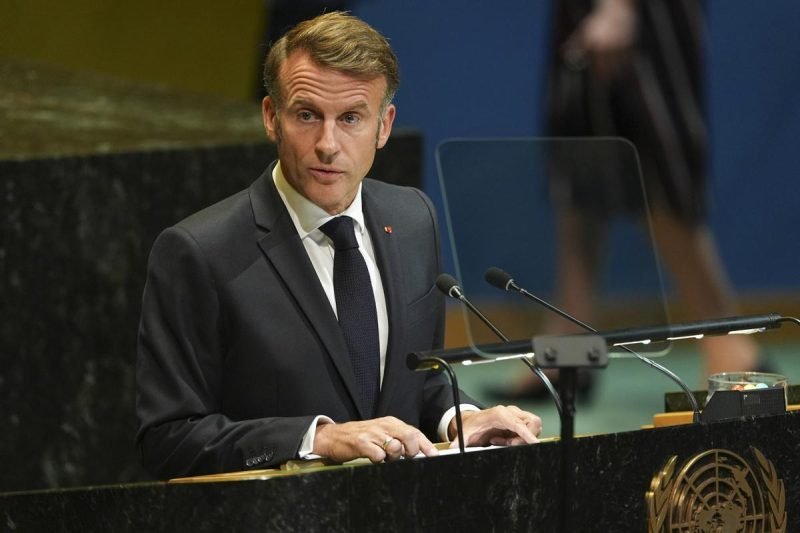
Illegal war? Iranian responsibility? Naval deployments to Hormuz? France walks a diplomatic tightrope as the Middle East burns.
Paris Questions Legality of U.S.-Israeli Strikes but Stops Short of Full Condemnation as Gulf Tensions Rise.
Nearly half a century after Ayatollah Ruhollah Khomeini broadcast revolutionary messages from a village outside Paris, France once again finds itself entangled in Iran’s fate — this time as a cautious Western power navigating an escalating regional war.
President Emmanuel Macron has struck a careful balance. He has questioned the legality of the U.S.-Israeli assault on Iran, describing it as outside international law, yet has also argued that Tehran “bears primary responsibility” for the crisis because of its refusal to compromise on nuclear issues.
That calibrated position reflects a broader European dilemma. Paris has avoided the blunt condemnations issued by Spain, but it has also resisted fully endorsing Washington’s campaign. Analysts say the French leadership views military action — particularly regime change — with skepticism shaped by history.
“We have the precedent in Iraq,” said Laure Foucher of the Fondation pour la Recherche Stratégique. “We know where that led.”
While Israeli Prime Minister Benjamin Netanyahu and U.S. President Donald Trump have spoken openly about dismantling Iran’s ruling system, French officials argue that external military force cannot resolve the deeper political and nuclear questions.
At the same time, France is preparing for spillover. Macron has ordered 10 warships to deploy to the eastern Mediterranean, the Red Sea and the Strait of Hormuz, reinforcing earlier naval movements meant to safeguard shipping lanes and protect approximately 400,000 French citizens living across the Middle East.
The mission, Macron emphasized, is defensive — an escort and support operation rather than an offensive posture.
The stakes are not abstract. France maintains defense partnerships with several Gulf states and retains deep historical ties to Lebanon, where fighting between Israel and Hezbollah threatens further destabilization. Macron has urged regional leaders to prevent Lebanon from being pulled fully into the war and pledged support to Lebanese armed forces.
At home, public opinion appears uneasy. Many French citizens see the U.S.-Israeli strikes as legally questionable and potentially destabilizing. Others, including segments of the Iranian diaspora in France, remain divided — some hoping the conflict weakens Tehran’s leadership, others warning that war will not deliver freedom.
For Macron, the challenge is strategic as well as moral. France seeks to uphold international law, preserve alliances, secure trade routes and avoid being drawn deeper into a widening confrontation.
In a conflict defined by hard power, Paris is attempting to exercise restraint without isolation — walking a diplomatic fine line between solidarity with partners and skepticism about the war’s trajectory.
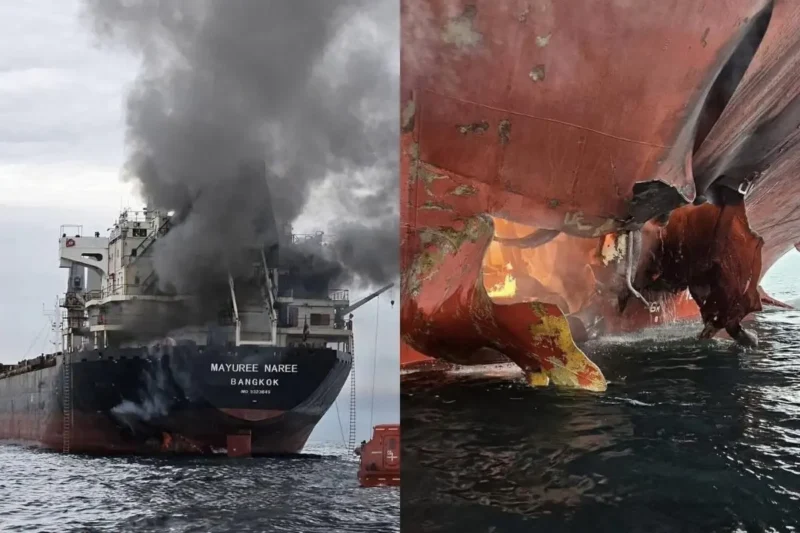
Oil chokepoints, burning ships, and missiles over Gulf skies. Is this now a war of global economic attrition?
Tehran Targets Commercial Vessels and Dubai Airport as Energy Supplies Tighten and Oil Markets Tremble.
Iran sharply escalated its campaign across the Gulf on Wednesday, striking commercial vessels and targeting transport infrastructure, including Dubai’s international airport, as U.S. and Israeli forces intensified air operations against Iranian military sites.
The widening attacks mark a shift toward economic warfare. Iranian officials warned of a prolonged “war of attrition,” signaling that energy flows from the oil- and gas-rich region would remain under threat.
Three merchant ships were struck in Gulf waters on Wednesday, according to maritime security monitors, bringing the total number of vessels hit since the conflict began to 14. Crews were evacuated from a Thai-flagged bulk carrier after an onboard explosion sparked a fire.
A Japanese-flagged container ship and a Marshall Islands-flagged freighter also sustained damage.
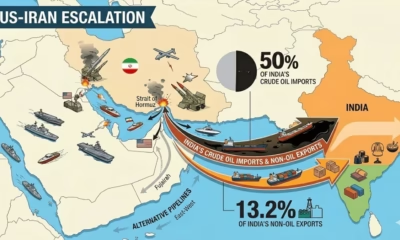
Meanwhile, Kuwait reported intercepting eight Iranian drones, and Saudi Arabia said it shot down five drones headed toward the Shaybah oil field. Hundreds of vessels remain stalled near the Strait of Hormuz, which carries roughly one-fifth of global oil supplies.
Iran’s Revolutionary Guards declared that not “a single litre of oil” would pass through the strait until U.S. bombing ceases. Iranian officials warned oil prices could surge to $200 per barrel if regional instability continues.
In Washington, Donald Trump offered mixed signals. He told Axios the war would end “soon” because there was “practically nothing left to target,” but vowed to continue strikes if necessary. Israel’s defense minister, Israel Katz, said the campaign would proceed “without any time limit” until objectives were achieved.
The International Energy Agency has urged the release of 400 million barrels of emergency reserves — potentially the largest coordinated action in its history — in an attempt to stabilize markets. Yet there is no sign that commercial shipping can resume safely through Hormuz.
The conflict’s humanitarian toll continues to mount. In Lebanon, where Israeli forces say they are targeting Hezbollah infrastructure, the United Nations reports more than 750,000 internally displaced. In Iran, funerals for senior commanders drew large crowds in Tehran, even as nightly airstrikes send residents fleeing the capital.
U.S. Central Command says Iranian missile and drone launches have declined sharply following strikes on manufacturing facilities. Adm. Brad Cooper confirmed that the military is using advanced artificial intelligence tools to accelerate targeting decisions, though he stressed that humans retain final authority over strikes.
For now, the war shows no clear path to de-escalation. What began as a military campaign against Iran’s strategic capabilities has expanded into a direct contest over trade routes, energy flows and global economic stability. The Gulf’s chokepoints — once geopolitical pressure valves — are now at the center of a confrontation with worldwide consequences.

A NATO member pulls its ambassador. Trade threats from Washington. Is Spain reshaping Europe’s stance on Israel and Iran?
Madrid Permanently Withdraws Ambassador as Rift Deepens Over Iran War.
Spain has permanently withdrawn its ambassador from Israel, formally downgrading diplomatic relations as tensions mount over the U.S.-Israeli war against Iran.
The decision, announced Tuesday, follows months of deteriorating ties between Madrid and West Jerusalem. Spain’s government said the Israeli mission will now be headed by a chargé d’affaires rather than a full ambassador — a move signaling a sustained cooling of relations rather than a temporary recall.
Prime Minister Pedro Sanchez has emerged as the most outspoken Western critic of Israel’s recent military actions. He said Spain would not be “complicit in something that is bad for the world simply out of fear of reprisals,” in a clear rebuke of the ongoing offensive.
The downgrade was proposed by Foreign Minister Jose Manuel Albares and approved by Spain’s Council of Ministers.
Tensions between Spain and Israel were already strained before the Iran war. Madrid recalled its ambassador last September after banning ships and aircraft carrying weapons to Israel during its Gaza campaign. Israeli officials denounced that move as discriminatory and politically hostile. Spain has also formally recognized Palestinian statehood — another flashpoint in bilateral relations.
The latest rupture extends beyond Israel. Madrid has refused to allow the United States to use joint Spanish military facilities for operations connected to the Iran conflict, drawing criticism from Donald Trump.
The U.S. president has publicly threatened trade consequences and criticized Spain for failing to meet NATO’s new defense spending target of 5% of GDP.
Despite the rhetoric, Albares insisted relations with Washington remain “normal,” noting that both countries’ embassies continue operating without disruption.
Spain now stands largely alone among major Western powers in issuing direct condemnation of the strikes on Iran. Most European governments have limited themselves to calls for restraint and de-escalation.
The diplomatic downgrade signals that Madrid’s position is not a short-term protest but a strategic recalibration. Whether that stance isolates Spain within NATO — or encourages broader debate inside Europe — remains to be seen.

A close Trump ally. A NATO partner. Now a public warning. Has Europe’s unity on Iran begun to crack?
Italian Prime Minister Says U.S.-Israeli Strikes Reflect “Dangerous” Trend Outside International Law.
ROME — Italian Prime Minister Giorgia Meloni delivered her sharpest rebuke yet of the U.S.-Israeli war against Iran on Wednesday, describing the conflict as part of a troubling pattern of unilateral military actions “outside the scope of international law.”
Speaking before the Senate, Meloni framed the Middle East war as another symptom of what she called a broader structural crisis in the international system — one already destabilized by Russia’s 2022 invasion of Ukraine.
“It is in this context,” she said, “that we must also place the American and Israeli intervention against the Iranian regime.”
The remarks mark a notable shift in tone from Rome. Meloni, a conservative leader with close ties to U.S. President Donald Trump, has largely aligned Italy with its transatlantic allies. Her government had faced criticism from opposition lawmakers for appearing reluctant to directly question Washington’s role in the conflict.
Italy now joins Spain as one of the few European countries to publicly voice explicit concern over the legality of the campaign. Most European governments have stopped short of direct criticism, instead urging de-escalation and restraint.
Yet Meloni’s speech balanced caution with firmness toward Tehran. She reiterated that Iran must not be allowed to develop nuclear weapons, warning that such an outcome would undermine the global non-proliferation framework and expose Europe to “dramatic repercussions for global security.”
The war, now in its 12th day, has expanded beyond Israel and Iran, disrupting roughly one-fifth of global oil and gas flows and drawing in Gulf states hosting Western forces. Meloni confirmed that Italy is providing air-defense assets to Gulf partners targeted by Iranian strikes.
“This is not only because they are friendly nations and strategic partners,” she said, “but because tens of thousands of Italian citizens are in the region — and around 2,000 Italian soldiers are stationed in the Gulf.”
Her intervention highlights the increasingly delicate position of European leaders: balancing alliance commitments with growing unease over the war’s legal and geopolitical consequences. By linking the Iran conflict to the broader erosion of international norms, Meloni signaled that Rome views the crisis not as an isolated flare-up — but as part of a more dangerous global pattern.
Whether her words foreshadow a broader European reassessment remains to be seen. For now, Italy has made clear it supports deterrence against Iran’s nuclear ambitions — but not without questioning the path chosen to achieve it.

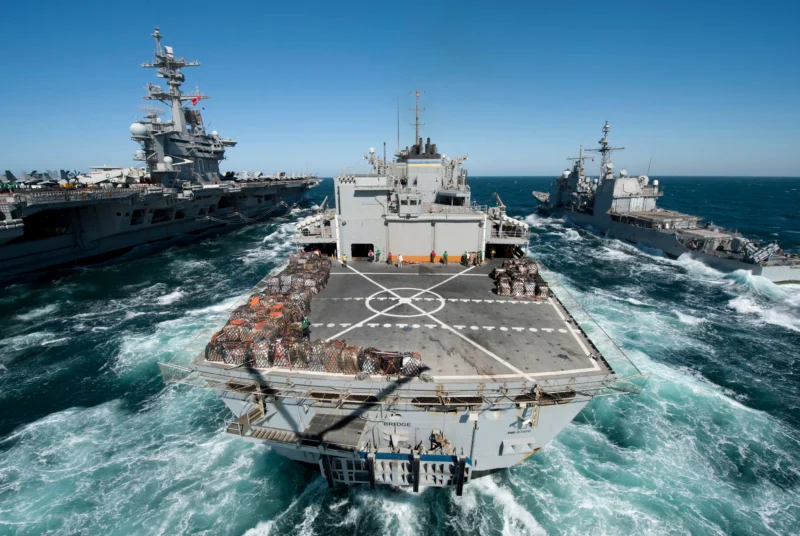
Eleven nuclear aircraft carriers. A $1 trillion defense budget. And a war watched in real time. Is America’s floating power projection unstoppable—or increasingly exposed?
From the $18 Billion USS Gerald R. Ford to the Battle-Tested USS Abraham Lincoln, U.S. Aircraft Carriers Dominate the Iran Conflict.
With a defense budget projected at $1.01 trillion for 2026—nearly 40 percent of global military spending—the United States has once again placed its most iconic weapon at the heart of war: the nuclear aircraft carrier.
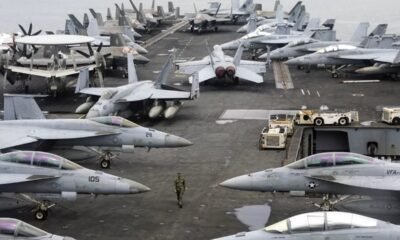
From the sleek deck of the $18 billion USS Gerald R. Ford to the battle-hardened USS Abraham Lincoln, America’s carrier fleet has become the unmistakable face of its campaign against Iran. No other country operates anything comparable. The U.S. Navy fields 11 nuclear-powered carriers—more than the combined fleets of China, Britain, France, India, Italy and Spain.
The Ford, the largest warship ever built, stretches 337 meters and carries up to 90 aircraft. It can launch 160 sorties a day—and surge to 270. Onboard is a floating city: 4,500 personnel, a full hospital, nuclear reactors capable of powering the ship for decades, and the ability to remain at sea for months.
Commissioned in 2017, then-President Donald Trump hailed it as “the future of naval aviation.” Since then, it has rotated through the Mediterranean, the Caribbean and now the Middle East, serving as both deterrent and launch platform.
Yet in the current Iran conflict, it is the older Abraham Lincoln—commissioned in 1989—that has carried much of the operational load. Upgraded to host F-35 stealth fighters, it operates in the Arabian Sea, launching sorties as part of the U.S.-Israeli campaign.
Iranian officials have claimed missile strikes against it—claims swiftly denied by U.S. Central Command.
Aircraft carriers have long been as much psychological instrument as military asset. In 2003, President George W. Bush delivered his “Mission Accomplished” speech aboard the Lincoln—an image that later became synonymous with premature victory.
Today, they project dominance. But they also raise questions.
China’s development of anti-ship ballistic missiles and long-range precision weapons has sparked debate within military circles about whether carriers remain invulnerable in a modern battlefield. No U.S. carrier has been sunk since World War II. But analysts warn that complacency could prove dangerous.
For now, however, these floating airbases remain central to Washington’s strategy: flexible, mobile, operating without reliance on foreign airfields. They symbolize American reach—and American resolve.
In a war defined by missiles, drones and economic disruption, the most visible star remains a 100,000-ton reminder of U.S. power: steel, nuclear energy and jet engines, cutting across open sea.
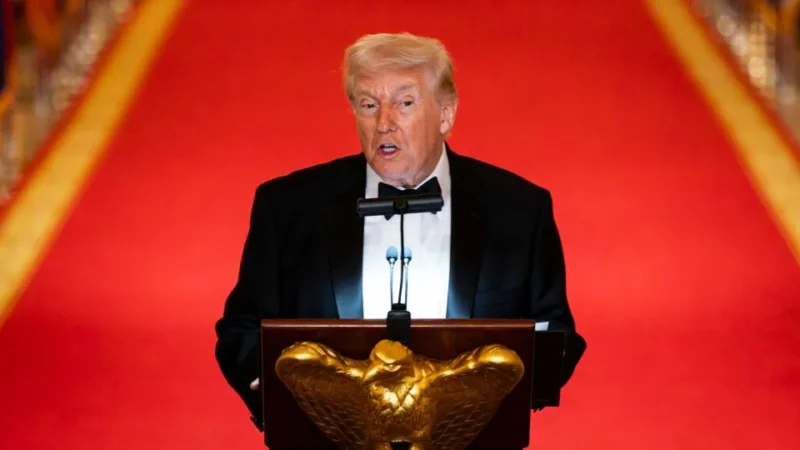
President Floats Waiving Oil Sanctions, Naval Escorts in Hormuz as Markets Whipsaw and Pressure Mounts.
End the war “very soon”? Lift oil sanctions? Escort tankers through Hormuz? Trump signals a pivot — but vows harsher strikes if Iran escalates.
President Donald Trump signaled Monday that the U.S.-Iran war could wind down “very soon,” while floating the possibility of waiving certain oil-related sanctions and deploying the U.S. Navy to escort tankers through the Strait of Hormuz.
The remarks, delivered at his Doral resort in Florida, come amid volatile energy markets, rising gasoline prices and mounting political pressure at home.
Trump said the operation was ahead of schedule but not likely to conclude this week. He claimed U.S. forces had struck thousands of targets and sharply reduced Iran’s missile and drone capabilities, calling military objectives “pretty well complete.”
At the same time, he warned of bombing “at a much, much harder level” if Tehran disrupts oil flows through the strait — the artery for a fifth of global crude and LNG shipments.
“We’re looking to keep oil prices down,” Trump said, adding he could waive “certain oil-related sanctions” to reduce prices. He offered no specifics but acknowledged discussing the topic with Russian President Vladimir Putin.
Washington has imposed wide-ranging restrictions on Russia’s energy sector over Ukraine, including a price cap and sanctions on major producers. Treasury Secretary Scott Bessent has previously suggested targeted waivers; last week, Indian refiners were temporarily allowed to purchase Russian oil already at sea.
Markets reacted swiftly. U.S. stocks rebounded after Trump first hinted to CBS that the conflict might be nearing its end. Oil futures, which had spiked above $119 a barrel earlier in the day, retreated below $90 post-settlement.
Group of Seven finance ministers said they stand ready to support global energy supplies, including potential stockpile releases, though France cautioned there is no agreement yet to tap emergency reserves.
Still, risks remain acute. The Strait of Hormuz is effectively constrained, and major Gulf producers have trimmed output. Trump said the Navy and partners could escort tankers “if needed,” and he warned that if Iran blocks the strait, it would face retaliation “TWENTY TIMES HARDER.”
On the ground, the conflict shows no sign of immediate ceasefire. Casualties have mounted across Iran, Israel and parts of the Gulf. Iran’s new supreme leader, Mojtaba Khamenei, has pledged continuity.
U.S. officials maintain they can sustain operations indefinitely, even as domestic concerns over inflation and fuel costs intensify ahead of November’s midterms.
Trump now faces a delicate balance: deliver “ultimate victory” while stabilizing energy markets and containing the war’s regional spillover. Whether sanctions relief and naval escorts mark a genuine pivot — or tactical messaging amid market turbulence — may determine how soon this conflict truly ends.

Is Trump Sleepwalking Into a Proxy War With Russia?

The Iran War and the End of the Old Order

Trump Signals Exit as Iran Punches Back


-

 Somaliland2 months ago
F-35s Over Hargeisa: The Night Somaliland’s Sovereignty Went Supersonic
-
 Terrorism1 month ago
America Pulls Back From Somalia but Doubles Down Next Door
-

 Somalia2 months ago
Aid Destroyed, Trust Shattered: Somalia Loses U.S. Support for Good
-
 Terrorism2 months ago
Foreign ISIS Pipeline Exposed: Puntland Captures Dozens of Non-Somali Fighters
-

 Opinion2 months ago
Turkey’s Selective Morality: From the Ruins of Gaza to the Red Sea
-

 Somaliland2 months ago
Somaliland at Davos: The Moment Somaliland Entered the World’s Inner Circle
-
 Diplomacy2 months ago
Ethiopia–Israel Axis Strengthens as Regional Stakes Rise
-
 US-Israel war on Iran2 months ago
US War Plans Against Iran Enter Advanced Stage