
US-Israel war on Iran
Jordan and Saudi Arabia Align as Region Faces Turbulence

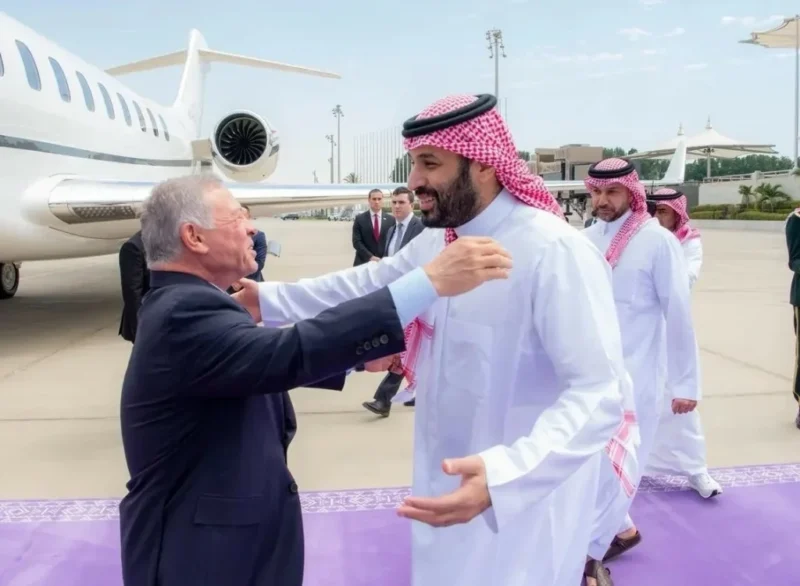
Jordan’s King Abdullah II Arrives in Jeddah for Talks with Saudi Crown Prince. At a moment of war and uncertainty, Riyadh and Amman are moving closer—fast.
King Abdullah II arrived in Jeddah on Monday, where he was received at King Abdulaziz International Airport by Mohammed bin Salman, signaling a high-level meeting at a moment of deep regional uncertainty.
The visit underscores longstanding ties between the Jordan and Saudi Arabia, two states that have historically positioned themselves as anchors of stability in the Middle East. Officials framed the meeting as part of ongoing coordination between leaderships, reflecting what both sides describe as a shared strategic outlook.
But the timing is what gives the visit its weight.
With the region facing escalating tensions—from the ongoing Iran war to mounting pressure on energy routes and security alliances—consultations between Riyadh and Amman take on broader geopolitical significance.
Both countries have consistently aligned on core regional priorities, including support for a political resolution to the Palestinian issue, counterterrorism cooperation, and safeguarding regional stability amid external pressures.
The meeting also carries diplomatic implications beyond the region.
By presenting a unified front, Saudi Arabia and Jordan aim to reinforce the role of coordinated Arab diplomacy in shaping international responses to crises. In an environment where global powers are increasingly divided, such alignment offers a counterweight—projecting cohesion at a time of fragmentation.
Economic considerations are also expected to feature prominently.
Saudi Arabia’s Vision 2030 reform agenda, led by Crown Prince Mohammed bin Salman, has opened new avenues for regional partnerships. Jordan, navigating its own economic modernization efforts, stands to benefit from expanded cooperation in sectors such as infrastructure, renewable energy, and technology.
Existing frameworks, including bilateral coordination councils, provide a mechanism to translate political alignment into tangible investment and development.
The optics of the personal by the Crown Prince at the airport—were deliberate.
They conveyed not only diplomatic courtesy but also the depth of the relationship, reinforcing a pattern of close engagement between the two leaderships. Such gestures, while symbolic, often reflect deeper strategic coordination behind closed doors.
As the Middle East enters a period of heightened volatility, this visit is less about ceremony and more about positioning.
For Riyadh and Amman, the message is clear: coordination is no longer optional—it is essential.













Years of planning. Weeks of war. One question: Will US troops enter Iran?
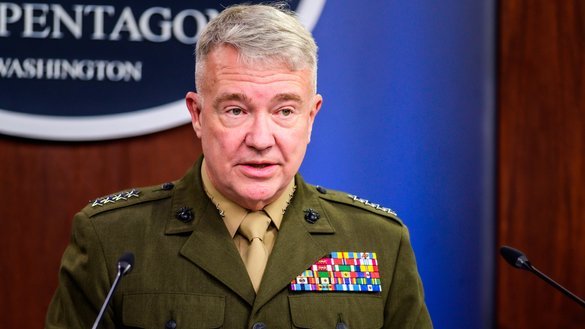
Retired Gen. Frank McKenzie, the former head of United States Central Command, has revealed that the U.S. military has spent years preparing for potential ground operations inside Iran—offering a rare glimpse into contingency plans now resurfacing as the war intensifies.
Speaking in a televised interview, McKenzie said American strategy has long centered on rapid, limited incursions rather than full-scale invasion. The focus: Iran’s southern coastline and strategically vital islands in the Gulf.
These operations, he explained, would be designed for speed and precision—“pre-planned withdrawal” missions aimed at seizing key positions, disrupting capabilities, and exiting before becoming entangled in prolonged conflict.
At the center of such thinking is Kharg Island, the country’s primary oil export terminal. McKenzie suggested that controlling the island—even temporarily—could effectively paralyze Iran’s oil economy without requiring widespread destruction of infrastructure.
The remarks come as the Pentagon weighs options that, according to recent reports, include weeks-long ground operations involving special forces and conventional infantry. While officials stress no final decision has been made, the military buildup tells its own story.
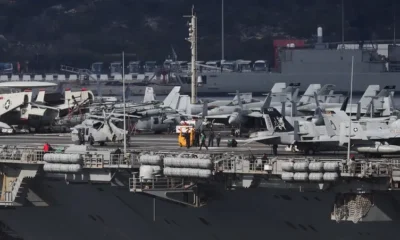
A U.S. amphibious strike group led by the USS Tripoli has already arrived in the region, carrying roughly 3,500 Marines and sailors, along with aircraft and tactical assault capabilities. The deployment underscores how quickly planning could shift into execution if political approval is given.
Yet McKenzie’s message was not purely hawkish.
He argued that U.S. objectives—keeping the Strait of Hormuz open and constraining Iran’s missile capabilities—may still be achievable without a major ground campaign. The implication: military pressure alone could force Tehran toward concessions.
That calculation, however, is far from certain.
Iranian officials have signaled readiness for a ground confrontation, while the conflict continues to expand across multiple fronts. At the same time, domestic pressure is building inside the United States. Recent polling suggests a clear majority of Americans oppose entering a full-scale war with Iran, raising political risks for any escalation.
The strategic dilemma is stark.
Limited operations promise high-impact results with lower long-term commitment. But even targeted incursions—especially around critical energy infrastructure—carry the risk of triggering wider retaliation across the region.
For now, the plans remain theoretical.
But as military assets accumulate and rhetoric hardens, the line between preparation and action is becoming increasingly thin.
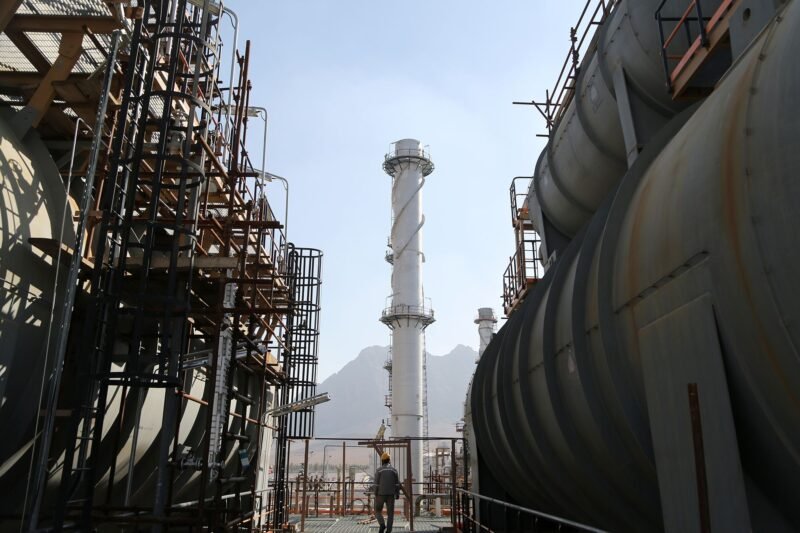
One threat. One chokepoint. One war reshaping the global economy in real time.
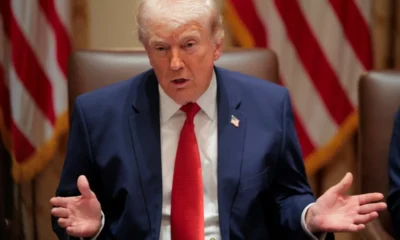
President Donald Trump has escalated rhetoric in the war with Iran, warning that the United States could “blow up and completely obliterate” Tehran’s energy infrastructure if a deal is not reached—raising fears of a broader economic and military shock.
The threat centers on reopening the Strait of Hormuz, a narrow waterway through which roughly a fifth of global oil supply normally flows. Its closure has already disrupted shipping and sent energy markets into turmoil.
Trump’s warning marks a sharp escalation from previous statements, signaling a willingness to target Iran’s oil wells and power plants—moves that could cripple the country’s economy but also risk wider regional fallout.
Tehran, however, pushed back.
Iranian officials rejected Washington’s proposed 15-point framework for ending the conflict, calling it “unrealistic” and “excessive,” directly contradicting Trump’s claim that Iran had accepted most of the terms. The dispute underscores a widening gap between public messaging and diplomatic reality, even as indirect contacts reportedly continue.
Meanwhile, the war’s economic impact is accelerating.
Global oil prices surged after Trump reiterated his intent to “take the oil in Iran,” with Brent crude rising above $116 a barrel. In the United States, average gasoline prices climbed to nearly $4 per gallon—the highest levels in years—highlighting how quickly the conflict is feeding into domestic economic pressure.
On the ground, the conflict continues to expand across multiple fronts.
Iranian state media reported that at least two people were killed in a U.S.-Israeli strike on a facility west of Tehran, while in Israel, debris from intercepted projectiles struck an oil refinery complex in Haifa Bay, sending plumes of smoke into the air. The incidents reflect a widening pattern: even defensive actions are producing economic and civilian consequences.
Beyond the battlefield, international divisions are becoming clearer.
Spain publicly ruled out allowing its bases or airspace to be used in support of the war, signaling reluctance among some Western allies to deepen involvement. That hesitation complicates any effort to build a broader coalition, particularly for securing key maritime routes.
At its core, the conflict is no longer confined to military objectives.
It has become a high-stakes struggle over energy, leverage, and economic pressure. Iran’s control over maritime chokepoints offers it asymmetric power, while U.S. threats to target energy infrastructure risk amplifying global instability.
The result is a volatile equilibrium: neither side backing down, both raising the cost.
And with oil markets already reacting, the next escalation may not just reshape the battlefield—but the global economy itself.
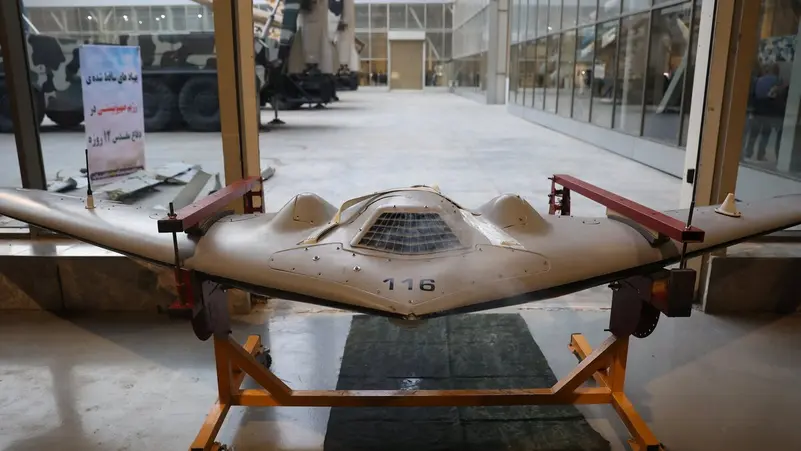
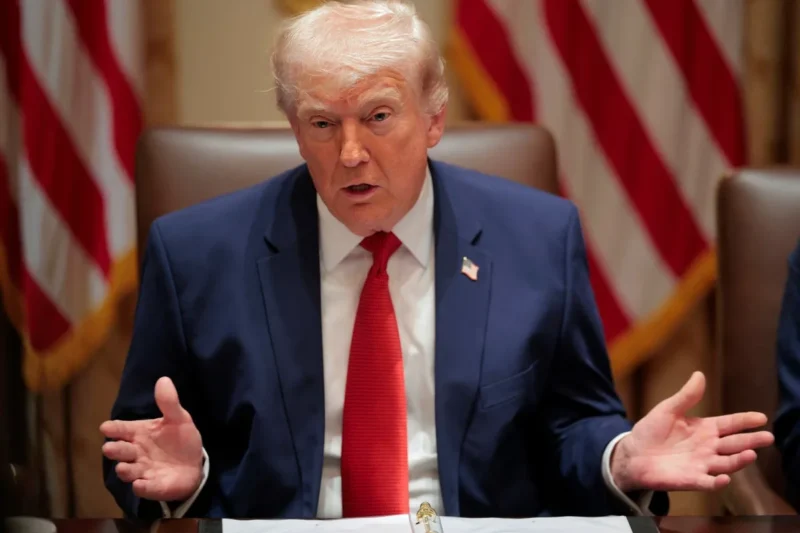
Is this about security—or resources? Trump’s latest statement is reshaping the entire war narrative.
U.S. President Donald Trump has openly suggested that controlling Iran’s oil could be a central objective of the ongoing war—remarks that are reverberating far beyond the battlefield.
Speaking to the Financial Times, Trump said his “favorite thing” would be to “take the oil in Iran,” while raising the possibility of seizing Kharg Island—the strategic terminal that handles the vast majority of Iran’s crude exports.
“Maybe we take Kharg Island, maybe we don’t. We have a lot of options,” he said, acknowledging that any such move would likely require a sustained U.S. military presence.
The implications are profound.
Kharg Island is not just another target—it is the backbone of Iran’s economy, responsible for up to 90% of its oil exports. Any attempt to seize or control it would effectively choke Tehran’s primary revenue stream, dramatically escalating both the military and economic dimensions of the war.
But the strategy carries significant risks.
Military analysts warn that capturing the island would expose U.S. forces to sustained missile, drone, and naval threats, while potentially triggering wider regional retaliation. It would also mark a shift from pressure tactics to outright economic warfare—blurring the line between strategic containment and resource seizure.
Markets have already reacted.
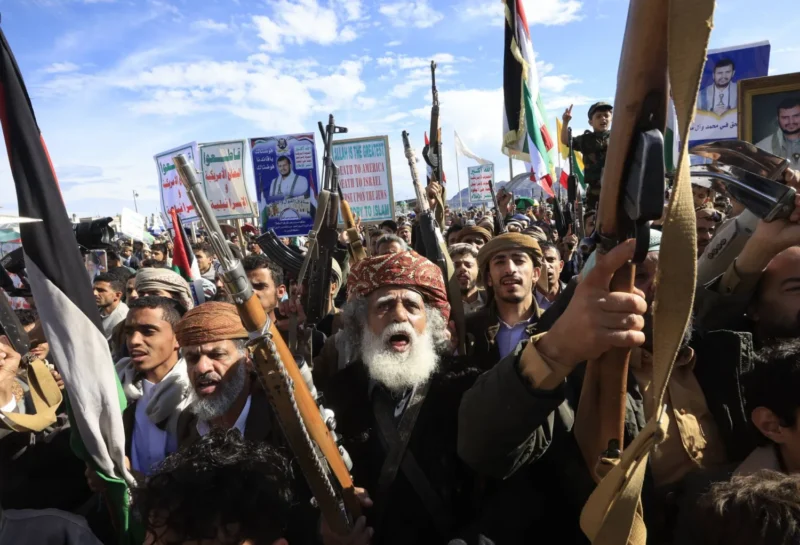
Yemen’s government says the war is no longer just external—it’s being imposed from within.
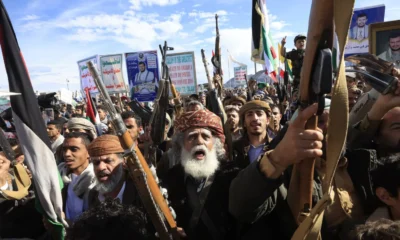
Yemen’s internationally recognized government has sharply condemned Iran following the entry of the Houthi movement into the widening Middle East war, warning that the escalation threatens the country’s sovereignty and risks dragging it deeper into a regional conflict it did not choose.
In a statement issued Sunday, officials accused Tehran of pursuing “destabilizing policies” by backing armed groups that operate outside state authority, describing the Houthis’ missile and drone attacks as illegitimate actions that undermine Yemen’s institutions and national unity.
“The decisions of war and peace must remain solely in the hands of the state,” the government said, stressing that militia-led military operations amount to hostile acts with far-reaching consequences.
The warning comes after the Houthis launched attacks toward Israel over the weekend, officially entering the conflict aligned with Iran. Israel’s military later confirmed intercepting two drones fired from Yemen, underscoring the rapid expansion of the war into new geographic fronts.
Yemen’s government framed the development as part of a broader regional pattern, accusing Iran of fueling conflicts across the Middle East by empowering proxy groups. Such interventions, it said, have repeatedly turned fragile states into prolonged battlegrounds, often at the expense of civilian populations and economic stability.
The stakes for Yemen are particularly high.
Already facing one of the world’s most severe humanitarian crises, the country risks further economic collapse if the conflict intensifies. Officials warned that continued escalation could disrupt supply chains, drive up food and energy prices, and deepen insecurity across already vulnerable regions.
The timing is also critical. With tensions rising in both the Gulf and the Red Sea, Yemen’s geographic position places it at the center of global trade routes. Any sustained Houthi involvement—especially if it expands to targeting shipping lanes—could have global repercussions far beyond the region.
The government called on the international community to take a firm stance against what it described as repeated violations of Yemen’s sovereignty, urging coordinated pressure to halt foreign interference and prevent further escalation.
The message reflects a growing concern: this is no longer just a war between states.
It is a conflict increasingly shaped by proxy actors, contested authority, and overlapping fronts—where local crises are pulled into global confrontation, and where the line between domestic instability and international war is rapidly disappearing.
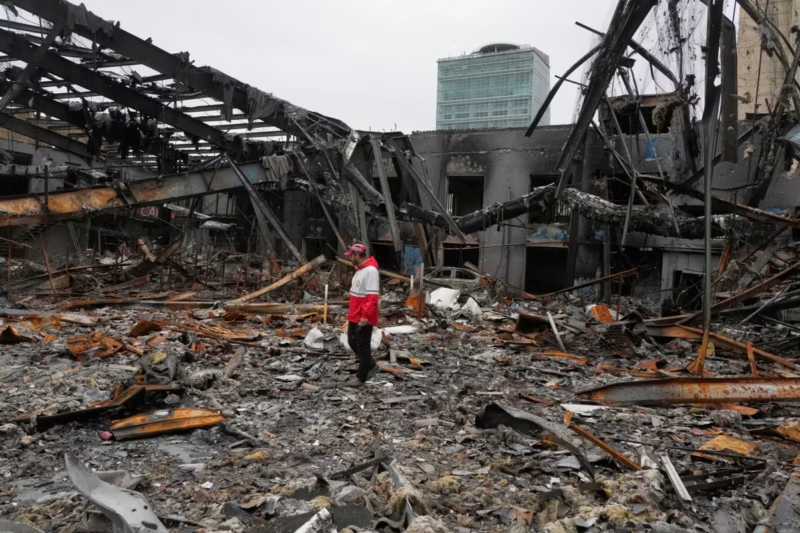
Is Yemen now a frontline extension of Iran’s war strategy? New claims suggest the answer is yes.
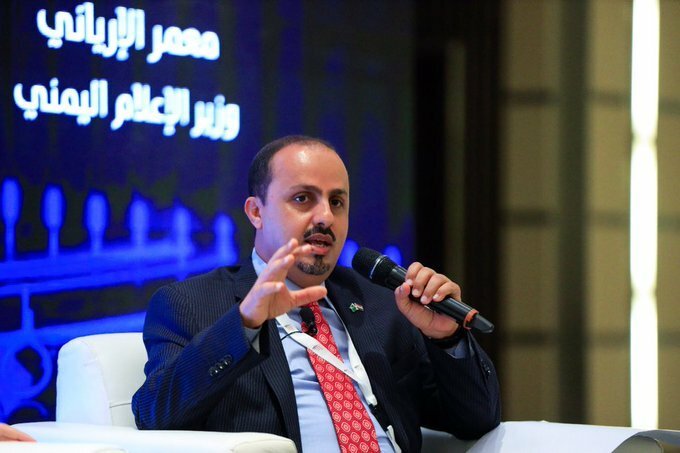
Yemen Says Iranian Revolutionary Guard Experts Arrive in Sanaa as Houthis Enter Iran War.
Yemen’s government has accused Iran of deepening its direct military involvement in the conflict, saying senior operatives from the Islamic Revolutionary Guard Corps have recently arrived in Sanaa, the Houthi-controlled capital.
Information Minister Muammar al-Iryani said the deployment of additional Iranian “leaders and experts” coincided with the latest escalation in the regional war, describing it as part of a deliberate and longstanding pattern rather than a coincidence.
According to al-Iryani, the move underscores what he called a centralized command structure directed by Tehran, in which the Houthis operate not as independent actors but as instruments within a broader cross-border military system.
“The idea that the Houthis are partners or autonomous allies is misleading,” he said, arguing that operational decisions are shaped and coordinated by Iran’s military leadership.
The claims come just hours after Yemen’s Houthi movement formally entered the war, launching a ballistic missile toward Israel—its first direct strike since the U.S.-Israeli campaign against Iran began. Israeli forces said they detected and intercepted the missile.
The development marks a significant expansion of the conflict’s geographic scope, opening a potential Red Sea front at a moment when global shipping routes are already under strain.
Iranian officials have previously warned that escalation could extend beyond the Gulf, with threats to disrupt traffic through the Bab al-Mandab Strait—a critical maritime chokepoint linking the Red Sea to global trade routes.
If sustained, such a shift would carry far-reaching consequences. The Bab al-Mandab corridor handles a substantial portion of global shipping, including energy supplies rerouted from the Strait of Hormuz, which has already been heavily disrupted by the war.
Al-Iryani warned that underestimating Iran’s role in Yemen risks misreading the conflict entirely. Allowing Tehran greater operational space, he argued, could accelerate the expansion of hostilities and deepen regional instability.
The situation now points to a broader transformation of the war—from a primarily Gulf-centered confrontation into a multi-theater conflict stretching from the Persian Gulf to the Red Sea.
Whether this escalation remains contained or triggers a wider maritime crisis may depend less on battlefield outcomes and more on how far regional actors—and their proxies—are willing to push the front lines.
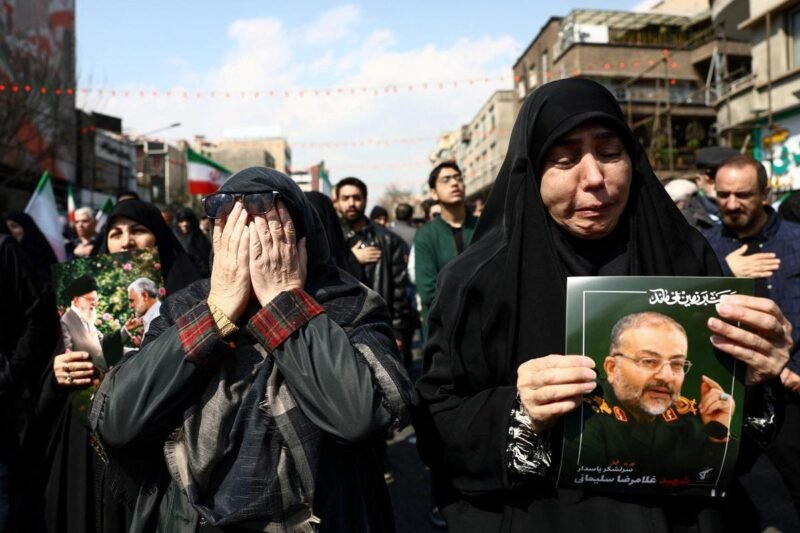
Why Iran’s War Resilience Is Rooted in Ideology, Not Just Military Power.
The war against Iran is often framed in familiar terms—missiles, deterrence, escalation, and nuclear risk. But those metrics, while critical, miss a deeper force shaping the conflict: ideology.
To understand Iran’s resilience, one must look beyond military capability and into the political theology that underpins the Islamic Republic. This is not simply a state fighting for survival. It is a system that draws meaning—and strength—from suffering itself.
At the heart of that worldview lies a centuries-old narrative rooted in Shia history, particularly the Battle of Karbala in 680. The killing of Hussein, the grandson of the Prophet Muhammad, has long symbolized righteous resistance against overwhelming injustice. In modern Iran, that story is not just remembered—it is operationalized.
Martyrdom is not incidental. It is foundational.
Since the early days of the Islamic Republic, leaders have framed their rule as part of a sacred struggle against external domination. That narrative becomes especially powerful in wartime. Loss is recast as sacrifice. Death becomes testimony. Endurance becomes victory.
In the current conflict with Israel and the United States, this framework is being actively reactivated. State-backed mourning ceremonies, mobilization of paramilitary groups like the Basij, and the language of resistance all reinforce a singular message: survival itself is a form of triumph.
This creates a strategic paradox.
From a conventional perspective, sustained military pressure should weaken Iran—degrading infrastructure, leadership, and capabilities. But within Iran’s ideological system, external attack can strengthen internal cohesion. It validates the regime’s core claim: that it is under siege by hostile powers.
That validation matters.
It blurs internal dissent. Citizens who oppose the government may still rally against foreign attacks, driven by nationalism, fear, or anger. In this environment, the state can reposition itself—not as an oppressive authority—but as a defender of the nation.
History reinforces this dynamic. The Iran-Iraq war of the 1980s entrenched a culture of endurance that still shapes political identity today. The lesson was simple: survival, even at immense cost, is victory.
Current strategy reflects that logic. Rather than seeking decisive battlefield success, Tehran appears to be pursuing attrition—absorbing blows, disrupting global systems such as energy flows, and waiting for political fatigue to set in among its adversaries.
Meanwhile, rhetoric from Washington risks amplifying the very narrative Iran depends on. Calls for “unconditional surrender” by Donald Trump shift the conflict from limited objectives to existential confrontation—precisely the framing Tehran has long cultivated.
None of this suggests the Islamic Republic is unbreakable. Its legitimacy is contested, its economy strained, and its population divided. But ideological systems do not require universal belief to function. They require enough conviction, enough institutions, and enough pressure to transform suffering into unity.
That is the danger.
Wars against ideological states are not decided solely by destroying capacity. They are also shaped by meaning. And in Iran’s case, the more intense the external pressure, the easier it becomes for the regime to reclaim the narrative that has sustained it for decades.
The battlefield, in other words, is not only physical.
It is symbolic.

Jordan and Saudi Arabia Align as Region Faces Turbulence

Inside the Pentagon’s Iran Playbook: Seize, Strike, Exit

Putin’s Oil Jackpot Goes Up in Flames


-
 US-Israel war on Iran1 month ago
UK Refuses Iran Strike Access, Trump Fires Back
-
 Russia-Ukraine War1 month ago
Europe’s Spies Challenge Trump’s Ukraine Peace Optimism
-
 Top stories4 weeks ago
War Expands Across Region as Iranian Militias Join Fight
-
 US-Israel war on Iran1 month ago
Iran Pledges ‘Never, Ever’ to Hold Bomb-Grade Material
-
 US-Israel war on Iran1 month ago
Syria Under Fire on Two Fronts
-
 Top stories1 month ago
India Turns to Brazil in Strategic Minerals Push Against China
-
 Russia-Ukraine War1 month ago
Estonia Warns NATO Would Strike Deep Inside Russia if Baltics Are Invaded
-
 Terrorism4 weeks ago
Regional Army Moves Against Expanding Armed Groups