Analysis
Donald Trump Set to Reclaim Presidency Amid Controversy and Bold Promises
Returning to the White House, Trump’s second term sparks contentious debates on immigration, trade, and social policy.
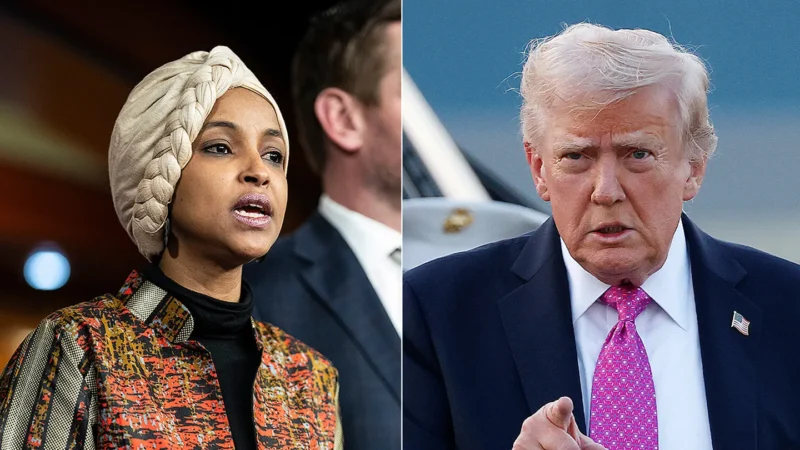
Donald Trump, the polarizing political figure and former 45th president, is set to return to the White House as the 47th president of the United States. His inauguration comes four years after his defeat in the 2020 election, marking him as the second U.S. president to serve nonconsecutive terms since Grover Cleveland in the 1890s. This event, historically significant in its own right, carries with it a storm of controversy and anticipation surrounding Trump’s ambitious, and often divisive, policy agenda.
Trump’s return is overshadowed by his legal and political baggage. As the first U.S. president with a felony conviction—stemming from falsified business records tied to hush money payments—Trump has defied precedent. His victory in the 2024 election, which ousted President Joe Biden after a single term, underscores his ability to rally a fervent voter base despite controversies. Critics and supporters alike are bracing for sweeping executive actions that could upend domestic and international policy landscapes.
Immigration dominates Trump’s early agenda. He has vowed to deport millions of undocumented migrants, starting with those convicted of crimes, and plans to reinstate policies that force asylum seekers to remain in Mexico. These moves are expected to provoke legal challenges, delaying their implementation and igniting fierce public debate. Trump’s plan to end birthright citizenship—a constitutional guarantee—has also drawn widespread skepticism regarding its feasibility.
In addition to immigration, Trump aims to escalate trade tensions with key partners, promising tariffs on Canada, Mexico, and China. These measures risk destabilizing economic relations but appeal to his base as a push for economic nationalism. Trump has also signaled an abrupt shift in U.S. foreign policy, vowing to mediate an end to Russia’s war in Ukraine within his first 100 days. However, his aides have tempered these claims, suggesting a truce is more realistic than a resolution.
Social issues remain a cornerstone of Trump’s platform, with sharp rhetoric against transgender rights and gender-affirming care. He has pledged to restrict transgender women from participating in women’s sports and to overturn policies supporting gender-affirming medical treatments. These stances have intensified the cultural divide in America, galvanizing both conservative and progressive factions.
Trump’s return to power signals a tumultuous chapter in American politics. His policies, unyielding and controversial, will undoubtedly face resistance from courts, Congress, and civil society. As Trump’s second term begins, the nation stands at a crossroads, with the implications of his presidency likely to shape the country for years to come.
Analysis
Gulf States Back U.S. Blockade on Iran—But Prepare for Impact
They support the pressure on Iran—but they may be the ones who pay the price.
The U.S. naval blockade of Iranian ports has forced Gulf Arab states into a familiar but dangerous position: aligned with Washington’s strategy, yet directly exposed to Tehran’s retaliation. Across the Gulf Cooperation Council, the reaction is not unity, but calculated anxiety.
At the center of this tension is a simple reality. The blockade may target Iran—but the battlefield, if it expands, will likely be the Gulf itself.
Countries such as Saudi Arabia and the United Arab Emirates have quietly welcomed the move as a necessary escalation to pressure Tehran into reopening the Strait of Hormuz. For them, restoring the free flow of oil is not optional—it is existential.
Yet neither government has publicly embraced the blockade without qualification, reflecting a deeper concern: Iran has already warned that “no port in the region will be safe.”
That warning has reshaped the regional security posture almost overnight.
In Riyadh, officials are leaning heavily on the East-West pipeline to bypass Hormuz, while recalibrating air defense coverage between energy infrastructure and population centers. In Abu Dhabi, policymakers have taken a more assertive tone, but beneath it lies caution. The UAE’s ports—especially Dubai and Fujairah—remain highly exposed to missile or drone strikes.
Elsewhere, the anxiety is even more visible. Qatar, whose economy depends on uninterrupted LNG exports, has emphasized de-escalation while quietly supporting efforts to secure maritime routes. Kuwait and Bahrain have raised threat levels and activated air defenses, acutely aware that their proximity makes them immediate targets in any escalation cycle.
Only Oman has maintained its traditional posture of neutrality, focusing on preserving limited shipping corridors and keeping diplomatic channels open. Its geographic position at the mouth of Hormuz gives it leverage—but also risk.
The pattern across the Gulf is unmistakable: support for pressure, resistance to war.
Leaders in the region broadly agree that Iran must not be allowed to control or restrict global energy flows. At the same time, they are deeply wary of being drawn into a prolonged conflict that could devastate their economies and infrastructure. Insurance costs for shipping are already rising. Energy markets remain volatile. And the threat of missile or drone attacks on oil facilities looms over every strategic calculation.
This is the paradox shaping Gulf policy. The blockade may be designed to weaken Iran’s leverage—but it simultaneously increases the vulnerability of the very states that depend most on stability.
For now, Gulf governments are betting on a narrow outcome: that pressure forces a reopening of Hormuz before retaliation escalates beyond control. It is a high-stakes gamble, one that assumes Tehran will calculate restraint over escalation.
If that assumption proves wrong, the region will not just feel the consequences—it will absorb them first.
Analysis
America Fought Iran — But Strengthened Its Rivals
Washington hit Iran hard. But did it accidentally help China and Russia win bigger?
Four Ways the Iran War Has Weakened the U.S. in the Global Power Struggle.
The war between the United States and Iran may have delivered battlefield gains for Washington, but its broader geopolitical consequences tell a more complicated story. As a fragile ceasefire holds, analysts increasingly argue that the conflict has exposed—and in some cases deepened—strategic vulnerabilities in America’s global position, particularly in its rivalry with China and Russia.
First, the war has reshaped influence dynamics in the Middle East. While Washington sought to reassert dominance, the perception among regional powers has shifted. Gulf states—long reliant on U.S. security guarantees—are now recalibrating, exploring deeper economic and diplomatic ties with both China and Russia.
Beijing, in particular, has quietly expanded its role as a mediator, building on earlier diplomatic successes between regional rivals. Moscow, despite setbacks such as the loss of Syria’s former leadership, has maintained relevance through selective alignment with Tehran.
Second, the conflict has diverted U.S. attention from its core strategic priorities. The Trump administration had signaled a pivot toward the Indo-Pacific and Western Hemisphere, where competition with China is most acute.
Instead, the Iran war pulled military, diplomatic, and political resources back into the Middle East. This shift has not gone unnoticed by rivals, who see an opportunity in Washington’s strategic distraction—and in growing tensions between the U.S. and its traditional allies, particularly within NATO.
Third, the economic fallout has been uneven—and, in some cases, advantageous to U.S. competitors. Iran’s disruption of the Strait of Hormuz sent global oil prices sharply higher, benefiting energy exporters like Russia, whose war-driven economy relies heavily on hydrocarbon revenues.
Meanwhile, China, despite its dependence on Gulf energy, has shown resilience through diversified supply chains and domestic energy investments. For Washington, however, rising fuel costs have translated into domestic political pressure and global market instability.
Finally, the war has eroded perceptions of U.S. global leadership. Washington’s shift from diplomacy to direct military action—combined with conflicting messaging during the conflict—has raised questions about its reliability as a negotiating partner.
In contrast, Beijing has positioned itself as a stabilizing force, supporting ceasefire efforts and advocating diplomatic solutions. That contrast has strengthened China’s claim to a larger role in shaping the international order.
None of this suggests the United States has lost its global standing. But the Iran war underscores a growing reality: in today’s multipolar world, military success does not automatically translate into strategic advantage.
Analysis
The War Didn’t End — It Mutated
No missiles. No peace. Just a more dangerous phase. The war isn’t over—it’s evolving.
US-Iran Ceasefire Masks a Deeper Conflict as War Shifts from Battlefield to Negotiation Table.
What looks like a ceasefire is, in reality, a transformation. The conflict between the United States and Iran has not ended—it has shifted into a more complex and potentially more dangerous phase, where ambiguity, interpretation, and strategic messaging now shape the battlefield as much as missiles once did.
The agreement that paused direct confrontation was never a detailed, enforceable settlement. It was a framework—intentionally broad, structurally ambiguous, and politically flexible. That ambiguity has allowed each side to claim success while quietly continuing the struggle through different means.
Washington presents the pause as the result of military pressure forcing Tehran to negotiate. Tehran, in turn, frames it as evidence of American retreat and implicit recognition of its demands.
This divergence is not cosmetic—it is the core of the problem.
Without a shared interpretation, the ceasefire has become part of the conflict itself. Each side claims compliance while accusing the other of violations, turning the agreement into a tool of strategic maneuvering rather than a mechanism for peace.
The result is a redistribution of conflict rather than its resolution. Direct US-Iran confrontation has eased, but violence has intensified in indirect arenas. Nowhere is this clearer than in Lebanon. Israel, backed politically by Donald Trump, treats the Lebanese front as outside the ceasefire and continues operations against Hezbollah. Iran insists the agreement applies to “all fronts,” a phrase whose ambiguity has effectively shifted the dispute from diplomatic language to active battlefields.
This is not a failure of wording—it is the strategy.
History offers a warning. Ambiguity in past agreements, such as UN Security Council Resolution 242, created decades of geopolitical tension over interpretation. The current moment echoes that pattern. Language is no longer neutral; it is an instrument of power.
Meanwhile, the Strait of Hormuz—initially the trigger of the crisis—has not been resolved but repositioned. It now functions as a bargaining chip within a fragile balance. Shipping flows have partially resumed, yet remain subject to informal controls and implicit Iranian leverage. This is not stability; it is conditional access.
For Gulf states, particularly Saudi Arabia, the implications are deeply unsettling. The ceasefire raises a critical fear: that a bilateral US-Iran understanding could emerge at their expense. Continued attacks and unresolved threats reinforce the perception that regional security is being negotiated without fully addressing their concerns.
This anxiety is not peripheral—it is central. Any framework that sidelines Gulf security risks becoming inherently unstable.
Looking ahead, three trajectories emerge.
The first is cautious de-escalation, where informal understandings gradually expand the ceasefire’s scope. The second—and most likely—is a prolonged, fragile equilibrium: a managed conflict where the ceasefire holds on paper while localized clashes persist. The third is collapse, triggered by miscalculation or escalation, leading to a renewed and potentially more intense confrontation.
Across all scenarios, one constant remains: no side can afford full-scale war. That reality imposes limits—but not resolution.
What is unfolding is not peace. It is a transitional phase where the rules of engagement are being renegotiated without consensus. The war has not been stopped; it has been reshaped.
And that may be the most dangerous outcome of all.
Analysis
Islamabad Talks Could Decide War or Peace
The world is watching Islamabad. One fragile ceasefire—three explosive disputes—zero room for failure.
The Pakistani capital has become the unlikely center of global diplomacy as high-stakes negotiations between the United States and Iran unfold under the shadow of a fragile ceasefire that could collapse at any moment.
For Pakistan, hosting the talks is both an opportunity and a risk. After weeks of outreach led by Shehbaz Sharif, Islamabad has positioned itself as a rare bridge between Washington, Tehran, Gulf capitals, and Beijing. But the stakes are immense: failure could damage its credibility, while even limited progress could restore its relevance on the global stage.
Security across the capital reflects that tension. The diplomatic zone has been effectively sealed, with layered checkpoints, fortified perimeters, and heightened surveillance. The message is clear—this is not routine diplomacy. It is crisis management at the highest level.
At the negotiating table, however, the challenges are far more complex than logistics. The talks bring together delegations led by JD Vance and senior Iranian officials, but decades of mistrust continue to shape every exchange. Even the format—largely indirect, with mediators shuttling between rooms—underscores how fragile the engagement remains.
Three core disputes define the battlefield of diplomacy.
First is the Strait of Hormuz. Washington demands full and immediate reopening of the waterway, a critical artery for global energy. Tehran, by contrast, sees Hormuz as leverage—seeking to maintain influence, potentially through regulated access or toll systems. The outcome will directly shape global oil markets and economic stability.
Second is sanctions relief. Iran insists that any lasting deal must include the lifting of economic restrictions that have crippled its economy. The United States has shown little willingness to concede, wary of granting Tehran financial breathing space without enforceable limits on its nuclear and missile programs.
Third—and increasingly volatile—is Lebanon. Iran argues the ceasefire must apply across all fronts, including Israeli operations against Hezbollah. The U.S. and Israel reject that interpretation, treating Lebanon as a separate theater. This disagreement alone has the potential to derail the entire process.
Overlaying these disputes is a deeper strategic question: what does each side actually want? The Trump administration appears focused on immediate objectives—reopening Hormuz, containing escalation, and avoiding a prolonged war. Tehran, meanwhile, is negotiating from a position shaped by survival—seeking recognition, economic relief, and long-term deterrence.
External actors are quietly shaping the process. Gulf states, particularly Saudi Arabia, are pressing for guarantees that their security concerns will not be sidelined again. China, heavily dependent on Gulf energy, has encouraged de-escalation while avoiding direct entanglement. European leaders are pushing for stability but lack leverage.
Time is the most unforgiving constraint. The ceasefire expires within days, leaving negotiators with a narrow window to produce at least a framework for continued dialogue. A comprehensive deal remains unlikely in the short term. The more realistic objective is a managed extension—buying time while preventing a return to open conflict.
The risk, however, is that even this limited goal proves elusive. Continued Israeli strikes in Lebanon, disputes over maritime access, or renewed military incidents could unravel the fragile pause before any agreement is reached.
What is unfolding in Islamabad is not a peace conference in the traditional sense. It is a high-pressure effort to stabilize a conflict that has already reshaped regional dynamics and shaken global markets.
In that sense, success may not be measured by a final deal—but by whether the talks prevent the next escalation.
Analysis
US-Iran Talks Face Assassination Fears and Risk of Ceasefire Collapse
Negotiators are talking—but also watching their backs. If Islamabad fails, the war could return fast.
The high-stakes negotiations between the United States and Iran in Islamabad have entered a tense new phase, where diplomacy is unfolding alongside mounting security fears and the looming risk of renewed conflict.
For the first time in years, elements of direct engagement have emerged between the two sides. The U.S. delegation, led by JD Vance, is facing off with Iranian officials headed by Mohammad Bagher Ghalibaf. Pakistan is playing host and mediator, aiming less for a breakthrough than for preventing total collapse.
But beyond the negotiating rooms, a darker layer of risk is shaping the talks.
Iran has publicly warned of what it calls “incitement to state terrorism,” pointing to commentary in U.S. policy circles suggesting that Iranian negotiators could be targeted if talks fail. Tehran has framed such rhetoric as a dangerous escalation—one that blurs the line between diplomacy and political violence.
Security measures reflect those fears. Pakistani authorities have effectively locked down key zones of the capital, deploying extensive checkpoints, surveillance, and rapid-response units. The precautions are driven not only by concerns over militant attacks or regional spillover, but also by the possibility of targeted strikes aimed at derailing the talks.
Reports circulating in regional media suggest Iran has taken extraordinary steps to protect its delegation, including the use of decoy flights—though such claims remain unverified.
The anxiety is not without precedent. The early phase of the war saw high-profile assassinations of senior Iranian figures, setting a tone that continues to influence Tehran’s threat perception.
Still, there is no credible evidence supporting extreme claims that Iranian nationals broadly face coordinated targeting in Pakistan. Officials view such narratives as exaggerations fueled by an already volatile environment.
What remains real is the risk if diplomacy fails.
At the center of the talks lies the unresolved dispute over the Strait of Hormuz, which Iran has used as leverage throughout the conflict. A breakdown in negotiations would likely trigger renewed pressure on the waterway, disrupting global energy flows and reigniting economic shockwaves.
Washington has signaled little tolerance for prolonged stalemate. Donald Trump has repeatedly warned of large-scale strikes if Iran does not fully reopen Hormuz, while Israel continues military operations in Lebanon outside the scope of the ceasefire.
The likely trajectory, analysts say, is not immediate all-out war—but rapid escalation: missile exchanges, proxy activation, and renewed attacks on regional infrastructure.
Longer term, failure in Islamabad could harden positions on both sides. In Tehran, it would strengthen arguments for accelerating nuclear capabilities under a more hardline leadership. In Washington, it would reinforce a shift back toward coercive pressure.
For now, the talks continue under tight security and heavy expectations.
The outcome may not deliver peace—but it will determine whether the current pause holds, or whether the conflict returns with greater intensity.
Analysis
The war hit Iran hard—but didn’t finish the job
Analysis
Ceasefire Exposes Hezbollah’s Grip and State Fragility
Iran pauses. Israel continues. And Lebanon is left burning—again.
The fragile U.S.–Iran ceasefire has exposed a brutal reality: while great powers pause, Lebanon remains trapped in a war it does not control.
The exclusion of Lebanon from the truce has turned the country into an active battlefield even as diplomacy unfolds elsewhere. Israeli strikes have intensified, targeting what it describes as Hezbollah infrastructure—but with devastating civilian consequences. Entire neighborhoods, once considered relatively insulated, are now within the conflict’s reach.
The result is not just destruction, but a deepening internal fracture across Lebanese society.
At the center of this crisis lies a structural problem that has defined Lebanon for decades: the existence of an armed non-state actor operating alongside a weak central government. Hezbollah’s military engagement—aligned with Iran’s regional strategy—has effectively drawn the entire country into confrontation. Yet when Tehran shifts toward de-escalation, Lebanon is left exposed, bearing the consequences without the protection of a broader strategic umbrella.
This asymmetry is driving a new and dangerous phase inside Lebanon itself.
Mass displacement, particularly from Shiite-majority areas linked to Hezbollah, is placing pressure on already fragile communities. Influxes of displaced families into other regions have triggered rising tensions, with some areas fearing they could become secondary targets.
What emerges is a volatile mix of humanitarian strain and sectarian anxiety—conditions historically associated with internal instability.
The political response reflects this strain. Calls for tighter monitoring of displaced populations, demands for greater state control, and growing criticism of Hezbollah’s role all point to a deeper shift: the erosion of the fragile social contract that has held Lebanon together since the end of its civil war.
Meanwhile, the state itself remains constrained.
President Joseph Aoun has emphasized that the only viable path forward is a ceasefire followed by direct negotiations with Israel. His position underscores a broader truth—Lebanon lacks the capacity to resolve the conflict unilaterally. Stability depends on external actors, even as those same actors shape the battlefield.
On the other side, Benjamin Netanyahu has made clear that operations against Hezbollah will continue “wherever necessary.” That stance effectively decouples Lebanon from the ceasefire framework, ensuring that violence persists regardless of U.S.-Iran diplomacy.
This leaves Lebanon in a strategic vacuum.
The war has revealed not only the limits of Hezbollah’s deterrence—its networks appear deeply penetrated—but also the absence of a unified national defense structure capable of protecting the country as a whole. The Lebanese Armed Forces remain a symbol of state authority, but not yet a substitute for the parallel military power that defines Hezbollah’s role.
The long-term implications are profound.
As sectarian tensions rise and state authority remains fragmented, Lebanon faces a choice it has long avoided: whether to maintain a system of competing power centers or move toward a restructured political order capable of asserting unified control. Without that shift, cycles of conflict are likely to repeat—triggered not by internal decisions, but by external alignments.
For now, the immediate priority is survival: halting the violence, stabilizing communities, and preventing internal collapse.
But the broader lesson is already clear.
The ceasefire may have paused one war—but in Lebanon, it has exposed another, far more enduring struggle over sovereignty, identity, and control.
Analysis
Hormuz was the warning. Bab el-Mandeb could be the escalation
Bab el-Mandeb Threat Raises Global Trade Fears as Iran Expands Leverage.
As tensions over the Strait of Hormuz continue, a second, equally critical chokepoint is entering the spotlight—and with it, a far more dangerous global scenario.
The Bab el-Mandeb Strait, linking the Red Sea to the Gulf of Aden, is emerging as Iran’s next potential pressure point. Iranian officials have openly signaled that if the conflict escalates, disruption could extend beyond Hormuz—effectively putting two of the world’s most vital trade arteries at risk.
This is not theoretical. The Bab el-Mandeb already sits within a volatile security environment, with Yemen’s Iran-aligned Houthi forces having disrupted shipping since 2023. Missile and drone attacks forced major companies, including Maersk, to reroute vessels, reshaping global trade patterns and driving up costs.
The strategic significance is immense. At its narrowest, the strait is just 18 miles wide, yet it carries millions of barrels of oil daily alongside critical goods—from food to industrial materials. It is also a key alternative route for Gulf energy exports diverted from Hormuz during crises.
What makes the current moment especially dangerous is the potential for overlap.
Iran does not maintain direct military control near Bab el-Mandeb. Instead, its leverage flows through regional proxies, particularly the Houthis. While not fully controlled by Tehran, they remain aligned enough that increased Iranian pressure could translate into intensified attacks or even temporary closure of the waterway.
If that happens, the impact would be immediate and compounding.
The disruption of Hormuz alone has already pushed oil prices sharply higher and strained global supply chains. A simultaneous threat to Bab el-Mandeb would amplify those effects—restricting both Gulf exports and Red Sea transit routes, effectively squeezing global trade from two directions.
Energy markets would not be the only casualty. Shipping insurance costs would surge, rerouting would increase transit times, and developing economies—already vulnerable—would face rising food and fuel prices.
Even without a full closure, the mere threat is enough to disrupt flows. As seen in previous Houthi campaigns, uncertainty alone can deter shipping, reducing traffic and tightening supply without a single decisive strike.
This is the new reality of modern conflict: chokepoints as weapons.
For global powers, the challenge is no longer limited to reopening one strait—it is preventing a cascading disruption across interconnected maritime routes. For regional players, particularly Gulf states, the stakes are even higher, as alternative export pathways become critical to economic survival.
The ceasefire may have slowed the crisis, but it has also expanded its geography.
And if Bab el-Mandeb becomes the next front, the world will not be dealing with a regional disruption—but a systemic shock to global trade itself.
-
Red Sea1 week agoHouthis Threaten to Shut Red Sea if War Widens
-
Terrorism2 weeks agoEgypt Uncovers Alleged Plan to Down Presidential Plane
-
Top stories6 days agoKremlin Claims EU Is Working Against Orbán
-
Top stories1 week agoIRGC Moves to Control Iran’s Future
-
Top stories3 weeks agoSaudi Arabia Deepens Defense Ties with Ukraine
-
US-Israel war on Iran6 days agoIsrael’s War Goals Unmet as U.S.-Iran Ceasefire Shifts Conflict Dynamics
-
Top stories3 weeks agoFrance Leads Talks With 35 Nations to Secure Strait of Hormuz
-
Analysis3 weeks agoRed Sea Emerges as Next Global Flashpoint