
Top stories
Thailand’s Shinawatra Dynasty Reclaims Power


Paetongtarn Shinawatra’s Ascension as Prime Minister Faces Scrutiny and Challenges
Thailand’s political landscape has shifted once again with the ascension of Paetongtarn Shinawatra as the country’s 31st prime minister. The 37-year-old, daughter of former prime minister Thaksin Shinawatra, was appointed following the Constitutional Court’s removal of her predecessor, real estate tycoon Srettha Thavisin. Despite her limited political experience and lack of direct electoral mandate, Paetongtarn’s rise has reignited debates about the enduring influence of the Shinawatra dynasty.
Paetongtarn’s promotion comes at a time of intense scrutiny and turbulence. Her father, Thaksin, who returned to Thailand from a 15-year exile in August 2023, remains a formidable figure behind the scenes. His return was part of a broader strategy to navigate Thailand’s political crisis, which has seen repeated interventions by the judiciary to reshape the political landscape.
“Thaksin is still very much actively involved behind the scenes,” notes Verapat Pariyawong, a Thai law and politics expert at the University of London SOAS. “His daughter is about to take on one of the toughest jobs that he knows all too well.”
The Shinawatra family has been central to Thailand’s political upheaval for over two decades, beginning with Thaksin’s landslide election victory in 2001. Their political fortunes have seen dramatic rises and falls, including coups and legal battles, as they have clashed with the royalist elite and conservative factions.
The Pheu Thai party, founded by Thaksin, has historically been seen as a populist champion for the poor. However, recent elections have shifted the spotlight to the pro-democracy Move Forward Party (MFP), which emerged victorious in 2023. The MFP’s dissolution just before Srettha’s removal highlighted the influence of Thailand’s “parallel powers”—a network of conservative and royalist entities that continue to shape the country’s political future.
With the MFP rebranding as the People’s Party and focusing on the 2027 elections, Paetongtarn’s immediate challenge is to form a cabinet that balances the interests of her coalition while navigating the country’s economic difficulties. Her first address as prime minister emphasized her commitment to transforming Thailand into a land of opportunities, but critics argue that the Shinawatra brand may no longer resonate with a populace disillusioned by persistent economic woes and political instability.
Household debt in Thailand is at record levels, and wages remain low. Critics such as Aat Pisanwanich, an international economy expert, argue that Shinawatra’s populist policies have failed to address these issues effectively. “The Shinawatra ‘brand’ is unsellable these days,” Pisanwanich asserts. “Under this government, everything will be the same if not worse.”
The political environment remains precarious, with potential threats from internal political shifts and judicial interventions. Analysts like Sirote Klampaiboon foresee challenging circumstances ahead, including scrutiny of cabinet appointments and potential legal controversies.
Despite these challenges, the Shinawatra dynasty’s resilience is notable. Sirote suggests that even if Paetongtarn encounters significant political setbacks, the family’s influence in Thai politics is unlikely to wane. “Even if something were to happen to Paetongtarn politically, the Shinawatra brand will not just disappear from Thai politics,” he says.
As Thailand’s youngest ever prime minister navigates these turbulent waters, the future of her family’s political legacy and the country’s path forward remain deeply intertwined.




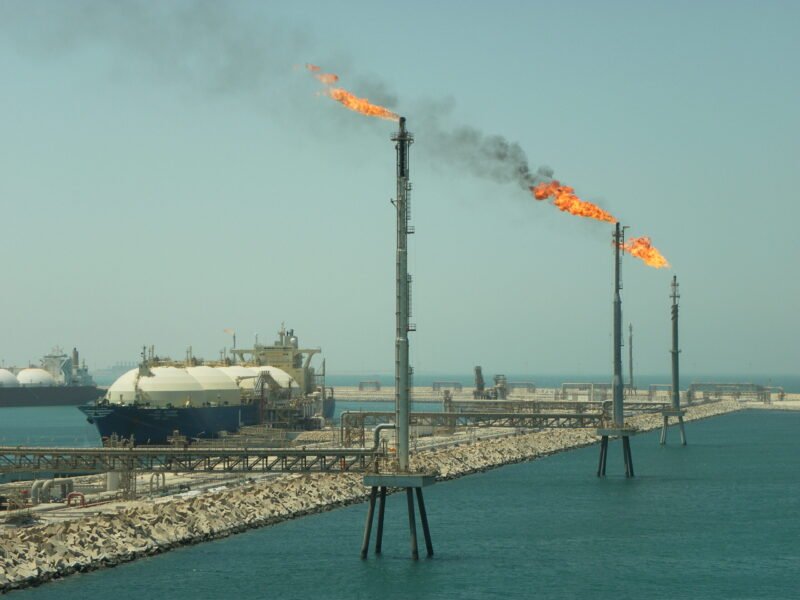
Strait of Hormuz Tensions and LNG Shutdown in Qatar Send Shockwaves Through Markets.
Missiles in the Gulf. Tankers at anchor. Is the world on the brink of an energy shock?
Energy markets jolted sharply higher as the widening conflict between Iran, the United States and Israel began to threaten critical oil and gas infrastructure across the Gulf.
Global benchmark Brent crude briefly climbed to $82 a barrel on Monday after reports that at least three vessels were attacked near the Strait of Hormuz — the narrow waterway through which roughly 20 percent of the world’s oil and gas flows. Iran warned ships against transiting the strait, deepening fears of a supply choke point.
Natural gas markets reacted even more dramatically. Europe’s benchmark gas price surged as much as 50 percent before closing 39 percent higher after QatarEnergy halted liquefied natural gas production following drone strikes on facilities in Ras Laffan Industrial City. Qatar’s defense ministry said the damage was contained, but the suspension rattled traders.
In neighboring Saudi Arabia, Saudi Aramco temporarily shut its Ras Tanura refinery after a drone strike, further tightening concerns about regional output.
Shipping disruptions compounded the volatility. The UK Maritime Trade Operations reported multiple security incidents in the Arabian Gulf and Gulf of Oman. At least 150 tankers dropped anchor outside the Strait of Hormuz, while major operators rerouted vessels to avoid exposure. Danish shipping giant Maersk paused sailings through the Bab el-Mandeb Strait and Suez Canal, diverting around Africa’s Cape of Good Hope.
Equity markets reflected the uncertainty. London’s FTSE 100 fell 1.2 percent, led lower by airlines and banks exposed to energy-sensitive sectors. France’s CAC-40 and Germany’s DAX posted steeper declines. In the United States, the S&P 500 and Nasdaq initially fell but later recovered to close modestly higher.
Analysts cautioned that markets are not yet in crisis mode. “The market isn’t panicking,” said Saul Kavonic of MST Marquee, noting that major oil infrastructure has not been comprehensively disabled. Others warned, however, that a prolonged conflict could push crude above $100 a barrel, feeding global inflation.
Economists say sustained energy price spikes would quickly filter into food, industrial commodities and transport costs. Central banks, including the Bank of England, could be forced to delay planned interest-rate cuts if inflation pressures intensify.
For now, the Strait of Hormuz remains the focal point. As long as tankers hesitate and production remains uncertain, volatility is likely to persist — a reminder that even limited regional conflict can ripple across the global economy within hours.
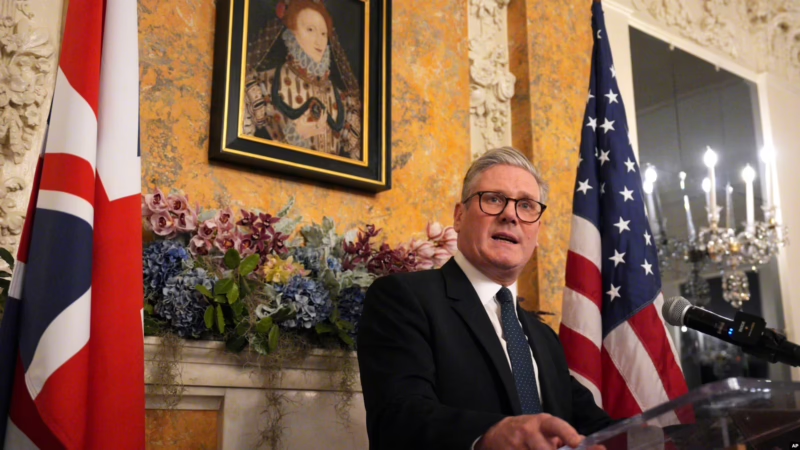
US President Says Historic Alliance Has Changed After UK Hesitation Over Iran Strikes.
From “special relationship” to public frustration — is the Atlantic alliance cracking?
U.S. President Donald Trump said the once “most solid relationship” between Washington and London is “not like it used to be,” signaling a rare public strain in the transatlantic alliance as the Middle East conflict widens.
In an interview with The Sun, Trump criticized British Prime Minister Keir Starmer for initially refusing to allow the United States to use British military bases in operations connected to strikes on Iran.
“This was the most solid relationship of all,” Trump said. “Now we have very strong relationships with other countries in Europe,” singling out France and Germany.
He described Starmer as “not helpful” and said he never expected such hesitation from the United Kingdom. Though he later acknowledged Britain’s decision to permit limited use of bases for what London described as a specific defensive purpose, Trump argued that the approval “took far too much time.”
The disagreement touches on politically sensitive terrain in Britain. Memories of former Prime Minister Tony Blair’s support for the 2003 Iraq invasion continue to shape public and parliamentary caution over Middle East interventions.
Addressing Parliament, Starmer defended his position, saying his duty was to act in Britain’s national interest. “We all remember the mistakes of Iraq,” he said, stressing that any UK involvement must have a lawful basis and a clear strategic plan.
Downing Street confirmed that British bases, including RAF Akrotiri in Cyprus, were not being used by U.S. bombers for offensive operations. The Cypriot base was itself struck by an unmanned drone, which Starmer said had been launched prior to Britain’s policy decision.
The exchange marks one of the sharpest rhetorical breaks in U.S.-UK relations in years. While the alliance remains operationally intact — particularly within NATO — the public tone reflects deeper unease over strategy, escalation and political risk.
For Washington, speed and alignment are strategic necessities in a fast-moving conflict. For London, caution carries domestic and legal weight. The friction underscores a broader reality: even long-standing alliances can bend under the pressure of war.
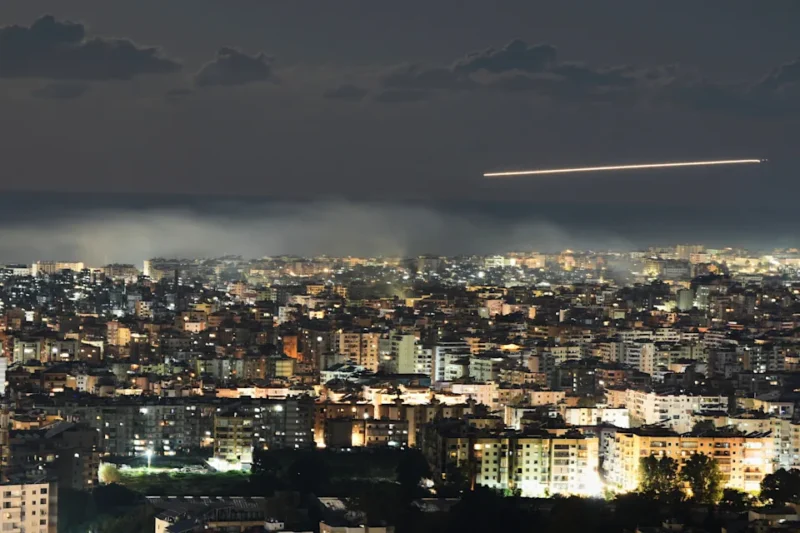
Embassies struck. Oil refineries targeted. Militias entering the war. The conflict is no longer confined to two countries.
The war between Israel, the United States and Iran widened sharply Monday as Iranian-backed militias joined the confrontation, missiles struck diplomatic and energy targets, and casualties mounted across multiple countries.
Iran and allied groups launched attacks on Israel and several Gulf states hosting American forces. In Kuwait City, fire and smoke were seen rising from inside the U.S. Embassy compound after reported missile or drone impacts. Kuwait’s defense ministry said several American warplanes crashed in the country, though it did not specify the cause. The U.S. military has not publicly confirmed those details.
Iranian officials said at least 555 people have been killed nationwide since the U.S.–Israeli air campaign began, with more than 130 cities reportedly struck. Israeli authorities said 11 people have been killed there in missile attacks.
In Iraq, a pro-Iranian militia claimed responsibility for drone strikes targeting U.S. forces at Baghdad’s airport and previously at Irbil. In Lebanon, Hezbollah said it fired missiles into Israel, prompting extensive Israeli retaliatory strikes that Lebanese authorities say killed at least 31 people.
Energy infrastructure has now entered the battlefield. Saudi Arabia’s Ras Tanura refinery — one of the world’s largest — was targeted by drones, which Saudi defenses said were intercepted. Kuwait and the United Arab Emirates also reported debris and damage linked to aerial interceptions.
Analysts say the strategy appears designed to impose economic pressure. “Gulf energy infrastructure is now squarely in Iran’s sights,” said Torbjorn Soltvedt of Verisk Maplecroft, warning of prolonged uncertainty for global oil markets. Roughly one-fifth of global oil trade passes through the Strait of Hormuz, where maritime tensions are rising.
Meanwhile, Iran’s envoy to the International Atomic Energy Agency accused Washington and Tel Aviv of striking safeguarded nuclear facilities, including Natanz. The United States and Israel have not publicly confirmed those claims.
President Donald Trump said U.S. combat operations would continue “until all objectives are achieved,” adding that further retaliation would be met with force. Britain, France and Germany signaled support for efforts to halt Iranian attacks but urged de-escalation.
The World Health Organization called for the protection of civilians and medical facilities as fighting spreads. With regional militias now active and oil infrastructure under threat, the conflict has entered a broader and more volatile phase — one that risks drawing in additional states and further destabilizing global markets.
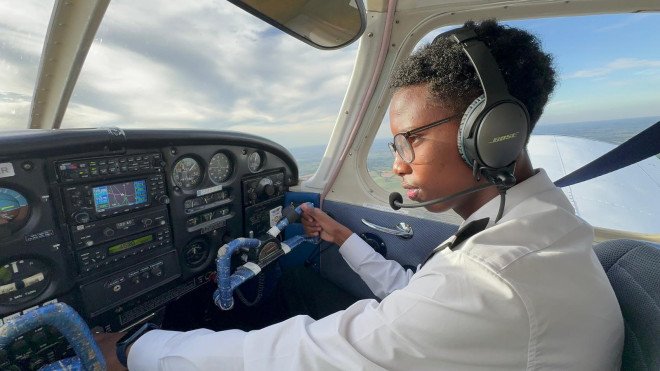
At 16, he flew solo. At 18, he’s chasing the captain’s seat. Meet the young pilot changing representation in British aviation.
At 18 years old, Suleiman Dida has already crossed one of aviation’s most defining thresholds: flying solo. Born in northwest London to parents from Mogadishu, Dida is now recognized as the United Kingdom’s youngest Somali pilot — a milestone in a field where Somali representation has historically been rare.
His fascination with flight began in childhood, watching uniformed pilots stride through terminals during family trips. That early curiosity turned into disciplined preparation. From his bedroom, he built a home flight simulator and logged hours on VATSIM, an online network that mirrors real-world air traffic control communications. It allowed him to practice navigation, phraseology and cockpit procedures long before stepping into a real aircraft.
He began formal flight training at 14. By 16, he completed his first solo flight in a Piper PA-28-140 — a moment widely regarded as one of the most demanding psychological tests for any pilot in training. Taking off, flying circuits and landing without an instructor onboard requires complete control and confidence.
Now working toward his Private Pilot Licence (PPL), Dida continues building hours in single-engine aircraft while preparing for the rigorous academic demands ahead. In the UK, aspiring commercial pilots must pass 14 Airline Transport Pilot Licence (ATPL) theoretical exams covering subjects from meteorology to aerodynamics — a hurdle many describe as among the toughest in aviation.
The path is also expensive. Training can exceed £100,000. Rather than enroll in a full-time academy program, Dida chose the modular route, completing qualifications in stages while managing costs. He began saving toward training expenses while still in primary school.
He has secured a conditional offer with Ryanair to fly the Boeing 737-800 once he completes required certifications and flight hours — a potential first step into commercial aviation.
Long term, his ambitions stretch further. He hopes to command wide-body aircraft like the Boeing 777 for global carriers such as Qatar Airways, Emirates or Ethiopian Airlines. And if Somalia’s national airline returns, he says he would welcome the chance to fly for his country of heritage.
“I didn’t see Somali pilots out there,” he said. “So I wanted to change that.”
Dida’s journey remains in its early stages — still grounded in classrooms and light aircraft rather than airline cockpits. But for many watching, his progress signals a shift: a new generation stepping into industries once seen as out of reach.
“See you in the skies,” he says — and he means it.
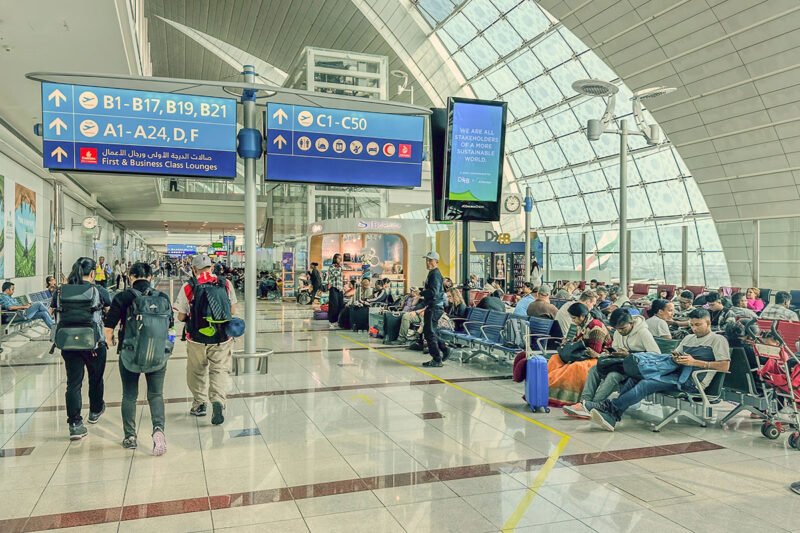
Flights grounded. Airports shut. Hundreds of thousands stranded. The Middle East conflict is now hitting global travel hard.
Air travel across the Middle East plunged into chaos Saturday after US and Israeli strikes on Iran — and Iran’s retaliatory missile attacks — forced major regional hubs to shut down, triggering one of the worst aviation disruptions in years.
Dubai International Airport, the world’s busiest international travel hub handling more than 1,000 flights daily, suspended operations after sustaining damage during overnight missile attacks. Airports in Abu Dhabi and Kuwait were also affected, while Doha’s Hamad International Airport closed as airspace across large parts of the region was shut.
Flight-tracking maps showed skies over Iran, Iraq, Israel, Kuwait and Bahrain nearly empty. Airlines across Europe and Asia rushed to cancel or reroute services as conflict corridors expanded.
Preliminary data from aviation analytics firm Cirium showed airlines canceled roughly half of scheduled flights to Qatar and Israel, and about 28 percent of flights to Kuwait. Overall, nearly a quarter of all flights to the Middle East were scrapped.
“The scale of these hubs today is enormous,” said UK aviation analyst John Strickland. “You will have hundreds of thousands of people stuck in the wrong parts of the world without certainty about when they can move.”
Dubai and Doha sit at the center of global east-west air travel, connecting Europe and Asia through tightly synchronized long-haul networks. Any prolonged shutdown ripples worldwide, disrupting cargo operations and passenger routes far beyond the region.
Eric Schouten, head of aviation security advisory Dyami, warned that airspace closures may last. “Passengers and airlines can expect airspace to be shut for quite some time,” he said.
The crisis adds to growing aviation strain since the Russia-Ukraine war restricted key flight paths. Conflict zones increase operational risk, raise fears of accidental aircraft shootdowns, and force longer routes that drive up fuel costs.
At Paris’s Charles de Gaulle Airport, travelers bound for Asia scrambled for alternatives after connecting flights via Doha were canceled. In Dubai, stranded passengers faced uncertainty, while tracking platform Flightradar24 briefly crashed under surging demand.
The European Union Aviation Safety Agency advised airlines to avoid affected airspace until further notice.
What began as a military escalation has quickly evolved into a global transport emergency — underscoring how tightly the world’s travel networks are linked to Middle Eastern stability.
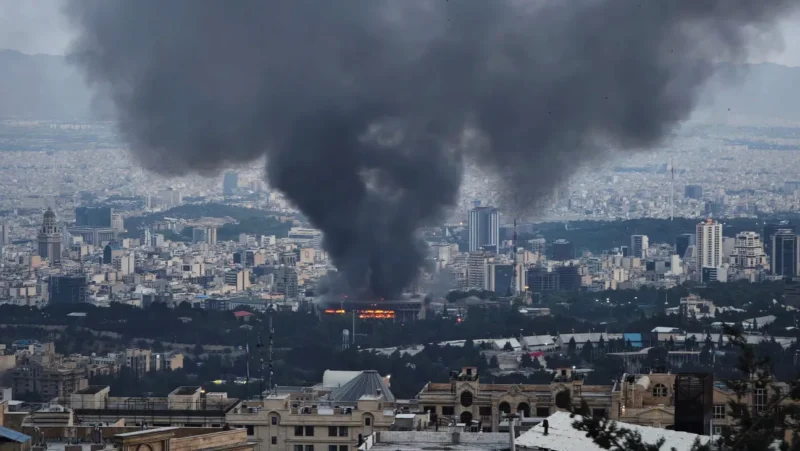
Tehran hit. Riyadh targeted. Missiles flying across borders. Is the Middle East entering a full-scale war?
The United States and Israel launched coordinated military strikes on Iran on Saturday, targeting what officials described as senior leadership and strategic security sites, triggering a rapid and dangerous escalation across the Middle East.
Explosions were reported in Tehran as the joint operation unfolded. President Donald Trump said the action was intended to eliminate a direct security threat to the United States and open space for political change inside Iran.
Tehran denounced the strikes as “unprovoked and illegal,” vowing consequences. Within hours, Iran launched retaliatory missile attacks against Israel and several Gulf countries hosting American military bases.
Saudi Arabia confirmed that missiles struck Riyadh and parts of its Eastern Province but said its air defenses repelled the attacks. The Saudi foreign ministry issued a sharp condemnation, describing the strikes as “blatant and cowardly Iranian attacks.”
“In light of this unjustified aggression, the Kingdom affirms that it will take all necessary measures to defend its security and protect its territory, citizens and residents,” the statement said, adding that retaliation remains an option.
The rapid exchange marks one of the most direct confrontations between Washington and Tehran in decades. The scope of the US-Israeli strike has not been fully detailed, but officials indicated that key security targets were hit.
Iran’s response broadened the battlefield, drawing Gulf states into the crisis. Several countries in the region host significant US military installations, raising fears of further strikes.
Regional governments are now on high alert. Air defense systems have been activated across multiple capitals, and commercial aviation routes are being reassessed as security conditions deteriorate.
Diplomatic channels appear strained. There has been no immediate indication of emergency talks, though international leaders are expected to push for de-escalation.
With missiles exchanged and capitals targeted, the conflict has shifted from brinkmanship to open confrontation. The coming hours may determine whether this remains a contained military exchange — or evolves into a broader regional war.
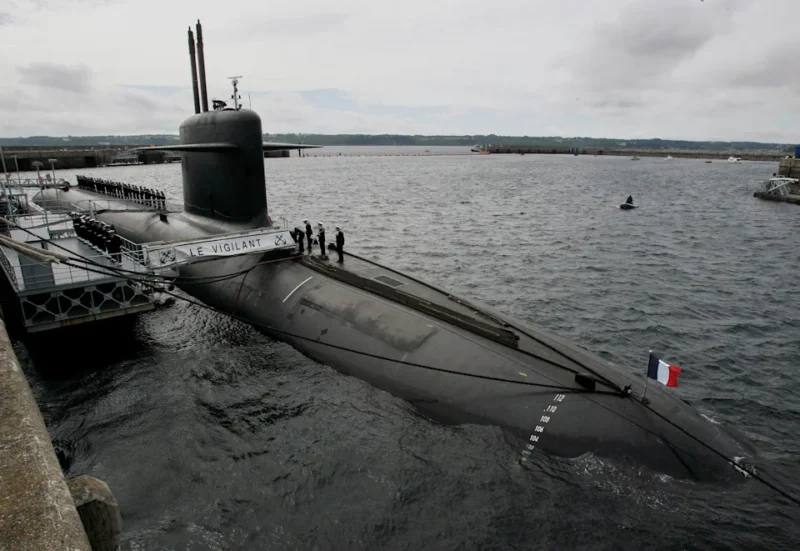
French President to Outline Deterrence Strategy at Submarine Base Amid Doubts Over American Nuclear Guarantees.
President Emmanuel Macron will travel Monday to France’s top-secret Île Longue submarine base to deliver a major speech on the country’s nuclear doctrine — a signal that Europe’s security landscape may be entering a new and uncertain phase.
The base, home to France’s four nuclear-armed submarines, provides a stark backdrop. Each vessel carries up to 16 M51 intercontinental ballistic missiles equipped with multiple warheads. As France’s commander in chief, Macron alone holds the authority to order their use.
The timing is significant. Russia’s war in Ukraine grinds on, Moscow has lowered its threshold for nuclear retaliation, and China and North Korea are expanding their arsenals. At the same time, questions have surfaced in parts of Europe about whether the United States would risk its own cities to defend European capitals under President Donald Trump.
For decades, U.S. nuclear weapons stationed in Europe formed the backbone of NATO’s deterrence strategy. But some European officials now speak more openly about contingency planning.
Rasmus Jarlov, chair of Denmark’s parliamentary defense committee, voiced the concern bluntly. “If things got really serious, I very much doubt that Trump would risk American cities to protect European cities,” he said, adding that Europe may need to look to France in the short term.
France is the European Union’s only nuclear-armed member. Macron previously stated in 2020 that France maintains fewer than 300 warheads — a stockpile he said was sufficient to inflict “absolutely unacceptable damage” on any state threatening France’s “vital interests,” which he noted have a “European dimension.”
Defense analysts will be listening carefully for signals of change: whether Macron expands the definition of France’s protective umbrella, increases cooperation with European partners, or hints at adjustments to arsenal size or deployment.
Germany has already opened discussions. Chancellor Friedrich Merz has acknowledged “initial talks” about nuclear deterrence, even publicly floating the idea that German aircraft could one day carry French nuclear weapons.
The language of deterrence is intentionally ambiguous, designed to keep adversaries guessing. But even subtle shifts in tone matter. With just 14 months left in his presidency, Macron’s remarks could shape Europe’s security doctrine for years to come.
As uncertainty clouds transatlantic guarantees, one question hangs over the Atlantic: if America’s shield weakens, will France’s nuclear force step into a broader European role?
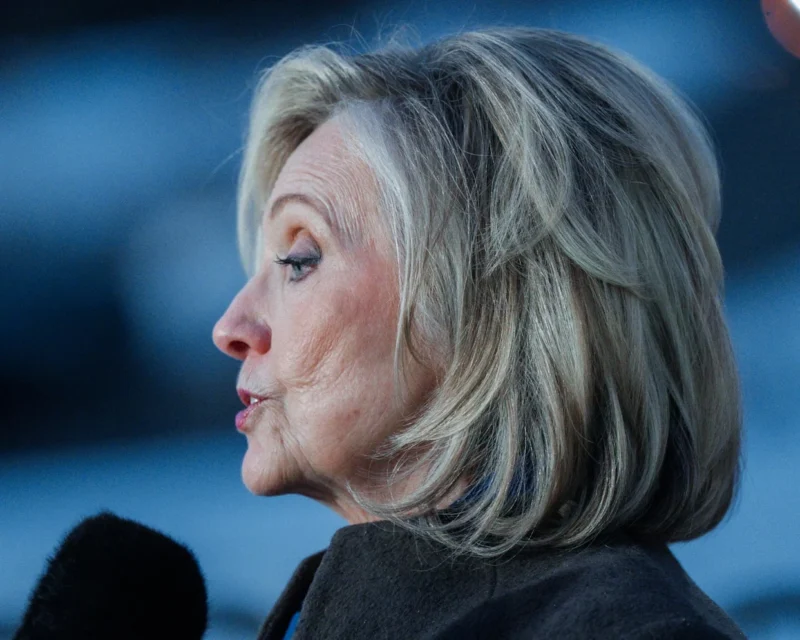
From Epstein to UFOs — what really happened inside Hillary Clinton’s closed-door testimony?
Hillary Clinton spent hours behind closed doors before a House oversight committee investigating her alleged links to Jeffrey Epstein — and emerged accusing Republicans of staging a political distraction aimed at shielding former President Donald Trump.
The former secretary of state flatly denied knowing Epstein or visiting any of his properties. “I did not know Jeffrey Epstein,” she told reporters afterward. “I never went to his island. I never went to his homes. I never went to his offices.”
Clinton argued the Republican-led inquiry was less about uncovering facts and more about diverting attention. “What is being held back? Who is being protected? And why the cover-up?” she asked.
The session, held privately at the committee’s request, grew contentious at several points. Clinton said members repeated the same questions “over and over again,” before the discussion took what she described as an unusual turn. “I started being asked about UFOs,” she said, along with questions tied to the debunked “Pizzagate” conspiracy theory.
The hearing was briefly suspended after Representative Lauren Boebert leaked a photo from the closed session, which was later posted on social media by a conservative influencer. Clinton’s legal team objected, noting that photography is prohibited during private depositions. “We had agreed upon rules,” Clinton said. “One of the members violated that rule.”
Democrats on the committee countered that the investigation should focus on Trump and Commerce Secretary Howard Lutnick, who have both acknowledged past contact with Epstein. Representative Robert Garcia said Trump should testify under oath regarding his ties. Committee Chair James Comer dismissed the idea of subpoenaing the former president but left open the possibility regarding others.
Epstein, a convicted sex offender, died in jail in 2019 while awaiting trial on federal trafficking charges. Recently released Justice Department documents have renewed scrutiny of his network of prominent associates.
Clinton also defended her husband, former President Bill Clinton, who is scheduled to testify. She said she is “100% confident” he was unaware of Epstein’s crimes during their past social interactions and that his connection ended years before Epstein’s criminal conduct became public.
Transcripts and video from both testimonies are expected to be released, setting the stage for further political fallout in a case that continues to entangle high-profile figures across party lines.

US Embassy in Riyadh Targeted by Drones

Netanyahu: Iran Conflict Won’t Be “Endless War”

Oil Surges, Gas Soars as Gulf War Threatens Global Energy Arteries


-

 Somaliland1 month ago
F-35s Over Hargeisa: The Night Somaliland’s Sovereignty Went Supersonic
-

 Somalia1 month ago
Aid Destroyed, Trust Shattered: Somalia Loses U.S. Support for Good
-
 Terrorism1 month ago
Foreign ISIS Pipeline Exposed: Puntland Captures Dozens of Non-Somali Fighters
-

 Somaliland1 month ago
Somaliland at Davos: The Moment Somaliland Entered the World’s Inner Circle
-
 Terrorism1 month ago
America Pulls Back From Somalia but Doubles Down Next Door
-
 Top stories2 months ago
Somali Pirates Hijack Chinese Fishing Vessel off Puntland Coast
-
 Somaliland2 months ago
Somaliland Rejects Claims of Israeli Military Bases or Gaza Refugee Deal
-
 Middle East2 months ago
US War Plans Against Iran Enter Advanced Stage