
WARYATV Investigating Report
Mogadishu Denies Israel Ties as Intelligence Evidence Mounts


Somalia has denied reports of secret contacts with Israel after WARYATV investigations exposed arms trafficking routes, Houthi–Al-Shabaab links, and covert security communications. Intelligence evidence tells a different story.
Somalia’s categorical denial of any relationship with Israel is no longer a simple diplomatic position. It is a forced posture—shaped by regional pressure, internal insecurity, and mounting intelligence exposure—that increasingly conflicts with documented reality.
This week, Somalia’s State Minister for Foreign Affairs, Ali Mohamed Omar (Ali Balcad), rejected WARYATV reports detailing covert communications between Mogadishu and Israel. He insisted Somalia has neither initiated nor planned diplomatic engagement with Tel Aviv, calling the reports false despite their circulation in Israeli media and confirmation by Israeli Deputy Foreign Minister Sharren Miriam Haskel.
The denial did not emerge in isolation. According to diplomatic sources familiar with the matter, Qatar and several Arab governments pressured Mogadishu to publicly disavow the Israeli disclosure, fearing political backlash across the Arab League and the OIC. Somalia’s position, therefore, reflects regional coercion rather than strategic autonomy.
Haskel’s statement to Israeli media—that Israel has held discussions with several African states, including Somalia—was not speculative language. It was carefully calibrated confirmation.
Combined with historical reporting that Somali President Hassan Sheikh Mohamud previously held a secret meeting with Prime Minister Benjamin Netanyahu, the claim fits a well-established pattern: Mogadishu engages Israel quietly while denying it loudly.
This contradiction mirrors Somalia’s broader credibility crisis.
Only weeks earlier, the same foreign minister denied that arms were flowing through Somali territory to Yemen’s Houthis—despite overwhelming maritime intelligence, UN reporting, and regional security assessments identifying Somalia’s southern coastline as a primary smuggling corridor.
That denial collapsed under scrutiny, particularly as Somali defense officials simultaneously held talks in Cairo with Yemeni counterparts on curbing illegal weapons movement.
The pattern is now unmistakable. Mogadishu denies realities that it cannot politically afford to admit.
The strategic context explains why. Somalia sits at the center of a rapidly evolving security convergence linking the Houthis, Al-Shabaab, Iranian logistics networks, and opportunistic Russian involvement.
Intelligence assessments—some first revealed by WARYATV in late 2024—confirm that Somali coastal routes are being used to move weapons, fighters, and technical expertise across the Gulf of Aden. This hybrid network has transformed the Red Sea into a frontline of proxy warfare.
Faced with this escalating threat, Somalia lacks the maritime capacity, intelligence infrastructure, and territorial control to respond independently. Israel, by contrast, possesses unmatched Red Sea surveillance capabilities. Quiet engagement with Jerusalem is therefore a strategic necessity—not an ideological shift—but one Mogadishu cannot acknowledge without alienating Gulf patrons and Arab allies.
This explains the political theatre now unfolding: public denials paired with private coordination.
The irony is severe. Somalia insists no trafficking corridors exist while seeking assistance from the one state capable of mapping and dismantling those corridors. It denies Israeli engagement while benefiting from Israeli intelligence visibility. This duality is not diplomacy—it is survival management.
For international actors, the implications are significant. Somalia’s denials are not reliable indicators of conditions on the ground. They are defensive narratives designed to preserve aid flows, diplomatic legitimacy, and regional alignment. Meanwhile, the real security architecture of the Red Sea is being shaped through informal, covert, and increasingly unstable partnerships.
The contrast with Somaliland is impossible to ignore. While Mogadishu struggles to conceal ungoverned coastlines and clandestine dependencies, Somaliland has demonstrated consistent maritime control, transparency, and strategic reliability—without denial or duplicity. This divergence is now central to U.S., European, and Red Sea security calculations.
Somalia’s Israel denial is therefore not the end of the story. It is evidence that the story has already moved beyond public diplomacy. The Horn of Africa has entered a phase where political taboos collapse under operational pressure—and where denial itself becomes an intelligence signal.
In that environment, Mogadishu’s loudest insistence may be its clearest admission.
Mogadishu Caught Lying: Intelligence Exposes Massive Arms Pipeline to Houthis
Israel Breaks the Silence: Mogadishu’s Secret Plea for Help Exposed
The Secret Maritime Corridor Linking Yemen’s Houthis to Somalia’s Militants















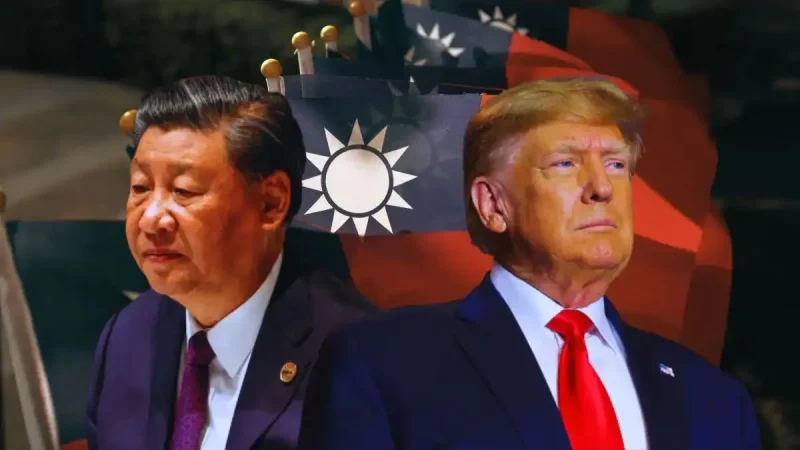
THE SILENT WAR: Congressional Report Links Somaliland Instability to China’s Red Sea Strategy.
While the people of Somaliland have been focused on internal debates, elections, and localized conflicts in Awdal and Lasanod, a much larger, invisible war has been raging around them.
A groundbreaking investigation, corroborated by a massive 745-page report from the U.S. Congress, reveals a startling truth: Somaliland has been under sustained fire not just from Mogadishu, but from Beijing. The chaotic events of the last two years—the violence in Lasanod, the unrest in Awdal, and the relentless diplomatic pressure from Somalia—are not isolated incidents.
They are the kinetic symptoms of a superpower proxy war where China is using Somali instability to punish Hargeisa for its relationship with Taiwan.
The Beijing Doctrine: Punish the Partner

The U.S. Congress report explicitly identifies China’s “assertive Red Sea diplomacy” as a mechanism designed to “undercut Taiwan and Somaliland ties and undermine Somaliland’s recognition.”
This confirms what intelligence analysts have long suspected: Beijing has no inherent quarrel with the existence of Somaliland or its people. Its aggression is purely transactional and strategic.
China’s singular red line is Taiwan. When Hargeisa forged diplomatic ties with Taipei in 2020, it inadvertently placed itself in the crosshairs of the Chinese Communist Party’s global strategy to isolate the island democracy.
Our investigation indicates that the destabilization campaigns in Lasanod and Awdal were not organic, localized grievances but were inflamed by external financing.
Credible intelligence suggests that funds flowing through Mogadishu—officially earmarked for “development” or “security cooperation” from Chinese state-linked entities—have been diverted to fuel militias and incite unrest in Somaliland’s border regions.
The strategic goal is simple: make Somaliland appear ungovernable and unstable, thereby eroding the case for international recognition and punishing Hargeisa for its “defiance” in hosting Taiwan.
Somalia as the Proxy Spoiler
The Federal Government of Somalia (FGS) has proven to be a willing, albeit cynical, proxy in this grand game. Lacking the military or economic power to reintegrate Somaliland by force, Mogadishu has found a powerful patron in Beijing.
By aligning its anti-Somaliland rhetoric with China’s “One China” policy, the FGS secures financial backing and diplomatic cover from a permanent member of the UN Security Council.
This alliance explains the FGS’s renewed confidence and aggressive posturing in international forums. Somalia is not acting alone; it is acting with the assurance of Chinese protection.
The recent diplomatic offensives by Mogadishu to block Somaliland’s international engagements are directly supported by Chinese diplomatic machinery, which views every step toward Somaliland’s recognition as a victory for Taiwan and a loss for Beijing.
The Resource War: Minerals and Space
The U.S. report sheds light on why China cares so deeply about the Horn of Africa beyond the Taiwan issue. Africa is crucial for China’s access to strategic minerals (like lithium and rare earths found in Somaliland) and its race to dominate space. The geography of the Horn is ideal for tracking satellites and space assets.
By keeping Somaliland unstable and unrecognized, China ensures that Western powers, particularly the U.S., cannot easily access these strategic resources or establish stable partnerships for space and technology infrastructure in Berbera or Hargeisa.
The Unintended Frontline
Somaliland has been fighting a war it didn’t fully realize it was in. The enemy is not just the militia in the east or the bureaucrat in Mogadishu; it is a global superpower leveraging its vast resources to enforce a diplomatic blockade.
However, this revelation also contains a powerful strategic opportunity. The U.S. Congress’s explicit recognition of this dynamic signals that Washington is waking up to the reality.
Somaliland is no longer just a “breakaway region” in the eyes of the U.S.; it is a democratic ally under attack by America’s primary global rival. This shifts the narrative in Washington from humanitarian concern to national security interest.
The path forward for Hargeisa is to leverage this reality. Somaliland must present itself not as a victim of local conflict, but as a resilient, democratic bulwark against Chinese hegemony in the Red Sea.
The attacks on Awdal and Lasanod are not signs of internal failure; they are the scars of a nation standing on the right side of the most important geopolitical struggle of the 21st century.

From Hargeisa Classrooms to Libya’s Jails—The New Route of Boy Trafficking.
HARGEISA, SOMALILAND — A crisis of unimaginable cruelty is unfolding in the heart of Somaliland’s capital, Hargeisa, where the most vulnerable members of society—children as young as 12—are being systematically stolen and smuggled into the treacherous hands of traffickers in Libya.
This is not the familiar tragedy of desperate youths seeking a better life; this is an organized, cold-blooded abduction scheme targeting minors between the ages of 12 and 16, a horrific trend now shattering families across Somaliland and Puntland.
The Mother’s Silence: A $10,000 Ransom
The emotional epicenter of this tragedy is the devastating story of Samia Adan Ahmed, a mother of four whose life was instantly cleaved in two. She awoke one morning to find her two sons, aged 13 and 15, missing. Ten days of agonizing silence followed, only to be brutally broken by a phone call from the war-torn chaos of Libya.
The voice on the line delivered a chilling ultimatum: Send $10,000, or your children will not live.
Samia Adan had no money. She had only grief. According to her brother, Abdullahi Adan Ahmed, the shock was so profound it stole her voice for five full days. Doctors brought to her bedside were baffled by her silent, catatonic state, unable to treat the invisible trauma of maternal despair. This is the human cost of the trafficking epidemic: a mother rendered mute by the calculated greed of criminals.
The Network of Betrayal
WARYATV investigations confirm the terrifying modus operandi of the trafficking rings operating with shocking impunity right here in Hargeisa. These are not distant, shadowy figures; they are local predators, often tragically described by victims as relatives.
Abdullahi Adan Ahmed revealed the insidious scheme: The networks begin by befriending vulnerable children near their schools, offering small amounts of money to establish contact and gain trust. Once rapport is established, they weave a compelling fantasy: a swift escape from “this bad life and poverty” to the shimmering promise of European countries.
They then provide the full logistical support—passports, tickets, and smuggling routes—to spirit the children away from Hargeisa.
But the real horror of the Libyan journey eclipses any fantasy. Libya is less a gateway to Europe and more a living hell, a hotbed for exploitation and organized crime. Unconfirmed, yet deeply disturbing reports reaching WARYATV suggest a darker, unmentionable motive for trafficking boys aged 13–15: the chilling possibility of organ removal schemes.
Voices from the Abyss
The testimonies of those who have survived the abyss underscore the urgency of this crisis. Said Hassan Duale, a 15-year-old boy who was trafficked from Hargeisa at the age of 13 and later returned by the UN Migration Agency (IOM), spoke with a wisdom far beyond his years.
“I want to talk about children being trafficked from Hargeisa, but it’s like talking to someone who has lost their hearing,” he told WARYATV, reflecting the deep sense of futility and resignation facing many affected families.
Young returnees paint a consistent picture of utter suffering: torture, slavery, systematic abuse, and exploitation at the hands of smugglers and human traffickers while stranded in Libya.
Where once young adults risked their own lives and money crossing the ocean, today, these children are being forcibly pushed into a migration path that remains one of the most dangerous in the world.
It is a miracle that some return alive after a year or two.
A Fragile Lifeline: The IOM Return
Against this backdrop of devastation, the Voluntary Humanitarian Return (VHR) program, supported by the UN Migration Agency (IOM) and the EU, offers a fragile lifeline.
In one recent operation, a plane carrying 165 Somali migrants—mostly young men below the age of 25, including a critical 27 minors—landed at Egal International Airport in Hargeisa to return 13 members to Somaliland before continuing to Mogadishu. This action brings the total number of migrants returned from Libya to Somalia this year alone to over 550.
The IOM emphasizes that these returns are voluntary, informed, and executed with dignity. Upon arrival, returnees receive essential support to rebuild their shattered lives: temporary accommodation, medical and psychosocial counselling, pocket money, and communications tools to reconnect with their distraught families.
However, the voluntary nature of the return scheme is itself fraught with moral complexity. Critics highlight that returning to the desperate circumstances that drove them out—to avoid prolonged torture and suffering—can hardly be deemed a free choice.
Furthermore, despite the IOM’s long-term reintegration assistance, which includes funding anti-migration projects like access to clean water and farming opportunities, the root causes of poverty and lack of opportunity remain formidable.
Over 1,400 Somali migrants are estimated to remain stranded in Libya, desperate for protection and humanitarian assistance. The terrifying surge in child trafficking from Hargeisa necessitates immediate, coordinated action to dismantle the local criminal networks profiting from the trade in stolen futures.
The silence of Samia Adan Ahmed must become a deafening call for justice.
Tortured, Starved, and Finally Home: 145 Somalis Return from Libya
Libya’s Migrant Mass Graves: Evidence of Executions as Chaos Fuels Trafficking
Ethiopian Woman’s Horror in Libya: A Warning to Migrants Facing a Death Trap
Ethiopian Woman Tortured for Ransom Highlights Libya’s Human Trafficking Crisis
Libyan Militia Detains 300 Migrants Amid Efforts to Curb Mediterranean Crossings
Somali Migrants Trapped in Libya, Tortured, Starved, and Left Begging for Repatriation
IOM: Somali Migrant Arrivals to Europe Surge Threefold This Year
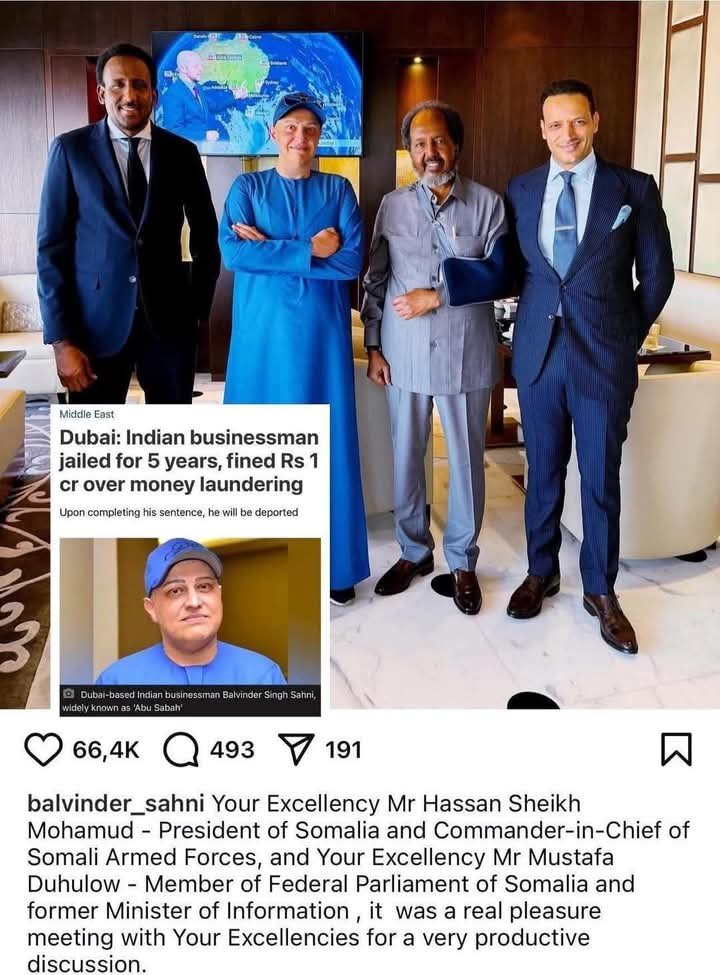
WARYATV uncovers how jailed billionaire Abu Sabah’s Dubai money laundering case is linked to Somali President Hassan Sheikh Mohamud. Shocking offshore account allegations and corruption exposed.
Somalia President Hassan Sheikh Mohamud Faces Mounting Corruption Allegations Amidst International Scrutiny.

Balvinder Singh Sahni, also known as Abu Sabah
Recent developments have intensified scrutiny on Somali President Hassan Sheikh Mohamud, as allegations of corruption and financial misconduct continue to surface. Notably, the conviction of Indian-origin billionaire Balvinder Singh Sahni, also known as Abu Sabah, in Dubai for money laundering has reignited questions about his alleged ties to President Mohamud.
Sahni, known for his lavish lifestyle, was sentenced to five years in prison, fined over $136,000, and ordered deported for operating within an “organized criminal group.” His son was also convicted, alongside 30 other defendants. Dubai authorities confiscated assets worth $40 million, exposing a transnational web of shell companies and illicit funds.
But the case doesn’t end there.
Sahni’s relationship with President Mohamud is now under fresh international scrutiny. Investigators are probing allegations that Sahni served as a close financial conduit for Mohamud — handling investments, fund movements, and influence-buying across the Gulf.
In parallel, reports surfaced last year that President Mohamud had stashed over $260 million in Swiss offshore accounts, suspected to be diverted international aid. These funds have allegedly been frozen by US and European anti-money laundering agencies.
Domestically, Mohamud’s administration has been rocked by accusations of nepotism and asset stripping. In 2023, he controversially appointed his daughter, Jehan Hassan Sheikh Mohamud, as his international advisor — a move widely criticized for cronyism.
More recently, Mohamud has been accused of selling public land and government property to Gulf investors and political allies, displacing poor residents while amassing real estate wealth in Mogadishu.
As Abu Sabah’s conviction sends shockwaves through Dubai and Mogadishu alike, the ties between Somalia’s highest office and international criminal finance networks are now impossible to ignore.
WARYATV will continue following the money

Herzog Pushes Back on Trump’s Netanyahu Pardon Demand

Goldman’s Top Lawyer Steps Down as Epstein Emails Surface

Portugal Approves Law Restricting Social Media Access for Children Under 16


-
 Interagency Assessment2 months ago
TOP SECRET SHIFT: U.S. MILITARY ORDERED INTO SOMALILAND BY LAW
-

 Somaliland4 months ago
Somaliland Recognition: US, UK, Israel, and Gulf Bloc Poised for Historic Shift
-
 Minnesota1 month ago
Fraud Allegations Close In on Somalia’s Top Diplomats
-
 Middle East2 months ago
Saudi Arabia vs. UAE: How The Gulf Rivalry is Heating Up
-

 American Somali3 months ago
Why Frey Won a Significant Share of the Somali Vote Against a Somali Opponent
-
 Middle East2 months ago
Turkey’s Syria Radar Plan Triggers Israeli Red Lines
-
 Editor's Pick2 months ago
Why India Is Poised to Become the Next Major Power to Recognize Somaliland
-
 The Million-Follower Exile2 months ago
Why America Deported Its Most Famous Somali TikTok Star And Who Paid The Price