
Middle East
The Island That Could Break Tehran

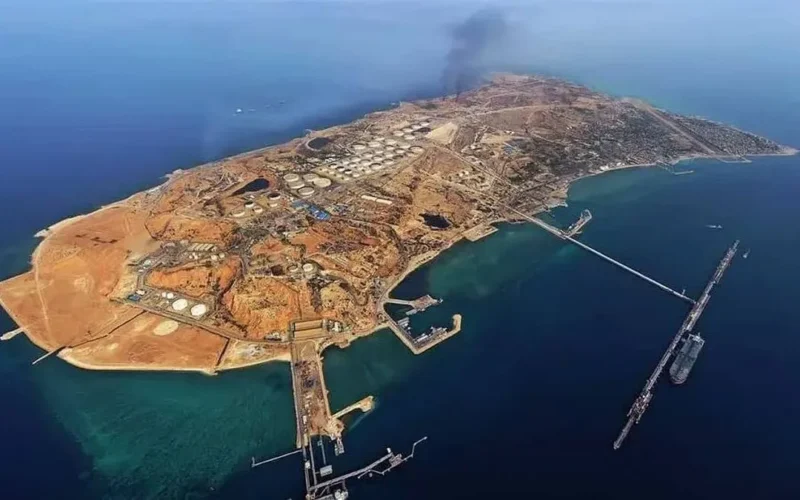
Why Kharg Island Could Become Donald Trump’s Decisive Lever Against Iran.
One small island. Ninety-four percent of Iran’s oil exports. No U.S. boots on Tehran’s streets. Is this Trump’s ultimate pressure point?
In 1988, long before he entered politics, Donald Trump mused in an interview that if Iran fired “one bullet” at American forces, he would “do a number on Kharg Island” and “go in and take it.” At the time, it sounded like bravado.
Nearly four decades later, that obscure reference is drawing renewed scrutiny.











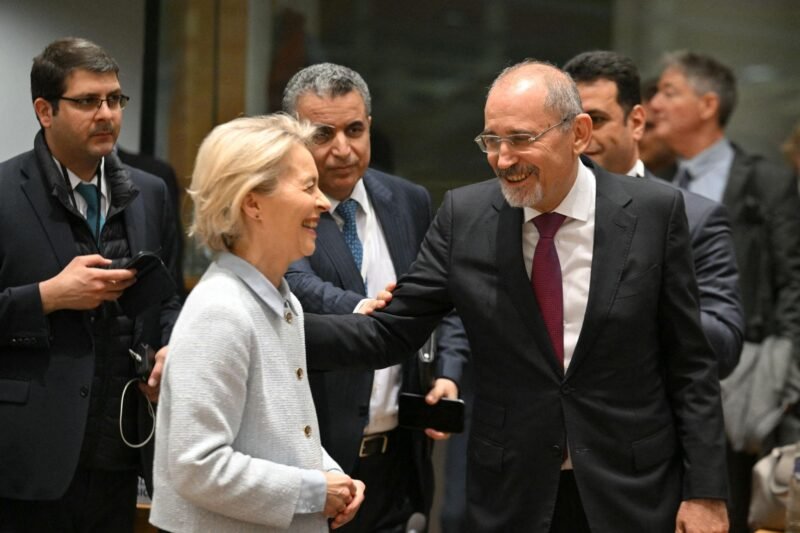
Antonio Costa Rebukes Ursula von der Leyen as European Leaders Split on US-Israeli Strikes.
“Freedom cannot be achieved through bombs.” Europe’s top officials are no longer speaking with one voice.
A sharp public divide has emerged at the top of the European Union over the U.S.-Israeli war against Iran, exposing tensions over diplomacy, international law and Europe’s global role.
Antonio Costa, president of the European Council, rebuked European Commission chief Ursula von der Leyen on Tuesday, declaring that “freedom and human rights cannot be achieved through bombs.”
His remarks followed von der Leyen’s speech a day earlier at the EU Ambassadors Conference in Brussels, where she suggested that the killing of Iran’s Supreme Leader Ali Khamenei could “open a path towards a free Iran.” She also questioned whether Europe could continue to anchor itself to what she described as a fading “rules-based international order.”
Costa took a different tone, insisting the EU must defend international law and remain committed to diplomacy. His intervention underscored the institutional divide: while the Commission often pushes strategic positions, the European Council — representing member states — operates by consensus, particularly on foreign policy.
Von der Leyen argued that Europe’s “well-intentioned attempts at consensus” could hinder the bloc’s credibility. Yet consensus is embedded in EU treaties, and member states have struggled for months to align on issues ranging from Ukraine funding to defense spending and sanctions on Russia.
Hungarian Prime Minister Viktor Orban has frequently blocked joint initiatives, including a €90 billion loan package for Ukraine. Spanish Prime Minister Pedro Sanchez has positioned himself against what he calls Europe’s “rearmament,” and has emerged as one of the strongest critics of the U.S.-led strikes on Iran.
Sanchez’s stance has drawn criticism from U.S. President Donald Trump, who recently threatened trade measures against Spain.
The split highlights a broader strategic dilemma: whether Europe aligns firmly with Washington’s military posture or doubles down on diplomatic engagement. As the Middle East conflict widens, the EU’s internal divisions risk weakening its ability to shape outcomes — and to speak with a unified voice on the global stage.
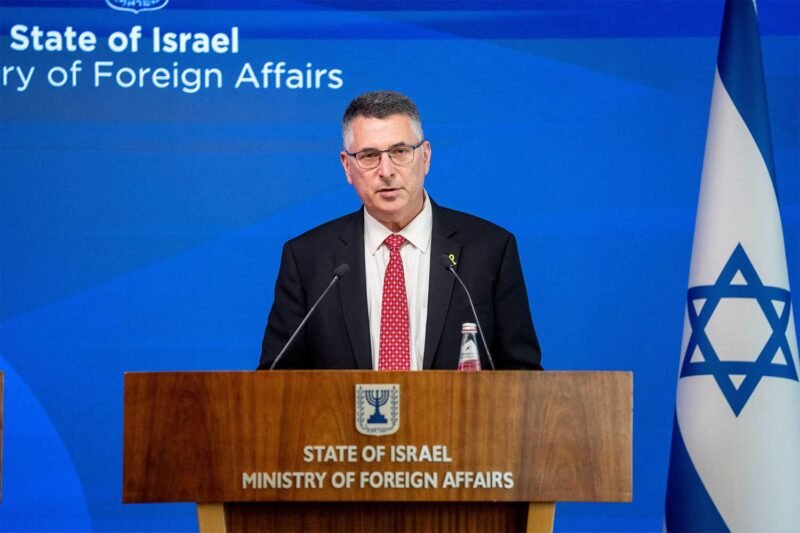
Foreign Minister Gideon Saar Says Fighting Will Continue Until “Appropriate” to Stop, as Germany Pushes for Diplomatic Path.
Not endless — but not over. Israel says the war will stop when its goals are met.
Israel is not seeking an open-ended war with Iran and will coordinate closely with the United States on when to end the conflict, Israeli Foreign Minister Gideon Saar said Tuesday, as the war entered its 11th day.
Speaking in Jerusalem alongside German Foreign Minister Johann Wadephul, Saar declined to provide a timeline for when hostilities might cease.
“We will continue until the minute that we and our partners think that is appropriate to stop,” he said. “We are not looking for an endless war.”
The U.S.-Israeli campaign against Iran has widened into a regional confrontation, with Iranian missile and drone strikes reaching neighboring Gulf states and Israel continuing operations against Hezbollah in Lebanon.
Saar said Israel’s objective is to eliminate what he called “existential threats” posed by Iran, including its nuclear and ballistic missile programs. He described Iran’s newly appointed Supreme Leader, Mojtaba Khamenei — son of slain leader Ali Khamenei — as an extremist.
“We want to remove, for the long-term, existential threats from Iran to Israel,” Saar said when asked what victory would look like.
Israeli officials have indicated that beyond degrading military capabilities, they hope to create conditions that could enable internal political change in Iran. Saar acknowledged that such change might not occur during the war itself.
In Berlin earlier Tuesday, German Chancellor Friedrich Merz voiced concern about the trajectory of the conflict and the apparent absence of a clear endgame.
Wadephul said he believed Israel and Washington remain open to diplomacy, but any settlement would require Iranian commitments on nuclear enrichment, missile development and support for regional militias — concessions Tehran has so far rejected.
As fighting intensifies across multiple fronts, Israel’s message is calibrated: the war will not be endless — but it will not end until strategic objectives are met.
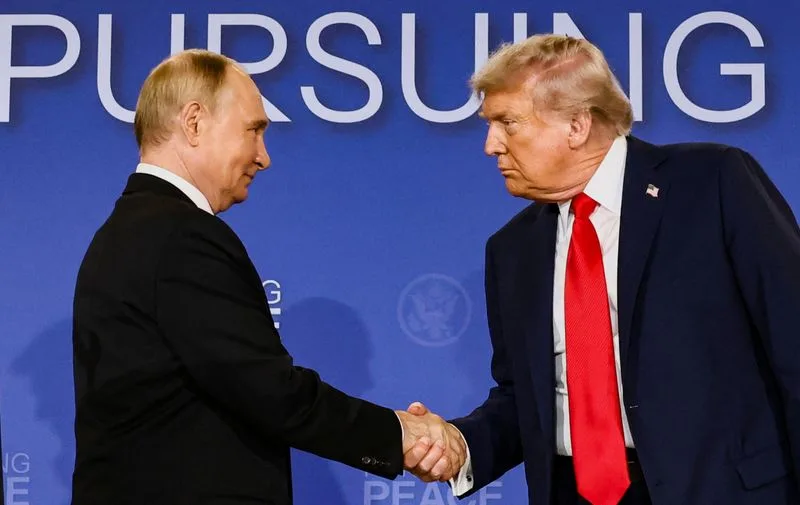
One phone call. Three wars. And oil at the center of it all.
U.S. Weighs Easing Russian Oil Sanctions as Leaders Discuss Iran Conflict and Ukraine Ceasefire.
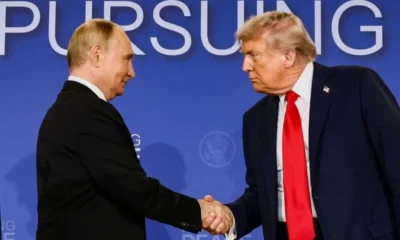
U.S. President Donald Trump and Russian President Vladimir Putin spoke by phone Monday about the war in Iran, prospects for peace in Ukraine and the growing strain on global energy markets, as Washington considers easing sanctions on Russian oil to stabilize prices.
The call — their first publicly confirmed conversation this year — came amid sharp volatility in oil markets triggered by the U.S.-Israeli assault on Iran and Tehran’s threats to disrupt shipping through the Strait of Hormuz, a chokepoint that carries roughly 20 percent of global crude supplies.
Speaking at his golf club in Florida, Trump described the conversation as “very good,” saying Putin expressed interest in helping reduce tensions in the Middle East. “I said you could be more helpful by getting the Ukraine-Russia war over with,” Trump told reporters, signaling that ending the Ukraine conflict remains a U.S. priority.
Earlier Monday, Putin warned that the Iran conflict risked triggering a full-scale global energy crisis. He cautioned that oil production dependent on transit through the Strait of Hormuz could grind to a halt if fighting escalates further. Russia, the world’s second-largest oil exporter, is positioned to benefit from any prolonged disruption.
Against that backdrop, the Trump administration is weighing options to ease certain oil-related sanctions on Russia, according to sources familiar with internal discussions. The aim would be to increase global supply and cool prices that have surged since the outbreak of the Iran war. Any move could include targeted exemptions for countries such as India, which rely heavily on discounted Russian crude.
Trump confirmed that his administration was reviewing “certain oil-related sanctions” to help bring prices down but did not specify which countries would benefit.
The potential shift presents a delicate balancing act. Loosening restrictions could help stabilize markets and lower fuel costs, but it risks undermining efforts to restrict Moscow’s revenue stream as the war in Ukraine drags on.
Putin, meanwhile, reiterated that Russia remains open to long-term energy cooperation with Europe if political conditions allow — a signal that Moscow sees opportunity in the current turmoil.
The call underscores a widening geopolitical realignment driven by energy. As conflict in the Middle East collides with unresolved fighting in Ukraine, oil flows — and the leverage they create — are once again shaping diplomacy at the highest level.

President Claims Tehran’s Military Is “Gone” While Threatening Massive Retaliation Over Strait of Hormuz.
“Very soon,” Trump says. The Pentagon says, “We’ve only just begun.” So which is it?
U.S. President Donald Trump said Monday that the war with Iran could end “very soon,” projecting confidence that Tehran’s military capacity has been largely destroyed. Yet within hours, his administration delivered mixed signals, hinting at deeper strikes and warning of overwhelming retaliation if Iran disrupts global oil flows.
“I think soon. Very soon,” Trump told reporters at his Doral National golf club in Florida when asked whether the conflict could end in days or weeks. In a separate interview with CBS News, he said the U.S.-Israeli assault was “very complete,” adding that Iran had “nothing left in a military sense.”
Markets briefly rallied on the remarks, with oil prices easing amid speculation that the confrontation might be winding down.
But Trump also spoke of “ultimate victory” over Iran’s clerical establishment and confirmed that the United States was holding back some “most important” targets — including parts of Iran’s electrical grid — for potential future strikes.
“If Iran does anything to stop oil through the Strait of Hormuz, they’ll get hit at a much, much harder level,” he warned, later writing that Tehran would be struck “TWENTY TIMES HARDER” if it disrupted shipping.
Iran’s Islamic Revolutionary Guard Corps (IRGC) responded defiantly, saying it would “determine the end of the war” and threatening to halt regional oil exports if U.S. and Israeli attacks continued. The Strait of Hormuz carries roughly a fifth of the world’s oil supply, making it one of the most sensitive chokepoints in global trade.
The rhetoric reflects a widening gap between declarations of victory and preparations for escalation. Just days ago, Trump demanded Iran’s “unconditional surrender.” Meanwhile, the Pentagon posted that the United States had “only just begun to fight.”
Complicating matters further, Tehran’s leadership has shifted following the killing of Supreme Leader Ali Khamenei, with his son Mojtaba Khamenei now installed at the helm. Trump called the appointment “not good,” but stopped short of indicating whether the new leader was a direct target.
For now, the message from Washington remains fluid: the war is nearly over — unless it isn’t. Whether this is strategic ambiguity or policy uncertainty may determine how quickly the conflict truly ends.
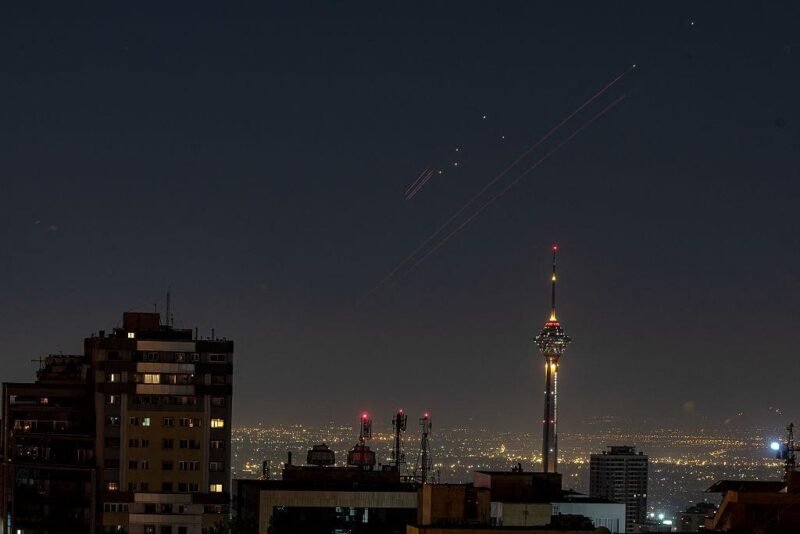
After a Week of War, Tehran’s Arsenal Appears Crippled — but the Regime Remains Standing.
Iran’s missiles shook the region. Now its military machine may never be the same.
Only a week into the war, the imbalance in military power is already reshaping the strategic map of the Middle East. Iran’s long-built arsenal — once presented as an existential threat to its neighbors — appears severely degraded, even as the regime in Tehran remains intact.
Military assessments circulating in regional capitals suggest that much of Iran’s offensive infrastructure — missile depots, drone facilities, command centers and logistics networks — has been significantly damaged. While Tehran continues to project defiance, the scale and speed of the strikes have exposed the vulnerability of a system that spent decades building deterrence through volume and reach.
The conflict began on February 28, when U.S. and Israeli forces launched coordinated attacks that killed Supreme Leader Ali Khamenei and targeted key military assets. Iran responded with missile and drone barrages across the Gulf, striking more than ten countries. Though officials in Tehran framed the attacks as directed at military targets, several civilian sites — airports, ports and residential areas — were also hit.
For years, Iran’s strategy was clear: accumulate enough destructive capacity to deter intervention and dominate regional calculations, potentially under the shield of a future nuclear deterrent. That calculus now appears disrupted. Analysts increasingly describe the dismantling of Iran’s “weapons empire” as a strategic turning point — one that could neutralize its ability to project overwhelming force for years.
Yet history offers caution. After Iraq’s defeat in Kuwait in 1991, Saddam Hussein’s regime survived another 12 years despite military devastation and sanctions — a scenario often recalled as the “Safwan tent” precedent. A weakened but intact regime can endure, rebuild and recalibrate.
There are few signs that Iran’s governing structure is collapsing from within. The Islamic Revolutionary Guard Corps, or IRGC, remains cohesive. No large-scale defections have emerged. No unified opposition force has demonstrated the capacity to replace the system. While some speculate about transformation from within, meaningful change would likely require fractures inside the security establishment — and those are not yet visible.
A full-scale ground invasion to impose regime change, as occurred in Iraq in 2003, appears unlikely. The political appetite and military resources required would be enormous. That leaves Washington facing a narrower set of options: accept a weakened but functioning system, or attempt to shape whatever leadership emerges from within it.
If current trends continue, Iran’s capacity to threaten its neighbors with overwhelming military force may be sharply reduced by the war’s end. Whether that ushers in a more restrained Iran — or simply a wounded power waiting to rebuild — will define the next chapter.
The arsenal may be collapsing. The regime, for now, is not.
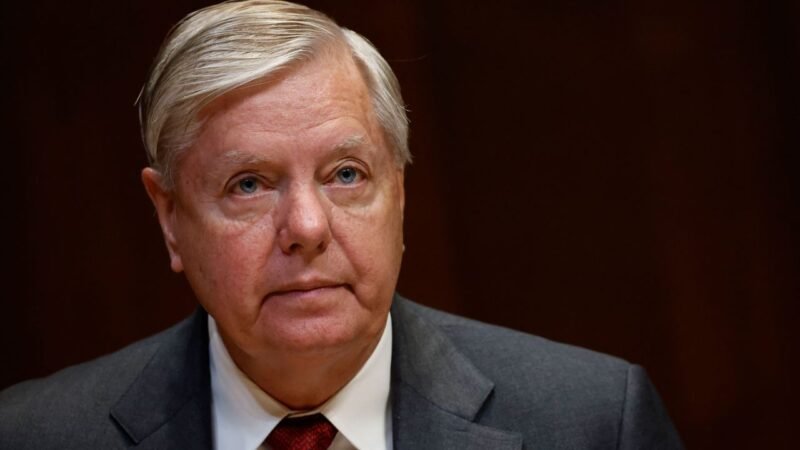
Sen. Lindsey Graham Says Regime Change in Tehran Would Reshape Middle East — and Unlock Oil Wealth.
“Good investment.” “Tonne of money.” Is this war about security — or something bigger?
Sen. Lindsey Graham, one of Congress’s most hawkish voices on Iran, said Sunday that removing Tehran’s leadership would not only transform the Middle East but also prove financially beneficial for the United States.
“When this regime goes down, we are going to have a new Middle East, and we are going [to] make a tonne of money,” the South Carolina Republican said in an interview on Fox News, signaling strong support for the ongoing U.S.-Israeli campaign against Iran.
Graham suggested that partnerships with oil-rich states such as Iran and Venezuela could shift global energy dynamics. “Venezuela and Iran have 31 percent of the world’s oil reserves,” he said. “This is China’s nightmare. This is a good investment.”
His remarks came as the conflict, triggered by U.S.-Israeli strikes on February 28, entered a new phase marked by escalating Iranian missile and drone attacks across the Gulf.
Iran swiftly rejected the characterization. Foreign Ministry spokesman Esmaeil Baghaei accused Washington of seeking to partition the country and seize its energy resources. “They aim at partitioning our country to take illegal possession of our oil riches,” he said.
Graham predicted further escalation, warning that the United States would “blow the hell out of these people” and ensure that “nobody will threaten” shipping in the Strait of Hormuz again. He also called on Gulf states, including Saudi Arabia and the United Arab Emirates, to join the fight more directly.
The senator’s comments underscore the ideological divide surrounding the war. Supporters argue that dismantling Iran’s missile and nuclear infrastructure removes a long-standing threat. Critics contend that regime change risks repeating past interventions that destabilized Iraq and Libya.
Graham has supported nearly every major U.S. military campaign in the Middle East over the past two decades, including the 2003 invasion of Iraq. He has also made multiple trips to Israel in recent months, meeting with officials including Prime Minister Benjamin Netanyahu, according to U.S. media reports.
In a remark that widened the geopolitical lens, Graham hinted that Cuba could be next on Washington’s agenda. “Free Cuba,” he said, suggesting that U.S. foreign policy was entering a more aggressive phase.
As oil prices surge and regional tensions mount, Graham’s framing of the war as both strategic necessity and economic opportunity is likely to fuel further debate — at home and abroad — about the true objectives of America’s expanding conflict.
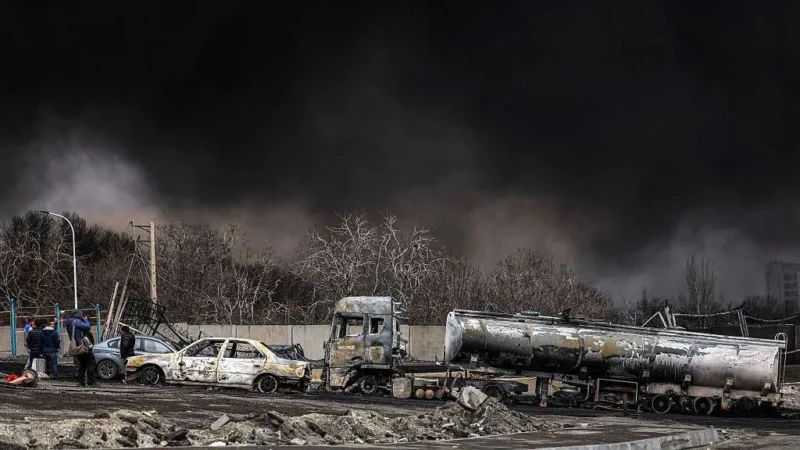
Iranians Describe Smoke-Choked Skies, Toxic Fears and Scarcity After Strikes Hit Capital’s Fuel Infrastructure.
When the sun disappears at noon and even the birds vanish, a city knows something has changed.
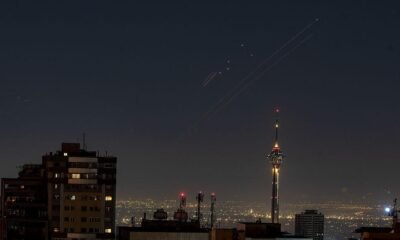
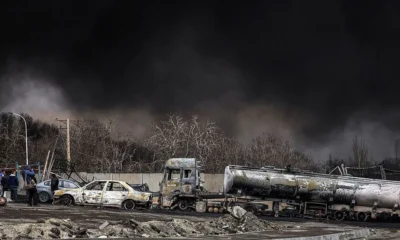
Tehran woke Sunday to a skyline swallowed by smoke after overnight airstrikes ignited oil depots in and around the capital, residents said, describing scenes that felt “apocalyptic” as soot blanketed streets and fears mounted over toxic rain, polluted water and dwindling supplies.
At least four oil depots and a petroleum logistics site were struck, according to local authorities, who reported six people killed and 20 wounded at one location. Videos circulating online showed towering flames piercing the night sky and thick plumes still rising hours later.
By morning, rain fell through the smoke-filled air. Officials warned residents about possible acid rain and advised them to stay indoors. The Red Crescent cautioned that exposure to toxic chemicals could irritate skin and lungs, urging people to avoid turning on air conditioners or venturing outside immediately after rainfall.
For many, staying inside was a luxury they could not afford.
“The situation is so frightening it’s hard to describe,” said Negin, an activist in the central-eastern part of the city who spoke under a pseudonym. “Smoke has covered the entire city. I have severe shortness of breath and burning in my eyes and throat, and many others feel the same.”
She said masks and inhalers were already in short supply. Prices were climbing. Fuel was being rationed to a few liters per vehicle in some areas. “This is truly a crime against humanity,” she said, arguing that civilians were paying the price for a conflict beyond their control.
Medical experts warned that toxic gases and fine particulate matter can aggravate asthma, heart disease and other chronic conditions. Residents described eye irritation, persistent coughing and a metallic smell lingering in the air.
Mehdi, a 42-year-old restaurant owner in western Tehran, compared the atmosphere to the early days of the pandemic. “There’s soot everywhere,” he said. “We’re afraid to even clean the windows. My eyes are burning.”
He said he would close his restaurant until he was certain water supplies were safe. Others tried to flee the city, only to encounter long lines at gas stations and highways clogged with cars.
One resident, Mehnaz, said the blaze at the Shahr-e Rey depot turned night into day — and day into darkness. “In the night it looked like day,” she said. “In the day, it was so dark, it looked like a new moon night. So dark, just like our futures.”
As Tehran’s 10 million residents assess the damage, many say the greatest fear is not only what burned — but what lingers in the air, the water and the fragile sense of normalcy that once defined their city.
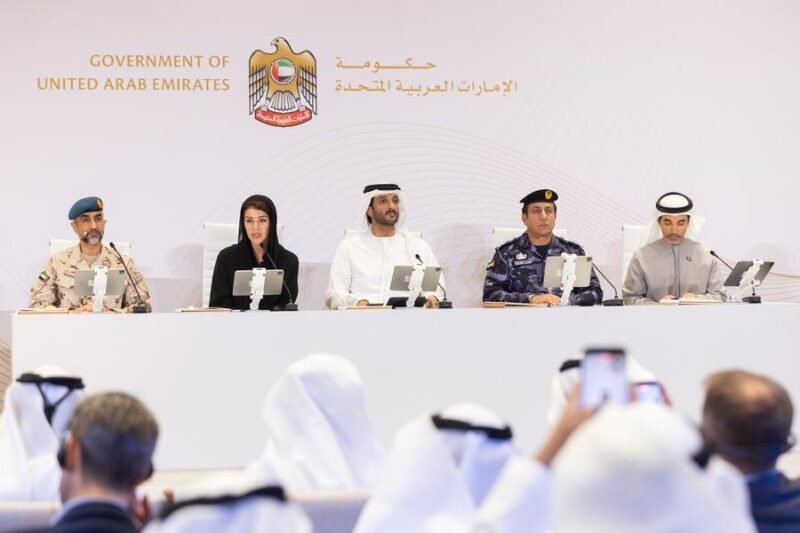
From neutrality to “a time of war” — the Gulf’s balancing act is collapsing.
Abu Dhabi Says It Is Responding to “Brutal and Unjustified Aggression” After More Than 1,400 Iranian Missiles and Drones
The United Arab Emirates said Sunday it is acting in self-defense against what it called “brutal and unjustified aggression” by Iran, as missile and drone attacks continued across the Gulf for a second consecutive week.
In a statement, the UAE’s foreign ministry said Iran had launched more than 1,400 ballistic missiles and drones targeting infrastructure and civilian sites in the region, causing casualties.
“The United Arab Emirates affirms that it is acting in self-defense,” the ministry said, adding that the country “does not seek to be drawn into any conflicts or escalation” but reserves the right to protect its sovereignty and citizens under international law and the UN Charter.
The war began on February 28 when the United States and Israel launched coordinated strikes on Iran, killing Supreme Leader Ali Khamenei and triggering a regional conflict. Tehran responded with missile and drone barrages against Israel and U.S. interests — and, increasingly, against Gulf states that insist they are not participants in the war.
Fresh attacks were reported Sunday in Saudi Arabia, Qatar and Kuwait, while explosions had rocked Dubai and Bahrain’s capital, Manama, a day earlier.
UAE President Mohamed bin Zayed Al Nahyan said Saturday that the Emirates were in “a time of war” but would “emerge stronger.”
Dubai authorities confirmed that a Pakistani national was killed after debris from an aerial interception struck a vehicle.
Iran’s President Masoud Pezeshkian had earlier apologized to Gulf countries, suggesting they would no longer be targeted unless their territory was used to strike Iran. Hours later, Iran’s judiciary chief contradicted that message, saying strikes would continue against Gulf sites “at the disposal of the enemy.”
Pezeshkian later said his remarks had been misinterpreted, insisting Iran sought good relations with neighbors but would retaliate against aggression.
For Gulf states that have long sought to remain outside direct confrontation, the conflict is narrowing their options. With air defenses active and civilian casualties mounting, the UAE’s declaration underscores a shift from cautious neutrality to open defensive posture.
The question now is whether that posture deters further escalation — or draws the region deeper into war.

The Island That Could Break Tehran

EU Rift Erupts Over Iran War

Israel: No “Endless War” With Iran


-

 Somaliland2 months ago
F-35s Over Hargeisa: The Night Somaliland’s Sovereignty Went Supersonic
-

 Somalia2 months ago
Aid Destroyed, Trust Shattered: Somalia Loses U.S. Support for Good
-
 Terrorism2 months ago
Foreign ISIS Pipeline Exposed: Puntland Captures Dozens of Non-Somali Fighters
-
 Terrorism1 month ago
America Pulls Back From Somalia but Doubles Down Next Door
-

 Somaliland2 months ago
Somaliland at Davos: The Moment Somaliland Entered the World’s Inner Circle
-

 Opinion2 months ago
Turkey’s Selective Morality: From the Ruins of Gaza to the Red Sea
-
 Middle East2 months ago
US War Plans Against Iran Enter Advanced Stage
-
 Diplomacy2 months ago
Ethiopia–Israel Axis Strengthens as Regional Stakes Rise