Top stories
A Nobel for a Swag Bag: Trump Keeps Venezuela’s Opposition Waiting
Venezuela’s María Corina Machado Hands Trump Nobel Prize but Leaves Without US Backing.
María Corina Machado arrived at the White House carrying what few world leaders possess and Donald Trump openly admires: a Nobel Peace Prize. She left with a Trump-branded swag bag — and no clear political endorsement.
The symbolism was striking. Machado, Venezuela’s most prominent opposition figure and a Nobel laureate for her democracy campaign, presented her medal as a personal gesture of gratitude, hoping to secure Washington’s backing for a post-Maduro transition. Trump gladly accepted the optics, praising the move as a “wonderful gesture of mutual respect.” But behind the smiles and photographs, the strategic message was far colder.
The Trump administration made clear that nothing substantive had changed. Despite years of US rhetoric backing Venezuelan opposition forces, Trump has now placed his weight behind Delcy Rodríguez — Maduro’s former vice president — as acting leader, citing stability and governability. For Machado, that decision remains the immovable obstacle.
The contrast could not be sharper. Machado speaks the language of democratic renewal, human rights and free elections. Trump’s team speaks the language of control, predictability and leverage. In that equation, moral capital alone is not enough.
Even the Nobel Committee quietly stepped in to underline reality: the medal can change hands, but the title cannot. A subtle reminder that symbolism does not rewrite power structures.
Machado publicly framed the meeting as “historic” and “extraordinary,” emphasizing shared values and the need to rebuild Venezuelan institutions. Yet the White House press secretary was blunt: Trump’s assessment of Machado’s political viability “has not changed.”
What this episode reveals is a deeper truth about Trump’s foreign policy style. He is willing to accept symbolic gestures, personal tributes and global praise — but he trades only in outcomes he can control. In his view, Rodríguez offers continuity. Machado offers uncertainty.
For Venezuela’s democratic movement, the moment was sobering. The photo-op generated headlines, but the strategy did not shift. A Nobel Prize proved powerful enough to flatter a president — but not powerful enough to move US policy.
In Washington’s calculation, legitimacy matters less than manageability. And for now, Machado remains on the outside, holding moral authority — while the White House bets on power it believes it can shape.
Top stories
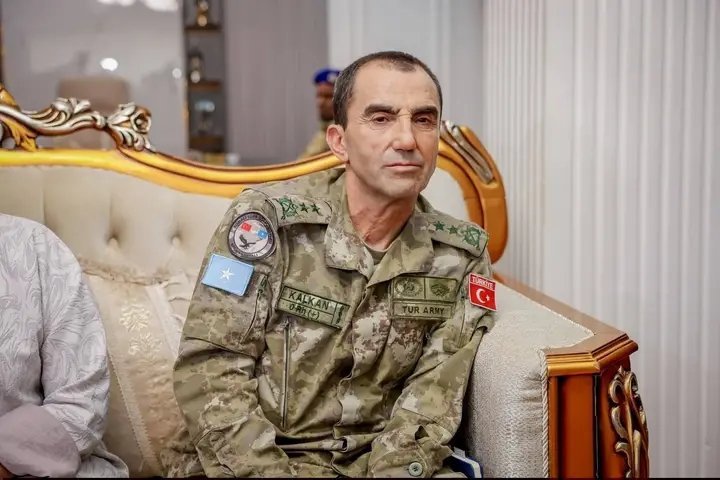
U.S. Appoints Justin Davis as Acting Head of Embassy in Somalia
Washington Tightens Grip on Mogadishu: Veteran Diplomat Takes Charge at Critical Moment.
Washington has quietly but deliberately reshuffled its top diplomatic leadership in Mogadishu, appointing veteran diplomat Justin Davis as chargé d’affaires ad interim at one of America’s most sensitive foreign missions. The move places Davis at the helm of U.S. policy execution in Somalia at a moment of political fragility, regional realignment, and growing uncertainty across the Horn of Africa.
Officially framed as a continuity measure, the appointment comes as Somalia heads toward contentious elections, faces deepening internal divisions, and reacts defensively to Israel’s recognition of Somaliland. In practice, naming a seasoned career diplomat rather than rushing a high-profile ambassadorial pick suggests caution, control, and a desire to manage risk rather than reshape strategy.
Davis is no newcomer. With nearly two decades of experience across volatile regions and already serving as deputy chief of mission, he represents institutional memory and operational discipline. As chargé d’affaires, he now becomes Washington’s highest-ranking representative on the ground, overseeing security cooperation, counterterrorism coordination against al-Shabab, and political engagement with a federal system under strain.
The timing matters. While the Trump administration has publicly rejected Israel’s recognition of Somaliland, the U.S. abstention at the UN Security Council revealed internal balancing — avoiding open confrontation while keeping diplomatic maneuvering space. Davis steps in as that balancing act grows more complex, especially as Mogadishu’s rhetoric hardens and Somaliland consolidates its new diplomatic reality.
This appointment signals that the U.S. is not disengaging from Somalia — but neither is it escalating. Instead, Washington appears to be reinforcing day-to-day control, prioritizing stability, counterterrorism, and managed engagement over bold political bets.
In the Horn of Africa’s current climate, personnel choices are policy signals. By elevating a steady hand rather than a political heavyweight, Washington is choosing containment over transformation — at least for now.
Top stories
Inside Trump’s Plan to Invoke Military Rule in Minneapolis
The streets of Minneapolis have become the front line of a high-stakes constitutional showdown as President Trump threatens to invoke the Insurrection Act, a move that would effectively place the Minnesota state capital under martial law.
After a night of escalating violence that saw federal vehicles torched and properties looted, the President took to Truth Social to issue a chilling ultimatum: if state officials fail to suppress what he labeled “professional rioters and insurgents,” the United States military will do it for them. The threat follows a chaotic incident on Wednesday in the Hawthorne neighborhood, where a federal trooper opened fire during a confrontation with three Venezuelan nationals.
According to the Department of Homeland Security, the violence was sparked by a car chase involving Julio Cesar Sosa-Celis, a Venezuelan national with a prior conviction.
The agency reports that after the chase, Sosa-Celis and two other men—identified as Alfredo Alejandro Ajorna and Gabriel Alejandro Hernandez-Ledezma—ambushed the officer with a snowplow and a broom. In what Homeland Security Secretary Kristi Noem described as an “attempted assassination,” the trooper fired in self-defense, wounding Sosa-Celis. The fallout was instantaneous.
Protesters clashed with police late into the night, pelting officers with fireworks and ice, while the FBI has now issued a $100,000 reward for the recovery of government property stolen during the mayhem.
The tension in the city has been simmering since the fatal shooting of 37-year-old Renee Nicole Good by a federal trooper last week, but the introduction of the 1807 Insurrection Act has pushed the crisis into uncharted territory.
This 19th-century law grants the President the power to deploy federal troops domestically to enforce laws, bypassing local authorities entirely. Minnesota Representative Mahmoud Ahmed Noor warned that such a move would represent a complete overhaul of the American system, potentially allowing the military to operate under its own laws just as the country nears a critical election cycle. “It would have a huge impact,” Noor stated, “not just in the state, but across the entire country.”
With nearly 3,000 federal troops already stationed in Minnesota, the political divide has reached a breaking point. Governor Tim Walz, a Democrat, sent a direct appeal to the White House on Thursday to “turn the heat down,” while Minneapolis Mayor Jacob Frey—who has repeatedly demanded that ICE leave his city—described the current atmosphere as “not livable.” Despite these pleas, the administration remains undeterred.
After a federal judge denied Minnesota prosecutors a restraining order to suspend ICE operations, President Trump signaled that federal enforcement will only intensify, setting the stage for a historic confrontation between state sovereignty and federal military power.
Top stories
Trump Freezes U.S. Visas for Somalia in Sweeping Immigration Clampdown
U.S. Halts Immigration Visas for Somalia and Over 70 Countries Under New Trump “Public Charge” Policy.
The Trump administration has sharply escalated its immigration crackdown, ordering a pause on U.S. immigration visas for Somalia and more than 70 other countries in a move that signals a return to hardline “public charge” enforcement. The decision, announced quietly by the State Department on January 14, affects permanent immigration pathways and is set to take effect January 21.
While the administration has not published an official list, U.S. officials confirmed that Somalia is among the affected countries, alongside Haiti, Iran, Afghanistan, Ethiopia, Nigeria, Sudan, and others across Africa, the Middle East, the Caribbean, and parts of Asia and Europe. Temporary visas for tourists, athletes, and World Cup participants are not included.
At its core, the policy revives Trump’s first-term doctrine that immigrants must prove they will not rely on public assistance. Officials argue the pause is necessary to prevent what they describe as “abuse of public benefits” and to protect U.S. taxpayers, claiming stricter enforcement could save billions annually.
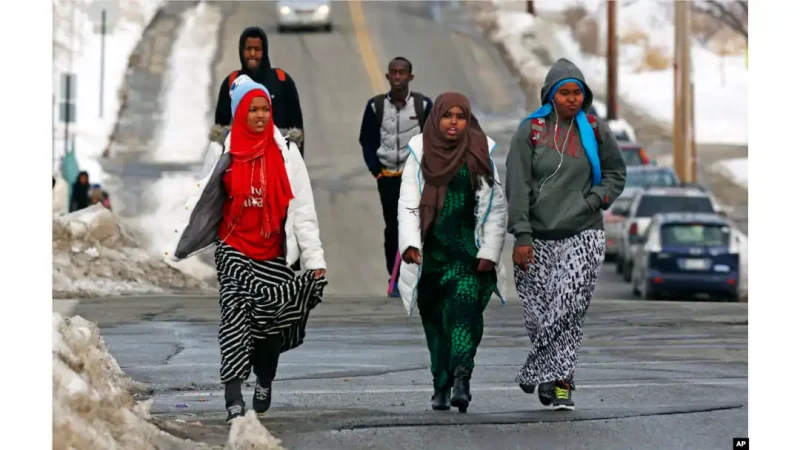
But the political context is impossible to ignore. The move comes amid heightened scrutiny of Somali-American communities, particularly in Minnesota, where Trump allies have amplified a years-old fraud case involving nutrition programs. Though prosecuted under the Biden administration, the case has been repurposed as a political weapon to justify broader immigration restrictions.
Under the new framework, visa officers will be granted wide discretion to assess applicants based on age, income, family benefit use, and even whether relatives in the U.S. receive assistance—raising alarms among immigrant-rights groups who warn of collateral damage to mixed-status families and U.S. citizen children.
For Somalia, the decision lands at a moment of already strained relations with Washington, following aid suspensions and the termination of Temporary Protected Status. Taken together, these steps reflect a broader recalibration of U.S. policy—one that prioritizes restriction over engagement and places vulnerable nations at the center of America’s domestic political battles.
The visa freeze is officially “temporary,” but its strategic message is clear: under Trump’s second term, access to the United States is no longer a humanitarian question—it is a financial and political test.
Top stories
France Plants Flag in Greenland as Trump Threatens Takeover
France to Open Greenland Consulate in Political Signal Amid Trump’s Threats to Seize Territory.
France is stepping directly into the Greenland showdown, opening a new diplomatic front as U.S. President Donald Trump renews threats to take control of the Arctic territory. French Foreign Minister Jean-Noël Barrot confirmed that Paris will officially open a consulate in Greenland on February 6, calling it a deliberate “political signal” at a moment of rising geopolitical tension.
While the decision was approved last summer during President Emmanuel Macron’s visit to Greenland, its timing is unmistakable. Trump has repeatedly argued that U.S. control of Greenland is a national security necessity, citing Russian and Chinese activity in the Arctic — claims rejected by Denmark, Greenland, and now increasingly by Europe.
France’s move is designed to underline a core message: Greenland is not a bargaining chip. Barrot made that explicit, saying Greenland does not wish to be “owned, governed, or integrated into the United States,” and has chosen its future within Denmark, NATO, and the European Union framework.
The announcement comes as Danish and Greenlandic officials prepare to meet U.S. Vice President JD Vance in Washington, highlighting how the Arctic has become a frontline issue between Washington and its European allies. Rather than military escalation, Europe is responding with diplomatic presence — reinforcing sovereignty through institutions, not force.
Beyond symbolism, France signaled broader ambitions, including increased scientific and strategic engagement in the Arctic, where climate change is opening new shipping routes and intensifying global competition.
In effect, Paris is drawing a quiet but firm line: Greenland’s future will be shaped by its people and its European alliances — not by unilateral pressure from Washington.
Top stories
Republicans Threaten Clinton Contempt Vote
Epstein Fallout Hits Capitol: Republicans Say Bill and Hillary Clinton Risk Contempt of Congress Over Epstein Testimony Refusal.
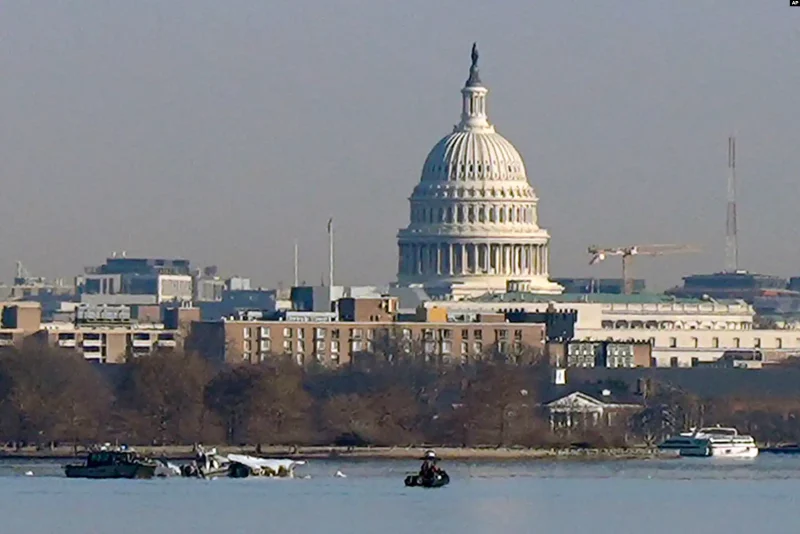
The Epstein scandal has re-entered Washington’s political bloodstream, this time dragging Congress, the Clintons, and the limits of oversight power into a fresh confrontation. House Republicans say former President Bill Clinton — and potentially former Secretary of State Hillary Clinton — could face contempt of Congress after refusing to comply with subpoenas tied to the Jeffrey Epstein investigation.
The Republican-led House Oversight Committee, chaired by Rep. James Comer, moved after Bill Clinton declined to testify at a scheduled deposition. Hillary Clinton was also subpoenaed. Republicans insist the issue is not criminal guilt but transparency, pointing to newly released Justice Department materials that include photographs of Epstein traveling with Clinton.
The Clintons reject the premise entirely. In a letter to the committee, they argued the subpoenas are legally invalid and politically motivated, noting they already provided written responses. Their framing is clear: this is not oversight — it is public humiliation dressed up as accountability.
Democrats, meanwhile, accuse Republicans of selective enforcement. While they approved the subpoena list as part of a broader process, they note that most other figures linked to Epstein have not been compelled to testify. That disparity undercuts claims of a neutral fact-finding mission.
Legal experts warn the standoff could have consequences beyond partisan theater. A successful contempt vote — followed by prosecution — would test unsettled legal ground, potentially reshaping how far Congress can go when subpoenas lack a clear legislative purpose. Ironically, an aggressive push could weaken congressional oversight at a moment when lawmakers already complain about executive overreach.
Hovering over the entire dispute is a larger unanswered question: the Epstein files themselves. Millions of pages remain unreleased despite a congressional deadline, fueling frustration on both sides of the aisle and reinforcing public suspicion that powerful figures remain shielded.
What looks like a Clinton confrontation is, at its core, a struggle over credibility — of Congress, of justice, and of whether the Epstein case will ever be fully exposed or remain a permanent political weapon.
Top stories
Russia Rejects Trump’s Claims Over Venezuela Oil
Russia has sharply rejected President Donald Trump’s assertion that the United States will control Venezuela’s vast oil reserves following the arrest of President Nicolás Maduro. Moscow insists that Russian energy assets in Venezuela are sovereign Russian property and will remain so, regardless of U.S. pressure or enforcement actions.
Russia’s state-owned Roszarubezhneft said all of its Venezuelan holdings belong to the Russian state and are protected under Venezuelan law, international law, and bilateral agreements. The company reaffirmed it would continue operating and honoring long-term commitments, signaling that Moscow has no intention of surrendering strategic energy ground in Latin America.
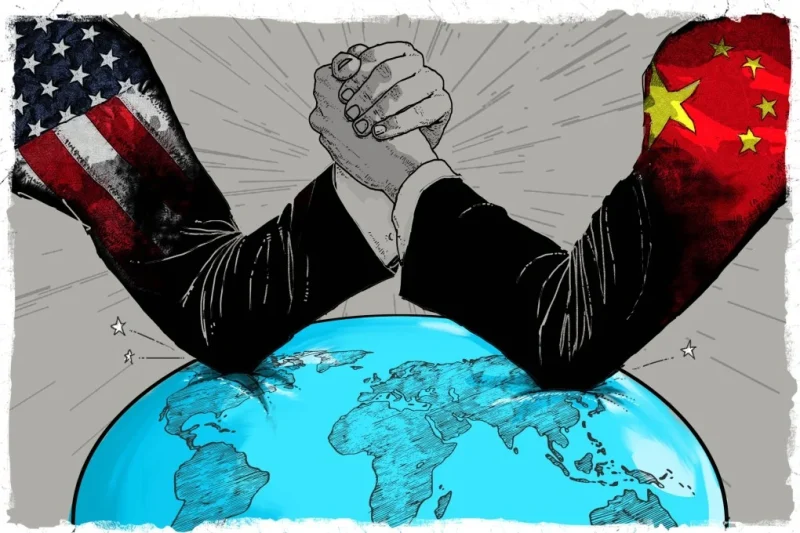
The dispute highlights a widening geopolitical clash. Trump has openly framed Venezuelan oil as a prize for U.S. energy companies, while Washington has escalated enforcement by seizing a Russian-flagged tanker linked to Venezuelan crude. Russia’s response frames these moves as illegal overreach and neo-colonial pressure.
Notably, President Vladimir Putin has remained publicly silent, leaving Russia’s foreign ministry and energy sector to carry the message. That restraint suggests Moscow is calculating its response carefully, wary of direct escalation while defending its economic interests.
At its core, this is not just about oil. It is about power, precedent, and control. Russia is signaling that while it may absorb diplomatic blows elsewhere, Venezuela remains a line it will not quietly abandon.
Top stories
US Homeland Security Terminates Somalia’s Temporary Protected Status
The Trump administration has delivered one of its clearest immigration signals yet: Somalia’s Temporary Protected Status (TPS) will officially end on March 17, 2026, closing a chapter that has allowed tens of thousands of Somali nationals to legally remain in the United States for decades.
Announcing the decision, Homeland Security Secretary Kristi Noem framed the move as both legal and political. Conditions in Somalia, she said, have “improved to the point” that they no longer meet the threshold required under US law. More pointedly, Noem argued that continuing to shelter Somali nationals under TPS is now “contrary to our national interests,” underscoring the administration’s “America First” posture.
The message is blunt: TPS was never meant to be permanent — and Washington is now enforcing that principle.
Legally, the administration is on firm procedural ground. US law requires DHS to reassess TPS designations before expiration, and Somalia’s current status was always set to sunset unless renewed. Politically, however, the decision lands amid heightened scrutiny of Somali communities in the US, intensified immigration enforcement in Minnesota, and strained US-Somalia relations following aid suspensions and fraud allegations.
The practical impact will be significant. Somali nationals without another legal pathway will be expected to depart voluntarily, with DHS promoting the CBP Home app as a structured exit route — complete with a paid plane ticket, a $1,000 departure bonus, and the promise of possible future legal entry. Critics are likely to see this as coercive; supporters will call it orderly enforcement.
What makes this decision more consequential is its timing. Somalia remains deeply unstable, with Al-Shabaab still active, millions facing food insecurity, and governance fragile. Ending TPS signals that Washington’s patience — and tolerance for prolonged humanitarian exceptions — is wearing thin.
Strategically, the move also reinforces a broader recalibration of US policy toward Africa: less open-ended assistance, tighter immigration controls, and a sharper link between domestic enforcement and foreign policy judgments.
For Somali-Americans, the next year will be decisive. For Mogadishu, the message is uncomfortable but clear: Washington no longer views Somalia as meeting the threshold for exceptional protection. And for the wider immigration debate, this is a precedent-setting reminder that “temporary” protections now come with an expiration date the US is prepared to enforce.
Top stories
China Pressures European States to Block Taiwanese Officials Using Visa
China has quietly escalated its campaign to isolate Taiwan — this time by pressuring European governments to deny entry to Taiwanese politicians, or risk “crossing China’s red lines.” Behind closed doors, Chinese diplomats have delivered pointed legal warnings to multiple European capitals, arguing that EU border rules obligate them to block Taiwanese officials from visiting Europe.
The move reflects a sharper, more coercive phase in Beijing’s diplomacy. By invoking the Schengen Borders Code — which allows entry denial if a visitor is deemed a threat to a country’s international relations — China is advancing an aggressive interpretation: that any engagement with Taiwan automatically threatens EU–China relations. In effect, Beijing is asking Europe to internalize China’s political sensitivities into its own visa enforcement.
European diplomats familiar with the demarches describe the legal reasoning as strained and unconvincing, but the tone as unmistakably intimidating — especially for smaller states more dependent on Chinese trade and investment. The message is less about law and more about leverage: accommodate Taiwan, and relations with Beijing may suffer.
This pressure campaign follows a series of high-profile visits by Taiwanese leaders, including the vice president and foreign minister, to EU member states and even the European Parliament. Beijing’s reaction signals that parliamentary diplomacy — once tolerated — is now being treated as a strategic provocation.
The broader pattern is clear. As China ramps up military pressure around Taiwan, it is simultaneously tightening diplomatic screws abroad, attempting to shrink Taipei’s international space without firing a shot. Europe, which officially maintains a “one China” policy but robust unofficial ties with Taiwan, is being tested: comply quietly, or assert political autonomy.
So far, responses suggest resistance. Several governments, including the UK, have stressed that visa decisions are governed solely by domestic law. Taiwan, meanwhile, has rejected Beijing’s claims outright, arguing that China’s coercion — not Taiwan’s diplomacy — is what truly destabilizes Europe’s international relations.
At its core, this episode exposes a growing fault line. Beijing is no longer content with managing Taiwan bilaterally; it is now attempting to discipline third parties. Whether Europe accepts that logic will shape not just EU–China relations, but the future balance between rules-based diplomacy and power-based pressure.
-
Analysis10 months agoSaudi Arabia’s Billion-Dollar Bid for Eritrea’s Assab Port
-
Opinion17 years agoSomaliland Needs a Paradigm Change: Now or Never!
-
Interagency Assessment1 month agoTOP SECRET SHIFT: U.S. MILITARY ORDERED INTO SOMALILAND BY LAW
-
Somaliland3 months agoSomaliland Recognition: US, UK, Israel, and Gulf Bloc Poised for Historic Shift
-
EDITORIAL1 year agoDr. Edna Adan Champions the Evolving Partnership Between Somaliland and Ethiopia
-
ASSESSMENTS10 months agoOperation Geel Exposes the Truth: International Community’s Reluctance to Embrace Somaliland as a Strategic Ally
-
Top stories2 years ago
Ireland, Norway and Spain to recognize Palestinian state
-
Russia-Ukraine War5 months agoFibre-Optic Drones Shift Ukraine’s Drone Warfare