Connect with us

US-Israel war on Iran

Trump Pressures Europe as Hormuz Crisis Tests NATO

Published

on

U.S. Urges Allies to Protect Strait of Hormuz Amid Energy Shock, Warns Inaction Could Harm NATO’s Future.

If the Strait of Hormuz is Europe’s energy lifeline, why isn’t Europe sending ships?

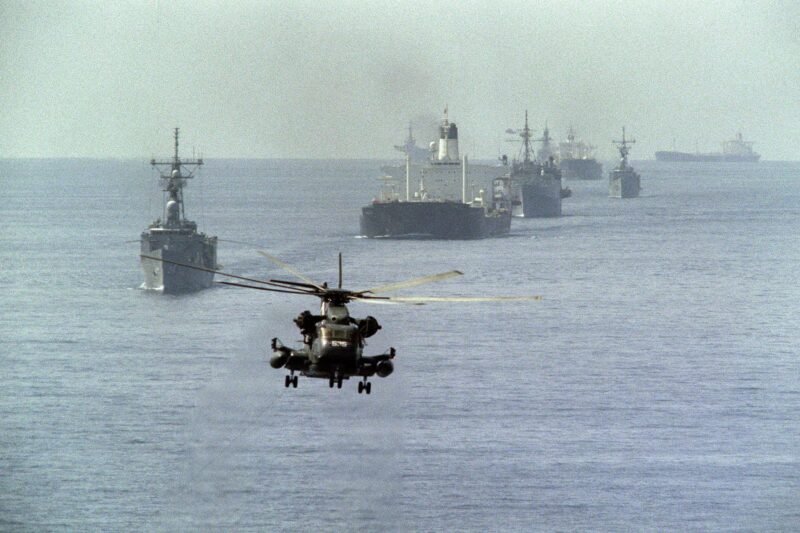
President Donald Trump has escalated pressure on European and Asian allies to help secure the Strait of Hormuz, warning that failure to assist could have consequences for NATO’s future.

Tehran’s effective closure of the strait — a passageway for roughly one-fifth of global oil supplies — has triggered the largest energy disruption in decades. Oil prices have surged past $100 a barrel, sending shockwaves through global markets and raising fears of prolonged economic strain.

Trump argues that countries most dependent on Gulf energy should shoulder the burden of protecting it. “It’s only appropriate,” he said, suggesting that allies benefiting from the waterway must help defend it. In comments to the Financial Times, he warned that a refusal to participate would be “very bad” for NATO — an unusually direct linkage between energy security and alliance solidarity.

So far, the response has been restrained.

Japan, which imports the vast majority of its oil from the Middle East, has declined to dispatch naval vessels. Prime Minister Sanae Takaichi instead authorized the release of strategic reserves — the first such move since Russia’s invasion of Ukraine in 2022. Tokyo’s hesitation reflects both constitutional constraints and domestic sensitivities about overseas deployments.

Australia has similarly ruled out sending ships. France and the United Kingdom are exploring limited options — such as aerial mine-clearing support — but remain wary of escalating the conflict.

European Union foreign ministers are discussing reinforcement of an existing naval mission, though no consensus has emerged on expanding operations into the strait itself.

The reluctance underscores a widening strategic gap. For Washington, reopening Hormuz is urgent not only economically but politically. Rising energy prices are fueling domestic pressure on the administration. For European capitals, however, direct involvement risks entanglement in a conflict they neither initiated nor fully control.

Trump has also pressed China, which imports significant volumes of Gulf oil, to contribute. He has hinted that cooperation over Hormuz could shape his willingness to proceed with a summit with Xi Jinping. Beijing, meanwhile, is reportedly engaging Tehran diplomatically to ensure safe passage for shipments.

The broader question is whether alliance dynamics can withstand the strain. NATO was built around collective defense against clear military threats. The Hormuz crisis blurs those lines — part naval mission, part economic stabilization effort, part geopolitical contest.

If allies continue to hesitate, Washington faces a difficult choice: escalate alone, or recalibrate expectations of burden-sharing. Either path carries risks.

For now, the strait remains constrained, oil prices elevated, and the alliance under pressure. In a conflict already reshaping the Middle East, it may also test the limits of Western unity.


Analysis

If Iran’s Missiles Are “Destroyed,” Why Are They Still Flying?

Published

on

Despite Heavy U.S.–Israeli Strikes, Tehran Retains Enough Launch Capacity to Sustain a War of Attrition.

Air dominance doesn’t mean silence. Iran’s reduced barrages still carry strategic weight.

The White House has declared sweeping success. “Complete and total aerial dominance,” it said, claiming Iran’s ballistic missile capability is “functionally destroyed.” President Donald Trump added that drone manufacturing capacity has been decimated.

Yet missiles continue to fly.

In recent days, Qatar, Saudi Arabia, the United Arab Emirates and Israel have all reported interceptions. A missile strike in Abu Dhabi killed one person. Sirens have echoed across central Israel. Drone-related fires have disrupted areas near Dubai and Fujairah. If Iran’s launch systems are crippled, how is it still firing?

The answer lies in scale, strategy and survivability.

There is little doubt that Iran’s capabilities have been sharply reduced. U.S. officials say missile launches are down roughly 90 percent from the first days of the war, with drone attacks reduced by more than 80 percent. Israeli assessments indicate hundreds of launchers have been destroyed — possibly 290 out of an estimated 410 to 440.

But “functionally destroyed” does not mean eliminated.

Iran entered the war with one of the region’s largest missile inventories, estimated in the thousands. More importantly, it invested heavily over the years in dispersal. Launchers were decentralized. Mobile systems were embedded in civilian or non-traditional locations. Hidden stockpiles were prepared long before the conflict escalated.

Without ground forces inside Iran, fully neutralizing those assets is extraordinarily difficult — even with air superiority.

What has changed is tempo. Instead of mass volleys, Tehran is firing sporadically — one or two missiles, a handful of drones. Militarily, such attacks may be limited. Strategically, they are potent.

Iran appears to be shifting from shock-and-awe retaliation to calibrated attrition. The objective is not overwhelming destruction but sustained pressure. Each launch forces costly intercepts, keeps air defenses on high alert and injects uncertainty into regional markets.

This is classic asymmetric warfare.

Iran’s relatively inexpensive drones, such as loitering munitions derived from the Shahed model, can be produced quickly and launched without sophisticated fixed infrastructure. Even if most are intercepted, the occasional breakthrough is enough to rattle public confidence. As security analysts often note, it takes only one successful strike to shift perceptions.

Tehran’s broader calculation may be economic rather than purely military. The conflict has already pushed oil prices above $100 per barrel. Shipping traffic through the Strait of Hormuz remains constrained, affecting roughly 20 percent of global energy flows. Insurance premiums are rising. Markets are volatile.

If the war becomes a contest of endurance — missile stockpiles versus interceptor inventories, economic resilience versus disruption — Iran may believe time is not entirely on Washington’s side.

The United States and Israel have degraded Iran’s capacity significantly. But degradation is not elimination. As long as Tehran can sustain a credible threat, even at reduced intensity, it retains leverage.

In modern warfare, silence is rarely absolute. The question is not whether Iran can fire as many missiles as before. It is whether firing fewer, more strategically, achieves its aims.

Continue Reading

Analysis

Iran’s Proxy Play Reaches the Atlantic

Published

on

From Lebanon to Yemen — and now the Sahara? Washington fears Tehran’s shadow network is moving west.

U.S. Lawmakers Move to Label Polisario a Terror Group Amid Claims of IRGC and Hezbollah Support in Western Sahara.

For years, analysts tracked Iran’s expanding arc of influence across the Middle East — from Hezbollah in Lebanon to the Houthis in Yemen. Now, U.S. lawmakers warn that Tehran’s shadow war may be stretching beyond the Levant and Gulf, toward North Africa’s Atlantic coast.

A legislative push in Congress, led by Ted Cruz, seeks to designate the Polisario Front as a foreign terrorist organization. Supporters argue that intelligence pointing to Iranian and Hezbollah involvement with the group has transformed a long-running territorial dispute in Western Sahara into a broader security concern.

The Polisario Front, which seeks independence for Western Sahara from Morocco, has historically framed itself as a nationalist movement with Marxist-Leninist roots.

But reports circulating in Western and regional security circles allege that elements of the Islamic Revolutionary Guard Corps and Hezbollah have provided training, drones, mortars and other advanced weaponry to Polisario fighters in camps near Tindouf, Algeria.

Morocco severed diplomatic ties with Tehran in 2018, citing what it described as Hezbollah-backed military training for Polisario cadres. Iran has denied destabilizing activities in North Africa, and Polisario officials reject accusations of foreign military alignment. Yet the claims have gained renewed traction amid broader tensions between Washington and Tehran.

The strategic implications, if substantiated, would be significant. Iran’s regional model has often relied on cultivating non-state armed groups capable of exerting pressure without direct state confrontation. Extending such a model into the Maghreb would mark a geographic expansion beyond its traditional Middle Eastern theaters.

Western Sahara itself sits near key maritime routes connecting the Atlantic and Mediterranean. Security analysts caution that militarization of the dispute could add volatility to an already fragile belt stretching from the Sahel to Libya.

The proposed U.S. legislation would require annual assessments of alleged military cooperation between Polisario, Iran and Hezbollah. Designation under existing counterterrorism authorities could trigger sanctions and financial restrictions aimed at curbing funding streams.

Yet the situation remains complex. Western Sahara’s status has been contested for decades, and regional rivalries — including tensions between Morocco and Algeria — shape the landscape. Labeling Polisario a terrorist organization could recalibrate diplomatic dynamics in North Africa as much as it constrains Tehran.

The broader question is whether this represents a durable strategic foothold for Iran or a limited convergence of interests in a localized conflict. What is clear is that the map of confrontation between Washington and Tehran no longer appears confined to the Gulf.

If the allegations prove accurate, the U.S.–Iran shadow war may be entering a new phase — one that reaches from the deserts of Western Sahara to the wider Atlantic horizon.

Continue Reading

US-Israel war on Iran

Starmer: Britain Won’t Be Pulled Into Gulf War

Published

on

UK Prime Minister Resists U.S. Pressure Over Strait of Hormuz While Unveiling Heating Oil Support for Households.

No wider war, but rising bills. Starmer says Britain will protect shipping — without escalating the conflict.

Prime Minister Keir Starmer has said the United Kingdom will not be drawn into a broader Middle East war, even as Washington presses allies to help secure the Strait of Hormuz and reopen global shipping routes disrupted by the Iran conflict.

Speaking at Downing Street, Starmer acknowledged that discussions with the United States are ongoing after President Donald Trump urged NATO allies to contribute naval forces. Trump has warned that failure to assist could carry consequences for the alliance’s future.

Starmer described the decision as “difficult,” confirming the UK is examining options that could include deploying ships or mine-hunting drones. But he drew a clear distinction between maritime security and direct military escalation.

“While taking the necessary action to defend ourselves and our allies, we will not be drawn into the wider war,” he said, emphasizing that Britain’s approach would remain grounded in national interest rather than pressure from abroad.

The remarks reflect unease within European capitals about the absence of a clear endgame from Washington. Starmer said a negotiated settlement must ultimately follow the current phase of hostilities, adding that his government’s decision not to participate in the initial U.S. offensive was based on principle and a “calm, level-headed assessment” of British interests.

At the same time, the prime minister acknowledged the domestic impact of the conflict. Oil prices have surged amid disruption in the Gulf, feeding into higher energy costs at home.

To cushion households that rely on heating oil, Starmer announced £53 million in targeted support. Lower-income families will receive assistance, and suppliers accused of price gouging could face legal action and tighter regulation.

“We cannot allow the war in the Gulf to turn into a windfall for Putin,” Starmer added, linking energy instability to broader geopolitical risks.

The government has not ruled out broader support if energy bills continue to rise after the price cap expires this summer, though Starmer cautioned that future oil prices remain uncertain. For now, he framed de-escalation as the most effective form of economic relief.

The UK’s position highlights a delicate balance: safeguarding maritime trade without deepening military involvement. As global powers debate how to reopen the Strait of Hormuz, London is signaling that it will help manage the crisis — but on its own terms.

Continue Reading

US-Israel war on Iran

Abiy Calls for Fuel Discipline as Global Oil Shock Hits Ethiopia

Published

on

Ethiopian Prime Minister Urges Responsible Consumption as Middle East Crisis Disrupts Supply Chains.

When global oil trembles, import-dependent economies feel it first. Ethiopia is preparing for impact.

Prime Minister Abiy Ahmed has urged Ethiopians to use fuel responsibly as disruptions tied to the escalating Middle East crisis strain global oil supply and raise concerns over availability.

In a message shared on social media, Abiy warned that countries reliant on imported petroleum are already facing difficulties securing sufficient shipments.

Ethiopia, which depends heavily on foreign oil to power transport, agriculture and industry, is particularly exposed to fluctuations in international markets.

“Until the problem is resolved and we return to a normal oil supply system, we must use oil economically and prioritize basic needs,” the prime minister said.

His remarks reflect mounting anxiety among import-dependent economies as tensions in the Gulf disrupt shipping routes and push up global prices. Oil is traded on international markets, meaning even countries geographically distant from the conflict are affected almost immediately.

Abiy called on fuel distributors and service stations to act with responsibility, ensuring that available supplies are directed toward essential services. Hospitals, public transport, food distribution networks and key industries are expected to receive priority access if shortages intensify.

He also appealed directly to consumers, urging restraint in non-essential travel and discouraging unnecessary consumption during what he described as a period of uncertainty in global energy markets.

The warning signals a shift from market observation to domestic preparedness. For Ethiopia, rising fuel prices do not only affect motorists; they ripple across food supply chains, manufacturing costs and inflation trends.

Transport expenses influence the price of staple goods, while higher import bills place additional pressure on foreign currency reserves.

Abiy’s message stops short of announcing rationing measures, but it underscores the vulnerability of oil-importing nations during geopolitical crises.

By calling for conservation now, the government appears intent on preventing panic buying and maintaining supply discipline while international markets stabilize.

The coming weeks will test whether global tensions ease or deepen. For Ethiopia and similar economies, the strategy is clear: manage demand, protect essential services, and brace for continued volatility in energy markets shaped far beyond their borders.

Continue Reading

Analysis

Has Washington Lost Control of the Iran War?

Published

on

Air superiority wins battles. Control of oil routes can reshape wars.

Closure of the Strait of Hormuz and Resilient Iranian Leadership Raise Questions About Who Now Holds the Initiative.

In the opening days of the conflict with Iran, the advantage clearly belonged to Washington and Jerusalem. A surprise Israeli strike eliminated Supreme Leader Ali Khamenei, and U.S. and Israeli aircraft struck thousands of targets with little resistance. Tehran’s early missile barrages were largely intercepted. Casualties inside Israel remained limited compared with previous flare-ups.

Three weeks later, the picture looks more complicated.

Iran’s decision to close the Strait of Hormuz — through which roughly 20 percent of global oil supplies transit — has injected a new and destabilizing variable into the war. Energy prices have surged. Shipping traffic has slowed. Financial markets have grown jittery. What began as a largely conventional air campaign has evolved into an economic confrontation with global consequences.

Senior Iranian officials now project defiance. Mohsen Rezaee of the Revolutionary Guards declared that “the end of the war is in our hands,” calling for a U.S. withdrawal from the Gulf. Such rhetoric would have seemed improbable in the first days of bombardment, when Iran’s command structure appeared shaken.

The United States and Israel retain overwhelming conventional superiority. Daily strikes continue. Military infrastructure inside Iran has been degraded. Some analysts, such as Danny Orbach of the Hebrew University, argue that setting the agenda — choosing targets, dictating tempo — still constitutes holding the initiative. By that definition, Washington remains in control.

Others are less convinced.

Peter Neumann of King’s College London argues that Tehran has successfully shifted the battlefield from airspace to economics. Closing Hormuz was not simply retaliation; it was leverage. Protecting hundreds of commercial vessels in narrow waters would demand enormous resources and still offer no guarantee of safety. A single mine or missile could disrupt global supply chains.

President Donald Trump now faces mounting domestic pressure as fuel prices rise. Calls for allied navies to assist in reopening the strait have so far met hesitation. Escalatory options — from seizing Iran’s Kharg Island to striking oil facilities outright — carry their own risks, including prolonged instability.

Meanwhile, regime change in Tehran appears distant. Despite the killing of Khamenei, the leadership transition to Mojtaba Khamenei has not triggered mass uprisings. Analysts note that the security apparatus remains intact and dissent tightly suppressed.

Beyond Iran itself, the regional chessboard is fluid. Hezbollah has sustained rocket fire from Lebanon, prompting heavy Israeli retaliation and large-scale displacement. Iraqi militias and Yemen’s Houthis have been more restrained, at least for now. Each actor calculates survival differently.

Wars often hinge not only on battlefield metrics but on endurance and perception. Tactical dominance does not automatically translate into strategic victory. If Iran can sustain economic pressure while absorbing military blows, the calculus shifts.

The early momentum belonged to the U.S. and Israel. Whether it still does may depend less on airpower than on who can better withstand the consequences of escalation — and who ultimately decides that the costs have become too high.

Continue Reading

US-Israel war on Iran

Iran Denies Striking Saudi Oil as Gulf Tensions Mount

Published

on

Tehran Rejects Blame for Attacks on Ras Tanura and Shaybah, Calls for Regional Unity Amid Expanding War.

Tehran says it’s not targeting Saudi oil — but Gulf infrastructure keeps getting hit. Who’s really escalating?

Iran’s ambassador to Saudi Arabia has denied that Tehran is behind recent drone attacks on Saudi oil facilities, insisting that Iranian forces are targeting only U.S. and Israeli military assets during the ongoing conflict.

Alireza Enayati said that if Iran had carried out strikes on Saudi infrastructure, it would have publicly acknowledged responsibility. “If we were behind it, we would have announced it,” he was quoted as saying. He did not identify an alternative perpetrator.

The denial comes after Saudi Arabia’s Ras Tanura refinery temporarily halted operations following a drone incident that caused a small fire. Separate attempted attacks were reported at the Shaybah oilfield near the UAE border. Saudi authorities have not formally assigned blame.

The incidents add strain to a region already unsettled by weeks of confrontation between Iran, the United States and Israel. After Washington and Jerusalem launched strikes in late February, Tehran retaliated against military targets across several Gulf states, including Saudi Arabia, Qatar, Bahrain, Iraq and the United Arab Emirates.

Yet Enayati stressed that relations between Tehran and Riyadh remain “progressing naturally.” The two countries restored diplomatic ties in 2023 under a China-brokered agreement that ended years of hostility. He said he remains in direct contact with Saudi officials and reiterated that Saudi territory would not be used to launch attacks on Iran.

Iran’s foreign minister, Abbas Araghchi, echoed the ambassador’s position, denying that Iran targets civilian areas and proposing a joint investigative committee with neighboring states to determine responsibility for infrastructure strikes.

The broader Gulf landscape remains fragile. The United Arab Emirates — which normalized relations with Israel in 2020 — has absorbed repeated attacks on U.S. bases and energy sites. While Gulf governments have condemned Iranian missile and drone activity, regional sources describe growing frustration with Washington, arguing that they are bearing economic and security costs for a conflict not of their choosing.

Enayati framed the crisis as the product of “excessive reliance on external powers,” urging deeper cooperation among the Gulf Cooperation Council members, Iraq and Iran. The message underscores Tehran’s effort to prevent a unified regional front against it.

Analysts suggest Iran’s strategy has shifted from competing militarily to testing endurance. As Paul Musgrave of Georgetown University in Qatar observed, the contest may hinge less on firepower than on “who has the highest threshold for pain.”

For Gulf states, the question is equally stark: how to shield their economies and infrastructure while avoiding deeper entanglement in a widening war.

Continue Reading

Analysis

Oil Shock Could Cost Trump the White House

Published

on

Wars aren’t lost only on battlefields. They’re lost at the gas pump — and voters are watching.

Rising Energy Prices and Public Backlash Over Iran War Threaten to Undermine President’s Political Standing.

President Donald Trump may believe the war with Iran can be managed militarily. Politically, it is a far riskier bet.

The administration has projected confidence since launching joint operations with Israel, framing the campaign as decisive and limited. Trump has argued that any spike in oil prices is temporary — a “small price to pay” for eliminating what he calls an Iranian nuclear threat.

Markets, at least initially, have not panicked. The S&P 500 remains near historic highs, and the United States is less dependent on imported crude than during the oil shocks of the 1970s.

But wars are not judged by stock indices alone. They are measured in household costs.

Oil prices are set globally. Even a country producing more of its own energy cannot fully insulate itself from a disruption in the Strait of Hormuz, through which roughly one-fifth of the world’s oil passes.

Gasoline prices have already climbed above $3.50 a gallon nationwide. Federal projections suggest retail fuel prices may not return to prewar levels until well into 2027.

That matters politically. Fuel costs ripple outward: trucking firms pass on higher diesel expenses; airlines adjust fares; farmers facing higher fertilizer and transport bills raise food prices. Inflation, which had begun stabilizing earlier this year, now faces renewed pressure.

Any delay in Federal Reserve rate cuts would further strain borrowers and investors alike.

The war’s unpopularity compounds the economic risks. Unlike previous military engagements that rallied public support in their early phases, polling indicates skepticism from the outset.

Americans appear wary of open-ended commitments, particularly those framed around regime change or “unconditional surrender” — goals that history suggests are far harder to achieve than to declare.

Trump’s team has attempted to blunt the economic fallout: proposing naval escorts for tankers, easing certain sanctions on Russian oil exports, and exploring expanded Venezuelan production. But stabilizing global energy markets typically requires either de-escalation or a decisive reduction in the adversary’s capacity to disrupt supply — outcomes that are neither swift nor guaranteed.

The deeper challenge lies in strategic clarity. Tactical success from the air does not automatically produce political victory on the ground. Iran’s Revolutionary Guards and allied networks retain the capacity to endure and retaliate asymmetrically.

Survival, for Tehran, can itself be framed as resistance.

For Trump, the dilemma is acute. Backing down from maximalist rhetoric risks appearing weak. Escalating further — potentially with ground forces — risks prolonging both the conflict and the economic pain.

American presidents are rarely undone solely by foreign adversaries. More often, it is domestic fatigue and economic strain that erode support.

If higher prices persist and the war drags on without a clear endpoint, the battlefield that matters most may not be in the Middle East at all — but in suburban swing districts and restless households weighing their costs.

Military campaigns can be declared “complete.” Voters’ verdicts are less easily controlled.

Continue Reading

US-Israel war on Iran

Sanctions Relief for Moscow Raises New Questions

Published

on

If Russia is aiding Iran, why is Washington easing the pressure? That question is now echoing across Capitol Hill.

Trump Administration Eases Oil Restrictions on Russia Despite Reports It Is Assisting Tehran Against U.S. Forces,

The Trump administration has moved to temporarily ease sanctions on Russian oil exports — even as U.S. officials acknowledge intelligence suggesting Moscow may be helping Iran target American assets in the escalating Middle East war.

Multiple outlets have reported that Russia provided Tehran with information potentially useful in striking U.S. forces. One American official described the assistance bluntly: Moscow was offering “intelligence help to Iran.” The White House has not publicly disputed that assessment. Instead, senior officials have largely dismissed the significance of the reports.

The policy shift came days later. The Treasury Department granted a temporary exemption allowing Russian oil already at sea to be delivered to global buyers, a move designed to increase supply and temper surging energy prices tied to the Iran conflict.

According to the The New York Times, the exemption represents a notable pivot in Washington’s pressure campaign over Russia’s war in Ukraine.

Administration officials argue the measure is pragmatic. With oil prices climbing and the Strait of Hormuz under threat, easing supply constraints could stabilize global markets. Treasury Secretary Scott Bessent framed the decision as part of a broader effort to protect consumers from inflation shocks.

But critics see a contradiction.

Sen. Elissa Slotkin, a former CIA and Pentagon official, warned during a Senate hearing that if Russia is aiding attacks on U.S. troops, “we have crossed a Rubicon.” Instead of escalating pressure, she argued, Washington is granting Moscow financial relief at a moment of heightened risk.

Special envoy Steve Witkoff, who has held multiple meetings with Vladimir Putin, has publicly emphasized Moscow’s denials. “We can take them at their word,” he said in a televised interview. NATO Ambassador Matthew Whitaker echoed that position in subsequent appearances.

Democrats remain unconvinced. Sen. Chris Coons argued that Russia stands to benefit strategically from the Iran war, which diverts Western attention and fractures alliances. The The Wall Street Journal observed that the Kremlin appears quietly satisfied as Washington’s focus shifts.

The broader geopolitical calculus is complex. By easing oil sanctions, the administration may be attempting to manage domestic economic pressure as gasoline prices rise. Yet the move also risks sending mixed signals about U.S. resolve toward Moscow at a time when the Ukraine war remains unresolved.

In wartime, economic stability can shape political survival. But when sanctions policy collides with battlefield intelligence, the trade-offs become stark.

For now, the administration appears to be betting that lower energy prices outweigh the diplomatic costs. Whether that calculation holds — especially if further evidence of Russian assistance to Iran emerges — may determine not only the course of the conflict, but the credibility of Washington’s broader strategy.

Continue Reading

Most Viewed

error: Content is protected !!