
Comment
Will Israeli Jets Be Called to Bomb Al-Shabab and ISIS?


Somalia has condemned Israel in the halls of the United Nations. Its ambassador in New York, Abubakar Osman Baale, branded the recent Israeli strike in Doha as a “direct threat to the sovereignty of Qatar.” Mogadishu’s words were clear and defiant: solidarity with Qatar, denunciation of Israel.
But behind the rhetoric lies a far darker, more immediate truth: Somalia is being strangled by Al-Shabab in the south and ISIS offshoots in Puntland’s rugged north.
And no country has mastered the art of precision counterterror warfare more effectively than Israel.
It is a paradox too sharp to ignore. Somalia rails against Israel in public forums, while in private it struggles to contain one of the deadliest extremist insurgencies in the world. Al-Shabab’s bomb-makers are innovating faster than the Somali National Army can adapt. In the north, ISIS fighters are embedding themselves in mountain redoubts that Somali forces have failed to root out for years.
Billions of dollars in Western aid and years of U.S. drone strikes have not broken these networks. If anything, the insurgencies are learning, dispersing, adapting.
Now imagine an alternative: Israeli Air Force squadrons, the same F-35s that flew undetected to Doha, conducting surgical strikes against Al-Shabab leadership compounds or ISIS caves in Puntland.
Israel’s Shin Bet and Mossad running the kind of intelligence penetration operations in Somalia that they have perfected in Gaza and southern Lebanon.
Israeli cyber units dismantling Al-Shabab’s online propaganda in days, not years. Somalia’s terror problem would look radically different.
The irony is brutal. To attract more global aid, Somalia must demonstrate that it is crushing terrorists. But its own military capacity is stretched thin, and its international partners are fatigued.
A secret partnership with Israel would be the most effective military shortcut available. Yet Somalia’s leadership clings to its anti-Israel posture, repeating pan-Arab talking points while jihadists tighten their grip inside its own borders.
History suggests this contradiction cannot last. If Mogadishu continues condemning Israel while failing to deliver security, international patience will run out. Already, Western capitals view Somalia as an endless sinkhole of aid, corruption, and unfinished battles.
At some point, leaders in Washington, London, and even the Gulf will quietly ask: why not let Israel do in Somalia what it has done everywhere else—hunt terrorists with ruthless precision?
The prediction is stark: Somalia will face a moment of reckoning. Either it doubles down on public hostility toward Israel and risks watching its territory further consumed by jihadists, or it swallows political pride and quietly courts the very air force it now condemns.
The reality is that no country, not even the United States, has Israel’s unique blend of operational daring, intelligence depth, and battlefield efficiency.
For Somalia, the war against Al-Shabab and ISIS may ultimately be won—or lost—not in Mogadishu’s speeches at the UN, but in whether it can overcome its own political taboos and accept help from the one air force capable of rewriting its security map.
Decades of Espionage: How Israel’s Intelligence Network Crippled Hezbollah
Iran state TV says Haniyeh Assassinated by Short-Range Projectile, Not Bomb
As Assad falls and Iran weakens, Qatar gains influence across Middle East
Inside Israel’s Master Plan: How Nasrallah Was Eliminated in a Precision Operation
Israel Eliminated Nasrallah Along With Other Senior Hezbollah Members
Nasrallah’s Fall: From Israel’s “Favorite Enemy” to a Marked Man
IDF Confirms Elimination of Senior Hamas Leaders in Gaza Strike
The Empire That Never Was: How Iran’s Syria Fantasy Crashed and Burned
Israel Strikes Dozens of Hezbollah Targets in Lebanon After Nasrallah Killing
Arab States Watch Hezbollah’s Deterrence Erode as Israel Restores Military Dominance
Israel’s Secret Red Button Plan Strikes Hezbollah with Devastating Precision
Israel Strikes Yemen’s Houthi Ports in Retaliation as Missile Attack Rocks Israeli Cities
Behind The Scenes of Israeli Attack: Over 100 Aircraft and a 2,000 km Journey to Iran
Israeli Airstrike Sparks Outrage: Hamas Leader’s Family Members Killed in Gaza
Israel Acted on Intelligence to Preempt Hezbollah Attack, Security Source Says
Turkish President Advocates for Islamic Coalition Against Israel
Israel Outraged as Erdogan-Backed Sharaa Gains U.S. Recognition
Will Israeli Efforts Deter the Houthis? – A Strategic Analysis
ISRAEL; Somaliland Could Play a Key Role in Securing The Red Sea
Israel Must Cripple the Houthis—Outsourcing War to Trump Won’t Work
Israeli Helicopter Lands Near Damascus Amid Airstrikes: Reports
Israel’s Largest Airstrike in Yemen: Critical Infrastructure Destroyed in Coordinated Attack
What Happened to Iran’s Bragging About ‘Retaliation’ Against Israel?
Israel to Strike Iran’s Nuclear Sites in 2025 – U.S. Intel Report
Israel’s Strategic Shift: From Iranian Axis to Sunni Jihad Threat
Iran and Turkey’s condemnation of Israel’s role in Syria: The battle for influence















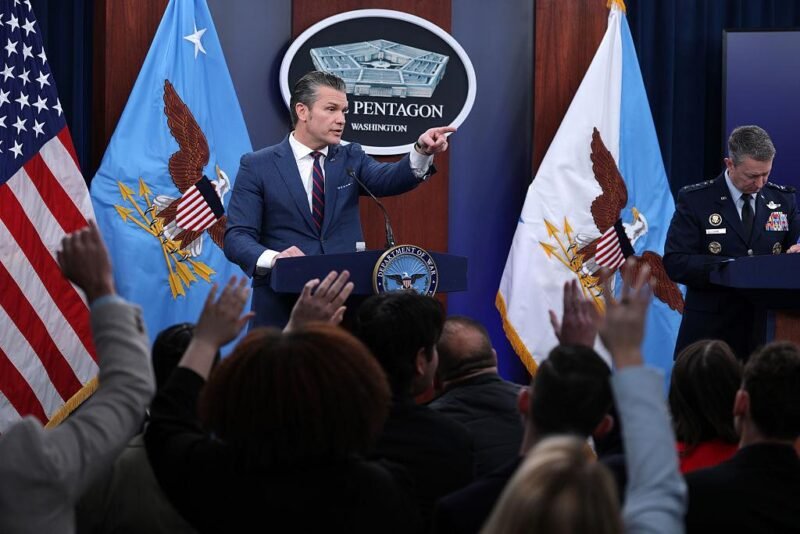
A fierce debate is unfolding in Washington over a proposed $200 billion surge in military funding tied to the war with Iran—one that cuts to the core of what “America First” actually means.
Senator Jim Banks, a Republican from Indiana, has emerged as one of the plan’s most vocal defenders, arguing that the massive Pentagon request is not a departure from Trump’s doctrine, but a continuation of it. Speaking on national television, Banks insisted that the funding would ultimately serve domestic priorities by rebuilding U.S. weapons stockpiles and bringing defense manufacturing back home.
“It’s a lot of money,” he acknowledged, “but it’s going into America First priorities.”
That framing is central to the administration’s argument. Rather than presenting the spending as purely wartime expansion, officials are positioning it as an investment in national strength—boosting domestic industry, reducing reliance on foreign supply chains, and preparing for future conflicts, including potential tensions with China.
But the justification is not universally accepted.
Concerns have surfaced across party lines, with lawmakers questioning both the scale of the request and the strategic clarity behind it. Critics argue that tying such a vast sum to an evolving conflict—one without a clearly defined endpoint—risks committing the United States to prolonged and unpredictable engagement.
There is also a deeper contradiction at play.
The “America First” doctrine has traditionally emphasized limiting foreign entanglements and focusing on domestic priorities. Expanding military spending for an overseas war challenges that premise, raising questions about whether the policy is being reinterpreted—or stretched—to fit current circumstances.
Supporters counter that the two ideas are not mutually exclusive. By investing in domestic production of munitions and defense systems, they argue, the U.S. can strengthen its economy while enhancing its military readiness. In this view, foreign conflict becomes a catalyst for domestic industrial policy.
Yet that argument depends on outcomes that remain uncertain.
The war with Iran continues to evolve, with shifting strategies, fluctuating markets, and no clear timeline for resolution. Funding decisions made now could shape U.S. involvement for years, particularly if the conflict expands or requires sustained operations.
Defense Secretary Pete Hegseth reinforced the administration’s position, emphasizing the practical realities of warfare. “It takes money to kill bad guys,” he said, suggesting the final figure could still change as negotiations continue.
For lawmakers, the decision is not just about numbers—it is about direction.
Approving the funding would signal a willingness to deepen U.S. engagement in the conflict while reshaping the meaning of “America First” in the process. Rejecting or scaling it back would raise questions about how Washington intends to sustain its current military posture.
As Congress weighs the request, the debate is likely to intensify.
Because behind the $200 billion figure lies a broader question—one that extends beyond budgets and into strategy: is the United States redefining its priorities, or revealing the limits of a doctrine built for a different moment?
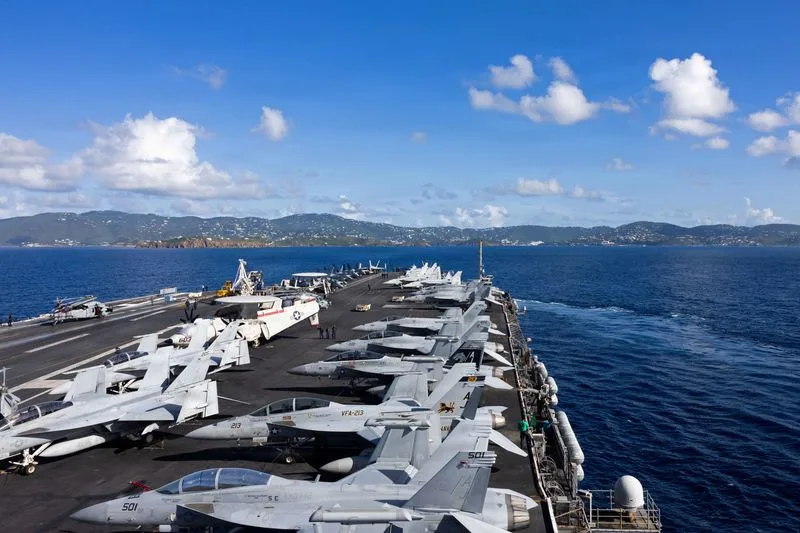
America’s Most Powerful Warship Pulls Back: Trouble on USS Ford Signals Deeper Strain.
The world’s largest warship just stepped back from the front lines. Is this a routine stop—or a warning sign?
The return of the USS Gerald R. Ford to a naval base in Crete may appear routine on the surface—but in the context of an intensifying war with Iran, it raises deeper questions about strain, readiness, and the limits of U.S. military endurance.
The $13 billion aircraft carrier, the most advanced and largest warship ever built, has been central to U.S. operations in the Middle East. Its arrival at Souda Bay follows a non-combat fire aboard the ship earlier this month, which injured crew members and damaged living quarters.
While officials have emphasized that the vessel remains operational, the incident is only the latest in a series of challenges during what has become an unusually long deployment—now stretching close to nine months and potentially longer than typical U.S. Navy rotations.
That extended deployment is beginning to show signs of strain.
Reports indicate that nearly 200 sailors were treated for smoke-related injuries after the fire, with damage affecting key sections of the ship’s internal infrastructure. Combined with persistent technical issues—ranging from maintenance problems to basic onboard systems—the situation has fueled concerns about crew morale and overall readiness.
This matters far beyond the ship itself.
Aircraft carriers like the Ford are not just military platforms; they are symbols of U.S. power projection. Each carrier strike group represents a floating airbase capable of launching sustained operations across entire regions. When such a platform temporarily withdraws—even for repairs—it creates a potential gap in operational capacity.
U.S. officials have indicated that other assets may fill that gap, but the timing is notable. The redeployment comes as tensions with Iran escalate, maritime routes face disruption, and Washington considers more aggressive military options.
The broader issue is sustainability.
Modern warfare—especially one spanning multiple regions, from the Middle East to previous operations in the Caribbean—places enormous pressure on personnel and equipment. The Ford’s extended mission, which included earlier operations near Venezuela before its Middle East deployment, highlights how rapidly U.S. forces are being stretched across theaters.
For sailors onboard, the impact is personal. Long deployments, operational stress, and unexpected incidents like onboard fires can erode morale, even as missions continue. For military planners, the question is more strategic: how long can high-tempo operations be sustained without affecting readiness?
The Pentagon has not signaled any immediate reduction in operations. But the optics of the Navy’s flagship carrier stepping back, even briefly, come at a moment when the war is expanding and expectations of U.S. military dominance remain high.
In modern conflict, perception matters as much as capability.
And the image of America’s most powerful warship returning to port—amid reports of strain and extended deployment—offers a subtle but significant reminder: even the strongest military systems have limits.
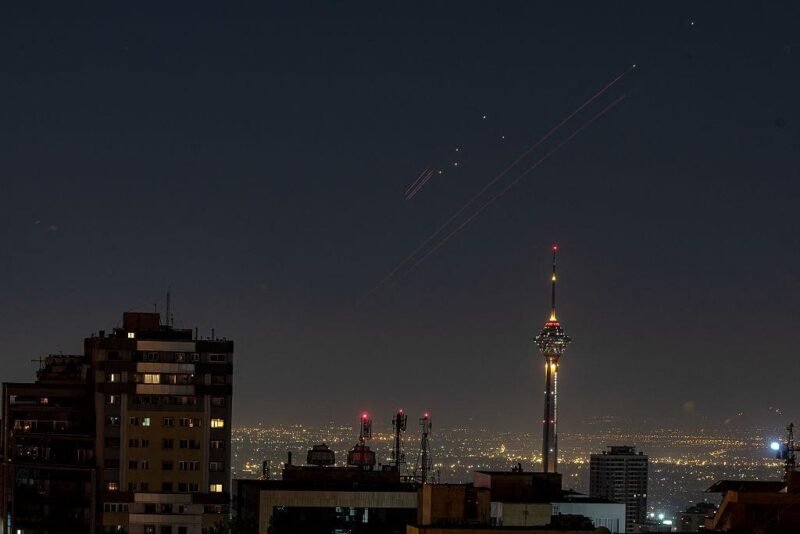
After a Week of War, Tehran’s Arsenal Appears Crippled — but the Regime Remains Standing.
Iran’s missiles shook the region. Now its military machine may never be the same.
Only a week into the war, the imbalance in military power is already reshaping the strategic map of the Middle East. Iran’s long-built arsenal — once presented as an existential threat to its neighbors — appears severely degraded, even as the regime in Tehran remains intact.
Military assessments circulating in regional capitals suggest that much of Iran’s offensive infrastructure — missile depots, drone facilities, command centers and logistics networks — has been significantly damaged. While Tehran continues to project defiance, the scale and speed of the strikes have exposed the vulnerability of a system that spent decades building deterrence through volume and reach.
The conflict began on February 28, when U.S. and Israeli forces launched coordinated attacks that killed Supreme Leader Ali Khamenei and targeted key military assets. Iran responded with missile and drone barrages across the Gulf, striking more than ten countries. Though officials in Tehran framed the attacks as directed at military targets, several civilian sites — airports, ports and residential areas — were also hit.
For years, Iran’s strategy was clear: accumulate enough destructive capacity to deter intervention and dominate regional calculations, potentially under the shield of a future nuclear deterrent. That calculus now appears disrupted. Analysts increasingly describe the dismantling of Iran’s “weapons empire” as a strategic turning point — one that could neutralize its ability to project overwhelming force for years.
Yet history offers caution. After Iraq’s defeat in Kuwait in 1991, Saddam Hussein’s regime survived another 12 years despite military devastation and sanctions — a scenario often recalled as the “Safwan tent” precedent. A weakened but intact regime can endure, rebuild and recalibrate.
There are few signs that Iran’s governing structure is collapsing from within. The Islamic Revolutionary Guard Corps, or IRGC, remains cohesive. No large-scale defections have emerged. No unified opposition force has demonstrated the capacity to replace the system. While some speculate about transformation from within, meaningful change would likely require fractures inside the security establishment — and those are not yet visible.
A full-scale ground invasion to impose regime change, as occurred in Iraq in 2003, appears unlikely. The political appetite and military resources required would be enormous. That leaves Washington facing a narrower set of options: accept a weakened but functioning system, or attempt to shape whatever leadership emerges from within it.
If current trends continue, Iran’s capacity to threaten its neighbors with overwhelming military force may be sharply reduced by the war’s end. Whether that ushers in a more restrained Iran — or simply a wounded power waiting to rebuild — will define the next chapter.
The arsenal may be collapsing. The regime, for now, is not.

President Nominates Sen. Markwayne Mullin After Mounting Criticism Over Immigration and Disaster Response.
A Cabinet exit amid protests, lawsuits, and GOP backlash — what went wrong at Homeland Security?
President Donald Trump on Thursday fired Homeland Security Secretary Kristi Noem, ending a turbulent tenure marked by controversy over immigration enforcement, department spending, and disaster response.
Trump announced the move on social media, saying he would nominate Oklahoma Republican Sen. Markwayne Mullin as her replacement. He also said Noem would take on a new role as “Special Envoy for The Shield of the Americas,” a security initiative focused on the Western Hemisphere.
Noem’s departure makes her the first Cabinet secretary to leave during Trump’s second term.
Mounting Pressure on Capitol Hill
The dismissal follows days of pointed criticism during congressional hearings, where Noem faced unusually sharp questioning not only from Democrats but also from members of her own party.
Lawmakers scrutinized a $220 million advertising campaign launched by the Department of Homeland Security (DHS) encouraging undocumented immigrants to leave the country voluntarily. Noem told lawmakers Trump had been aware of the campaign in advance. Trump later told Reuters he had not signed off on it.
Her leadership also drew criticism after the department was partially shut down for 20 days, with many employees continuing to work without pay.
Immigration Crackdown Under Fire
Noem had overseen Trump’s hard-line immigration agenda, which triggered protests and legal challenges nationwide. Tensions escalated following the fatal shootings of two protesters in Minneapolis by immigration enforcement officers — incidents that intensified scrutiny of DHS tactics and oversight.
Republican frustration reportedly grew over the department’s execution of enforcement policy and over the pace of disaster funding through the Federal Emergency Management Agency (FEMA). Critics questioned how billions of dollars allocated by Congress had been spent and whether emergency responses had been managed effectively.
What Comes Next
Mullin’s nomination will require Senate confirmation. Under federal vacancy laws, however, he can serve as acting Homeland Security secretary while his nomination is pending.
The shake-up underscores the volatility within Trump’s second-term Cabinet and reflects the political sensitivity surrounding immigration enforcement and federal emergency management.
With immigration central to Trump’s domestic agenda, the transition at DHS signals not a retreat — but a recalibration at a department at the heart of the administration’s most contentious policies.
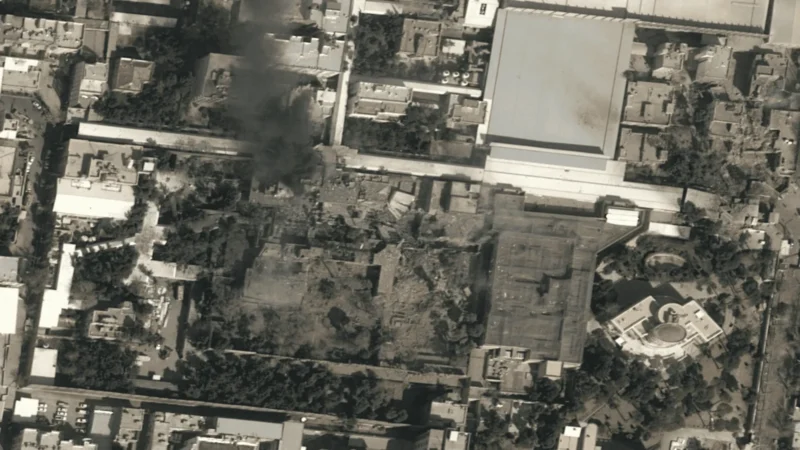
Leadership Council Forms as Tehran Moves Swiftly to Prevent a Power Vacuum After US-Israeli Strike.
Was this a decapitation meant to collapse Iran — or the moment that forces it to consolidate and strike back?
The killing of Iran’s Supreme Leader, Ali Khamenei, in a joint U.S.-Israeli strike has triggered the most consequential leadership transition in the Islamic Republic since 1989. But instead of chaos, Tehran has responded with speed.
Within hours, Iranian authorities confirmed the formation of an interim leadership structure under constitutional provisions designed for precisely this moment. According to international reporting, Alireza Arafi has been appointed as the jurist member of a temporary leadership council tasked with exercising the supreme leader’s authority until the Assembly of Experts selects a successor.
That move matters. It signals continuity — not collapse.
For decades, Iran has operated under sanctions, covert pressure and military threats. Its political architecture was built with redundancy. Succession planning is embedded in its system because siege conditions were never theoretical. The rapid appointment to the interim council suggests the state intends to close any vacuum quickly and limit elite fragmentation.
The broader question now is succession.
Among names frequently discussed is Mojtaba Khamenei, the late leader’s son. His perceived advantage would be network continuity and reassurance to hardline constituencies. But hereditary optics carry risks in a republic born from anti-monarchical revolution.
Another possibility is Hassan Khomeini, grandson of the revolution’s founder. His symbolic legitimacy could unify factions, though symbolism alone may not satisfy security-driven elites in wartime.
Clerical heavyweights such as Sadeq Amoli Larijani or Ahmad Khatami represent institutional continuity. Meanwhile, political operators like Ali Larijani could emerge as power brokers shaping consensus behind the scenes.
Above all stands the Islamic Revolutionary Guard Corps (IRGC). In moments of existential threat, security institutions tend to gain influence. External attempts at “decapitation” often produce the opposite of fragmentation — accelerated consolidation and a harder posture.
Strategically, the strike was widely interpreted as an effort to paralyze decision-making and disrupt succession. Yet early signs suggest Iran’s system remains operational. The leadership council framework indicates the state is prioritizing legibility to itself — keeping chains of command intact even under bombardment.
Regionally, the emotional impact is profound. For Shiite communities beyond Iran’s borders, Khamenei’s death may deepen anti-Israeli sentiment and intensify confrontation with Western allies. Political violence in the Middle East rarely stays contained; it travels through networks of memory, grievance and identity.
The larger geopolitical shift is equally significant. Targeted elimination of a sitting head of state redraws perceived boundaries of sovereignty. Whether this becomes a new precedent — or an isolated rupture — will shape regional calculations for years.
Iran now enters a succession phase under fire. The decisive variable is not whether the system feels shock. It does. The question is whether pressure fractures it — or forces it into a more disciplined, more centralized survival mode.
History suggests states built for siege rarely disintegrate on command.
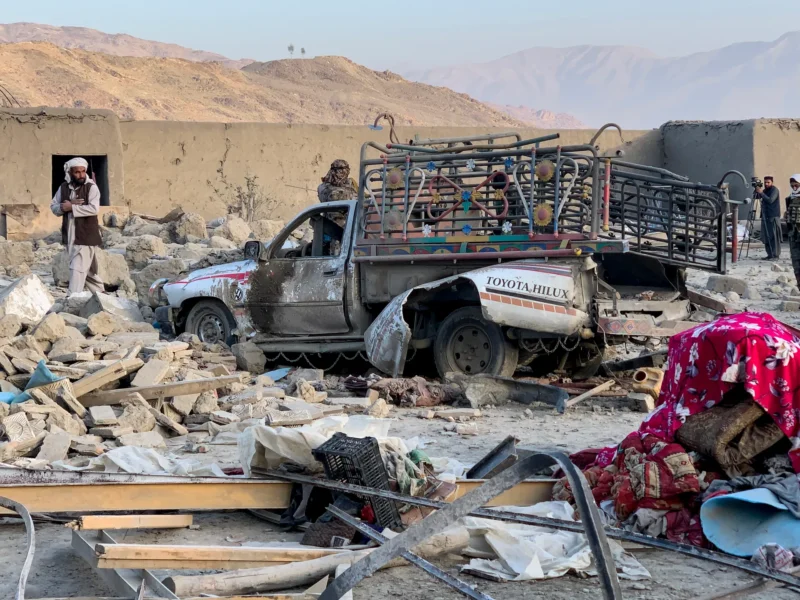
Air strikes on Kabul. Artillery at Torkham. “Open war” declared. How did neighbors turn into battlefield rivals?
Pakistan has launched air strikes on Afghanistan’s capital, Kabul, as well as targets in Paktia and Kandahar, marking one of the most serious escalations between the two countries since the Taliban returned to power in 2021.
Pakistani Defense Minister Khawaja Asif declared that Islamabad’s “cup of patience has overflowed,” describing the confrontation as “open war.” Afghanistan’s Taliban government confirmed the strikes and said it had begun “large-scale offensive operations” along the border in response.
The fighting follows weeks of clashes along the 2,600-kilometer Durand Line, the disputed frontier that Afghanistan has never formally recognized. Gunfire and shelling were reported near the key Torkham crossing, a vital trade and transit route.
Both sides claim heavy casualties. Pakistani officials say dozens of Taliban fighters were killed in air strikes and border battles. Kabul disputes those numbers and claims its forces inflicted significant losses on Pakistani troops. Independent verification remains difficult.
At the core of the conflict lies Pakistan’s long-standing demand that the Afghan Taliban crack down on Tehreek-e-Taliban Pakistan (TTP), a militant group responsible for deadly attacks inside Pakistan. Islamabad accuses Kabul of allowing TTP fighters to operate from Afghan territory — a charge the Taliban deny.
Since 2022, attacks in Pakistan’s Khyber Pakhtunkhwa and Balochistan provinces have surged. Analysts say Islamabad’s frustration has grown as diplomatic efforts and ceasefires repeatedly collapsed.
Another source of tension is the Durand Line itself. Afghanistan considers the British-era border illegitimate, arguing it divided Pashtun communities. Pakistan insists it is the recognized international boundary.
Military imbalance complicates the picture. Pakistan fields a far larger, better-equipped force, including air power — something the Taliban lack. That gives Islamabad the ability to strike deep into Afghan territory without crossing the border. However, experts warn that Afghanistan could respond asymmetrically, potentially through proxy fighters or cross-border attacks.
International reaction has been swift. The United Nations has urged restraint. Iran and Russia have called for dialogue. India condemned Pakistan’s air strikes, accusing Islamabad of exporting its internal instability.
The risk now is miscalculation. What began as cross-border skirmishes could spiral into sustained confrontation. Neither side appears ready to back down — and both face internal pressures that make compromise politically costly.
For two neighbors bound by geography and history, the latest exchange underscores a volatile truth: unfinished disputes and militant safe havens can quickly ignite into open conflict.
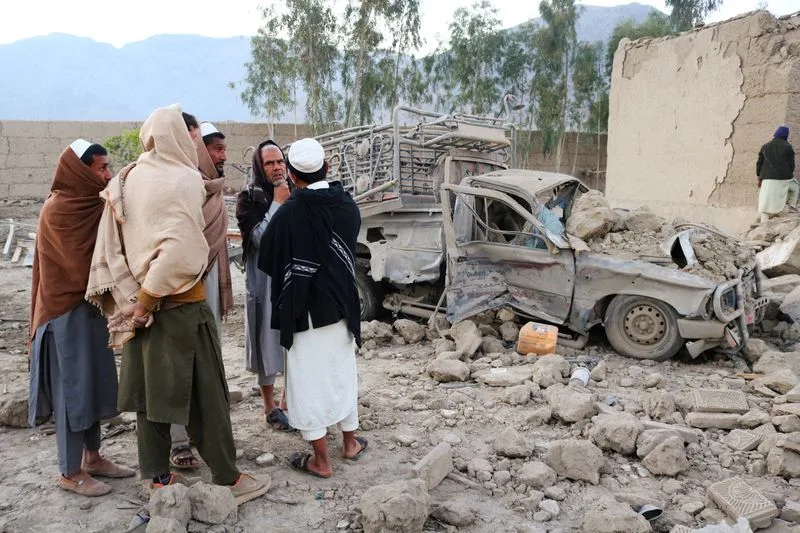
Airstrikes. Border clashes. A fragile ceasefire at risk. What’s really fueling the latest Afghanistan–Pakistan standoff?
Tensions between Afghanistan and Pakistan have surged after Pakistan launched airstrikes on what it described as militant targets inside Afghan territory, threatening a fragile ceasefire that has held since deadly clashes in October.
Pakistani security officials said the strikes killed at least 70 militants. The United Nations reported that at least 13 civilians also died. The Taliban government in Kabul condemned the operation and warned of a response.
At the heart of the dispute is Islamabad’s long-standing accusation that Tehreek-e-Taliban Pakistan (TTP) fighters operate from Afghan soil. Pakistan says TTP leaders and Baloch insurgents use safe havens across the border to stage attacks inside Pakistan. Kabul denies allowing its territory to be used against its neighbor.
The immediate trigger for the latest strikes was a string of recent attacks in Pakistan. Security sources cited multiple incidents since late 2024 that they claim were linked to militants based in Afghanistan. One attack in Bajaur district last week killed 11 security personnel and two civilians. Pakistan says the attacker was an Afghan national; the TTP claimed responsibility.
The TTP, formed in 2007, has carried out attacks on markets, mosques, military bases and schools, including the 2012 shooting of Malala Yousafzai. While Pakistan conducted large-scale operations that reduced violence by 2016, militant activity has steadily increased since 2022, according to conflict monitoring groups.
Relations between Kabul and Islamabad have deteriorated despite Pakistan’s early support for the Taliban’s return to power in 2021. Islamabad expected cooperation against anti-Pakistan militants. Instead, mistrust has deepened, with repeated border closures disrupting trade and movement.
Militarily, the imbalance is stark. Pakistan fields more than 600,000 active personnel and hundreds of combat aircraft. The Taliban’s forces are far smaller and lack a modern air force. Yet analysts warn that the conflict could escalate through asymmetric retaliation, including cross-border raids or proxy attacks.
For now, both sides appear to be calibrating their responses. But with militant violence rising and diplomatic trust thin, the frontier remains one of South Asia’s most volatile fault lines.

Warships in the Gulf. Tariffs on Iran’s trade partners. Quiet talks in Oman. Maximum Pressure is back — but is it leverage or escalation?
The return of “Maximum Pressure” is not just a policy shift. It is a performance of power.
The Trump administration has revived its coercive diplomacy toward Iran with calculated intensity: a reinforced U.S. naval presence in the Gulf, sweeping economic threats, and a parallel diplomatic channel through Oman. The choreography is deliberate. Force is visible. Negotiation is quiet. The message is unmistakable — Washington wants a deal, but on its terms.
At the center of this strategy is economic isolation. A February 6 executive order threatening 25 percent tariffs on countries trading with Iran effectively extends U.S. sanctions outward, pressuring third parties to choose between access to the American market or engagement with Tehran. It is not simply punishment; it is structural coercion. The global trading system becomes an enforcement tool.
The military dimension reinforces that pressure. The deployment of the USS Abraham Lincoln Carrier Strike Group signals readiness without declaring war. President Donald Trump has warned of consequences “far worse” than previous strikes, invoking the June 2025 U.S.–Israeli campaign against Iranian targets. That precedent changed the calculus. Tehran can no longer assume rhetorical threats lack follow-through.
Yet the armada is paired with diplomacy. Indirect contacts mediated by Oman have been described as constructive. Neither side appears to seek full-scale conflict. A major invasion remains improbable in the near term. The more plausible trajectory is continued pressure aimed at extracting concessions — on nuclear enrichment, missile development, regional proxies, and internal repression.
The core obstacle is scope. Iran appears prepared to negotiate within a narrow nuclear framework. Washington demands broader behavioral change. That gap defines the risk.
If talks collapse, targeted strikes on nuclear or missile infrastructure become more likely. Maritime friction in the Gulf — especially between U.S. vessels and the Islamic Revolutionary Guard Corps — raises the possibility of miscalculation. Even a limited exchange could spiral.
But the objective is not regime change. It is strategic realignment. Maximum Pressure is designed to force integration into a U.S.-defined regional order without overt war.
The question now is psychological, not merely military: Does Tehran view this as theater — or as a credible promise? The answer will determine whether Muscat becomes the venue of breakthrough or the prelude to escalation.

Bolton’s Warning: Leaving Now Means Iran Wins

Trump: US Set to Exit Iran—Deal or No Deal

Israel Rejects Linking Lebanon to Any US-Iran Deal


-

 US-Israel war on Iran1 month ago
UK Refuses Iran Strike Access, Trump Fires Back
-
 Russia-Ukraine War1 month ago
Europe’s Spies Challenge Trump’s Ukraine Peace Optimism
-
 Top stories4 weeks ago
War Expands Across Region as Iranian Militias Join Fight
-
 Top stories1 month ago
India Turns to Brazil in Strategic Minerals Push Against China
-
 US-Israel war on Iran1 month ago
Iran Pledges ‘Never, Ever’ to Hold Bomb-Grade Material
-
 US-Israel war on Iran1 month ago
Syria Under Fire on Two Fronts
-
 Russia-Ukraine War1 month ago
Estonia Warns NATO Would Strike Deep Inside Russia if Baltics Are Invaded
-
 Terrorism4 weeks ago
Regional Army Moves Against Expanding Armed Groups