
Middle East
Graham: Iran War a “Good Investment” for U.S.

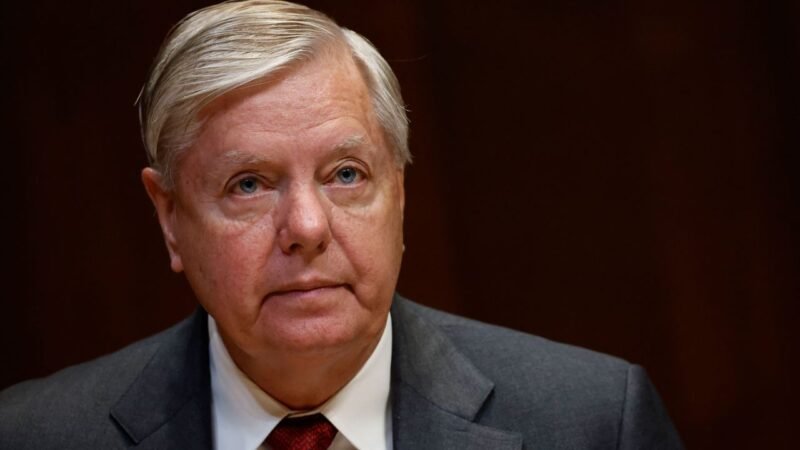
Sen. Lindsey Graham Says Regime Change in Tehran Would Reshape Middle East — and Unlock Oil Wealth.
“Good investment.” “Tonne of money.” Is this war about security — or something bigger?
Sen. Lindsey Graham, one of Congress’s most hawkish voices on Iran, said Sunday that removing Tehran’s leadership would not only transform the Middle East but also prove financially beneficial for the United States.
“When this regime goes down, we are going to have a new Middle East, and we are going [to] make a tonne of money,” the South Carolina Republican said in an interview on Fox News, signaling strong support for the ongoing U.S.-Israeli campaign against Iran.
Graham suggested that partnerships with oil-rich states such as Iran and Venezuela could shift global energy dynamics. “Venezuela and Iran have 31 percent of the world’s oil reserves,” he said. “This is China’s nightmare. This is a good investment.”
His remarks came as the conflict, triggered by U.S.-Israeli strikes on February 28, entered a new phase marked by escalating Iranian missile and drone attacks across the Gulf.
Iran swiftly rejected the characterization. Foreign Ministry spokesman Esmaeil Baghaei accused Washington of seeking to partition the country and seize its energy resources. “They aim at partitioning our country to take illegal possession of our oil riches,” he said.
Graham predicted further escalation, warning that the United States would “blow the hell out of these people” and ensure that “nobody will threaten” shipping in the Strait of Hormuz again. He also called on Gulf states, including Saudi Arabia and the United Arab Emirates, to join the fight more directly.
The senator’s comments underscore the ideological divide surrounding the war. Supporters argue that dismantling Iran’s missile and nuclear infrastructure removes a long-standing threat. Critics contend that regime change risks repeating past interventions that destabilized Iraq and Libya.
Graham has supported nearly every major U.S. military campaign in the Middle East over the past two decades, including the 2003 invasion of Iraq. He has also made multiple trips to Israel in recent months, meeting with officials including Prime Minister Benjamin Netanyahu, according to U.S. media reports.
In a remark that widened the geopolitical lens, Graham hinted that Cuba could be next on Washington’s agenda. “Free Cuba,” he said, suggesting that U.S. foreign policy was entering a more aggressive phase.
As oil prices surge and regional tensions mount, Graham’s framing of the war as both strategic necessity and economic opportunity is likely to fuel further debate — at home and abroad — about the true objectives of America’s expanding conflict.










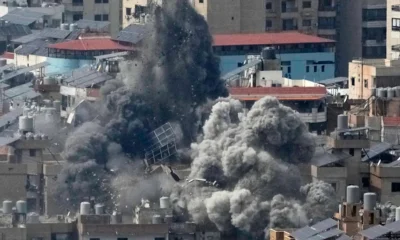

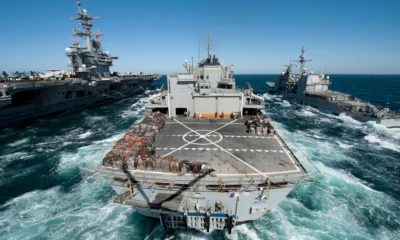

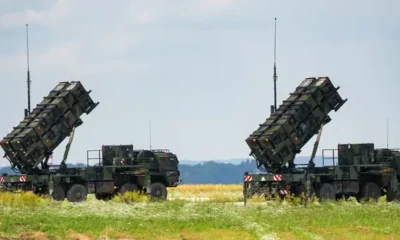

After a Week of War, Tehran’s Arsenal Appears Crippled — but the Regime Remains Standing.
Iran’s missiles shook the region. Now its military machine may never be the same.
Only a week into the war, the imbalance in military power is already reshaping the strategic map of the Middle East. Iran’s long-built arsenal — once presented as an existential threat to its neighbors — appears severely degraded, even as the regime in Tehran remains intact.
Military assessments circulating in regional capitals suggest that much of Iran’s offensive infrastructure — missile depots, drone facilities, command centers and logistics networks — has been significantly damaged. While Tehran continues to project defiance, the scale and speed of the strikes have exposed the vulnerability of a system that spent decades building deterrence through volume and reach.
The conflict began on February 28, when U.S. and Israeli forces launched coordinated attacks that killed Supreme Leader Ali Khamenei and targeted key military assets. Iran responded with missile and drone barrages across the Gulf, striking more than ten countries. Though officials in Tehran framed the attacks as directed at military targets, several civilian sites — airports, ports and residential areas — were also hit.
For years, Iran’s strategy was clear: accumulate enough destructive capacity to deter intervention and dominate regional calculations, potentially under the shield of a future nuclear deterrent. That calculus now appears disrupted. Analysts increasingly describe the dismantling of Iran’s “weapons empire” as a strategic turning point — one that could neutralize its ability to project overwhelming force for years.
Yet history offers caution. After Iraq’s defeat in Kuwait in 1991, Saddam Hussein’s regime survived another 12 years despite military devastation and sanctions — a scenario often recalled as the “Safwan tent” precedent. A weakened but intact regime can endure, rebuild and recalibrate.
There are few signs that Iran’s governing structure is collapsing from within. The Islamic Revolutionary Guard Corps, or IRGC, remains cohesive. No large-scale defections have emerged. No unified opposition force has demonstrated the capacity to replace the system. While some speculate about transformation from within, meaningful change would likely require fractures inside the security establishment — and those are not yet visible.
A full-scale ground invasion to impose regime change, as occurred in Iraq in 2003, appears unlikely. The political appetite and military resources required would be enormous. That leaves Washington facing a narrower set of options: accept a weakened but functioning system, or attempt to shape whatever leadership emerges from within it.
If current trends continue, Iran’s capacity to threaten its neighbors with overwhelming military force may be sharply reduced by the war’s end. Whether that ushers in a more restrained Iran — or simply a wounded power waiting to rebuild — will define the next chapter.
The arsenal may be collapsing. The regime, for now, is not.
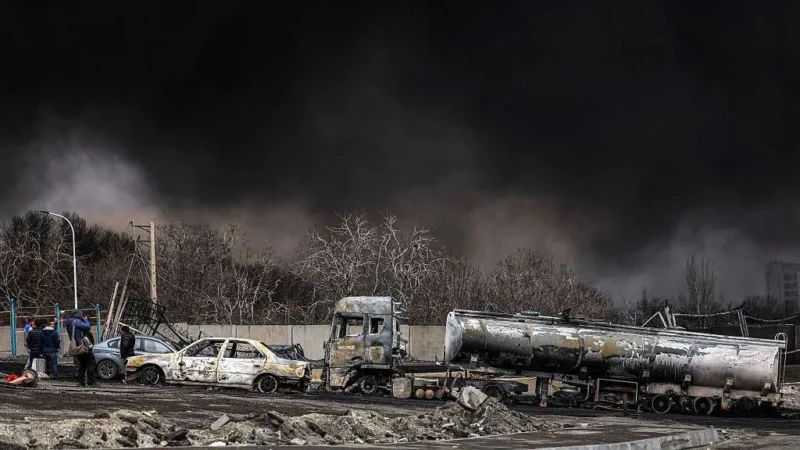
Iranians Describe Smoke-Choked Skies, Toxic Fears and Scarcity After Strikes Hit Capital’s Fuel Infrastructure.
When the sun disappears at noon and even the birds vanish, a city knows something has changed.
Tehran woke Sunday to a skyline swallowed by smoke after overnight airstrikes ignited oil depots in and around the capital, residents said, describing scenes that felt “apocalyptic” as soot blanketed streets and fears mounted over toxic rain, polluted water and dwindling supplies.
At least four oil depots and a petroleum logistics site were struck, according to local authorities, who reported six people killed and 20 wounded at one location. Videos circulating online showed towering flames piercing the night sky and thick plumes still rising hours later.
By morning, rain fell through the smoke-filled air. Officials warned residents about possible acid rain and advised them to stay indoors. The Red Crescent cautioned that exposure to toxic chemicals could irritate skin and lungs, urging people to avoid turning on air conditioners or venturing outside immediately after rainfall.
For many, staying inside was a luxury they could not afford.
“The situation is so frightening it’s hard to describe,” said Negin, an activist in the central-eastern part of the city who spoke under a pseudonym. “Smoke has covered the entire city. I have severe shortness of breath and burning in my eyes and throat, and many others feel the same.”
She said masks and inhalers were already in short supply. Prices were climbing. Fuel was being rationed to a few liters per vehicle in some areas. “This is truly a crime against humanity,” she said, arguing that civilians were paying the price for a conflict beyond their control.
Medical experts warned that toxic gases and fine particulate matter can aggravate asthma, heart disease and other chronic conditions. Residents described eye irritation, persistent coughing and a metallic smell lingering in the air.
Mehdi, a 42-year-old restaurant owner in western Tehran, compared the atmosphere to the early days of the pandemic. “There’s soot everywhere,” he said. “We’re afraid to even clean the windows. My eyes are burning.”
He said he would close his restaurant until he was certain water supplies were safe. Others tried to flee the city, only to encounter long lines at gas stations and highways clogged with cars.
One resident, Mehnaz, said the blaze at the Shahr-e Rey depot turned night into day — and day into darkness. “In the night it looked like day,” she said. “In the day, it was so dark, it looked like a new moon night. So dark, just like our futures.”
As Tehran’s 10 million residents assess the damage, many say the greatest fear is not only what burned — but what lingers in the air, the water and the fragile sense of normalcy that once defined their city.
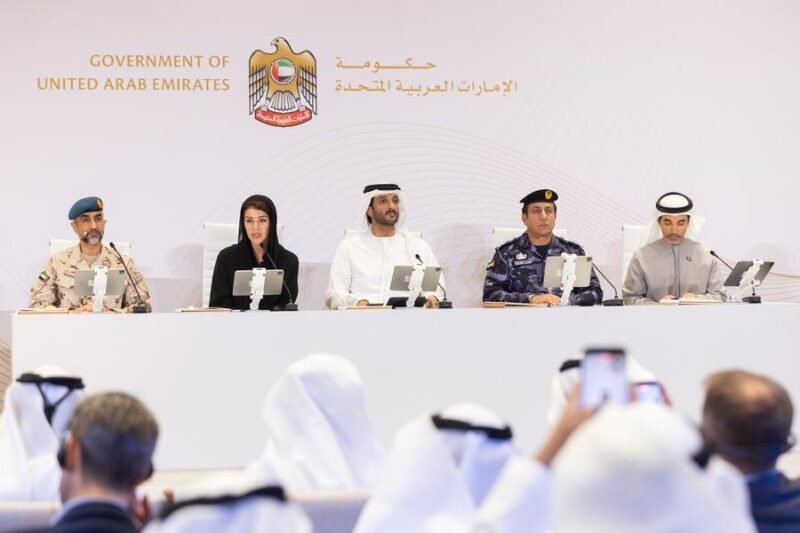
From neutrality to “a time of war” — the Gulf’s balancing act is collapsing.
Abu Dhabi Says It Is Responding to “Brutal and Unjustified Aggression” After More Than 1,400 Iranian Missiles and Drones
The United Arab Emirates said Sunday it is acting in self-defense against what it called “brutal and unjustified aggression” by Iran, as missile and drone attacks continued across the Gulf for a second consecutive week.
In a statement, the UAE’s foreign ministry said Iran had launched more than 1,400 ballistic missiles and drones targeting infrastructure and civilian sites in the region, causing casualties.
“The United Arab Emirates affirms that it is acting in self-defense,” the ministry said, adding that the country “does not seek to be drawn into any conflicts or escalation” but reserves the right to protect its sovereignty and citizens under international law and the UN Charter.
The war began on February 28 when the United States and Israel launched coordinated strikes on Iran, killing Supreme Leader Ali Khamenei and triggering a regional conflict. Tehran responded with missile and drone barrages against Israel and U.S. interests — and, increasingly, against Gulf states that insist they are not participants in the war.
Fresh attacks were reported Sunday in Saudi Arabia, Qatar and Kuwait, while explosions had rocked Dubai and Bahrain’s capital, Manama, a day earlier.
UAE President Mohamed bin Zayed Al Nahyan said Saturday that the Emirates were in “a time of war” but would “emerge stronger.”
Dubai authorities confirmed that a Pakistani national was killed after debris from an aerial interception struck a vehicle.
Iran’s President Masoud Pezeshkian had earlier apologized to Gulf countries, suggesting they would no longer be targeted unless their territory was used to strike Iran. Hours later, Iran’s judiciary chief contradicted that message, saying strikes would continue against Gulf sites “at the disposal of the enemy.”
Pezeshkian later said his remarks had been misinterpreted, insisting Iran sought good relations with neighbors but would retaliate against aggression.
For Gulf states that have long sought to remain outside direct confrontation, the conflict is narrowing their options. With air defenses active and civilian casualties mounting, the UAE’s declaration underscores a shift from cautious neutrality to open defensive posture.
The question now is whether that posture deters further escalation — or draws the region deeper into war.
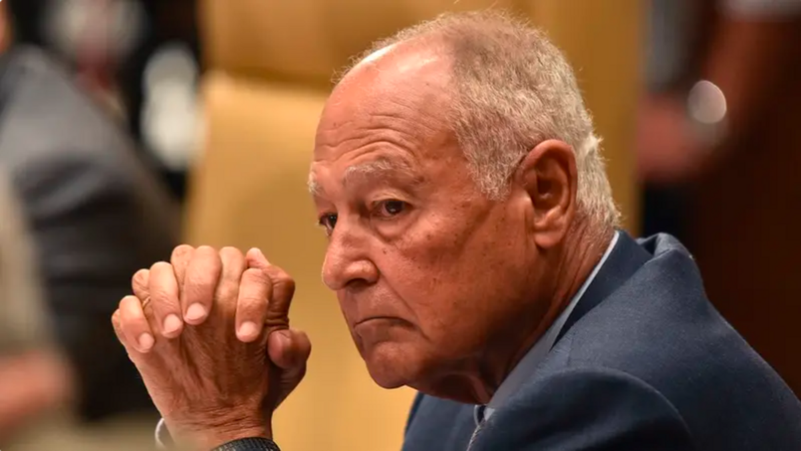
Secretary-General Ahmed Aboul Gheit Urges Tehran to Reverse “Massive Strategic Mistake” Amid Escalating Regional War
When even longtime mediators call your actions “reckless,” the diplomatic clock is ticking.
The Arab League sharply condemned Iran’s attacks on Gulf member states on Sunday, calling them “reckless” and warning Tehran that it was committing a “massive strategic mistake” by widening the war.
Speaking from Cairo during an emergency videoconference of Arab foreign ministers, Secretary-General Ahmed Aboul Gheit said Iranian missile and drone strikes against member states “cannot be justified under any pretext or excuse.”
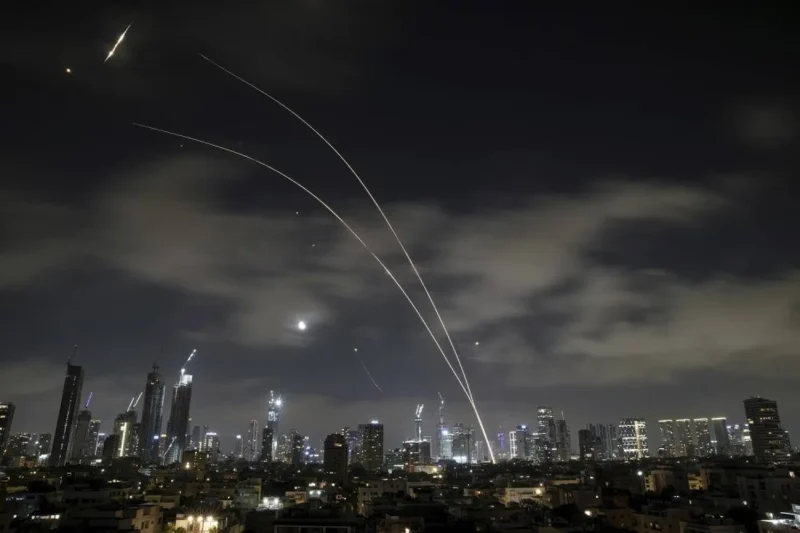
After apologizing to its neighbors, Iran launched more missiles. Is the Gulf now fully in the war?
Missiles and Drones Hit Saudi Arabia, UAE, Qatar and Kuwait as Tehran Vows to Continue Targeting Regional “Enemy Sites”
Iran pressed ahead with missile and drone attacks across the Gulf on Sunday, even as its president sought to soften earlier remarks that had been interpreted as a pledge to suspend strikes on neighboring states.
Saudi Arabia, the United Arab Emirates, Qatar and Kuwait all reported new aerial assaults as the war entered its second week.
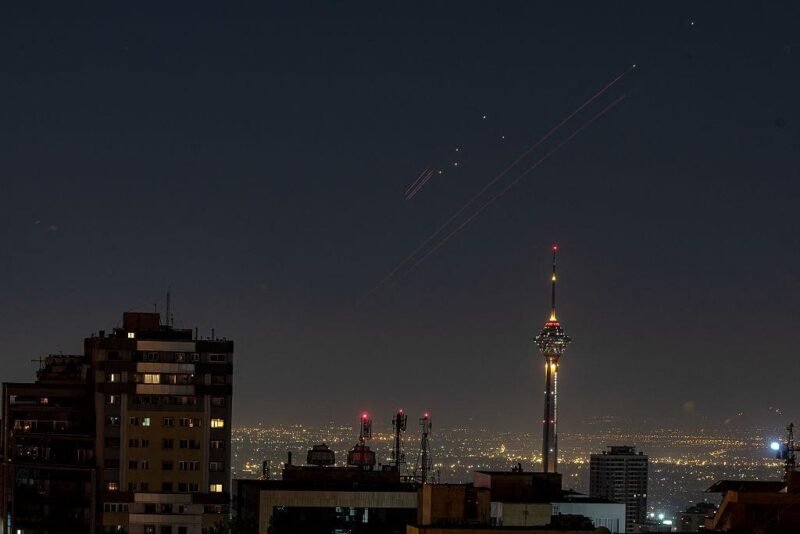
Loud explosions were heard over Dubai and Manama a day earlier, and air defenses across the region were activated again overnight.
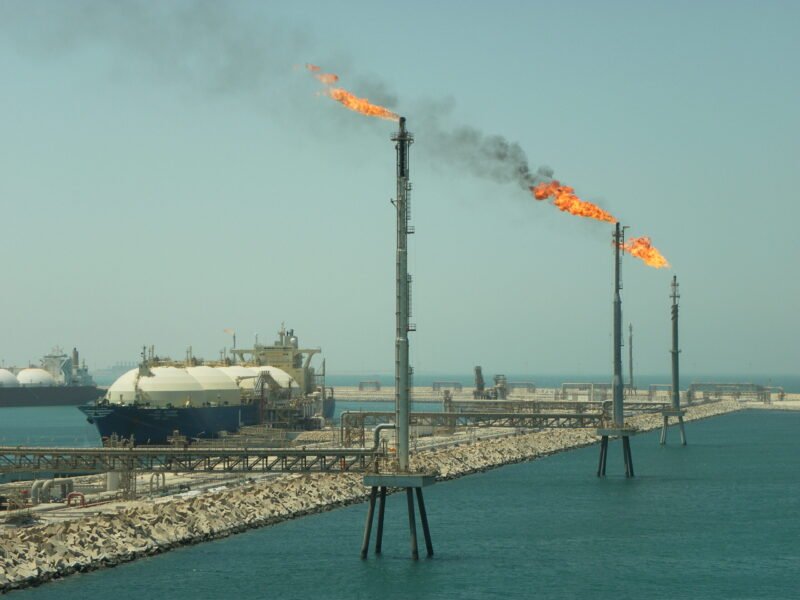
Kuwait said its military intercepted several drones and missiles. The country’s national oil company announced a “precautionary” reduction in crude production after fuel tanks at Kuwait International Airport were targeted in a drone strike. Authorities said a fire at the airport was quickly contained and there were no significant injuries.
An apology in the morning — a warning by night. Is Iran widening the war?
Tehran Signals Continued Attacks on Regional States It Accuses of Assisting US-Israeli Operations.
Iran signaled a harder line on Saturday, with senior officials declaring that attacks on neighboring countries will continue if their territory is used — openly or covertly — in operations against Tehran.
Gholamhossein Mohseni-Ejei, Iran’s judiciary chief and a member of the interim leadership council, said “heavy attacks” would persist against regional targets that provide what he described as “points… used in aggression against our country.”
“Evidence from Iran’s armed forces shows that the geography of some countries in the region is openly and covertly at the disposal of the enemy,” Mohseni-Ejei said. “The government and other pillars of the system are in agreement.”
The comments came hours after Iranian President Masoud Pezeshkian struck a more conciliatory tone, apologizing to Gulf neighbors for earlier strikes and promising restraint unless their territory was directly used to launch attacks on Iran.
Gulf governments have denied allowing their soil to be used in US or Israeli strikes and have repeatedly said they seek to avoid being drawn into the conflict.
Despite those assurances, Iranian forces have targeted sites across the Gulf since US-Israeli airstrikes killed Supreme Leader Ali Khamenei on February 28. Some attacks have struck civilian infrastructure.
Thirteen people, including seven civilians, have been killed in Gulf countries since the war began. Among them was an 11-year-old girl in Kuwait who died after being hit by falling debris in a residential neighborhood.
Iran’s parliamentary speaker, Mohammad Bagher Ghalibaf, reinforced the confrontational message, arguing that “as long as American bases exist in the region, countries will not see peace.”
The dual messaging — apology paired with escalation — reflects Tehran’s balancing act. On one hand, it seeks to deter regional cooperation with Washington. On the other, it risks pushing wary Gulf states closer to the United States by widening the battlefield.
For Gulf capitals that have long tried to insulate themselves from direct confrontation, the warning sharpens an already stark choice: maintain neutrality under fire, or openly align in a war they insist is not theirs.
As Iran Conflict Escalates, Satellite Jamming and Spoofing Disrupt Shipping, Aviation, and Global Trade.
When ships think they’re at airports and planes “drift” off course, the battlefield has gone digital.
Within hours of the first U.S.-Israeli strikes on Iran, a different kind of weapon began reshaping the conflict — not missiles, but signals.
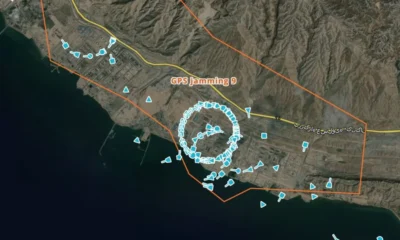
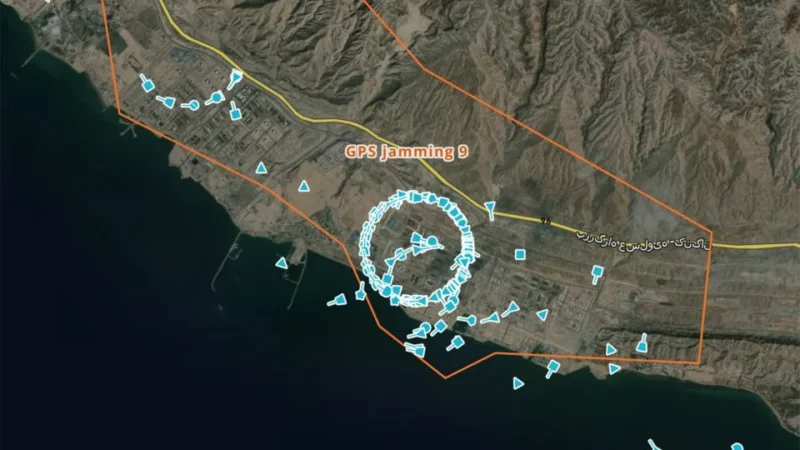
Commercial vessels navigating Gulf waters suddenly appeared to be located at airports, nuclear facilities or deep inland. The culprit was widespread jamming and spoofing of global navigation satellite systems, the digital backbone that keeps ships, planes and drones on course.
According to maritime intelligence firm Windward, more than 1,100 commercial vessels in UAE, Qatari, Omani and Iranian waters experienced navigation disruptions in the first 24 hours after hostilities began. Traffic through the Strait of Hormuz — the narrow artery that carries roughly 20% of the world’s oil and gas — slowed sharply. Some tankers reversed course. Others went dark, switching off their Automatic Identification System (AIS), the transponder designed to prevent collisions.
“You don’t know where ships are,” said Michelle Wiese Bockmann, a senior maritime intelligence analyst at Windward. “The whole point of AIS is collision avoidance.”
The tactic itself is simple. Militaries broadcast high-powered radio signals on the same frequencies used by satellite navigation tools. Jamming blocks the signal; spoofing manipulates it, feeding false coordinates to receivers. The result can be vessels moving in strange geometric “crop circles” on tracking maps or appearing thousands of miles from their actual position.
Data from Lloyd’s List Intelligence recorded 1,735 GPS interference events affecting 655 vessels in just a few days. Daily incidents have nearly doubled since the conflict began.
The practice is not new. Satellite interference became common during Russia’s 2022 invasion of Ukraine, where drone warfare surged. But experts say the problem has now become “endemic” in conflict-adjacent regions such as the Baltic, Black Sea and Middle East.
Ramsey Faragher, director of the Royal Institute of Navigation, describes jamming as an “easy shield” against GPS-guided drones. The complication is that the electronic fog affects everything else in the area — commercial ships, civilian aircraft, even rescue equipment.
The aviation sector is already feeling the strain. The International Air Transport Association reports a 220% rise in global GPS signal loss events affecting aircraft between 2021 and 2024. Pilots have described cockpit displays “drifting away from reality,” with map shifts and false altitude warnings increasing workload during critical flight phases.
The vulnerability stems from physics. GPS signals weaken dramatically as they travel more than 20,000 kilometers from orbit, making them relatively easy to overpower. While Europe’s Galileo system now offers authentication features, most civilian satellite signals remain largely unprotected.
The stakes extend beyond inconvenience. Modern ships rely heavily on automation. Younger mariners often have less experience navigating by radar, visual watchkeeping or celestial methods. Interference can also trigger compliance alarms if a vessel’s spoofed location appears inside sanctioned territory.
The most alarming scenario is humanitarian. If a vessel were struck and crew forced to abandon ship, emergency beacons dependent on satellite positioning could transmit false coordinates, delaying rescue.
Satellite navigation transformed global trade by making positioning instantaneous and precise. But as the Gulf conflict demonstrates, that era of assumed reliability is ending.
Electronic warfare has moved from the margins to the mainstream. And in this war, the most powerful weapon may be the one no one can see.
President Masoud Pezeshkian Apologizes to Gulf States, Says Tehran Will Only Retaliate if Attacked.
An apology — and a warning. Is Iran signaling de-escalation or drawing a new red line?
Iran signaled a potential shift in its regional posture on Saturday, with President Masoud Pezeshkian announcing that Tehran will suspend strikes on neighboring countries unless attacks are launched from their territory.
In a speech broadcast on state television, Pezeshkian declared that Iran would “never surrender” to Israel or the United States as the Middle East war entered its second week. At the same time, he offered an apology to regional states hit by Iranian missiles and drones in recent days.
“I must apologize on my own behalf and on behalf of Iran to the neighboring countries that were attacked by Iran,” Pezeshkian said. He added that the interim leadership council had agreed that “no more attacks will be made on neighboring countries and no missiles will be fired unless an attack on Iran originates from those countries.”
The remarks come after Israel and the United States launched coordinated strikes on February 28 that killed Iran’s Supreme Leader Ali Khamenei and triggered a broader regional conflict. Iran responded with missile and drone attacks targeting Israel and U.S. interests across the Gulf.
Pezeshkian is one of three members of an interim leadership council governing Iran following Khamenei’s death. His dual message — defiance toward Washington and Tel Aviv coupled with an overture to neighbors — suggests Tehran is attempting to contain the geographic spread of the war while maintaining a posture of resistance.
Regional capitals have been wary of being drawn into direct confrontation. Iranian strikes on Gulf cities in recent days rattled energy markets and raised fears of further escalation around critical infrastructure and shipping lanes.
By pledging to halt attacks unless provoked from neighboring territory, Tehran appears to be drawing a narrower line: retaliation will be tied explicitly to perceived participation in attacks on Iran.
Whether this declaration marks genuine de-escalation or a tactical pause remains uncertain. Much will depend on whether regional states allow their bases or airspace to be used in ongoing operations — and how Iran defines an “originating” attack.
For now, the message is calibrated: no surrender, but conditional restraint.

The Fall of Iran’s Military Empire

Graham: Iran War a “Good Investment” for U.S.

Tehran Engulfed After Oil Depots Bombed


-

 Somaliland2 months ago
F-35s Over Hargeisa: The Night Somaliland’s Sovereignty Went Supersonic
-

 Somalia2 months ago
Aid Destroyed, Trust Shattered: Somalia Loses U.S. Support for Good
-

 Terrorism2 months ago
Foreign ISIS Pipeline Exposed: Puntland Captures Dozens of Non-Somali Fighters
-
 Terrorism1 month ago
America Pulls Back From Somalia but Doubles Down Next Door
-

 Somaliland2 months ago
Somaliland at Davos: The Moment Somaliland Entered the World’s Inner Circle
-

 Opinion2 months ago
Turkey’s Selective Morality: From the Ruins of Gaza to the Red Sea
-
 Middle East2 months ago
US War Plans Against Iran Enter Advanced Stage
-
 Diplomacy2 months ago
Ethiopia–Israel Axis Strengthens as Regional Stakes Rise