
US-Israel war on Iran
Iran Threatens Gulf Energy Hubs

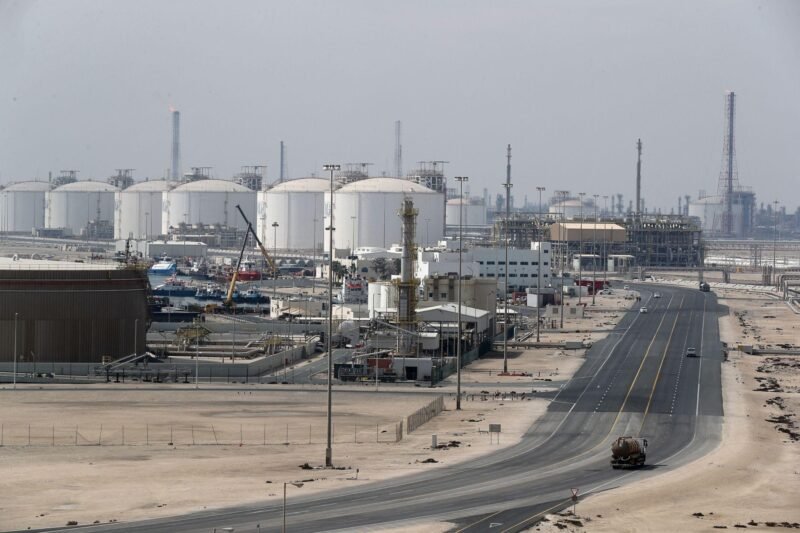
Revolutionary Guards Warn of Imminent Attacks on Saudi, UAE and Qatari Infrastructure as Oil Prices Surge.
The war has moved to the energy heartland. Now the Gulf’s refineries and gasfields are in the crosshairs.
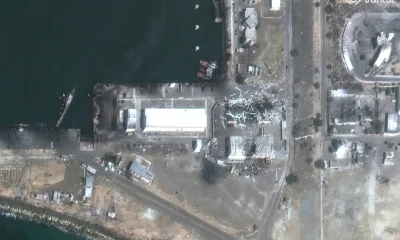
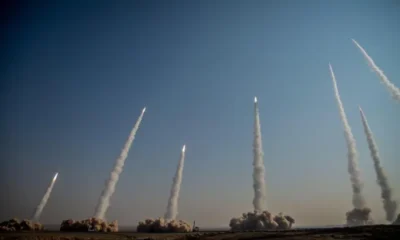
Iran has threatened to strike major energy facilities across the Gulf after Israeli missiles reportedly hit the country’s largest gasfield, marking a sharp escalation in the widening regional conflict.
The targeted site, the South Pars gas field, contains the world’s largest known natural gas reserves and forms the backbone of Iran’s gas production. It is jointly shared with Qatar, making it one of the most strategically sensitive energy assets in the Middle East.
Iran’s Revolutionary Guards warned that facilities in Saudi Arabia, the United Arab Emirates and Qatar would become “direct and legitimate targets” in the coming hours.
State media identified Saudi Arabia’s Samref refinery and Jubail petrochemical complex, the UAE’s al-Hosn gasfield, and Qatar’s Mesaieed and Ras Laffan industrial hubs as potential targets. Authorities urged workers and residents near those sites to evacuate immediately.
Until now, U.S. and Israeli operations had largely avoided direct strikes on Iran’s oil and gas sector, a restraint seen as an effort to prevent a full-scale economic shock. The attack on South Pars appears to signal a shift.
Global markets reacted swiftly. Oil prices climbed toward $110 a barrel on Wednesday amid fears that the conflict could engulf the Gulf’s energy infrastructure, which underpins a significant share of global oil and liquefied natural gas exports.
The continuing blockade of the Strait of Hormuz — through which roughly one-fifth of the world’s oil flows — has already strained supply chains.
Eskandar Pasalar, governor of Iran’s southern Asaluyeh region, described the attack as a turning point. The “pendulum of war has swung” into what he called a “full-scale economic war.”
Qatar condemned threats to energy infrastructure. Government spokesperson Majid al-Ansari warned that targeting such facilities would endanger not only regional populations but global energy security.
Israeli media reported that the strike on South Pars was carried out with U.S. consent, though neither government immediately provided detailed confirmation.
If Iran follows through on its threats, the conflict could move decisively from military confrontation to economic warfare, placing the Gulf’s vast energy network — and the global economy — at direct risk.











Finland has no direct stake in Hormuz. So why is its president talking about joining the fight?
President Alexander Stubb Signals Openness to Backing U.S. Operations — With Ukraine in Mind.
Finland’s president, Alexander Stubb, has emerged as one of the few European leaders openly suggesting that the European Union should consider supporting U.S. efforts in the Strait of Hormuz. His reasoning has less to do with Iran than with Ukraine.
While most major EU powers — including France, Germany and Italy — have stressed restraint and declined to commit forces to the Gulf, Stubb has said countries with “the capacity and the will” should help Washington secure maritime trade routes.
In London, he went further, reacting positively to the idea that European naval support in the Gulf could be leveraged to extract stronger U.S. backing for Kyiv in its war with Russia.
At the heart of Stubb’s calculus is concern that the U.S.-Israeli war with Iran is diverting American military resources and political attention away from Ukraine. Rising oil prices, driven in part by instability in the Strait of Hormuz, also benefit Russia by boosting energy revenues. From Helsinki’s perspective, anything that weakens Western focus on Ukraine strengthens Moscow’s hand.
The proposal has met skepticism inside Europe. German Defense Minister Boris Pistorius publicly questioned what a handful of European frigates could accomplish that the U.S. Navy cannot. European Commission President Ursula von der Leyen has said there is “no appetite” in Brussels to widen EU naval operations beyond existing missions.
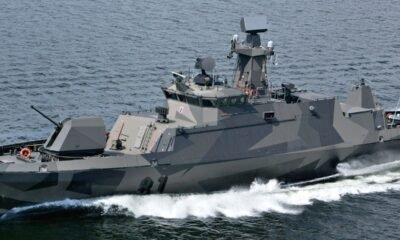
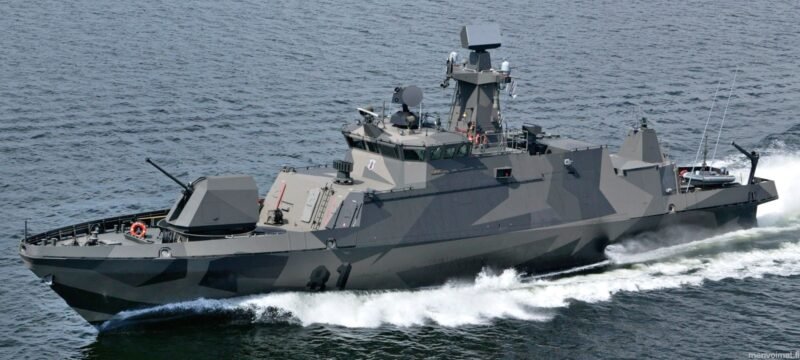
Finland’s own naval capabilities are limited: a small fleet of missile boats and minesweepers, designed primarily for Baltic Sea defense. The Baltic states that have echoed Stubb’s posture — Estonia and Lithuania — field similarly modest forces. Any deployment would be symbolic rather than decisive.
Still, symbolism may be the point. For Stubb and like-minded leaders, visible alignment with Washington in one theater could help maintain U.S. engagement in another. The risk, critics argue, is entanglement in a conflict far from Europe’s core security interests.
Public support within the EU for involvement in the Iran conflict remains weak. Larger military powers such as France and Poland have ruled out participation in combat operations, though some have left open the possibility of maritime escort missions once hostilities subside.
For now, Stubb represents a small but vocal bloc that sees strategic linkage between the Gulf and Eastern Europe. Whether that linkage persuades Washington — or alienates other European partners — remains to be seen.
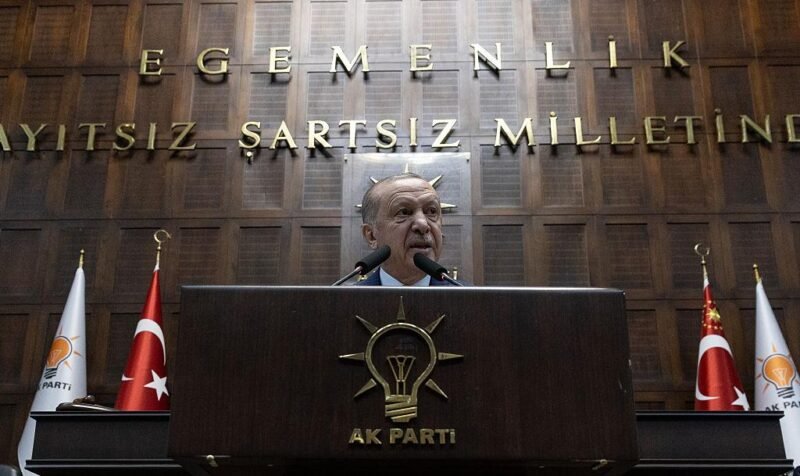
If Iran falls, who stands next in line? In Ankara, that question is no longer theoretical.
Ankara Fears Crushing Tehran Could Trigger a New Phase of Regional Power Struggles.
As the war between Israel, the United States and Iran deepens, officials in Turkey are asking a stark question: if Tehran is broken, what comes next — and who?
From the first days of the open strikes on Iran in late February, President Recep Tayyip Erdogan condemned the attacks as violations of international law and warned that the conflict risked spiraling into a regional catastrophe.
Foreign Minister Hakan Fidan reinforced that message, cautioning that escalation could destabilize energy markets and disrupt the Strait of Hormuz, a chokepoint critical to global oil flows — and to Turkey’s import-dependent economy.
But Ankara’s concerns run deeper than fuel prices.
Turkish officials argue that forcibly dismantling Iran would not bring stability. Instead, it could collapse one of the region’s major power centers, triggering internal fragmentation and unleashing a chain reaction from Iraq and Syria to the Caucasus and the Eastern Mediterranean.
For Turkey, which has absorbed the spillover of wars in Iraq and Syria for two decades — from refugee waves to cross-border militancy — the prospect of chaos inside Iran is viewed as an existential strategic risk.
The fear is not ideological alignment with Tehran. Turkey and Iran compete across multiple theaters, from Syria to the South Caucasus. Rather, Ankara sees the regional balance — tense and imperfect though it may be — as preferable to a vacuum.
There is another layer to Turkish anxiety: the belief that Israel’s campaign may not end with Iran. Israeli political figures have publicly identified Turkey as a growing regional rival.
In Ankara’s strategic calculus, if Iran is decisively weakened, attention could shift toward other independent regional actors — with Turkey foremost among them.
Recent incidents have reinforced that sense of proximity. Iranian missiles have reportedly entered Turkish airspace during regional exchanges, prompting diplomatic protests.
For Ankara, the war is no longer distant. It is edging toward its borders.
At the same time, Turkey faces domestic economic fragility. Rising energy costs, inflationary pressure and market volatility could compound existing challenges. A prolonged regional war would translate quickly into higher import bills, strained budgets and social tension.
Ankara’s response has therefore followed a dual track: vocal diplomatic opposition to escalation and quiet reinforcement of defensive preparedness. Erdogan has repeatedly called for a ceasefire and mediation, framing diplomacy as the last barrier before a broader conflagration.
In Turkish strategic thinking, the destruction of Iran would not conclude a conflict. It would reset the Middle East into a far more combustible phase — one in which alliances shift, power vacuums open and rivalries intensify.
For now, Turkey speaks the language of restraint. But behind that language lies a sober calculation: if the region’s fire is not contained, it will not stop at Iran’s borders.
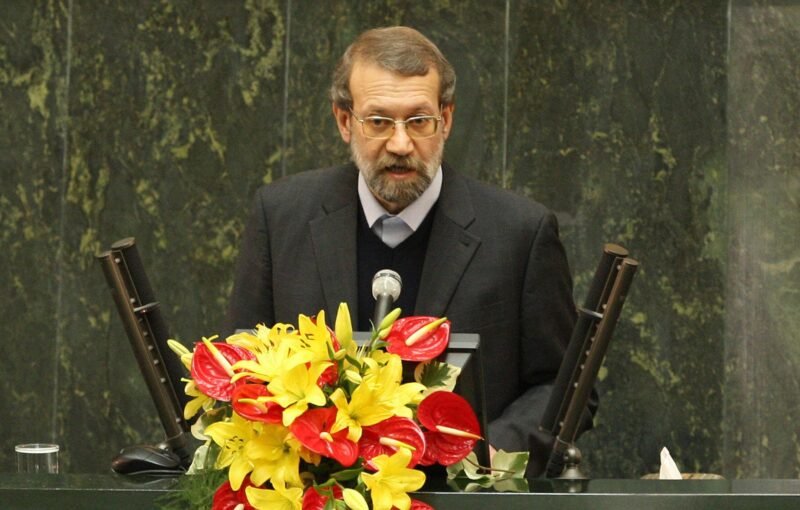
He believed the West would never accept Iran’s regime. Two decades later, he died in a war he once predicted.
Slain Iranian Security Chief Long Argued the West Sought Regime Change — A Warning That Now Echoes in War.
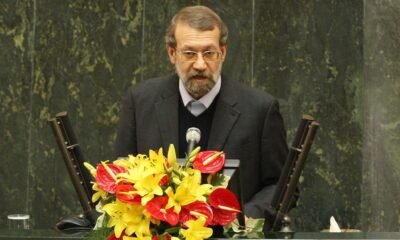
When Ali Larijani sat for an interview in Tehran in 2006, he was already convinced that Iran’s standoff with the West was not truly about uranium enrichment. It was about survival.
“If it was not the nuclear matter, they would have come up with something else,” he said at the time, dismissing Western concerns as pretext. The pressure on Iran, he argued, was reason enough to suspect that regime change — not diplomacy — was the real objective.
Nearly two decades later, Larijani is dead, reportedly killed in a targeted Israeli airstrike. His death marks one of the highest-profile assassinations since the conflict between Iran, Israel and the United States erupted into open war.
At the time of his death, Larijani was again serving as secretary of Iran’s Supreme National Security Council, the same post he held during fraught nuclear negotiations with Western powers in the mid-2000s.
A former commander in the Revolutionary Guards, he combined ideological loyalty with a calculating pragmatism that sometimes put him at odds with more flamboyant figures inside the Islamic Republic.
He had watched Mahmoud Ahmadinejad win the presidency in 2005 and bristled at what he saw as unnecessary provocations toward Israel and the West. Larijani sought accommodation that would preserve the regime’s security. Ahmadinejad preferred confrontation.
Their rivalry culminated in Larijani’s resignation in 2007 — widely interpreted as evidence that Supreme Leader Ali Khamenei sided with the president.
Yet Larijani never drifted far from power. He later became speaker of the Majles and remained a fixture within the ruling establishment. As unrest swept Iran in recent years, he was reportedly tasked with suppressing protests — a role critics say he carried out ruthlessly.
He was not a reformer. But neither was he a caricature. Reports suggested he opposed elevating Khamenei’s son, Mojtaba, to the supreme leadership, favoring instead a candidate who might temper public anger. Whether that was conviction or calculation is unclear.
What is clearer is that Larijani’s worldview — that the West’s hostility was implacable — shaped his politics. He warned in 2006 that war would send oil prices soaring and could lead to the closure of the Strait of Hormuz. Those predictions now define the global economic landscape.
His life embodied the paradox of Iran’s ruling elite: pragmatic yet unyielding, suspicious yet strategic. His death may silence one voice in Tehran, but it does not end the conviction he articulated years ago — that for Iran’s revolutionary state, compromise was always temporary, and confrontation inevitable.
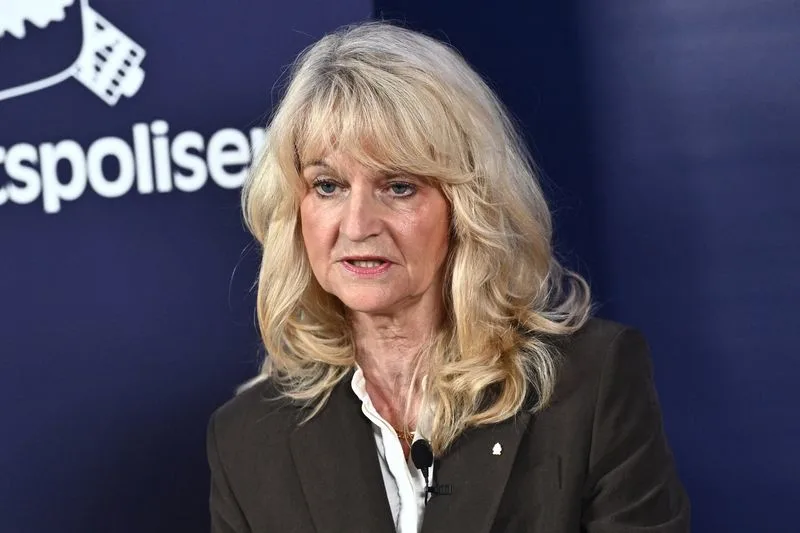
SAPO Says Risks to Jewish, American and Israeli Targets Have Increased Amid Escalating Middle East Conflict.
The Iran war isn’t just reshaping the Middle East. Sweden now says the fallout is reaching Europe’s north.
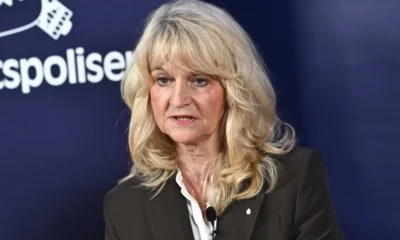
Sweden’s Security Service has warned that the war involving Iran, Israel and the United States is increasing security risks inside the Nordic country, including potential threats to Jewish, American and Israeli interests.
In its annual national security assessment released Wednesday, the Swedish Security Service, known as SAPO, said developments in the Middle East are heightening concerns about retaliatory actions and proxy activities on European soil.
“History has shown that a desperate and pressured regime can be a dangerous regime,” said Fredrik Hallstrom, SAPO’s head of operations, referring to the current conflict involving Iran.
Security Service Chief Charlotte von Essen stated in the report that the U.S.-Israeli military operation against Iran — and Tehran’s countermeasures — have “increased the threat against American, Israeli and Jewish targets in Sweden.”
Iran has long been viewed by Swedish authorities as a potential security concern. Officials have previously warned that foreign state actors have exploited domestic criminal networks, particularly amid Sweden’s ongoing struggle with gang-related violence, to conduct operations inside the country.
Beyond Iran, the agency reiterated that Russia remains the primary long-term security challenge. SAPO described Moscow as increasingly willing to engage in hybrid operations across Europe in support of its war in Ukraine. Russian authorities have repeatedly denied involvement in such activities.
Swedish investigators have reviewed hundreds of suspected sabotage cases in recent years, including incidents involving underwater cables, electricity substations and water treatment facilities. However, SAPO said it has not been able to definitively link any physical sabotage inside Sweden to a foreign power.
“Overall we expect that the threat levels against Sweden will continue to deteriorate in the coming years,” von Essen said.
The assessment underscores a broader European concern: conflicts far beyond the continent’s borders are increasingly generating security repercussions at home, from infrastructure vulnerabilities to potential attacks on symbolic targets.
For Sweden, once regarded as a relatively insulated nation, the message from its security services is clear — global instability is now a domestic issue.
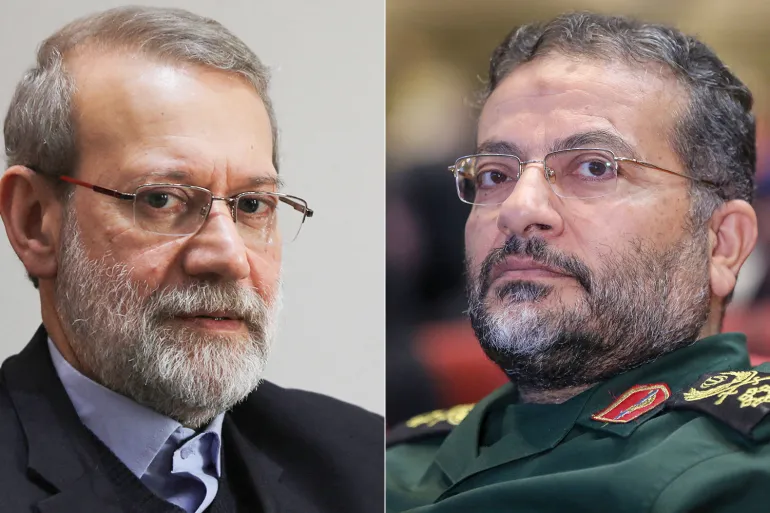
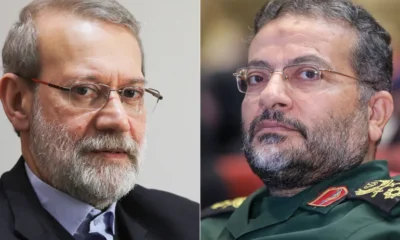
The Islamic Revolutionary Guard Corps has officially confirmed the death of Ali Larijani, the influential head of Iran’s Supreme National Security Council, following a series of joint US-Israeli airstrikes.
Larijani, a former parliamentary speaker and a pivotal advisor to the late Supreme Leader Ali Khamenei, was widely regarded as the most powerful political figure in the country during the current leadership transition.
Reports from the IRGC’s media arm indicate that Larijani was killed alongside his son, Mortaza, and his security deputy, Alireza Bayat.
The operation also resulted in the death of Brigadier General Gholamreza Soleimani, the commander of the Basij militia, as confirmed by Israeli Defense Minister Israel Katz.
The loss of Larijani marks a significant moment in the ongoing conflict, as Western analysts previously identified him as the de facto leader overseeing the selection of a successor to the supreme leadership.
While US and Israeli officials have signaled that regime change remains a primary strategic objective, Iranian officials maintain that the government remains resilient.
They point to the swift appointment of Mojtaba Khamenei to succeed his father as evidence that the administration’s core structure remains intact despite the targeted assassination of its top-tier leadership.
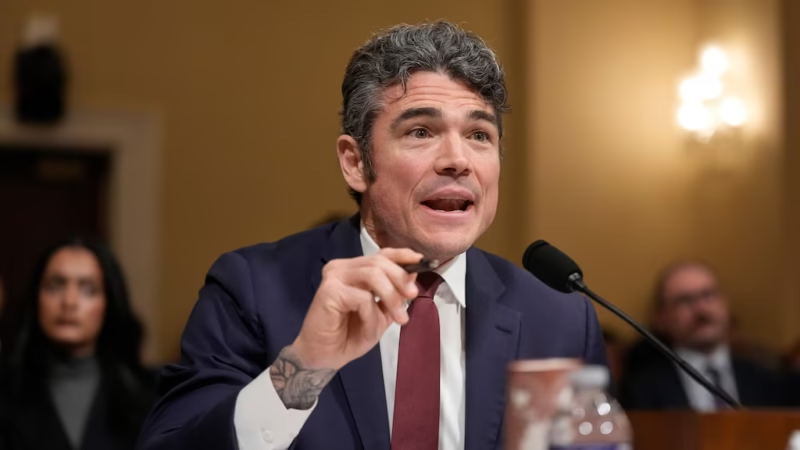
A senior U.S. security official walks away — saying Iran posed no imminent threat. The war debate just moved inside the White House.
Joe Kent Resigns as National Counterterrorism Center Director, Accuses Israel of Driving U.S. Into Conflict.
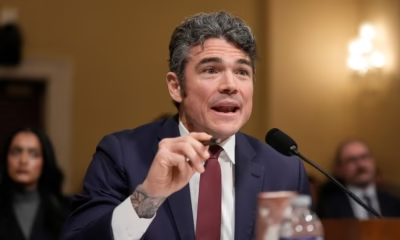
Joe Kent, director of the National Counterterrorism Center, resigned Tuesday in protest over the administration’s war with Iran, declaring that he could not support a conflict he believes was unnecessary and influenced by Israel.
In a resignation letter posted publicly, Kent wrote that Iran posed “no imminent threat” to the United States and argued that Washington had been drawn into war under pressure from Israeli officials and their American allies.
Kent, a former U.S. Army Special Forces warrant officer, served under Director of National Intelligence Tulsi Gabbard. His departure marks one of the most senior resignations tied directly to the current conflict.
In his letter, Kent praised Donald Trump for actions taken during his first term, including the killing of Iranian General Qassem Soleimani and operations against ISIS, while avoiding what he described as “endless wars.”
But he accused the administration of abandoning that posture amid what he called a misinformation campaign pushing for confrontation with Tehran.
Kent drew parallels to the run-up to the Iraq war, warning against repeating what he described as strategic misjudgments driven by flawed intelligence narratives.
The White House responded sharply. Speaking at a public event, Trump said he had read Kent’s statement and described him as “weak on security.” The president rejected the assertion that Iran was not a threat, insisting that global consensus recognized Tehran’s danger.
Kent’s political background has been controversial. He twice ran for Congress in Washington state and lost.
His campaigns drew scrutiny over associations with far-right activists and conspiracy-driven rhetoric surrounding the 2020 election and the January 6 Capitol attack. He was confirmed to his counterterrorism role on a narrow, partisan Senate vote.
His resignation underscores widening fractures within the administration and the broader conservative coalition over the Iran war. While some Republicans argue the campaign is necessary to degrade Tehran’s military capacity, others fear it risks becoming another prolonged Middle Eastern entanglement.
Kent’s departure does not change U.S. strategy, but it highlights internal dissent at a sensitive moment. Wars abroad often expose divisions at home. In this case, the disagreement is no longer confined to lawmakers or commentators — it has reached the upper ranks of America’s counterterrorism leadership.
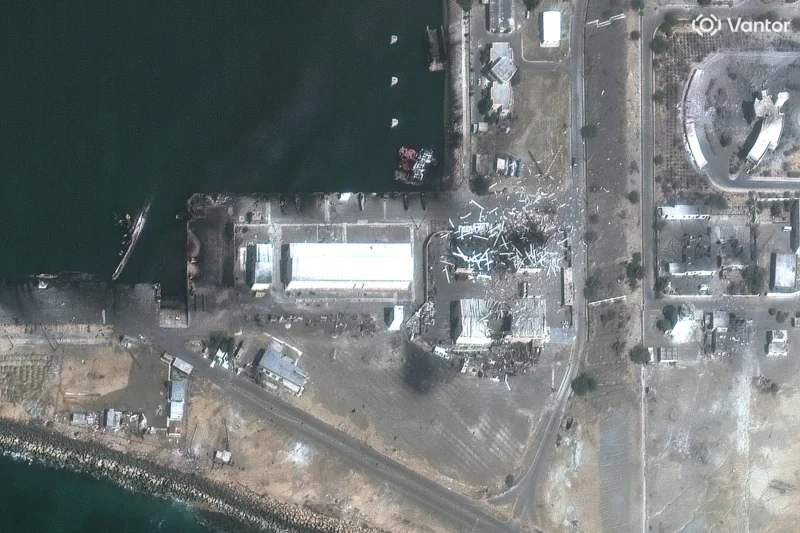
CENTCOM Chief Says Mines, Drone Boats and Torpedo Sites Targeted as Washington Moves to Secure Strait of Hormuz.
It’s no longer just warships. The U.S. is dismantling Iran’s hidden naval weapons — piece by piece.
The U.S. military is broadening its campaign against Iran’s naval capabilities, targeting not only warships but also mines, drone boats and torpedo production sites in a bid to secure the Strait of Hormuz.
Adm. Brad Cooper, commander of US Central Command, said Monday that American forces have destroyed more than 100 Iranian naval vessels and are intensifying efforts to eliminate what he described as Tehran’s “decades-old threat” to maritime commerce.
“We’re also zeroed in on dismantling Iran’s threat to the free flow of commerce through the Strait of Hormuz,” Cooper said in a video statement.
Over the weekend, U.S. forces struck more than 90 military targets on Kharg Island, Iran’s primary oil export hub located roughly 300 miles from the strategic waterway. Among the targets were storage bunkers for naval mines, drone storage facilities and sites producing light- and heavy-weight torpedoes.
While President Donald Trump has said Iranian oil infrastructure at Kharg was spared, he warned that restraint could end if Tehran interferes further with shipping in the strait — a chokepoint through which about one-fifth of global oil supplies pass.
U.S. officials previously said more than 60 Iranian ships and 30 minelayers had been damaged or destroyed since the launch of Operation Epic Fury on Feb. 28. Gen. Dan Caine, chairman of the Joint Chiefs of Staff, confirmed that MGM-140 Army Tactical Missile Systems, or ATACMS, were used to sink multiple vessels, including a submarine.
The shift reflects Washington’s assessment that Iran is more likely to rely on asymmetric naval tactics — mines, fast attack craft and unmanned vessels — than conventional fleet battles. By targeting these tools, U.S. planners aim to blunt Tehran’s capacity to disrupt tanker traffic and destabilize energy markets.
The conflict has exacted heavy costs. Iranian and Israeli officials report hundreds of casualties on both sides. At least 13 U.S. service members have been killed since operations began, including six airmen who died when a KC-135 refueling aircraft crashed in Iraq last week.
As the war enters its third week, Washington’s strategy appears clear: degrade Iran’s ability to threaten Hormuz before the economic shock spreads further. Whether these strikes are enough to deter Tehran — or provoke broader escalation — remains uncertain.
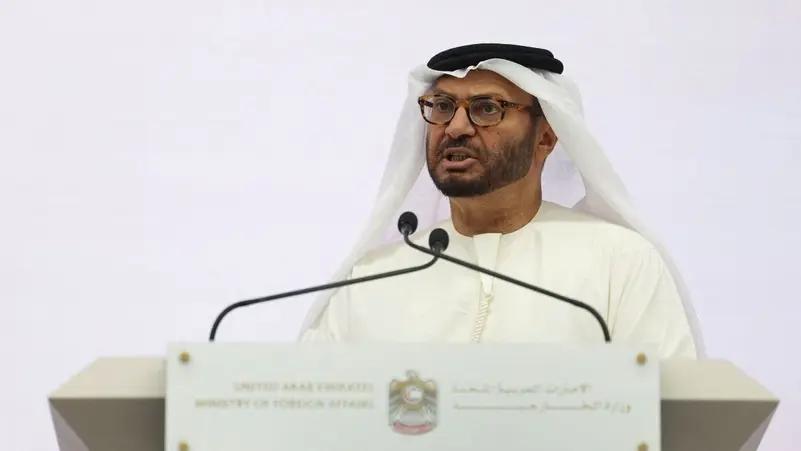
Senior Adviser Anwar Gargash Says Emirates Could Support Effort to Safeguard Shipping as Iran Crisis Deepens.
The Strait of Hormuz is the world’s most dangerous shipping lane — and the UAE may now be ready to act.
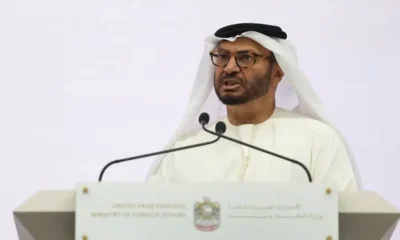
The United Arab Emirates could join a U.S.-led international effort to protect shipping through the Strait of Hormuz, a senior Emirati official said Tuesday, signaling a potential shift as tensions with Iran continue to rattle global energy markets.
Anwar Gargash, diplomatic adviser to the UAE president, said discussions were ongoing but no formal agreement had been finalized.
“We all have a responsibility to ensure the flow of trade, the flow of energy,” Gargash said during an online event hosted by the Council on Foreign Relations.
His remarks come as Iran has effectively blocked or severely disrupted traffic through the narrow waterway, through which roughly one-fifth of global oil supplies transit. The disruption has pushed energy prices sharply higher and intensified pressure on governments dependent on Gulf exports.
President Donald Trump has called on allied nations to deploy naval assets to escort commercial tankers and help restore safe passage. So far, responses from major powers have been cautious, with several governments weighing the risks of becoming more directly involved in the conflict.
The UAE’s position is particularly sensitive. While it hosts U.S. military forces and remains a key American security partner, Emirati officials have repeatedly stressed that they do not seek escalation. At the same time, the country’s economy depends heavily on uninterrupted energy exports and maritime trade.
Gargash suggested that any stabilization effort would need to extend beyond reopening the strait. Once the war between the United States, Israel and Iran ends, he said, a broader framework would be required to prevent Tehran from using its nuclear, missile or drone programs to destabilize the region again.
The statement reflects the Gulf’s strategic dilemma: protect vital economic lifelines without being drawn into a prolonged regional war. For now, the UAE appears open to coordination — but careful not to commit until the shape and scope of the mission become clearer.
Whether a multinational naval coalition materializes may determine not only the security of a narrow stretch of water, but also the trajectory of a conflict that is already reshaping the Middle East’s balance of power.

Why Is Finland Eyeing the Iran War?

Iran Threatens Gulf Energy Hubs

After Iran, Is Turkey Next?


-
 Terrorism2 months ago
America Pulls Back From Somalia but Doubles Down Next Door
-

 Somaliland2 months ago
F-35s Over Hargeisa: The Night Somaliland’s Sovereignty Went Supersonic
-

 Somalia2 months ago
Aid Destroyed, Trust Shattered: Somalia Loses U.S. Support for Good
-
 Terrorism2 months ago
Foreign ISIS Pipeline Exposed: Puntland Captures Dozens of Non-Somali Fighters
-

 Somaliland2 months ago
Somaliland at Davos: The Moment Somaliland Entered the World’s Inner Circle
-

 Analysis2 months ago
How Chinese Speculators Set the Stage for the Gold and Silver Crash
-

 Top stories2 months ago
France Blocks EU Push to Let Ukraine Buy British Storm Shadow Missiles
-
 Military2 months ago
Ethiopia, Morocco Formalize Military Cooperation