
Comment
Carter’s Camp David Masterstroke: A Lesson for Today’s Power Brokers


Jimmy Carter’s obsessive diplomacy birthed a fragile but historic Middle East peace deal—what Trump and today’s leaders must learn from Camp David.
Jimmy Carter didn’t just broker peace between Israel and Egypt—he redefined presidential diplomacy by fusing moral conviction with tactical obsession.
While most presidents shield themselves from messy global crises, Carter grabbed the Middle East’s most volatile conflict by the horns. He gambled everything—his presidency, reputation, even U.S. strategic leverage—to force Israel’s Menachem Begin and Egypt’s Anwar Sadat into a reluctant historic truce. Unlike his successors, he didn’t hide behind envoys. He locked world leaders in a forest cabin, memorized every inch of Sinai topography, read psychological profiles like a spy chief, and wrote the damn treaty himself.
The result? The first Arab country recognized Israel, forever redrawing regional politics. But Carter’s legacy also comes with a caution: the deal’s second act—Palestinian autonomy—was gutted by legal vagueness and Begin’s bad faith. It was a triumph with a ticking bomb underneath. Begin got the Nobel. Sadat got assassinated.
Today, as Trump eyes a Saudi-Israel mega-deal and Gaza burns, Carter’s ghost looms large. Trump wants a Camp David-style splash—complete with Arab recognition and a sidelined Iran. But here’s the Carter doctrine he must understand: there is no real deal without Palestinian dignity, no lasting pact without sacrifice from all sides, and no breakthrough without a U.S. leader willing to bleed political capital.
Camp David wasn’t clean. It was human, high-stakes, and raw—equal parts threat, charm, and chess. It reminds us that peace is not made by summits or selfies, but by presidents who risk everything in rooms without cameras.
Carter played for history. Who’s ready to do that now?

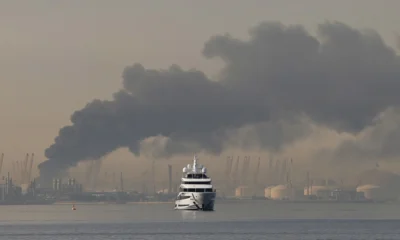
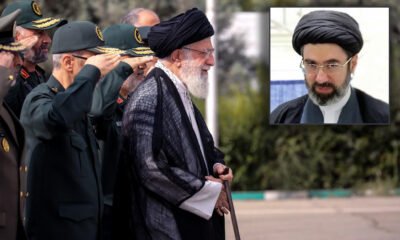
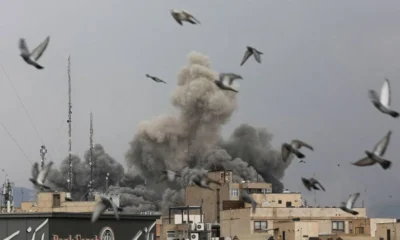

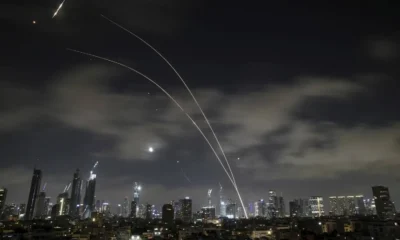

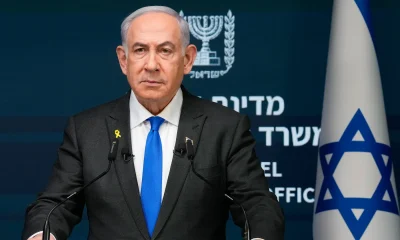

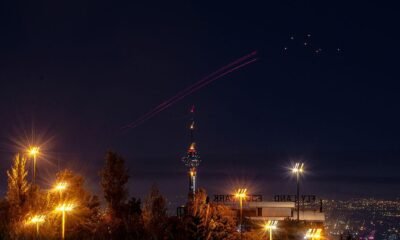

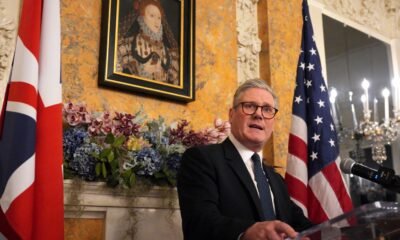

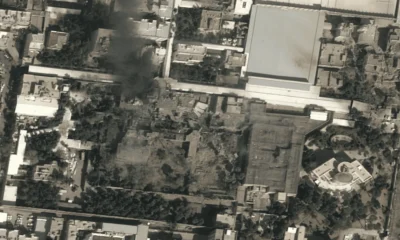




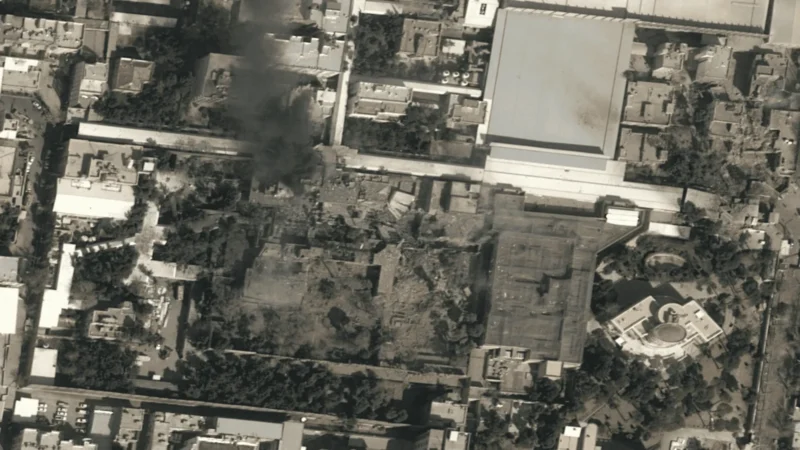
Leadership Council Forms as Tehran Moves Swiftly to Prevent a Power Vacuum After US-Israeli Strike.
Was this a decapitation meant to collapse Iran — or the moment that forces it to consolidate and strike back?
The killing of Iran’s Supreme Leader, Ali Khamenei, in a joint U.S.-Israeli strike has triggered the most consequential leadership transition in the Islamic Republic since 1989. But instead of chaos, Tehran has responded with speed.
Within hours, Iranian authorities confirmed the formation of an interim leadership structure under constitutional provisions designed for precisely this moment. According to international reporting, Alireza Arafi has been appointed as the jurist member of a temporary leadership council tasked with exercising the supreme leader’s authority until the Assembly of Experts selects a successor.
That move matters. It signals continuity — not collapse.
For decades, Iran has operated under sanctions, covert pressure and military threats. Its political architecture was built with redundancy. Succession planning is embedded in its system because siege conditions were never theoretical. The rapid appointment to the interim council suggests the state intends to close any vacuum quickly and limit elite fragmentation.
The broader question now is succession.
Among names frequently discussed is Mojtaba Khamenei, the late leader’s son. His perceived advantage would be network continuity and reassurance to hardline constituencies. But hereditary optics carry risks in a republic born from anti-monarchical revolution.
Another possibility is Hassan Khomeini, grandson of the revolution’s founder. His symbolic legitimacy could unify factions, though symbolism alone may not satisfy security-driven elites in wartime.
Clerical heavyweights such as Sadeq Amoli Larijani or Ahmad Khatami represent institutional continuity. Meanwhile, political operators like Ali Larijani could emerge as power brokers shaping consensus behind the scenes.
Above all stands the Islamic Revolutionary Guard Corps (IRGC). In moments of existential threat, security institutions tend to gain influence. External attempts at “decapitation” often produce the opposite of fragmentation — accelerated consolidation and a harder posture.
Strategically, the strike was widely interpreted as an effort to paralyze decision-making and disrupt succession. Yet early signs suggest Iran’s system remains operational. The leadership council framework indicates the state is prioritizing legibility to itself — keeping chains of command intact even under bombardment.
Regionally, the emotional impact is profound. For Shiite communities beyond Iran’s borders, Khamenei’s death may deepen anti-Israeli sentiment and intensify confrontation with Western allies. Political violence in the Middle East rarely stays contained; it travels through networks of memory, grievance and identity.
The larger geopolitical shift is equally significant. Targeted elimination of a sitting head of state redraws perceived boundaries of sovereignty. Whether this becomes a new precedent — or an isolated rupture — will shape regional calculations for years.
Iran now enters a succession phase under fire. The decisive variable is not whether the system feels shock. It does. The question is whether pressure fractures it — or forces it into a more disciplined, more centralized survival mode.
History suggests states built for siege rarely disintegrate on command.
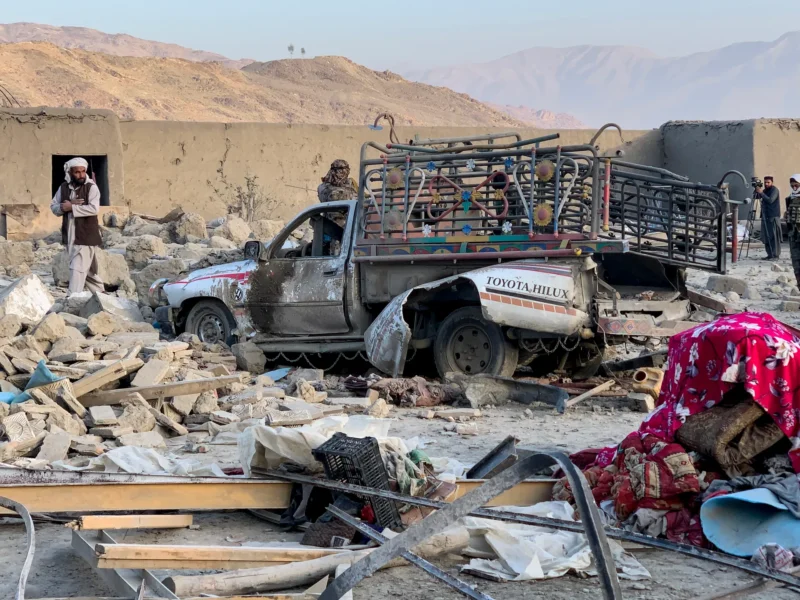
Air strikes on Kabul. Artillery at Torkham. “Open war” declared. How did neighbors turn into battlefield rivals?
Pakistan has launched air strikes on Afghanistan’s capital, Kabul, as well as targets in Paktia and Kandahar, marking one of the most serious escalations between the two countries since the Taliban returned to power in 2021.
Pakistani Defense Minister Khawaja Asif declared that Islamabad’s “cup of patience has overflowed,” describing the confrontation as “open war.” Afghanistan’s Taliban government confirmed the strikes and said it had begun “large-scale offensive operations” along the border in response.
The fighting follows weeks of clashes along the 2,600-kilometer Durand Line, the disputed frontier that Afghanistan has never formally recognized. Gunfire and shelling were reported near the key Torkham crossing, a vital trade and transit route.
Both sides claim heavy casualties. Pakistani officials say dozens of Taliban fighters were killed in air strikes and border battles. Kabul disputes those numbers and claims its forces inflicted significant losses on Pakistani troops. Independent verification remains difficult.
At the core of the conflict lies Pakistan’s long-standing demand that the Afghan Taliban crack down on Tehreek-e-Taliban Pakistan (TTP), a militant group responsible for deadly attacks inside Pakistan. Islamabad accuses Kabul of allowing TTP fighters to operate from Afghan territory — a charge the Taliban deny.
Since 2022, attacks in Pakistan’s Khyber Pakhtunkhwa and Balochistan provinces have surged. Analysts say Islamabad’s frustration has grown as diplomatic efforts and ceasefires repeatedly collapsed.
Another source of tension is the Durand Line itself. Afghanistan considers the British-era border illegitimate, arguing it divided Pashtun communities. Pakistan insists it is the recognized international boundary.
Military imbalance complicates the picture. Pakistan fields a far larger, better-equipped force, including air power — something the Taliban lack. That gives Islamabad the ability to strike deep into Afghan territory without crossing the border. However, experts warn that Afghanistan could respond asymmetrically, potentially through proxy fighters or cross-border attacks.
International reaction has been swift. The United Nations has urged restraint. Iran and Russia have called for dialogue. India condemned Pakistan’s air strikes, accusing Islamabad of exporting its internal instability.
The risk now is miscalculation. What began as cross-border skirmishes could spiral into sustained confrontation. Neither side appears ready to back down — and both face internal pressures that make compromise politically costly.
For two neighbors bound by geography and history, the latest exchange underscores a volatile truth: unfinished disputes and militant safe havens can quickly ignite into open conflict.
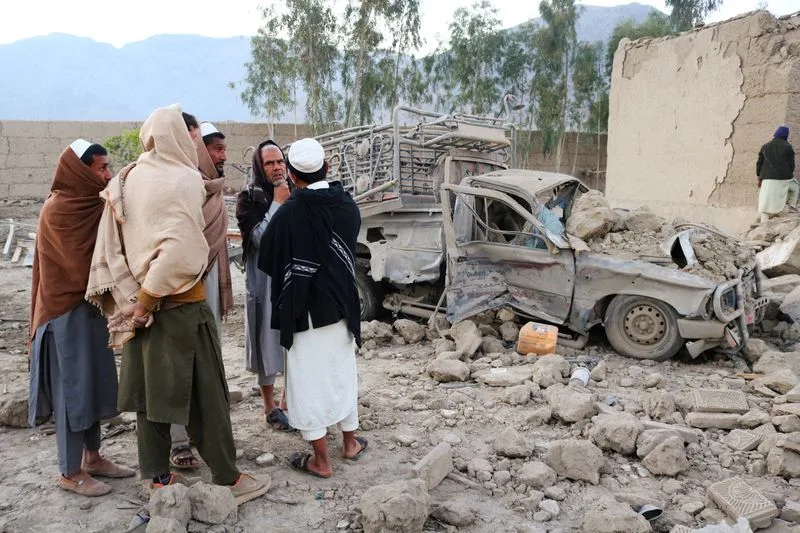
Airstrikes. Border clashes. A fragile ceasefire at risk. What’s really fueling the latest Afghanistan–Pakistan standoff?
Tensions between Afghanistan and Pakistan have surged after Pakistan launched airstrikes on what it described as militant targets inside Afghan territory, threatening a fragile ceasefire that has held since deadly clashes in October.
Pakistani security officials said the strikes killed at least 70 militants. The United Nations reported that at least 13 civilians also died. The Taliban government in Kabul condemned the operation and warned of a response.
At the heart of the dispute is Islamabad’s long-standing accusation that Tehreek-e-Taliban Pakistan (TTP) fighters operate from Afghan soil. Pakistan says TTP leaders and Baloch insurgents use safe havens across the border to stage attacks inside Pakistan. Kabul denies allowing its territory to be used against its neighbor.
The immediate trigger for the latest strikes was a string of recent attacks in Pakistan. Security sources cited multiple incidents since late 2024 that they claim were linked to militants based in Afghanistan. One attack in Bajaur district last week killed 11 security personnel and two civilians. Pakistan says the attacker was an Afghan national; the TTP claimed responsibility.
The TTP, formed in 2007, has carried out attacks on markets, mosques, military bases and schools, including the 2012 shooting of Malala Yousafzai. While Pakistan conducted large-scale operations that reduced violence by 2016, militant activity has steadily increased since 2022, according to conflict monitoring groups.
Relations between Kabul and Islamabad have deteriorated despite Pakistan’s early support for the Taliban’s return to power in 2021. Islamabad expected cooperation against anti-Pakistan militants. Instead, mistrust has deepened, with repeated border closures disrupting trade and movement.
Militarily, the imbalance is stark. Pakistan fields more than 600,000 active personnel and hundreds of combat aircraft. The Taliban’s forces are far smaller and lack a modern air force. Yet analysts warn that the conflict could escalate through asymmetric retaliation, including cross-border raids or proxy attacks.
For now, both sides appear to be calibrating their responses. But with militant violence rising and diplomatic trust thin, the frontier remains one of South Asia’s most volatile fault lines.

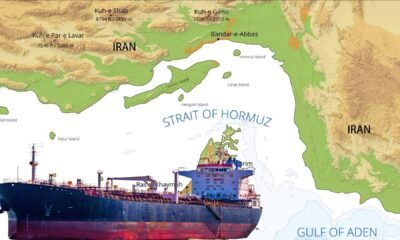
Warships in the Gulf. Tariffs on Iran’s trade partners. Quiet talks in Oman. Maximum Pressure is back — but is it leverage or escalation?
The return of “Maximum Pressure” is not just a policy shift. It is a performance of power.
The Trump administration has revived its coercive diplomacy toward Iran with calculated intensity: a reinforced U.S. naval presence in the Gulf, sweeping economic threats, and a parallel diplomatic channel through Oman. The choreography is deliberate. Force is visible. Negotiation is quiet. The message is unmistakable — Washington wants a deal, but on its terms.
At the center of this strategy is economic isolation. A February 6 executive order threatening 25 percent tariffs on countries trading with Iran effectively extends U.S. sanctions outward, pressuring third parties to choose between access to the American market or engagement with Tehran. It is not simply punishment; it is structural coercion. The global trading system becomes an enforcement tool.
The military dimension reinforces that pressure. The deployment of the USS Abraham Lincoln Carrier Strike Group signals readiness without declaring war. President Donald Trump has warned of consequences “far worse” than previous strikes, invoking the June 2025 U.S.–Israeli campaign against Iranian targets. That precedent changed the calculus. Tehran can no longer assume rhetorical threats lack follow-through.
Yet the armada is paired with diplomacy. Indirect contacts mediated by Oman have been described as constructive. Neither side appears to seek full-scale conflict. A major invasion remains improbable in the near term. The more plausible trajectory is continued pressure aimed at extracting concessions — on nuclear enrichment, missile development, regional proxies, and internal repression.
The core obstacle is scope. Iran appears prepared to negotiate within a narrow nuclear framework. Washington demands broader behavioral change. That gap defines the risk.
If talks collapse, targeted strikes on nuclear or missile infrastructure become more likely. Maritime friction in the Gulf — especially between U.S. vessels and the Islamic Revolutionary Guard Corps — raises the possibility of miscalculation. Even a limited exchange could spiral.
But the objective is not regime change. It is strategic realignment. Maximum Pressure is designed to force integration into a U.S.-defined regional order without overt war.
The question now is psychological, not merely military: Does Tehran view this as theater — or as a credible promise? The answer will determine whether Muscat becomes the venue of breakthrough or the prelude to escalation.
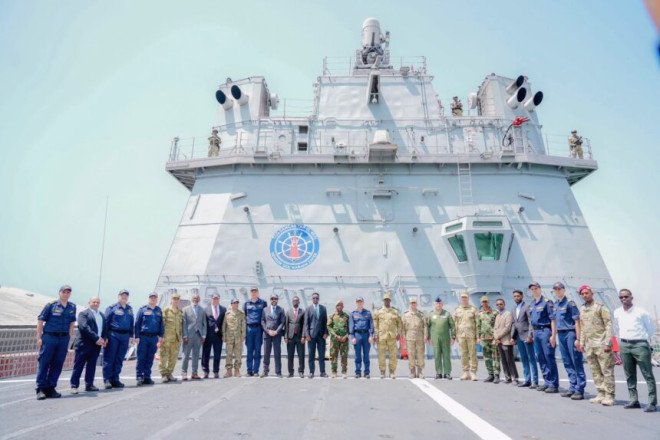
Ankara says “stability.” Somaliland sees risk. The Horn of Africa is entering a new strategic chapter — and the stakes are rising fast.
When Turkish warships docked in Mogadishu, alongside reports of F-16 fighter jet deliveries and offshore drilling plans, the signal was unmistakable: Ankara is deepening its footprint in Somalia. For Somaliland — whose collective memory still carries the trauma of the 1988 bombardment of Hargeisa by the regime of Siad Barre — the optics alone are unsettling. Military expansion in Mogadishu is rarely viewed as defensive. It is viewed through history.
Yet a sober assessment of the Turkey–Somalia defense and economic framework suggests a more complex reality. Turkey is unlikely to launch — or support — an offensive campaign against Somaliland. The strategic costs would be immense.
As a key member of NATO, Ankara positions itself as a regional stabilizer, not a proxy combatant in Somalia’s internal territorial disputes. An unprovoked escalation against a relatively stable and democratic territory with informal ties to the United Kingdom, the UAE and Ethiopia would undermine Turkey’s diplomatic standing at a time when it seeks influence across Africa and the Red Sea corridor.
Economics also act as a restraint. Turkey’s maritime doctrine — often described as the “Blue Homeland” — prioritizes sea lanes, energy access and trade routes. A regional war would jeopardize precisely the offshore prospects and shipping stability Ankara hopes to cultivate. Investors do not drill in active conflict zones.
Ethiopia further complicates any military calculus. Somaliland’s memorandum of understanding with Ethiopia creates a deterrent layer Ankara cannot ignore. Turkey maintains significant economic and defense ties with Addis Ababa; it is unlikely to risk indirect confrontation over Mogadishu’s maximalist claims.
Still, the danger lies less in intent than in imbalance. Advanced aircraft in a fragile security environment introduce new variables. Even if initially deployed against Al-Shabaab, the capability itself alters regional power equations. History in Somalia has shown how quickly state assets can be redirected.
Maritime cooperation carries similar risks. If Turkish-trained Somali naval units patrol waters claimed by Somaliland — particularly near the vital Berbera corridor — even minor incidents could escalate into diplomatic crises.
The most combustible element may be energy exploration. Should Turkish drilling vessels operate in offshore blocks Somaliland considers within its jurisdiction, a commercial venture could morph into a sovereignty dispute with international implications.
Turkey is not preparing an invasion. It is consolidating influence — military, economic and maritime — in a strategically vital region. For Somaliland, the challenge is not alarmism but strategy: direct engagement with Ankara, stronger regional integration with Ethiopia, and early internationalization of maritime boundary concerns.
In the Horn of Africa, power shifts rarely announce themselves loudly. They unfold quietly — until they don’t.
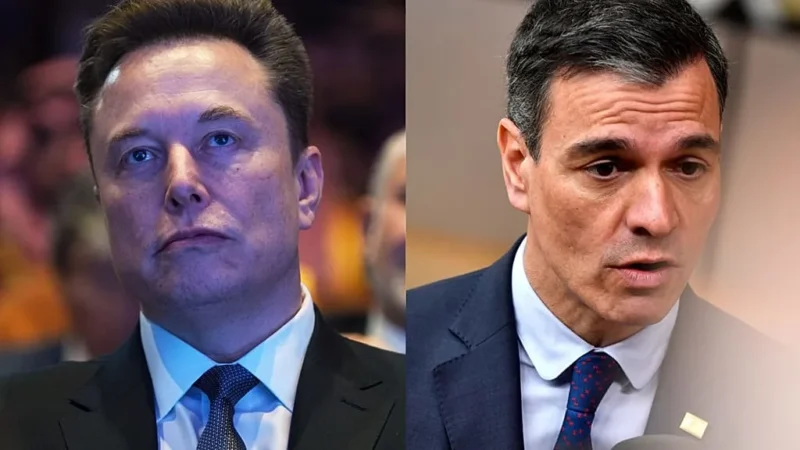
Europe tightens the net on Big Tech — and Musk is furious. Is Spain protecting children… or crossing into digital authoritarianism?
Tech billionaire Elon Musk on Tuesday launched a blistering attack on Spanish Prime Minister Pedro Sánchez, accusing him of authoritarianism after Madrid unveiled plans to sharply tighten regulation of social media platforms—particularly to shield minors from online harm.
The clash was triggered by Sánchez’s announcement of a forthcoming legislative package that would bar children under 16 from accessing social networks and impose meaningful age-verification requirements on platforms operating in Spain. Under the proposal, executives could face legal liability if their companies fail to remove illegal or hateful content, a move the government says is necessary to end what it describes as the digital “Wild West.”
Musk, who owns the social media platform X, responded with characteristic bluntness, labeling Sánchez a “tyrant” and using a derogatory nickname for the Spanish leader. The remarks underline a widening rift between U.S. tech leaders who champion minimal moderation in the name of free speech and European governments pushing for stricter oversight.
Spanish officials argue the measures are long overdue. Sánchez said platforms would no longer be allowed to rely on “easily bypassed checkboxes” to verify users’ ages and warned that failure to comply could have legal consequences for those at the top. The aim, he said, is to curb the spread of hate speech and protect young users from harmful content.
The dispute unfolds as the European Union intensifies scrutiny of major tech firms. Brussels has already fined X for breaching transparency rules, and regulators across the bloc are exploring ways to enforce digital standards more aggressively. On Tuesday, French authorities searched X’s Paris offices as part of an investigation into alleged algorithm manipulation and possible foreign interference—an inquiry that has summoned Musk to testify. X said it was “disappointed but not surprised,” rejecting the allegations and warning that the probe threatens free expression.
For Sánchez, the confrontation with Musk plays into a broader European push to reassert control over online spaces, particularly where children are concerned. For Musk, it reinforces his self-styled role as a global critic of regulation he views as censorship. As Europe presses ahead with tougher digital rules, the standoff highlights a deeper question: who sets the boundaries of speech and responsibility in an increasingly regulated online world?
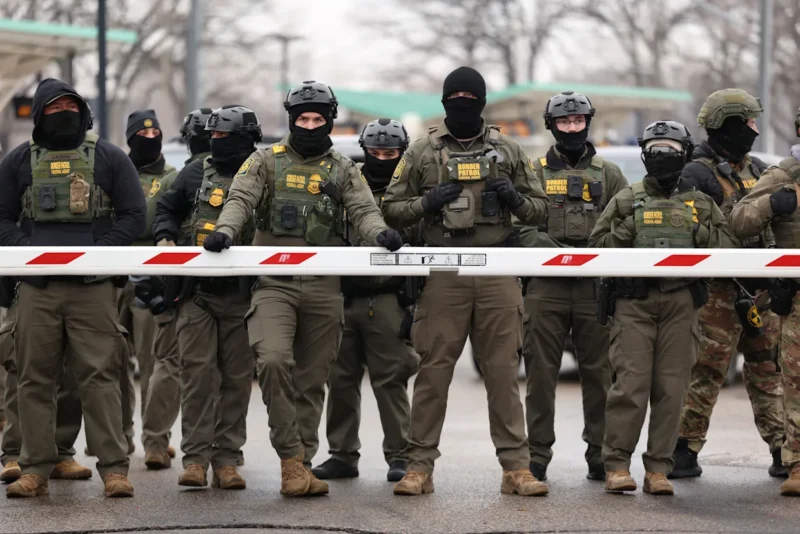
Masks Off, Cameras On—or Shutdown: Politics Return as Minneapolis Shootings Ignite DHS Showdown in Congress.
One shooting became two. Two deaths became a shutdown threat. Now DHS funding holds the government hostage.
Another U.S. government shutdown is looming, and this time the trigger is not abstract budget math but blood on the streets of Minneapolis.
With federal funding set to expire at midnight on Friday, Jan. 30, Senate Democrats are threatening to block any spending bill that includes funding for the Department of Homeland Security, escalating a standoff sparked by the fatal shooting of U.S. citizen Alex Pretti by a federal immigration officer. The killing came just weeks after another Minnesotan, Renée Good, died in a similar encounter — a sequence that has pushed immigration enforcement from a partisan dispute into a national reckoning.
At the center of the confrontation is Department of Homeland Security, which oversees Immigration and Customs Enforcement and Customs and Border Protection. For years, Democrats have criticized ICE’s tactics. Now, moderate senators who previously helped avert shutdowns are drawing a line.
“I hate shutdowns,” said Angus King, “but I can’t vote for a bill that includes ICE funding under these circumstances.” Colorado Democrat John Hickenlooper was blunter: “ICE is out of control.”
On Wednesday, Senate Minority Leader Chuck Schumer laid out a set of demands that amount to the most serious attempt yet to rein in federal immigration enforcement. They include tighter warrant rules, mandatory coordination with local law enforcement, a uniform federal code of conduct — and, most symbolically, a ban on masked agents combined with mandatory body cameras and visible identification.
“We want masks off, body cameras on,” Schumer said. “No more anonymous agents.”
Republicans see the demands as an effort to cripple President Donald Trump’s immigration crackdown. Democrats see them as basic guardrails after two citizens were killed in encounters with federal agents. The impasse has frozen what was, until days ago, a viable funding plan.
Congress had opted to split government funding into three bills. Two have already passed, keeping departments like Agriculture, Energy, and Justice open. The third — which includes DHS — narrowly cleared the House and appeared headed for Senate passage until the Minneapolis shooting shifted the political terrain.
Now Democrats say they will filibuster unless DHS funding is stripped out. They are willing to pass the rest of the government funding immediately, leaving DHS to negotiate separately. Republicans, led by Senate Majority Leader John Thune, insist on keeping the package intact. Thune has scheduled a vote for Thursday, widely expected to fail.
The White House is backing that approach. Press Secretary Karoline Leavitt said the administration wants the Senate to move forward with the full bill. Trump, for his part, has shown no sign of moderating enforcement tactics — and Democrats say executive promises are meaningless. “You cannot trust this administration,” said Nevada Sen. Jacky Rosen.
Procedurally, time is the enemy. Any change to the bill would require another House vote, but the House is currently in recess. Speaker Mike Johnson could recall lawmakers — or keep them away, as he did during the last shutdown.
If no deal is reached, the shutdown would be partial. Food assistance and national parks would continue. But air traffic controllers and TSA officers would again work without pay, federal workers would be furloughed, and loans, permits, and grant approvals would stall. Even if only DHS shuts down, agencies like disaster relief and the Transportation Security Administration lack the financial buffers ICE and CBP enjoy after last summer’s massive funding boost.
Cracks are also appearing inside the GOP. Republican Sens. Lisa Murkowski and Thom Tillis have called for DHS Secretary Kristi Noem to resign. Missouri Sen. Josh Hawley warned that current tactics are “not safe for anybody.”
Whether that unease translates into votes for reform remains unclear.
What is clear is that immigration enforcement has become the fulcrum of federal governance. Last fall, health care drove a record 43-day shutdown. Now DHS — and the conduct of masked federal agents on American streets — threatens to do the same.
The ticking clock is no longer just about funding. It is about accountability, trust, and whether Congress can still draw limits around executive power before the lights go out again.

As Washington shakes alliances, Beijing opens its doors—and Britain walks in.
British Prime Minister Keir Starmer arrived in Beijing this week for the first visit by a UK leader since 2018, signaling a cautious but deliberate reset in relations with China at a moment of widening strain between the United States and its traditional allies.
Starmer’s three-day trip, accompanied by a sizable business delegation, places Britain at the center of a broader European diplomatic surge toward Beijing. The visit comes as U.S. foreign policy under Donald Trump injects volatility into transatlantic ties, pushing middle powers to hedge rather than choose sides.
Speaking en route, Starmer rejected calls for isolation, framing engagement as a matter of national interest. Britain, he argued, must remain vigilant on security while recognizing that disengaging from the world’s second-largest economy is neither realistic nor strategic. “It doesn’t make sense to bury our head in the sand when it comes to China,” he said, describing the visit as an opportunity to make “real progress.”
That message carried into his first meeting with Xi Jinping at the Great Hall of the People. Starmer told Xi that it had been “too long” since a British prime minister visited China and called for a “more sophisticated” relationship—language that suggests recalibration rather than rapprochement.
Xi, for his part, leaned into Beijing’s broader charm offensive. He urged the UK to work with China on global stability, climate change, and economic cooperation, arguing that past “twists and turns” in bilateral ties served neither country. As permanent members of the UN Security Council and major economies, Xi said, London and Beijing have a responsibility to deepen dialogue in an increasingly fragmented world.
Starmer is scheduled to meet Premier Li Qiang before traveling to Shanghai, where he and roughly 60 representatives from business, sport, and culture will hold talks with Chinese executives. The emphasis on commerce underscores London’s pragmatic calculation: political differences persist, but economic gravity is hard to ignore.
Britain’s move mirrors a wider European trend. France, South Korea, Ireland, Finland, and Canada have all sent senior delegations to Beijing in recent months. German Chancellor Friedrich Merz is expected to follow soon, reinforcing the sense that Europe is probing a more autonomous China policy as U.S. trade and security commitments appear increasingly conditional.
China, meanwhile, is exploiting the moment. After years of diplomatic retrenchment during the pandemic, Beijing is once again hosting foreign leaders, positioning itself as a predictable partner amid Western turbulence. Trump’s own planned trip to China in early April only sharpens the irony: allies are engaging Beijing partly because Washington has become harder to read.
The visit is not without friction. Plans for a large new Chinese embassy in London have sparked domestic criticism, and unresolved issues—most notably the erosion of freedoms in Hong Kong—hover over the talks. Starmer has declined to say whether he will raise sensitive cases such as the conviction of media tycoon Jimmy Lai, a silence that reflects the delicate balance he is trying to strike.
For now, Starmer is framing the trip as pragmatic statecraft rather than geopolitical defiance. He has played down suggestions that engaging China risks alienating the United States, or that Britain is embracing a “middle power” doctrine aimed at countering both Washington and Beijing.
“I’m a pragmatist,” Starmer said, “a British pragmatist applying common sense.”
In practice, that pragmatism marks a shift. Britain is no longer approaching China solely as a strategic problem to be managed, nor as a partner to be embraced uncritically. It is testing a narrower path—engagement without illusion, cooperation without alignment—at a time when the old certainties of the Western alliance are visibly under strain.

Will the Gulf Now Join the War?

Mojtaba Khamenei Chosen as Supreme Leader

Iran War’s Hidden Front: What It Means for Ukraine


-

 Somaliland1 month ago
F-35s Over Hargeisa: The Night Somaliland’s Sovereignty Went Supersonic
-

 Somalia1 month ago
Aid Destroyed, Trust Shattered: Somalia Loses U.S. Support for Good
-
 Terrorism2 months ago
Foreign ISIS Pipeline Exposed: Puntland Captures Dozens of Non-Somali Fighters
-

 Somaliland1 month ago
Somaliland at Davos: The Moment Somaliland Entered the World’s Inner Circle
-
 Terrorism1 month ago
America Pulls Back From Somalia but Doubles Down Next Door
-
 Top stories2 months ago
Somali Pirates Hijack Chinese Fishing Vessel off Puntland Coast
-
 Opinion2 months ago
Turkey’s Selective Morality: From the Ruins of Gaza to the Red Sea
-
 Middle East2 months ago
US War Plans Against Iran Enter Advanced Stage