
Modern Warfare
North Korea’s Kim Tours Uranium Enrichment Site, Calls For More Weapons

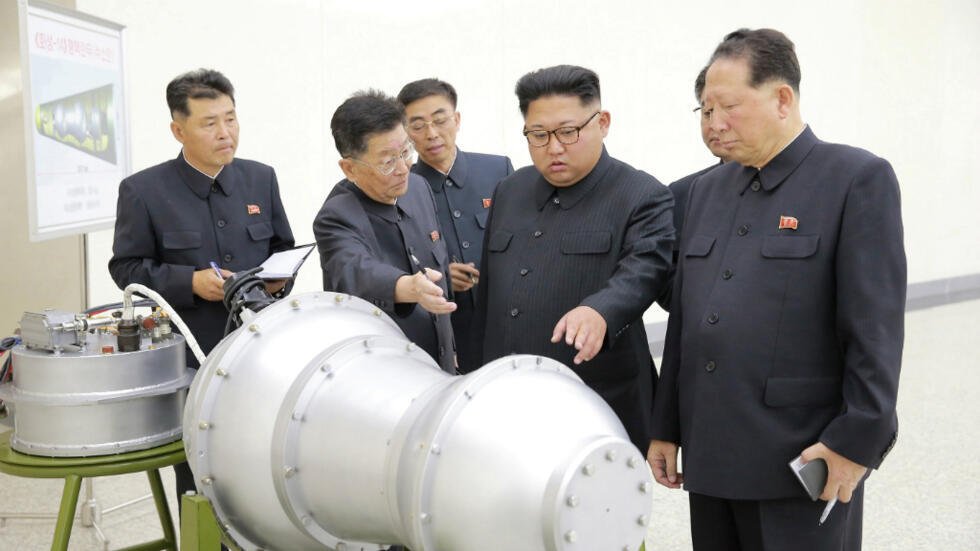
North Korea Reveals Uranium Enrichment Facility as Kim Pushes for Increased Nuclear Capabilities
North Korea’s state media revealed images of a uranium enrichment facility visited by leader Kim Jong Un, highlighting his ongoing push to significantly expand the country’s nuclear arsenal. This unveiling, part of a broader strategy to assert pressure on the U.S. and its allies, comes amid escalating global concerns over North Korea’s nuclear ambitions.
During his visit to the Nuclear Weapons Institute and a uranium enrichment production base, Kim Jong Un expressed “great satisfaction” with North Korea’s nuclear technology, according to the official Korean Central News Agency (KCNA). Kim’s tour included a detailed look at the control room and a construction site aimed at boosting the facility’s production capacity. State media photos captured Kim being briefed by scientists next to long rows of centrifuges, though the exact timing and location of the visit remain unspecified.
Kim emphasized the need to “exponentially increase” the number of nuclear weapons for self-defense, citing perceived threats from the U.S. and its allies. He ordered officials to expedite the development of a new type of centrifuge, believed to be advanced carbon fiber-based, which could substantially increase uranium production capabilities.
South Korea’s Unification Ministry condemned North Korea’s actions, labeling the development of nuclear weapons in defiance of UN sanctions as a serious threat to international peace. The ministry underscored the futility of North Korea’s nuclear pursuits and its potential to exacerbate regional instability.
The unveiling of the facility marks the first time North Korea has disclosed a uranium-enrichment site since allowing a tour of its Yongbyon complex to American scholars in 2010. At that time, North Korean officials revealed the presence of 2,000 operating centrifuges.
The recent images suggest North Korea has approximately 1,000 centrifuges at the newly revealed site. Analysts estimate that, if operated continuously, these could produce enough highly enriched uranium for one nuclear bomb annually. The potential introduction of advanced centrifuges could increase production capacity five to tenfold.
Experts like Ankit Panda from the Carnegie Endowment for International Peace view the images as crucial for refining estimates of North Korea’s nuclear material stockpile. The data could shift assumptions about North Korea’s capabilities, particularly in its production of highly enriched uranium versus plutonium.
Estimates of North Korea’s nuclear arsenal vary. In 2018, experts estimated the country had produced enough highly enriched uranium for 25 to 30 nuclear devices. Current speculation suggests North Korea may be capable of adding between six and 18 new bombs per year, depending on the efficiency of its enrichment processes.
Kim Jong Un’s recent visit to the uranium enrichment facility underscores North Korea’s ongoing commitment to expanding its nuclear capabilities despite international pressure and sanctions. The release of images from the site provides a rare glimpse into the country’s nuclear program, offering valuable insights into its production capabilities and future potential.
As global leaders continue to grapple with North Korea’s nuclear ambitions, the international community remains on high alert, monitoring developments closely to assess their impact on regional and global security.















Australian authorities have charged two Chinese nationals with foreign interference, accusing them of gathering intelligence on a Buddhist group in Canberra on behalf of Chinese security officials.
Federal police said Wednesday that a 25-year-old man and a 31-year-old woman were each charged with one count of “reckless foreign interference,” an offense carrying a maximum penalty of 15 years in prison. The pair are expected to appear in court later in the day.
Investigators allege the two worked alongside another Chinese national who was charged in August 2025 for covertly collecting information on the Guan Yin Citta movement. Authorities say the activities were directed by China’s Public Security Bureau, the country’s primary domestic law enforcement agency.
Australia’s federal police began investigating the case last year after receiving a tip from the Australian Security Intelligence Organisation. ASIO chief Mike Burgess described the broader security climate as “complex, challenging and changing,” warning that multiple foreign governments are attempting to monitor and intimidate members of diaspora communities in Australia.
“This sort of behaviour is utterly unacceptable and cannot be tolerated,” Burgess said in a statement.
Assistant Commissioner Stephen Nutt, who oversees counterterrorism and special investigations, said foreign interference and transnational repression disproportionately affect culturally and linguistically diverse communities. “Australia is not immune,” he added, cautioning that the arrests are unlikely to end such efforts.
The Guan Yin Citta group promotes Buddhist scripture recitation and spiritual practice and claims millions of followers worldwide. Beijing has labeled the movement a “cult,” and China’s security services have long been accused by rights groups of infiltrating overseas community organizations to track dissidents and expatriates.
Responding to the charges, Chinese Foreign Ministry spokesman Lin Jian urged Canberra to handle the matter “prudently” and to protect the rights of Chinese citizens, saying he was unaware of specific details of the case.
The arrests come against a backdrop of fluctuating ties between Canberra and Beijing. Relations have been strained in recent years by disputes over national security and influence in the Pacific, though trade tensions eased in 2024 when China lifted restrictions on Australian rock lobster imports. China remains Australia’s largest trading partner, accounting for nearly one-third of its total trade.

U.S. defence firm Anduril Industries opened a Sydney factory this week to build its “Ghost Shark” autonomous undersea vehicles, a tangible milestone in Australia’s push for sovereign maritime capability.
The A$1.7 billion ($1.1 billion) program — awarded in September to co-develop a fleet for the Royal Australian Navy — signals Canberra’s growing appetite for unmanned systems that can patrol littoral waters, deter aggression, and extend surveillance without putting sailors at direct risk.
Anduril says the first Ghost Shark is complete and ready for in-water trials ahead of a January delivery. The 7,400-square-metre plant will scale to full production in 2026 and create roughly 150 skilled jobs, while more than 40 local suppliers will feed parts into the programme.
For Australia, that supply-chain angle matters as much as the hardware: domestic manufacturing reduces reliance on foreign suppliers, creates political capital at home, and opens an export pathway to allies — subject, of course, to Canberra’s export controls.
Strategically, Ghost Sharks fit a wider logic. Australia faces an intensifying maritime environment in the Indo-Pacific where seabed sensors, unmanned surface vessels, and autonomous underwater systems increasingly define naval competition.
Autonomous systems can operate persistently, collect acoustic and electronic intelligence, and create layered defense zones around critical ports and sea lines of communication.
That matters for Australia’s deterrence posture in the face of sophisticated undersea capabilities deployed by regional peers.
But delivered capability will hinge on integration. Fielding dozens of underwater drones is not merely a procurement exercise; it requires doctrine, secure communications, maintenance networks, and robust rules of engagement to avoid accidents or escalation.
Interoperability with existing naval platforms and allied forces will determine whether Ghost Sharks are a niche tool or a force-multiplying node in a distributed maritime architecture.
There are also political tradeoffs. Building military kit locally brings jobs and industrial resilience, yet it raises questions about export controls, technology transfer, and alliance dependency if critical components remain foreign-sourced.
Anduril’s Sydney plant promises local content, but Canberra must guard against hollow sovereignty — factories onshore that still depend on offshore supply and design authority.
If the in-water tests succeed and the factory hits its stride in 2026, Australia will have a credible path to fielding persistent undersea autonomy at scale.
That outcome would mark a turning point: not just in capability, but in how democracies build resilient defence industries for the age of unmanned warfare.

From assassinations and cyberattacks to alliances with local gangs, Iran is waging a quiet but coordinated intelligence campaign across Denmark, Norway, and Sweden — with Europe slow to respond.
Iran’s intelligence services have long extended their reach far beyond the Middle East. Since the 1979 revolution, Tehran has relied on espionage, cyber intrusions, assassinations, and influence campaigns to suppress opponents abroad and gather strategic knowledge.
While the Middle East and North America attract most scrutiny, Scandinavia has quietly become one of Iran’s most active theaters of covert operations.
Recent cases in Denmark, Norway, and Sweden show that Tehran treats the region not as peripheral but as a low-cost, high-value arena. These countries’ advanced universities, cutting-edge industries, and politically active Iranian diaspora communities make them prime targets.
Denmark and Norway: Silencing Dissidents, Hitting Israel
Denmark has been a hub for Iranian cyber-espionage. Security officials say Iranian hackers have repeatedly targeted universities, aiming to steal sensitive research with military and surveillance applications. The hacking group “Silent Librarian,” tied to the Revolutionary Guard, has attacked academic databases across Europe under academic pretenses.
But cyber theft is only part of the story. In 2018, Danish authorities uncovered a plot to assassinate Habib Yabor Kabi, leader of an Arab separatist group opposed to Tehran.
A Norwegian-Iranian operative was convicted of scouting the target. The episode demonstrated Tehran’s willingness to eliminate opponents on European soil.
The following years saw Iranian networks strike at Israeli interests. In 2024, a Swedish gang tied to Tehran attempted to attack Israel’s embassy in Copenhagen, highlighting how Iran co-opts organized crime for deniable operations.
Norway, too, has lived under the shadow of Iranian operations. The 1993 shooting of publisher William Nygaard, who printed Salman Rushdie’s The Satanic Verses, remains widely linked to Tehran’s agents. More recently, Norwegian authorities expelled an Iranian suspected of preparing an attack on a pro-Israel activist. Iranian clerics tied to intelligence networks have used mosques in Oslo to monitor dissidents, while cyber intrusions target opposition groups.
Sweden: The Central Stage
Sweden has emerged as the most exposed. In 2021, authorities arrested an Iranian couple who had lived quietly in the country for six years before being activated to map Jewish community targets — a classic “sleeper agent” case.
Attacks on Israel’s embassy in Stockholm in 2024, traced to the Foxtrot gang led by a figure now based in Iran, reinforced concerns that Tehran has fused intelligence with Europe’s gang wars.
Iran has also sought to inflame Sweden’s politics. After Quran burnings in 2023 sparked outrage, Iranian cyber units hacked a local SMS service to send 15,000 messages urging revenge. Months later, Salwan Momika, the man behind the burnings, was gunned down in his home — raising questions about whether Tehran’s campaign helped set the stage.
Stockholm’s think tanks and universities have also seen infiltration. A government-funded institute’s director was revealed to have been in contact with a Tehran-run influence network, while researchers with embassy ties were expelled.
Other operatives tried to acquire dual-use technologies with potential applications in weapons programs.
A Coordinated Strategy
Taken together, these incidents show a consistent pattern. Iran’s goals are clear: suppress dissidents, intimidate diaspora activists, target Israeli and Jewish communities, and bypass sanctions by stealing advanced knowledge.
Its toolbox is wide — embassies, mosques, criminal gangs, cyber warfare, and sleeper agents.
This activity also connects directly to Tehran’s partnership with Moscow. Both regimes coordinate cyber tactics and intelligence operations, united by a desire to weaken Europe. Iran’s drones already support Russia’s war in Ukraine; its covert work in Scandinavia helps probe NATO’s northern flank.
Why It Matters
For too long, Denmark, Norway, and Sweden have treated these operations as isolated incidents. In reality, they are part of a coordinated campaign orchestrated by Iran’s Revolutionary Guard and Ministry of Intelligence. Scandinavian governments now flag Iran as a top-tier threat, but their policy responses remain fragmented.
The lesson is stark: Europe’s smaller democracies are not bystanders. They are frontlines in a shadow war that blends espionage, propaganda, cyber intrusions, and targeted violence.
Unless governments act collectively — shutting down Tehran-linked institutions, tightening academic and diplomatic oversight, and pressing the EU to designate the Revolutionary Guard a terrorist organization — the Islamic Republic will continue to see Scandinavia as open ground.
Iran’s campaign in the north is not simply about silencing its exiles. It is about projecting power into Europe itself, in tandem with Russia, and shaping the global contest between authoritarian states and the West.
Comment
China’s Space Grab in Africa: How Beijing Is Winning the Final Frontier as Trump Slashes U.S. Aid

While Trump retreats, China plants its flag in Africa’s skies—building satellites, telescopes, and alliances to dominate space and surveillance.
As Trump guts foreign aid, China ramps up space partnerships across Africa, embedding surveillance tech and satellites that could shift the balance in the global space race—and military power.
Space for Sale: How China Is Colonizing Africa’s Skies as America Pulls Back
While the United States under President Trump slashes development aid and scales down soft power, China is quietly launching a space takeover in Africa—one satellite, telescope, and military-grade surveillance system at a time.
From a space lab outside Cairo to high-powered telescopes tracking orbital objects from Egyptian hilltops, China is embedding itself deep into Africa’s burgeoning space infrastructure. Beneath the banner of cooperation and development, Beijing is not just gifting technology—it’s harvesting data, expanding its global surveillance network, and establishing a strategic military and political footprint across the continent.
This is no secret to Washington. Intelligence veterans like Nicholas Eftimiades warn that China is “democratizing space to enhance its authoritarian capabilities”—a global dragnet cloaked in diplomacy. And it’s working. More than 23 African nations now partner with China on space ventures, from satellite launches and ground stations to a proposed joint moon base that openly rivals NASA’s Artemis program.
The Space City outside Cairo, where Chinese engineers outnumber locals, is emblematic. The “African-built” satellites launched there? Mostly assembled in China. Data ownership? Officially Egyptian—but insiders say Beijing still taps into the stream. It’s not just soft power—it’s hardware dominance with military consequences, including anti-satellite warfare readiness and real-time surveillance of joint U.S.-Egyptian exercises.
As China builds eyes in the sky, Trump’s America is going dark—cutting U.S. Agency for International Development funds and retreating from space diplomacy. Meanwhile, SpaceX’s Elon Musk races ahead in military-grade satellite networks, but there’s little sign of the U.S. competing with China’s ground-level infiltration across Africa.
The result? A Cold War-style showdown in orbit, with Africa as the battlefield—and Trump’s retreat from development aid and soft power may have handed Beijing the launch codes for a new global order in space.
China isn’t just investing in Africa—it’s outsourcing its space program onto the continent, collecting data, projecting power, and rewriting the rules of 21st-century dominance. The moon may be next, but the race is already raging here on Earth. And right now, Beijing is winning.

Congressional panel demands data from universities as Beijing warns against violating rights of Chinese nationals studying in the U.S.
Tensions between Washington and Beijing have flared again, this time over Chinese students studying at U.S. universities. A congressional panel led by the House Select Committee on the Chinese Communist Party has formally requested data from six leading American institutions—Carnegie Mellon, Stanford, Purdue, USC, and others—regarding Chinese nationals in STEM fields. The panel alleges that these students may be embedded by Beijing to illicitly access sensitive research and advanced technologies.
The request, issued by committee chair Rep. John Moolenaar, reflects a growing wave of suspicion in Washington about the role of foreign students in U.S. research infrastructure. He described the current environment as a “dangerous crossroads,” where financial dependence on international tuition may be compromising national security. He further warned that academic campuses serve as “soft targets” for espionage, with the student visa system acting as a “Trojan Horse for Beijing.”
The accusations, while not new, signal an intensifying political push to scrutinize Chinese students and researchers more broadly. Lawmakers argue that Chinese nationals in U.S. programs tied to cutting-edge innovation—particularly in artificial intelligence, semiconductors, aerospace, and quantum computing—may be exploited by Beijing for strategic advantage.
Requests from the committee include data on research topics, funding sources, and institutional safeguards to prevent unauthorized access to federally funded projects. The implication is clear: lawmakers believe U.S. universities may be unwittingly contributing to China’s technological rise, particularly in areas with dual-use military potential.
However, this hardline stance has sparked significant backlash. Critics argue that sweeping generalizations about Chinese students risk veering into racial profiling and could undermine the very scientific openness that drives American innovation. Universities rely heavily on international students, especially from China, both for tuition and for their contributions to research and development.
Beijing was quick to condemn the move. Chinese Foreign Ministry spokesperson Mao Ning urged the U.S. to “stop overstretching the concept of national security” and to uphold the rights of Chinese students abroad. She emphasized that Chinese nationals make up roughly 25% of the international student population in the U.S. and contribute meaningfully to economic and technological advancement.
The latest controversy arrives amid an already fragile U.S.-China relationship, with disputes ranging from trade and technology to military posture in the Indo-Pacific. Beijing views the escalating rhetoric against its students as part of a broader campaign to contain China’s rise by restricting access to knowledge and collaboration.
Adding fuel to the fire, Republican Rep. Riley Moore introduced the “Stop CCP Visas Act”, which proposes banning Chinese citizens from studying or participating in exchange programs in the U.S. While the bill is unlikely to pass, it has generated alarm among civil rights groups and educators, who draw parallels to the Chinese Exclusion Act of 1882—a now-defunct law that restricted Chinese immigration for over 60 years.
The proposal has been met with strong resistance, not only from Democrats but also from within the higher education sector, which warns of long-term harm to America’s reputation as a global hub for academic excellence.
This clash over Chinese students encapsulates a broader dilemma in U.S.-China relations: how to safeguard national security without undermining openness and academic collaboration. While lawmakers raise valid concerns about espionage and intellectual property theft, targeting students en masse risks harming diplomatic relations, educational institutions, and America’s own innovation ecosystem.
At a time when global collaboration is vital to address challenges from climate change to pandemics, narrowing educational channels may prove counterproductive. How Washington navigates this balance will shape not only its scientific leadership but also the character of its global partnerships.
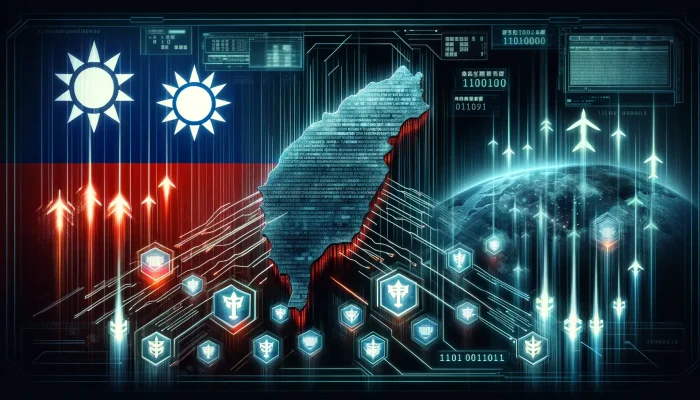
Beijing intensifies cyber warfare accusations, exposing operatives linked to Taiwan’s ruling party as regional military activities surge.
China’s Ministry of State Security has publicly identified four individuals it claims are members of Taiwan’s cyber warfare unit. This announcement comes as tensions continue to rise over Taiwan’s sovereignty and China’s assertive postures in the region. According to Beijing, these individuals are linked to the Democratic Progressive Party (DPP) and have been involved in disseminating disinformation and conducting pro-independence cyber activities.
The Chinese government released photographs and personal details of the alleged cyber operatives, aiming to expose what it sees as covert operations directed against its sovereignty and territorial integrity. This move is part of a broader strategy by Beijing to counter what it perceives as Taiwanese provocations under the guidance of the DPP, which it labels as a secessionist force.
In response, Taiwan’s defense ministry has vehemently denied these accusations, labeling them as baseless and indicative of China’s continued psychological warfare tactics. These exchanges underscore the deep-seated mistrust and the complex web of geopolitical tensions surrounding the Taiwan Strait.
The timing of China’s accusations is particularly significant, coinciding with the 20th anniversary of China’s Anti-Secession Law, which legally binds the country to prevent Taiwan’s independence by force if necessary. This law remains a cornerstone of Beijing’s policy towards Taiwan, reinforcing its claim over the island and justifying military preparedness.
Recent statements from a member of President Xi Jinping’s leadership team have reiterated China’s commitment to taking “resolute action” against Taiwanese secessionist activities, further heightening tensions. Meanwhile, Taiwan’s President Lai Ching-te has called China a “hostile external force” and has pledged to bolster Taiwan’s counter-espionage efforts in face of growing threats.
The identification of Taiwanese cyber operatives by China coincides with increased military activities around Taiwan. Beijing’s recent deployment of fighter jets and naval vessels around the island is seen by many as an attempt to intimidate and coerce the Taiwanese government into subservience.
These developments are closely watched by the international community, as they not only affect regional stability in Asia but also involve global powers, particularly the United States, which maintains a policy of strategic ambiguity regarding Taiwan’s defense.
The exposure of alleged Taiwanese cyber operatives by China marks a new phase in the cyber dimension of the cross-strait relations. It reflects the modern battleground where information warfare complements physical military might. As both nations bolster their cyber and espionage defenses, the potential for missteps or escalation increases, making the need for diplomatic engagement and restraint more crucial than ever.
The unfolding scenario will likely influence the strategic calculations of other regional players and global powers, shaping future diplomatic, economic, and military interactions in the Indo-Pacific region. The international community must remain vigilant and possibly mediate to prevent these tensions from spiraling into a broader conflict.

How Saudi Arabia’s Investment Could Redefine the Berbera Port and Horn of Africa’s Geopolitical Landscape.
Saudi Arabia is setting the stage for a profound strategic shift in the Horn of Africa through its planned multi-billion-dollar investment in Eritrea’s Assab port. This move not only positions Riyadh as a key player in the region but also challenges the existing dominance of other global powers such as the UAE, Turkey, and China within the crucial Red Sea trade corridor.
The investment in Assab port could significantly disrupt Ethiopia’s maritime ambitions. Given Ethiopia’s landlocked status, its government under Prime Minister Abiy Ahmed has long coveted access to the sea, viewing Eritrea’s ports as vital gateways. Secret reports suggest that Ethiopia might even consider military action to secure such access. However, Saudi Arabia’s involvement could deter such aspirations by enhancing Eritrea’s defensive capabilities and economic stability, making any aggressive move by Ethiopia both costly and politically untenable.
For Eritrea, aligning with Saudi Arabia could serve as a protective strategy against Ethiopian military ambitions, ensuring that its sovereignty over Assab remains unchallenged. This partnership would not only fortify Eritrea’s position but could also shift the regional power dynamics, potentially neutralizing Ethiopia’s influence over the Red Sea access points.
The potential Saudi investment in Assab port signifies more than just economic development; it reflects a strategic realignment in the Horn of Africa’s geopolitics. This realignment underscores a growing partnership between Saudi Arabia and Eritrea, aimed at safeguarding their interests along one of the world’s most vital maritime routes. Such a partnership could significantly alter regional power balances, offering Eritrea the backing needed to withstand Ethiopian pressures and enhancing Saudi influence in African geopolitics.
Furthermore, the move could recalibrate alliances and provoke reevaluations of strategic priorities among other regional players, including the UAE, Turkey, and China, all of whom have vested interests in the region’s maritime corridors. Each nation has been working to extend its influence through infrastructure investments and diplomatic engagements, and Riyadh’s new focus on Assab could prompt a rethinking of their strategies in response to the shifting sands of alliance and power.
For Somaliland, the developments surrounding Assab could have mixed implications. On one hand, a stronger Assab might divert some attention and resources away from Somaliland’s Berbera port, which has been backed by UAE investments. On the other hand, the geopolitical tensions and the strengthening of Assab could validate the strategic importance of having multiple allied ports along the Red Sea, potentially increasing the overall security and economic activity in the region.
The MOU signed between Somaliland and Ethiopia, which envisaged mutual recognition and economic cooperation, might also come under strain. Ethiopia’s potential isolation in the Red Sea arena could lead to a reevaluation of its foreign policy, especially towards its agreements with Somaliland.
Inconclusion, the anticipated Saudi investment in Assab is more than an economic venture; it is a strategic maneuver that could redefine regional alignments and power dynamics in the Horn of Africa. As the Red Sea becomes an increasingly contested geopolitical space, the actions of Saudi Arabia, coupled with the responses of other regional and global powers, will undoubtedly influence the future political landscape of this critical region.
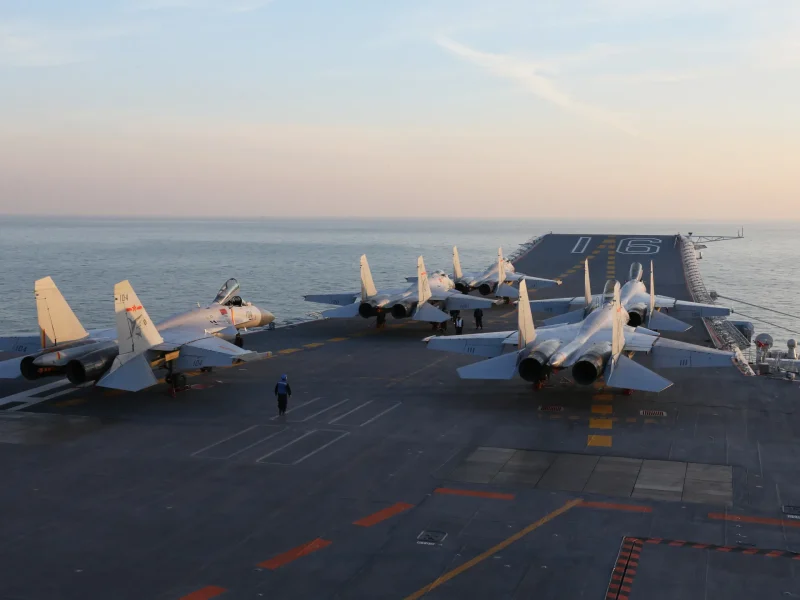
Taiwan Monitors Intensified Chinese Military Activity Amid Rising Tensions
Tensions in the Taiwan Strait have escalated as Taiwan’s Ministry of National Defense reported the detection of 47 Chinese military aircraft operating near the island over the past 24 hours. This activity coincides with the deployment of close to 90 Chinese navy and coast guard vessels near Taiwan, the southern Japanese islands, and the broader East and South China Seas.
China’s maneuvers have been linked to military assets from its northern, eastern, and southern theater commands. While Taiwan remains vigilant, the surge in naval and aerial presence has raised concerns about Beijing’s intentions. The developments come after China reserved airspace near Taiwan and escalated its military presence in strategic waters, moves likely intended to exert pressure on Taiwan and its allies.
Beijing’s assertive military posturing reflects its long-standing claims over Taiwan, a self-governed democracy that China views as a breakaway province. Meanwhile, Taiwan has increased its alert levels, maintaining readiness against potential escalations.
This show of force aligns with China’s broader regional ambitions, particularly in disputed maritime territories like the South China Sea. Analysts believe the recent activities are aimed at testing Taiwan’s defenses, projecting power to neighboring countries like Japan, and deterring U.S. influence in the region.
While Taiwan continues to monitor the situation, the international community, particularly the U.S. and its allies, is closely watching for signs of further escalation. The heightened activity underlines the fragility of the status quo in one of the most strategically sensitive regions globally.

Inside the IRGC’s Quiet Rebuild of Hezbollah

Iranian Missile Strikes Dimona, Israel’s Nuclear Town

Europe Scrambles to Lock In Winter Gas


-

 Terrorism2 months ago
America Pulls Back From Somalia but Doubles Down Next Door
-

 Somaliland2 months ago
Somaliland at Davos: The Moment Somaliland Entered the World’s Inner Circle
-

 Analysis2 months ago
How Chinese Speculators Set the Stage for the Gold and Silver Crash
-

 Top stories2 months ago
Rubio Signals Preemptive Military Option as U.S. Tightens Pressure on Iran
-

 Top stories2 months ago
France Blocks EU Push to Let Ukraine Buy British Storm Shadow Missiles
-

 Somaliland2 months ago
Somaliland, Israel, and the Power Table of Davos
-

 Russia-Ukraine War4 weeks ago
Russian General Boasted of Torture and Killing of Ukrainian Prisoners
-
 Russia-Ukraine War1 month ago
Europe’s Spies Challenge Trump’s Ukraine Peace Optimism