
US-Israel war on Iran
Israel Will Intensify in Strikes on Iran

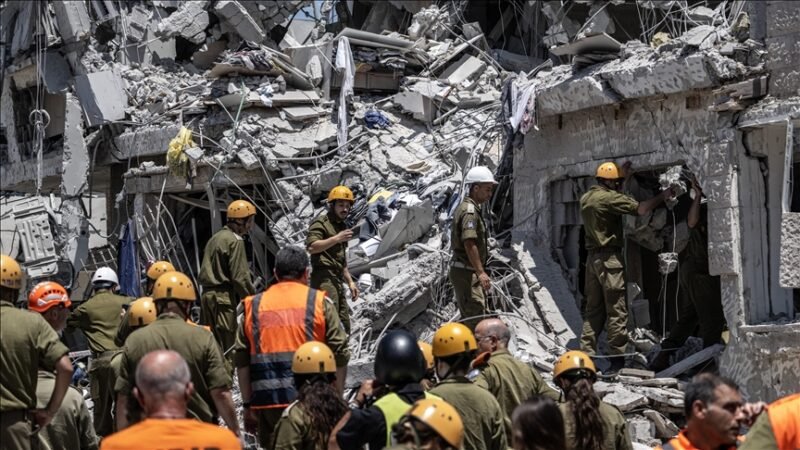
Defense Minister Says U.S.-Israeli Military Campaign Will Intensify “Significantly” in Coming Week.
Israel’s defense minister has warned that joint U.S.-Israeli strikes on Iran are set to escalate sharply in the coming days, signaling a new and potentially more destructive phase of the war.
In a statement released Saturday, Israel Katz said the intensity of military operations against what he described as the “Iranian terror regime” and its supporting infrastructure would “rise significantly” beginning Sunday.
“This week, the intensity of the strikes to be carried out by the [Israeli military] and the U.S. military against the Iranian terror regime and the infrastructure on which it relies will rise significantly,” Katz said.
The remarks come as the conflict enters its fourth week, with both sides expanding targets beyond initial military objectives. U.S. and Israeli forces have already conducted thousands of strikes aimed at degrading Iran’s missile-launch capabilities, aerospace units and defense-industrial facilities.
Iran, in turn, has launched ballistic missiles and drones at Israeli territory and Gulf energy infrastructure, escalating the confrontation beyond bilateral hostilities and into regional economic pressure.
Katz’s warning suggests that the campaign may shift toward broader infrastructure targets or deeper penetration into remaining Iranian military strongholds. Analysts say such an escalation could further strain regional defenses and heighten the risk of retaliatory strikes across the Gulf.
Washington has not yet detailed the scale of the next phase, but U.S. defense officials have indicated that operations remain focused on preventing Iran from rebuilding its missile and nuclear capabilities.
With oil prices elevated and diplomatic efforts stalled, the announcement underscores that de-escalation appears distant. Instead, both militaries are preparing for intensified operations — and a widening impact across the region.













Middle East Conflict Forces OPEC+ and Asian Importers to Rethink Energy Security as Hormuz Risk Surges.
The world isn’t running out of oil. It’s running out of certainty.
The Middle East crisis has done more than rattle oil markets. It is quietly rewriting the doctrine of global energy security.
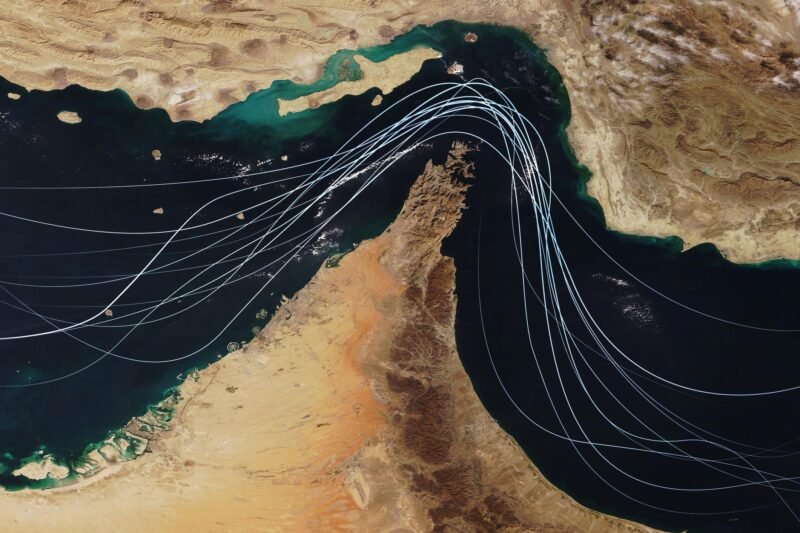
Missile and drone strikes across Gulf energy hubs have pushed the Strait of Hormuz — the transit point for roughly 21% of global petroleum liquids — from theoretical risk to active fault line.
Tankers are hesitating. Insurance premiums are climbing. Shipping queues are growing. The chokepoint is no longer background anxiety; it is the story.
Brent crude briefly surged above $119 a barrel before easing, while Middle East physical benchmarks spiked far higher, signaling a tightening that futures markets alone cannot explain.
The shock is less about destroyed production than about disrupted movement. Ports, airspace, insurance markets and tanker logistics have all become embedded in a conflict zone.
On paper, the world still has oil. Forecasts project mid-decade supply surpluses, with rising output from the United States, Brazil and Canada. But paper balances do not move cargo.
Around one-fifth of global oil and LNG still flows through Hormuz. Even partial disruption strands millions of barrels per day, overwhelming alternative pipeline routes from Saudi Arabia and the UAE.
This gap between spreadsheet surplus and deliverable supply has introduced a durable war premium. Freight costs are rising. Replacement barrels are more expensive. European diesel and jet fuel benchmarks have jumped. Markets are recalibrating around access risk, not just production capacity.
That shift is also transforming OPEC+. The group is no longer acting merely as a price manager. With most spare capacity concentrated in Saudi Arabia and the UAE, it now plays a quasi-stabilizing role in a corridor-constrained market.
Recent modest output adjustments were less about adding barrels and more about signaling control.
Yet spare capacity cannot escort tankers or neutralize naval threats. Maritime security has become as critical as upstream investment. European powers have hesitated to engage militarily, even as Washington offers escorts.
Asian importers, heavily exposed to Gulf crude, are quietly reassessing diversification strategies, insurance frameworks and emergency reserves.
The crisis underscores a structural reality: energy security is no longer defined only by how much oil exists underground. It hinges on whether it can travel safely through increasingly militarized sea lanes.
The emerging doctrine is stark. Control over shipping corridors, insurance credibility and geopolitical deterrence now matters as much as control over oil fields themselves. In this new order, the scarcest commodity is not crude — it is assured access.

U.S. Weighs More Warships and Possible Kharg Island Move as Gulf Conflict Expands.
Oil surges. Missiles fly. Allies clash — with words and warships.
President Donald Trump has lashed out at NATO allies, branding them “cowards” for refusing to help reopen the Strait of Hormuz, as Washington reportedly prepares to send additional warships and thousands of troops to the Middle East.
In a social media post, Trump accused European partners of benefiting from American military action against Iran while declining to share the burden of securing one of the world’s most critical maritime chokepoints. “Without the U.S.A., NATO IS A PAPER TIGER!” he wrote, arguing that reopening the strait would be “a simple military maneuver.”
The rhetoric comes as U.S. media report that the Pentagon is considering options that include occupying or blockading Iran’s Kharg Island — a small but strategically vital export terminal responsible for roughly 90% of Iran’s oil shipments. Any such move would carry significant risks, placing American forces within range of Iranian drones and rockets in a confined coastal environment.
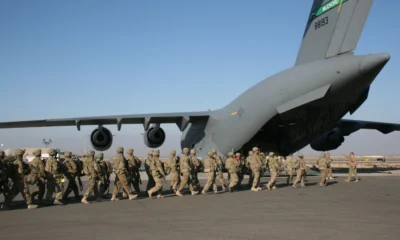
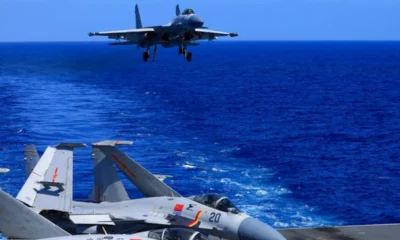
The Pentagon has already deployed the 31st Marine Expeditionary Unit, a rapid-response force of about 2,200 marines, aboard the USS Boxer, which departed earlier than scheduled. Officials have not disclosed specific mission parameters.
The conflict continues to widen. Iranian drone strikes reportedly hit Kuwait’s Mina al-Ahmadi refinery, while U.S. and Israeli forces struck Iranian cargo vessels in Gulf ports. Explosions were heard in Dubai as air defenses intercepted incoming rockets. In Israel, missile warnings sounded over Jerusalem.
Iran’s military has issued direct threats against U.S. and Israeli personnel worldwide, warning that “tourist and entertainment centres” could become unsafe. Meanwhile, energy infrastructure across the Gulf has been repeatedly targeted, sending oil and gas prices sharply higher.
Trump has previously said he had no intention of putting “boots on the ground,” yet the shifting posture — from expanded naval deployments to potential control of Iranian export facilities — signals how fluid the strategy remains.
British and other European leaders have expressed reluctance to join offensive operations, calling instead for de-escalation. Public opinion in several NATO countries remains skeptical of deeper involvement.
As the fourth week of war approaches, the strategic picture is increasingly complex. Washington is pushing to secure maritime trade and apply pressure on Tehran’s energy lifeline. Allies are wary of escalation. Iran continues to strike back.
The Strait of Hormuz remains partially paralyzed — and the political divide between the United States and some of its closest partners is now as visible as the military standoff in the Gulf.
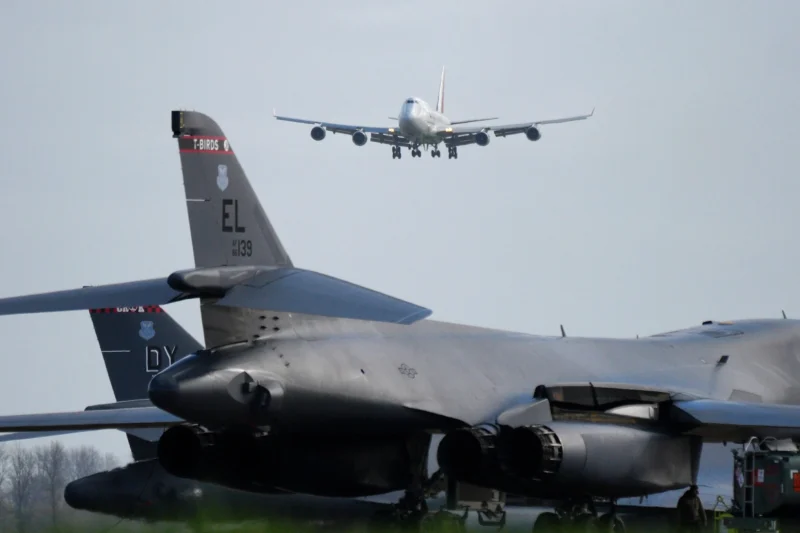
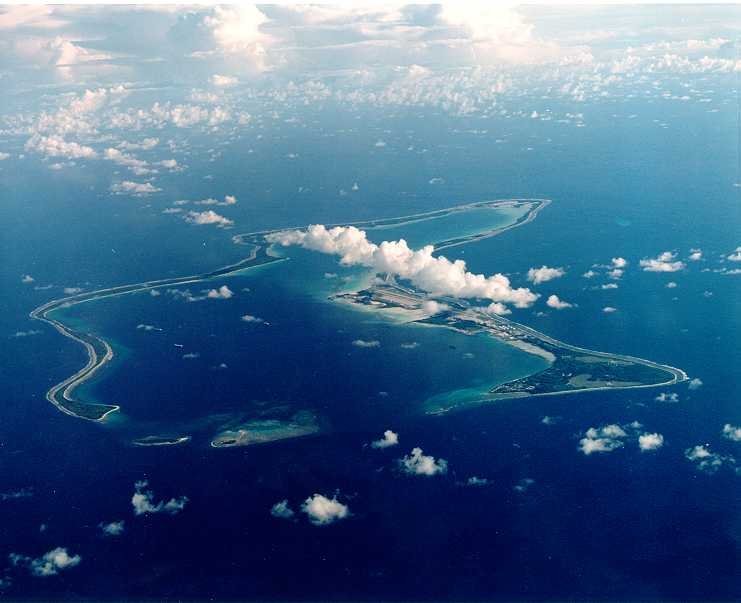
From reluctance to runway access — Britain shifts its stance.
Starmer Approves Use of RAF Fairford and Diego Garcia for Operations Targeting Iranian Threats in Hormuz.
The British government has authorized the United States to use military facilities in the United Kingdom and its overseas territories to carry out strikes against Iranian missile sites targeting shipping in the Strait of Hormuz, marking a significant shift in London’s posture toward the widening conflict.
A Downing Street statement said ministers met Friday to assess the escalating crisis and confirmed that the agreement includes “U.S. defensive operations to degrade the missile sites and capabilities being used to attack ships in the Strait of Hormuz.”
Prime Minister Keir Starmer had previously signaled reluctance to deepen Britain’s involvement. Earlier this week, he said the UK would not be drawn into a broader war and initially resisted a U.S. request to use British bases, citing the need for legal clarity.
That position evolved after Iran launched strikes affecting British allies in the region. London has now permitted U.S. forces to operate from RAF Fairford in England and from Diego Garcia, a strategically vital joint U.S.-UK base in the Indian Ocean.
President Donald Trump had publicly criticized Starmer in recent days, accusing Britain of not doing enough to support Washington’s campaign. On Monday, Trump described some allies as “greatly disappointing” and singled out the UK, once calling it “the Rolls-Royce of allies.”
The British government framed its decision as part of collective self-defense efforts to protect global shipping lanes, through which roughly 20 percent of the world’s oil supply flows. Officials emphasized that the authorization is limited to operations aimed at degrading missile capabilities threatening maritime traffic.
Despite the move, Downing Street reiterated its call for “urgent de-escalation and a swift resolution to the war.”
Public opinion in Britain remains cautious. A YouGov survey found that 59 percent of respondents oppose the U.S.-Israeli strikes on Iran, reflecting unease over deeper involvement in another Middle East conflict.
By granting access to its bases while continuing to press for de-escalation, London is attempting to balance alliance commitments with domestic skepticism — a tightrope that may grow harder to walk as the conflict intensifies.

Iran’s top commanders are falling. The war’s leadership phase is intensifying.
Tehran Confirms Deaths of Senior IRGC and Basij Commanders as U.S.-Israeli Campaign Targets Military Elite.
Several senior commanders in Iran’s Islamic Revolutionary Guard Corps (IRGC) have been killed in recent U.S.-Israeli strikes, according to statements carried by Iranian state-linked media, marking a sharp escalation in the campaign against Tehran’s military leadership.
Among those confirmed dead was Ali Mohammed Naini, an IRGC spokesperson. In a statement published on the Sepah News website, the Guard said Naini had been “martyred” in what it described as a “criminal cowardly terrorist attack by the American-Zionist side at dawn.”
Iranian outlets also reported the death of Mehdi Qureishi, identified as a commander in the IRGC’s aerospace force, who was said to have been killed in strikes in Isfahan.
Separately, General Esmail Ahmadi, described as head of the Basij intelligence unit, was reported killed on Thursday alongside three unnamed individuals in what Iranian media called a joint U.S.-Israeli strike.
The IRGC is a central pillar of Iran’s security apparatus, overseeing ballistic missile forces, drone operations and regional proxy networks. The Basij, a paramilitary force subordinate to the IRGC, plays a key role in domestic security and intelligence.
Since the campaign began on February 28, U.S. and Israeli officials have made clear that senior IRGC commanders, aerospace units and affiliated militia leadership are primary targets, alongside key military infrastructure.
The strikes aim to degrade Iran’s missile-launch capabilities and weaken its internal security command structure.
Iranian authorities have also previously reported the killing of top leadership figures during the opening phase of the conflict, underscoring the scale of the offensive against the country’s command hierarchy.
The targeting of high-ranking commanders signals a shift from infrastructure-focused operations to leadership decapitation — a strategy designed to disrupt decision-making, fragment command chains and reduce operational coordination.
Whether these losses will slow Iran’s military response or instead harden its resolve remains uncertain. But with senior officers increasingly in the crosshairs, the conflict is now cutting deep into the core of Iran’s security establishment.
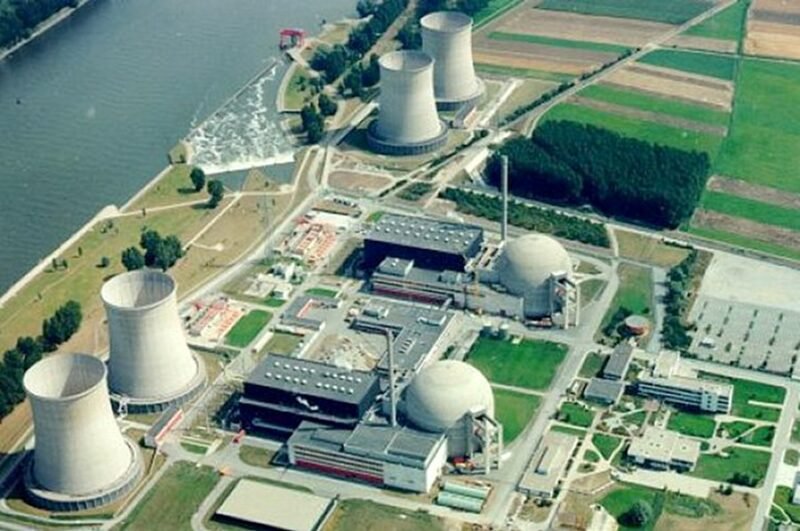
One strike. One reactor. Decades of fallout?
UN Health Agency Prepares for Potential Strike on Nuclear Sites as Conflict Escalates.
The World Health Organization is preparing contingency plans for what it calls a potential “worst-case” nuclear scenario in Iran, as fighting between the United States, Israel and Tehran intensifies.
Hanan Balkhy, the WHO’s Eastern Mediterranean regional director, told Politico that the agency is preparing for a nuclear incident “in its broader sense.” That could include a direct strike on one of Iran’s nuclear facilities or, in an extreme scenario, the use of atomic weapons by one of the parties to the conflict.
“No amount of preparation” could fully shield the region from consequences that might last for decades, she warned.
Since the U.S.-Israeli campaign began on February 28, multiple Iranian nuclear sites have been targeted. So far, international monitors report no radioactive contamination. The International Atomic Energy Agency has said that while certain structures near key facilities have been damaged, reactors themselves remain intact and radiation levels are normal.
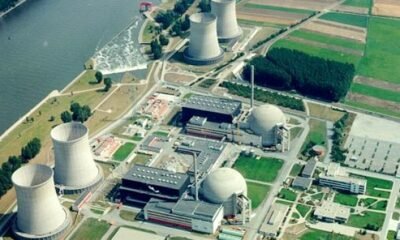
Concerns escalated earlier this week when Iranian authorities reported that a munition struck near the Bushehr nuclear power plant, the country’s only operational reactor. Rosatom, which built and helps operate the facility, confirmed that no radiation leaks occurred but described the strike as a serious security breach.
Russia’s Foreign Ministry condemned the attack, calling it a reckless escalation and urging Washington and Tel Aviv to avoid further strikes on nuclear infrastructure.
Israel, widely believed to possess undeclared nuclear weapons, has not publicly signaled any intention to escalate to that level. President Donald Trump dismissed suggestions that Israel might consider such an option, saying this week that “Israel wouldn’t do that.”
Still, health officials are planning for contingencies that extend beyond conventional warfare. The WHO’s role would include coordinating medical response, radiation monitoring, and cross-border health systems support in the event of contamination.
The warning underscores how the conflict has moved into more dangerous terrain. As strikes edge closer to sensitive nuclear facilities, the margin for error narrows — and the potential consequences grow far beyond the battlefield.
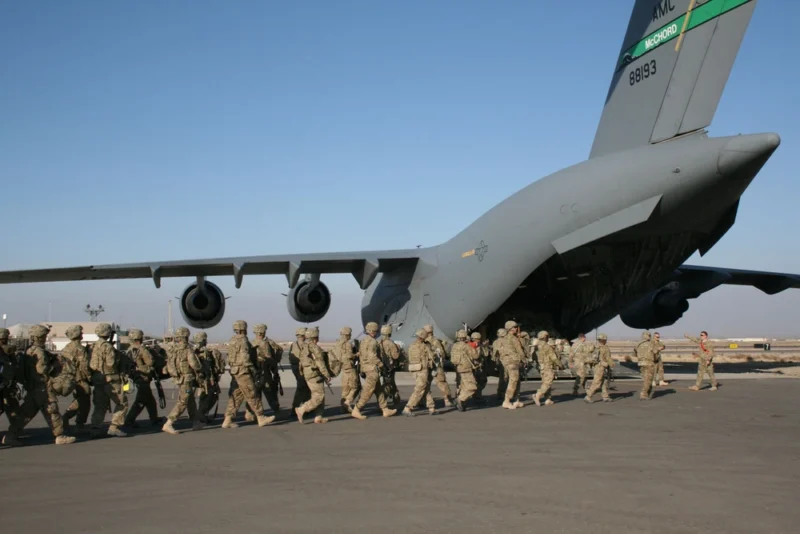
President Trump Faces a Defining Choice: Deploy U.S. Troops to Secure Nearly 1,000 Pounds of Enriched Uranium.
Airstrikes are one thing. Boots on Iranian soil are another.
President Donald Trump is confronting what may become the most consequential decision of the Iran war: whether to send American troops into Iranian territory to seize or destroy roughly 970 pounds of enriched uranium that experts say could fuel up to 10 nuclear weapons.
The White House has offered shifting explanations for launching the conflict, but one goal has remained constant: ensuring that Iran will “never have a nuclear weapon.” The complication is that airpower alone may not achieve that objective.
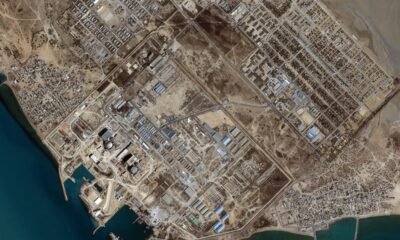
Much of Iran’s near–bomb-grade uranium is believed to lie buried beneath the rubble of heavily bombed sites, including facilities at Isfahan, Natanz and Fordow. Rafael Grossi, head of the International Atomic Energy Agency, has said the agency’s assessment is that the stockpile has likely not been moved and remains under debris at those locations.
Destroying centrifuges is one task. Recovering or neutralizing enriched uranium is another.
Several lawmakers warn that securing the material would almost certainly require a significant U.S. ground presence.
Senator Richard Blumenthal has argued that “securing the uranium cannot be done without a physical presence.” Even some Republican allies concede the difficulty. Senator Rick Scott acknowledged he has not been briefed on how such a mission could be accomplished without boots on the ground.
Defense Secretary Pete Hegseth has declined to discuss operational options publicly, saying only that the administration has “options.” Director of National Intelligence Tulsi Gabbard testified that U.S. strikes had “obliterated” Iran’s enrichment program, but questions remain about the fate of the existing uranium stockpile.
Military experts say a seizure operation is technically feasible if the United States maintains full air superiority. Special operations forces trained in handling nuclear material could secure and remove the canisters. But the logistics would be formidable.
Clearing rubble may require heavy equipment. Analysts estimate that more than 1,000 troops per site could be needed to secure a safe perimeter and conduct the mission.
The political risks are just as steep. Trump campaigned on avoiding new, prolonged Middle East entanglements. A ground deployment inside Iran — even a limited one — could escalate quickly, potentially triggering broader regional conflict and domestic backlash.
Yet inaction carries its own danger. If Iran’s hard-liners retain access to enriched uranium, they may feel greater urgency to weaponize it as a deterrent against future strikes.
The president now stands at a crossroads. Airstrikes have reshaped the battlefield. But the question of Iran’s uranium stockpile may determine whether this war remains limited — or becomes a far deeper American commitment.
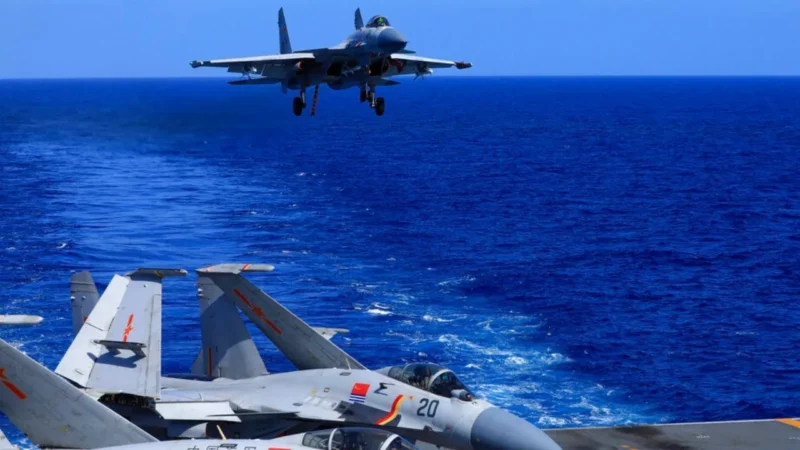
Winning the War — Or Just Surviving It?
Iran Has Been Pounded Militarily, but Geography, Time and Economic Leverage Complicate the Scorecard
The opening phase of the U.S.-Israeli campaign against Iran has been, by most measurable standards, a tactical success. Air superiority was established quickly.
Thousands of strikes degraded missile launchers, command centers and elements of Iran’s military infrastructure. Iranian leadership networks have been disrupted.
On paper, Washington and Jerusalem appear firmly in control.
But wars are not decided on paper.
More than 13,000 strikes in two weeks represent extraordinary operational intensity. Yet Iran has not collapsed, nor has it conceded.
President Donald Trump has insisted that the campaign is succeeding, even as U.S. forces rush additional assets into the region — redeploying air defenses, repositioning naval forces and urging reluctant partners to assist in protecting shipping lanes.
That posture does not signal defeat. But neither does it suggest a clean, predictable path to victory.
Iran, unable to match Western airpower, has chosen a different logic. Rather than seeking decisive battlefield gains, it has aimed to raise the cost of the war. Energy facilities, commercial hubs and maritime chokepoints have become pressure points.
The Strait of Hormuz — through which roughly a fifth of global oil flows — remains the most powerful lever in Tehran’s hands.
Modern interstate conflict rarely hinges on frontlines alone. It turns on endurance. On supply chains. On public tolerance for prolonged disruption.
Israel has absorbed strikes but remains heavily defended and socially hardened. Gulf states, particularly the UAE, have faced repeated targeting. Energy markets have reacted sharply. Tanker traffic has slowed. Interceptor stockpiles are being consumed.
The burden of constant air and maritime defense is immense — financially, logistically and politically.
Strategy, at its core, is the alignment of ends and means. By that measure, Iran’s approach is not irrational. It cannot win a symmetric war. So it plays asymmetrically. It stretches geography to its advantage. It prolongs the timeline. It relies on a higher tolerance for economic pain and domestic hardship than its adversaries may be able to sustain.
The next phase will test both sides differently. Israel will likely intensify efforts to dismantle Iran’s coercive institutions, including the Revolutionary Guards and the Basij militia. The United States will prioritize restoring maritime flow and reassuring regional partners. Iran may escalate selectively, potentially deploying capabilities — such as cruise missiles — that it has so far used sparingly.
So who is winning?
Militarily, the U.S. and Israel hold the upper hand. Strategically, the answer is murkier. If victory means degrading Iran’s infrastructure, that goal is advancing. If it means stabilizing the region and ending the conflict on favorable terms, the outcome remains uncertain.
Wars are rarely decided by who strikes hardest. More often, they are decided by who can endure longer.

Not a Shortage of Oil — A Shortage of Safe Passage

Israel Will Intensify in Strikes on Iran

Trump Slams NATO as “Cowards” Amid Hormuz Standoff


-
 Terrorism2 months ago
America Pulls Back From Somalia but Doubles Down Next Door
-

 Somaliland2 months ago
Somaliland at Davos: The Moment Somaliland Entered the World’s Inner Circle
-

 Analysis2 months ago
How Chinese Speculators Set the Stage for the Gold and Silver Crash
-

 Top stories2 months ago
Rubio Signals Preemptive Military Option as U.S. Tightens Pressure on Iran
-

 Top stories2 months ago
France Blocks EU Push to Let Ukraine Buy British Storm Shadow Missiles
-

 Somaliland2 months ago
Somaliland, Israel, and the Power Table of Davos
-
 Russia-Ukraine War4 weeks ago
Europe’s Spies Challenge Trump’s Ukraine Peace Optimism
-
 Russia-Ukraine War4 weeks ago
Russian General Boasted of Torture and Killing of Ukrainian Prisoners